
Mineral Wool Sandwich Panel Production Line For Roof
Sinowa is a well-known manufacturer and technical service provider of high-end mineral wool sandwich panel production line, learn more about mineral wool sandwich panel production line for roof, please contact Sinowa's technical engineer, tell us what you need, we will contact you as soon as possible!
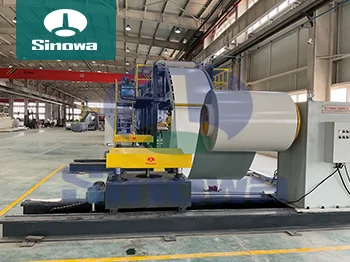
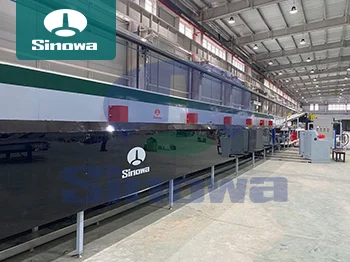
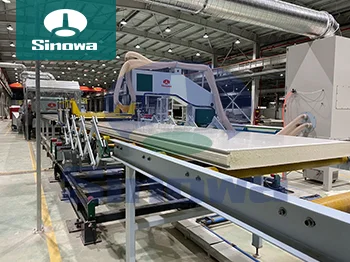
Sinowa is committed to the development and manufacturing of high-end and high-efficiency mineral wool sandwich panel production line. Our mineral wool sandwich panel production line are leading the way in efficiency, automatic control, human-computer interaction, environmental protection and energy consumption. Using system integration and bus control technology, it realizes the automatic integrated linkage control of the entire mineral wool sandwich panel production line, and can achieve remote interactive communication, which has the world-class level and a comprehensive leading high-performance mineral wool sandwich panel production line in the market.
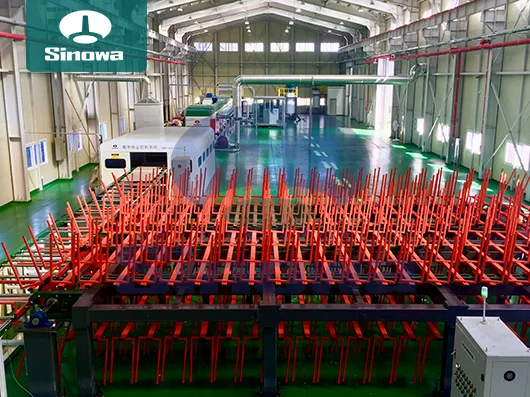
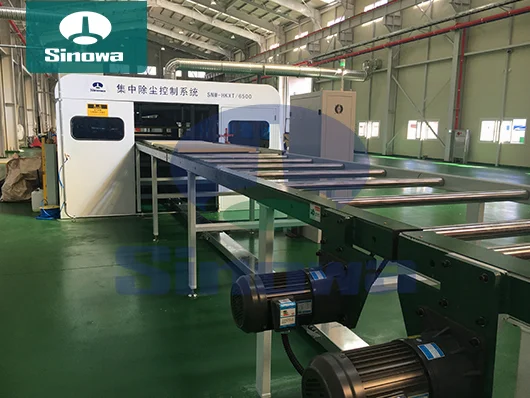
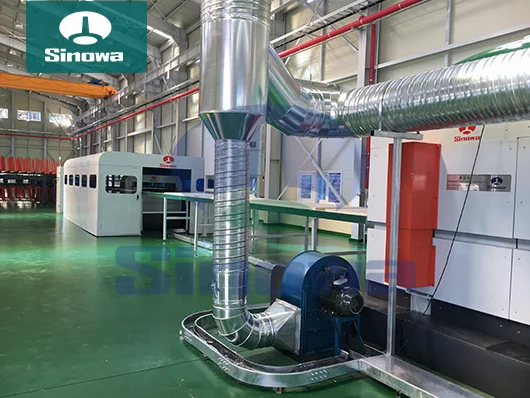
For more than ten years, relying on our innovative manufacturing concept and excellence in quality, reliable and trustworthy service to customers, we cooperate with customers all over the world, exported products to Canada, South Korea, Israel, Australia, the Middle East and other more than 20 countries and regions. contributed to building energy conservation and low-carbon production and have won widespread praise.
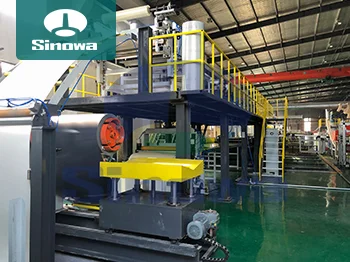
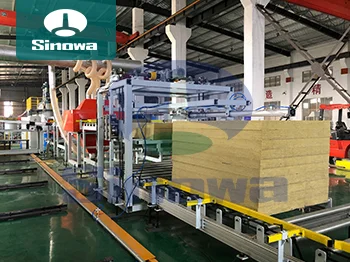
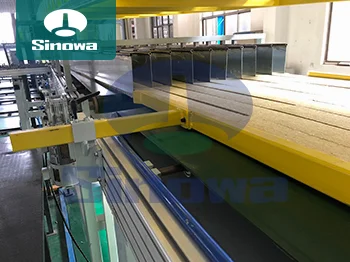
Sinowa has invested outstanding efforts in mineral wool sandwich panel production line, this is why our products are more efficiency, quality, automatic control technology, environmental protection, energy consumption indicators and the appearance and safety protection are comprehensively leading, some subversive design changes in many major technical points, these major innovations make our products excellent in price/performance and user experience.
The mineral wool sandwich panel production line designed for roof applications represents a comprehensive automated manufacturing system built to address the evolving demands of contemporary building enclosure construction. Unlike equipment made for flat wall panels, this line is engineered specifically to produce profiled roof panels that must withstand long-term exposure to outdoor weather fluctuations, wind loads, and continuous thermal cycling. The whole workflow operates in a continuous sequence, starting from raw material feeding and progressing through metal forming, mineral wool core processing, adhesive coating, composite pressing, curing, sizing and stacking. Every functional unit is synchronized by a central control framework, reducing manual handling and minimizing inconsistencies that may compromise roofing performance. The core design logic lies in combining rigid metal outer facings with fibrous mineral wool as the insulating inner layer, creating composite panels that merge structural strength with thermal and acoustic functions. Roof panels demand extra attention to rib profiles and seam compatibility, so the forming section of this line includes customized roller sets to shape metal sheets into trapezoidal or corrugated configurations. Such profiling improves drainage capacity on finished roofs and boosts overall panel stiffness without adding excessive weight to building frames. As construction projects increasingly prioritize energy conservation and safer enclosure materials, this type of production setup has become essential for large-scale fabrication of prefabricated roof components that shorten site construction cycles and simplify assembly work on building frames.
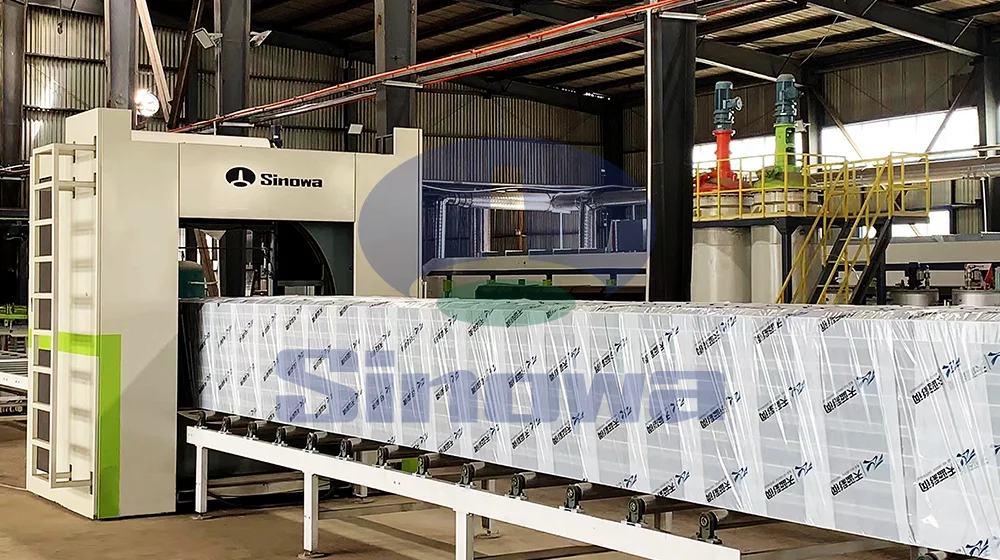
Raw material preparation forms the first critical stage within the mineral wool sandwich panel production line for roof panels, where two primary material streams are processed separately before being merged in the composite station. Metal coils are mounted on uncoiler units that release sheet material at a steady and controllable speed, feeding strips into roll forming equipment. Each set of rollers gradually bends and presses the flat metal into the required roof profile, creating raised ribs and grooves intended for water runoff and inter-panel connection. Simultaneously, solid mineral wool slabs are delivered to core processing machinery, where cutting blades slice blocks into strips matching the panel width and target thickness. A key operation unique to mineral wool roof panel production is lamellar rotation, turning cut wool strips so that fiber orientation runs perpendicular to the panel surface. This orientation enhances compressive strength and helps maintain dimensional stability when panels bear snow or wind pressure on rooftops. The equipment also trims mineral wool inserts to fill hollow spaces inside metal ribs, eliminating thermal bridging that would otherwise weaken insulation performance along panel seams. Material quality checks take place at this stage to filter out damaged wool blocks or uneven metal surfaces, preventing defective raw materials from moving downstream and wasting adhesive or production time.
Adhesive application serves as the vital connecting step that bonds metal facings to mineral wool cores on the roof panel production line, and the system is tuned carefully to match the special demands of outdoor roof products. Automated spraying or roller coating mechanisms spread adhesive evenly onto the inner side of both upper and lower metal sheets, controlling coating volume and distribution to avoid excessive glue that adds weight or insufficient coverage that causes delamination over time. The formulation of adhesive must maintain stable bonding properties across temperature shifts, rain exposure and ultraviolet radiation once panels are installed on roofs. After coating, the mineral wool strips are automatically positioned between the two prepared metal layers, with precision guides aligning core materials to keep them centered and avoid offset edges. For profiled roof panels, additional wool segments are inserted into corrugated indentations so the entire cross-section remains filled with insulating material rather than leaving empty air pockets. The combined assembly then proceeds toward the double-belt pressing station, where continuous uniform pressure and moderate controlled temperature encourage adhesive penetration into the porous fibrous surface of mineral wool. This phase ensures mechanical interlock between fiber structure and metal inner surface, resisting peeling risks that could emerge under outdoor thermal expansion and contraction cycles typical for roof systems.
The double-belt composite pressing and curing section is the heart of the mineral wool roof sandwich panel line, determining the final structural integrity and long-term reliability of each finished panel. Once metal sheets and mineral wool cores are stacked and aligned, the assembly enters the gap between two heavy-duty circulating belts that apply consistent pressure across the full panel width. The belts move at the same linear speed as upstream forming equipment to preserve continuous production flow without stopping the whole line. Built-in heating modules maintain stable temperature inside the pressing chamber to accelerate adhesive curing while avoiding overheating that might degrade mineral wool fibers or metal surface coatings. Pressure distribution is calibrated to accommodate the raised ribs of roof profiles, ensuring bonding occurs not only on flat areas but also along curved or indented metal sections. During this curing period, chemical cross-linking takes place inside the adhesive layer, creating a durable bond that can endure repeated thermal expansion and contraction after installation. Operators can adjust line speed, pressure and temperature parameters through the central control interface to adapt production for different panel thicknesses and mineral wool densities. This flexibility allows the same production system to manufacture roof panels tailored for different climate conditions and building load requirements without major mechanical reconfiguration.
After curing completes, the continuous composite panel exits the double-belt press and moves into the cutting and edge finishing zone of the mineral wool roof panel production line. Flying saw cutting units perform online cross-cutting while the panel keeps moving, removing the need to halt production for slicing operations. The cutting length can be set according to project specifications, delivering panels sized to match roof span dimensions and reducing waste generated by on-site trimming. Cutting tools are engineered to slice cleanly through both metal facings and mineral wool core, minimizing frayed wool fibers and jagged metal edges that would complicate installation or create safety hazards during roof assembly. Edge trimming stations follow the cutting process, shaving side edges to achieve uniform width and removing excess mineral wool or metal burrs. For roof panels, edge profiling may also form interlocking notches or overlaps that help adjacent panels seal together tightly against rainwater infiltration. After cutting and trimming, automated brushes clear dust and loose fiber debris from panel surfaces, and protective film can be applied on the exterior metal side to guard against scratches during transportation and roof installation. This finishing stage directly improves installation efficiency, as panels arrive pre-sized and ready for mounting onto roof support structures.
Integrated inspection and monitoring systems run throughout the mineral wool roof sandwich panel line, capturing real-time data to sustain consistent product quality across long production runs. Sensors track material feed speed, adhesive layer thickness, pressing pressure, curing temperature and panel dimensional measurements as products travel through each station. Any deviation from preset thresholds triggers alerts so staff can adjust parameters promptly before large quantities of non-conforming panels accumulate. Dimensional checks verify panel length, width, thickness and profile geometry, confirming that corrugated roof ribs meet shape tolerances needed for proper interlocking and drainage. Random samples are periodically pulled to examine bonding strength and core material distribution, confirming mineral wool fills the entire cross-section without voids or gaps that reduce thermal performance. The monitoring system records production data for each batch, supporting traceability for finished roof panels and helping technicians identify recurring mechanical or material issues. Unlike manual inspection alone, this automated oversight reduces human error and maintains stable output quality even when the line operates for extended shifts. Quality control at this stage focuses heavily on characteristics critical for roofing service life, such as bonding uniformity and profile precision, rather than cosmetic features that do not affect roof function.
Material handling, stacking and packaging units form the final segment of the production line, preparing finished mineral wool roof sandwich panels for safe transport and delivery to construction sites. After inspection, completed panels move along roller conveyors to an automatic stacking station. Mechanical lifting arms separate individual panels and arrange them neatly into stacks, placing protective separators between panels to prevent scratching of metal coatings and crushing of mineral wool edges. Stack height is controlled according to panel rigidity and weight to avoid permanent deformation of roof profiles during shipping. Once stacking finishes, stretch wrapping equipment encloses each bundle in protective wrapping film, shielding panels from dust, moisture and minor impact damage while in transit. Labeling modules can mark bundle information such as panel dimensions and production batch details, simplifying inventory management and sorting once materials reach construction sites. The layout of this end-of-line area is designed for smooth loading onto transport vehicles, minimizing extra lifting and handling that might bend roof profiles or break the bond between metal and mineral wool core. Efficient post-processing reduces labor requirements and lowers the risk of damage after panels leave the workshop, preserving the performance characteristics built during forming and composite curing stages.
The application potential and operational advantages of mineral wool roof sandwich panels, enabled by this specialized continuous production line, continue to expand as building design favors prefabricated and low-carbon enclosure solutions. Roof panels made on this production system combine thermal insulation, sound absorption and weather resistance within one single component, cutting down the number of separate layers needed in traditional roof construction. The mineral wool core restricts heat transfer across the roof assembly, helping stabilize indoor temperatures and reduce ongoing energy consumption for heating and cooling inside buildings. Its fibrous structure also absorbs airborne sound, lowering noise transmission through roof surfaces for facilities near busy surroundings. The automated nature of the production line delivers consistent panel geometry and bonding quality, supporting reliable long-term roof performance and reducing maintenance needs over decades of service. At the same time, the manufacturing workflow is optimized to manage raw material usage efficiently, cutting material waste compared to piecewise manual panel fabrication. For building designers and contractors, panels produced on this line simplify roof assembly work, shorten project timelines and create roof assemblies capable of enduring harsh outdoor exposure. As building practices shift toward off-site prefabrication, this mineral wool sandwich panel production line for roofing remains a practical, scalable solution for modern roof enclosure systems across diverse building types.
« Mineral Wool Sandwich Panel Production Line For Roof » Update Date: 2026/10/16
Tags: Mineral Wool Sandwich Panel Production Line , mineral wool sandwich panel production line, mineral wool sandwich panel production line manufacturer, mineral wool sandwich panel production line supplier, mineral wool sandwich panel production line for sale, customized mineral wool sandwich panel production line, china mineral wool sandwich panel production line
- Mineral Wool Sandwich Panel Line From China
- Mineral Wool Line For Building
- Rock Wool Panel Production Line On Sales
- Rockwool Production Line Supplier
- High-tech Rock Wool Sandwich Panel Line
- High-end Rockwool Sandwich Panel Production Line
- Rock Wool Panel Production Line Design
- High Efficiency Mineral Wool Sandwich Panel Machine
- Rockwool Production Line Manufacturer
- Fully Automatic Rock Wool Sandwich Panel Machine
- Low Price Fully Automatic Rock Wool Sandwich Panel Machine
- Fully Automatic Rock Wool Sandwich Panel Production Line Supplier
- Mineral Wool Line Price
- Rockwool Sandwich Panel Production Line Factory
- Rock Wool Production Line For House
- Rock Wool Panel Production Line Price
- High-tech Mineral Wool Sandwich Panel Machine
- Low Price Rockwool Production Line
- Mineral Wool Sandwich Panel Production Line In China
- Rock Wool Sandwich Panel Production Line Exporter
- Links:
- Sandwich Panel Continuous Production Line
- Automatic and Continuous Sandwich Panel Production Line
- Cheap and Low Price Sandwich Panel Production Line
- China Sandwich Panel Production Line Factory
- Color Steel Sandwich Panel Production Line For Cold Storage
- Continuous Composite Foam Sandwich Panel Production Line
- Continuous Production Line For Rockwool and Mineral Wool Sandwich Panels
- Continuous PU Phenolic Insulation Panel Production Line
- Continuous PU PIR Sandwich Panel Production Line
- Continuous PUF PUR Sandwich Panel Production Line
- Continuous Sandwich Panel Production Line For Roof and Wall
- Customized and Design Sandwich Panel Production Line
- Decorative Sandwich Panel Production Line For Glass Wool Boards
- High Quality Sandwich Panel Production Line For Sale
- Polyurethane(PU) Sandwich Panel Production Line
- Sandwich Panel Production Line Manufacturer and Supplier
- Sandwich Panel Production Machinery and Equipment