
Polyurethane Sandwich Panel Machinery Price
Sinowa is a well-known manufacturer and technical service provider of high-end polyurethane sandwich panel machinery, learn more about polyurethane sandwich panel machinery price, please contact Sinowa's technical engineer, tell us what you need, we will contact you as soon as possible!
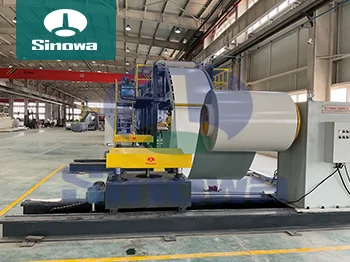
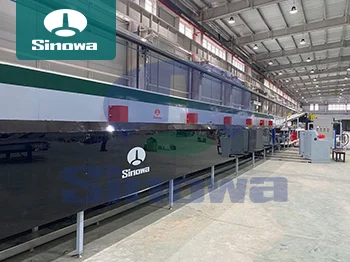
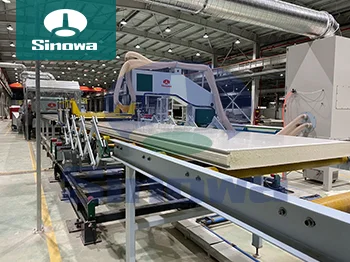
Sinowa is committed to the development and manufacturing of high-end and high-efficiency polyurethane sandwich panel machinery. Our polyurethane sandwich panel machinery are leading the way in efficiency, automatic control, human-computer interaction, environmental protection and energy consumption. Using system integration and bus control technology, it realizes the automatic integrated linkage control of the entire polyurethane sandwich panel machinery, and can achieve remote interactive communication, which has the world-class level and a comprehensive leading high-performance polyurethane sandwich panel machinery in the market.
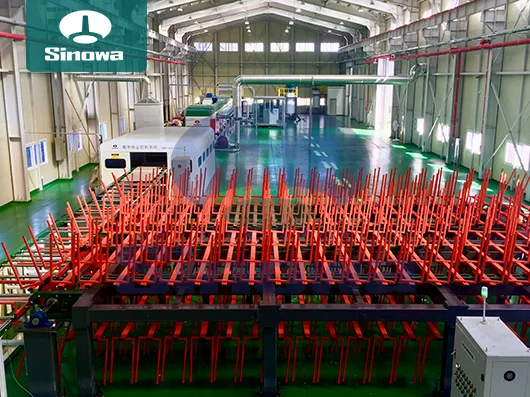
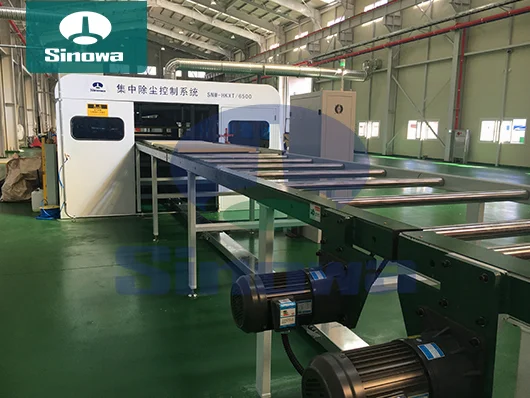
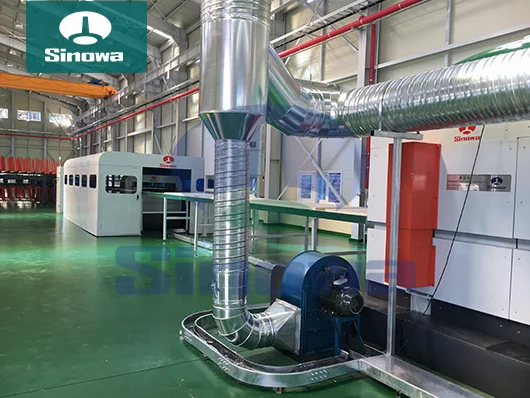
For more than ten years, relying on our innovative manufacturing concept and excellence in quality, reliable and trustworthy service to customers, we cooperate with customers all over the world, exported products to Canada, South Korea, Israel, Australia, the Middle East and other more than 20 countries and regions. contributed to building energy conservation and low-carbon production and have won widespread praise.
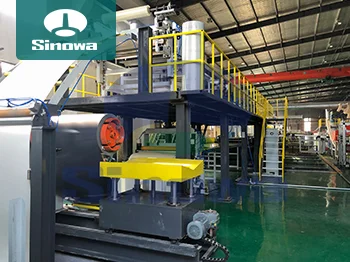
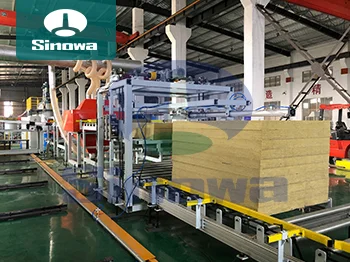
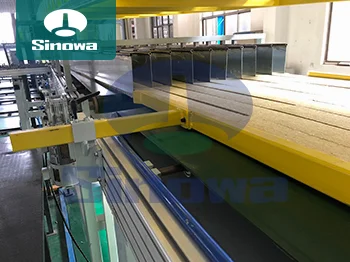
Sinowa has invested outstanding efforts in polyurethane sandwich panel machinery, this is why our products are more efficiency, quality, automatic control technology, environmental protection, energy consumption indicators and the appearance and safety protection are comprehensively leading, some subversive design changes in many major technical points, these major innovations make our products excellent in price/performance and user experience.
When buyers begin exploring polyurethane sandwich panel machinery price ranges, they quickly learn that pricing is never tied to a single fixed number but shaped by a layered set of functional and structural factors that define the equipment’s overall capacity and output consistency. The core working logic of this machinery centers on continuous foaming, lamination, and forming processes, and the complexity built into these stations directly alters the base investment required for any production setup. Systems designed for lower hourly output carry simpler mechanical layouts, with fewer auxiliary units to regulate raw material feeding, mixing speed, and panel curing cycles, which naturally keeps the overall cost at a more accessible level. In contrast, configurations built for sustained high-volume operation integrate more precise control modules that stabilize the blending of raw components, reduce material waste during foaming, and maintain uniform thickness across finished panels. Even subtle differences in how the machine handles surface material feeding and tension adjustment can create noticeable gaps in overall expenditure, as stable feeding systems prevent wrinkling, misalignment, and product defects that would otherwise cut into operational gains over time. Many new market participants mistakenly focus only on the upfront outlay when comparing options, overlooking how well a machine’s design matches their intended product mix, production schedule, and long-term operational targets. A machine that appears economical at first glance may demand frequent adjustments, higher consumption of raw materials, or extended downtime for maintenance, which raises the total cost of ownership far beyond the initial purchase figure. Understanding these trade-offs allows buyers to move past surface price comparisons and start evaluating machinery based on whether its performance characteristics align with the practical demands of their planned production workflow.
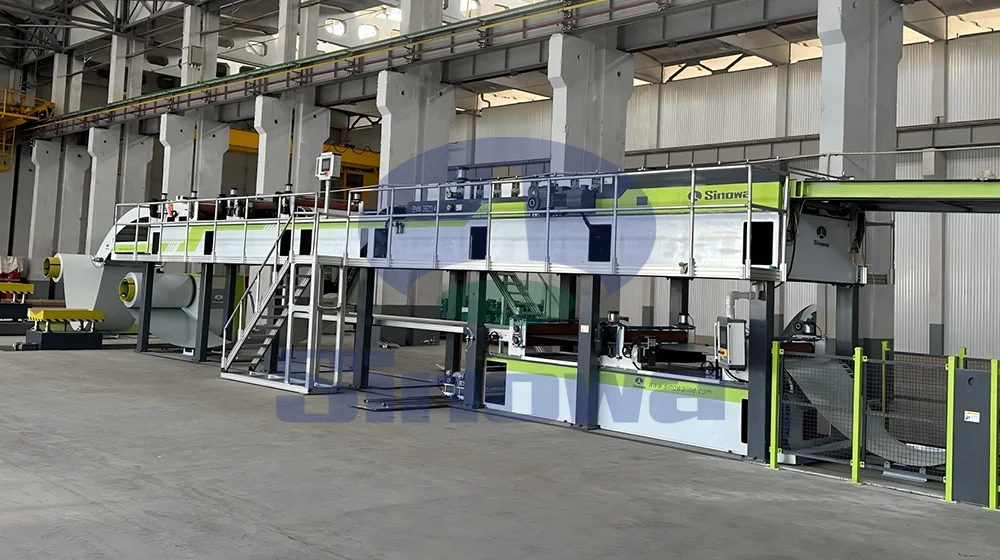
The composition of automation features stands as another major factor that shifts polyurethane sandwich panel machinery price positioning across available options. Basic setups rely heavily on manual intervention for routine tasks such as adjusting panel dimensions, monitoring mixing ratios, and switching between different product specifications, which limits production flexibility and reduces the capital needed to acquire the line. More advanced systems incorporate integrated control frameworks that store multiple production recipes, allowing operators to switch between different panel thicknesses and surface materials with minimal manual calibration. These automated control elements also deliver real-time feedback on operating parameters, helping operators catch irregularities in foaming pressure or material flow before they create batches of non-conforming panels. Each additional automated function adds to manufacturing costs for the equipment builder, and these costs are reflected in the final asking price for the complete production line. Beyond recipe storage and parameter monitoring, some systems include automated cutting, stacking, and packaging attachments that remove extra handling steps from the production sequence. While these attachments push the total investment higher, they also lower reliance on on-site labor and shorten the cycle time required to turn raw inputs into finished, ready-to-ship panels. Buyers must weigh the value of reduced labor needs and faster throughput against the larger initial payment, especially if their operation plans to run extended shifts or fulfill large, recurring orders. For smaller operations with variable order sizes and limited staffing budgets, a partially automated setup often strikes a more reasonable balance between capability and spending, rather than investing in a fully automated suite that remains underutilized for much of its operating life.
Material quality used to construct the machinery itself creates meaningful variation in polyurethane sandwich panel machinery price, as different structural components face constant exposure to chemical foaming agents, temperature shifts, and repeated mechanical stress throughout daily operation. Key sections that manage raw material mixing and foaming must withstand contact with reactive chemical blends, and components built from durable, corrosion-resistant materials hold their dimensional accuracy much longer than alternatives made from standard structural materials. The frame of the production line also bears continuous load from moving belts, pressing rollers, and curing sections, so heavier, rigid frame construction prevents gradual deformation that would compromise panel flatness over thousands of operating hours. Suppliers who source robust base materials and precision-machined moving parts incur higher production costs, and these costs translate into higher pricing for the finished machine. Cheaper alternatives often use lighter structural frames and thinner surface coatings, which can show signs of wear after a shorter operating period, requiring replacement parts and repair work sooner. While these lower-cost machines can produce sandwich panels for a time, the cumulative expense of spare parts, service visits, and unplanned shutdowns often closes the gap between the low upfront price and a more robust alternative within a few years of operation. It is important to distinguish between visible outer casing materials and the internal functional parts that drive core performance, since aesthetic upgrades rarely improve production stability, whereas upgrades to mixing heads, metering pumps, and pressing assemblies deliver tangible benefits to daily output quality. Careful assessment of component durability helps buyers avoid choices that seem budget-friendly at the point of purchase but become costly burdens through ongoing maintenance and premature equipment replacement.
After-sales support and service packages attached to polyurethane sandwich panel machinery also influence the final price presented to prospective buyers, though this connection is less obvious than hardware differences. A base equipment quotation may cover only the machine itself, with separate charges for installation guidance, operator training, troubleshooting support, and spare part supply. Offers bundled with comprehensive support services naturally carry a higher price tag, as the supplier allocates skilled technical resources to assist with on-site setup, walk new operators through standard procedures, and resolve unexpected operational issues after delivery. Training programs help teams learn proper startup, shutdown, and routine inspection practices, reducing the risk of operator error that can damage the machine or ruin batches of raw materials. Service terms that include priority access to technical consultation and streamlined spare part ordering further add value, minimizing downtime when a fault occurs. Some buyers opt for the lowest available price by declining bundled support, assuming their internal maintenance staff can handle setup and repairs independently. This approach works only when the team already possesses deep familiarity with polyurethane foaming and continuous panel forming equipment. Without that background, delayed troubleshooting and difficulty sourcing compatible replacement components can halt production for extended stretches, creating revenue losses that far exceed the savings from skipping support services. When comparing quotations, buyers should separate the value of physical equipment from the service entitlements included, rather than treating every price point as a direct comparison of identical hardware. This distinction reveals whether a higher offer includes protective support structures that protect continuous production after the machine arrives at the facility.
Production flexibility built into polyurethane sandwich panel machinery shapes pricing decisions, because lines engineered to accommodate a wide range of surface facings and core formulations require more adaptable mechanical and metering systems. Some machinery is configured to work well with a narrow selection of surface materials and fixed ranges of panel thickness, with limited ability to adjust foaming density or adhesive application rates. This focused design simplifies manufacturing for the equipment maker and keeps pricing restrained, making it suitable for businesses that focus on one standard panel type for most of their orders. Versatile lines can shift between different facing materials, adjust foam density to meet different thermal performance targets, and produce panels across a broad spectrum of widths and thicknesses. These adaptable systems feature adjustable metering units, variable-speed conveyor drives, and modular forming sections that can be reconfigured without major disassembly. Every modular and adjustable feature adds engineering complexity and testing work during the manufacturing phase of the machinery, raising the final price accordingly. For businesses serving diverse customer segments, this flexibility reduces the need to purchase multiple dedicated production lines, even though the single flexible unit costs more initially. Operators focused on a narrow product portfolio gain little advantage from paying extra for adjustability they will never use, and can direct their budget toward boosting reliability for their specific product type instead. Matching the machine’s adaptability to the variety of goods planned for production prevents overspending on unused capabilities while also avoiding the limitation of being unable to accept new types of orders as market demand evolves.
Lead time and production scheduling for the machinery itself can create shifts in polyurethane sandwich panel machinery price negotiations, especially during periods of strong overall market demand for building material production equipment. When order volumes for industrial machinery rise across the sector, suppliers operate near full capacity and may have less incentive to offer flexible pricing terms, while extended lead times become standard for all configurations. In quieter market cycles, suppliers have more available manufacturing capacity and may adjust pricing structures to secure new commitments, often pairing adjusted pricing with clear delivery timelines. Customized machinery requests, which involve modifying standard layouts to fit unique factory space layouts or special material handling arrangements, almost always sit at a higher price tier than standard off-line configurations. Customization requires additional engineering drawing work, revised component sourcing, and extra testing cycles to confirm the modified design functions as intended. Buyers sometimes underestimate how much small custom changes can increase the overall cost, requesting adjustments to conveyor height, footprint size, or material feeding arrangements without accounting for the engineering labor involved. Standardized layouts benefit from repeated production, refined assembly workflows, and proven performance records, all of which help suppliers control costs and pass some of those savings to buyers. Planning purchases to align with stable market cycles and limiting custom modifications to only those strictly necessary for the factory layout can help buyers manage spending. It is also wise to confirm delivery schedules alongside price discussions, as a lower quoted price paired with an excessively long lead time can delay the launch of panel production and postpone the revenue the equipment is meant to generate.
Operational efficiency metrics tie closely to long-term value, even when they do not immediately appear on the quotation for polyurethane sandwich panel machinery, and they should factor into how buyers judge whether a given price represents a reasonable investment. Efficient machinery optimizes the ratio between raw material input and finished panel output, cutting down on foam overfeed, spillage, and trimming waste generated during forming and cutting. Raw materials for polyurethane sandwich panels represent the largest ongoing expense for most manufacturers, so even a modest reduction in waste percentage accumulates into substantial savings over hundreds of production runs. Energy consumption is another key efficiency variable; well-designed systems manage heating, mixing, and conveyor power use to avoid unnecessary energy draw during steady operation. Machinery that runs with high energy demand will inflate monthly utility bills, adding recurring operating costs that compound for the lifespan of the line. When comparing differently priced options, buyers should request information on typical material consumption rates and energy use under normal operating conditions, rather than basing choices solely on the initial payment. A moderately higher-priced machine that uses raw materials and energy more efficiently can reach a break-even point faster than a cheaper alternative with higher running costs. These efficiency gains become more impactful as daily production volume increases, which is why large-scale producers often prioritize efficiency features more aggressively than small operators with lower output targets. Evaluating efficiency alongside price transforms the decision from a simple cost comparison into an assessment of total economic performance across the equipment’s usable service life.
Market aftermarkets and the availability of compatible spare parts form the final consideration that frames the meaning of polyurethane sandwich panel machinery price, because the continued usability of the line depends on access to replaceable parts long after the purchase is complete. Machinery built using widely standardized component types benefits from a broad aftermarket, where replacement pumps, sensors, belts, and seals can be sourced from multiple channels. This competitive availability keeps spare part costs stable and reduces the risk of long waits when replacement is needed. In contrast, designs that rely heavily on proprietary, uniquely manufactured components lock buyers into a single supply channel for replacements, which can lead to rising part costs and slower fulfillment over time. Even if such proprietary machinery carries an attractive upfront price, the lack of alternative part suppliers creates hidden financial exposure for the operator. When reviewing quotations, buyers can ask about the general availability of wearing parts and whether core functional components follow common design formats accessible through independent suppliers. This line of inquiry reveals how sustainable the machine will be to maintain years after installation. The most balanced purchasing decisions combine careful review of the initial price with an understanding of component commonality, maintenance ease, and the broader aftermarket ecosystem. By bringing together all these considerations—automation level, construction quality, flexibility, service support, efficiency, and spare part access—buyers can move past superficial price comparisons and select polyurethane sandwich panel machinery that aligns securely with their business goals, balancing immediate spending limits against stable, reliable production for years ahead.
« Polyurethane Sandwich Panel Machinery Price » Update Date: 2026/10/27
Tags: Polyurethane Sandwich Panel Machinery , polyurethane sandwich panel machinery, polyurethane sandwich panel machinery manufacturer, polyurethane sandwich panel machinery supplier, polyurethane sandwich panel machinery for sale, customized polyurethane sandwich panel machinery, china polyurethane sandwich panel machinery
- Polyurethane Sandwich Panel Machine For Cold Storage
- Glass Wool Sandwich Panel Machine Manufacturer
- Sandwich Wall Panel Production Line Factory
- PUF Panel Making Machine Price
- Sandwich Panel Manufacturing Line Supplier
- Cheap PUR Sandwich Panel Line
- Glass Wool Production Line Design
- Foam Sandwich Panel Machine On Sales
- Custom PUR Sandwich Panel Production Line
- High-tech Sandwich Wall Panel Production Line
- Low Price PIR Sandwich Panel Machine
- Customized Composite Panel Production Line
- PIR Sandwich Panel Machine Price
- Cheap Foam Sandwich Panel Machine
- High Efficiency Polyurethane Insulation Panel Production Line
- Low Price Fully Automatic PU Sandwich Panel Machine
- High-tech Decorative PU Sandwich Panel Production Line
- Polyurethane Sandwich Panel Machinery Factory
- Low Price Composite Panel Production Line
- Fully Automatic Sandwich Panel Making Machine Manufacturer
- Links:
- Sandwich Panel Continuous Production Line
- Automatic and Continuous Sandwich Panel Production Line
- Cheap and Low Price Sandwich Panel Production Line
- China Sandwich Panel Production Line Factory
- Color Steel Sandwich Panel Production Line For Cold Storage
- Continuous Composite Foam Sandwich Panel Production Line
- Continuous Production Line For Rockwool and Mineral Wool Sandwich Panels
- Continuous PU Phenolic Insulation Panel Production Line
- Continuous PU PIR Sandwich Panel Production Line
- Continuous PUF PUR Sandwich Panel Production Line
- Continuous Sandwich Panel Production Line For Roof and Wall
- Customized and Design Sandwich Panel Production Line
- Decorative Sandwich Panel Production Line For Glass Wool Boards
- High Quality Sandwich Panel Production Line For Sale
- Polyurethane(PU) Sandwich Panel Production Line
- Sandwich Panel Production Line Manufacturer and Supplier
- Sandwich Panel Production Machinery and Equipment