
High-tech Decorative PU Sandwich Panel Production Line
Sinowa is a well-known manufacturer and technical service provider of high-end decorative pu sandwich panel production line, learn more about high-tech decorative pu sandwich panel production line, please contact Sinowa's technical engineer, tell us what you need, we will contact you as soon as possible!
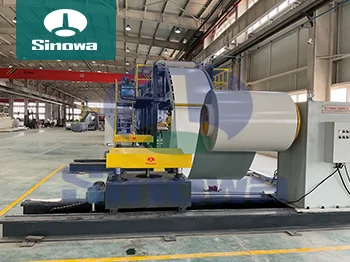
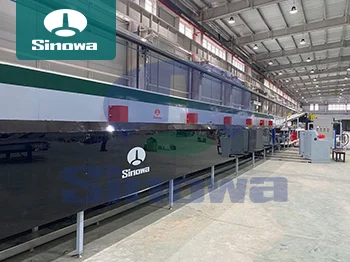
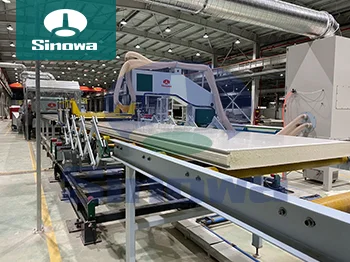
Sinowa is committed to the development and manufacturing of high-end and high-efficiency decorative pu sandwich panel production line. Our decorative pu sandwich panel production line are leading the way in efficiency, automatic control, human-computer interaction, environmental protection and energy consumption. Using system integration and bus control technology, it realizes the automatic integrated linkage control of the entire decorative pu sandwich panel production line, and can achieve remote interactive communication, which has the world-class level and a comprehensive leading high-performance decorative pu sandwich panel production line in the market.
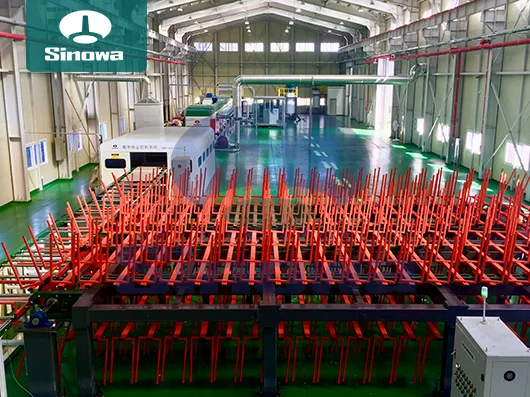
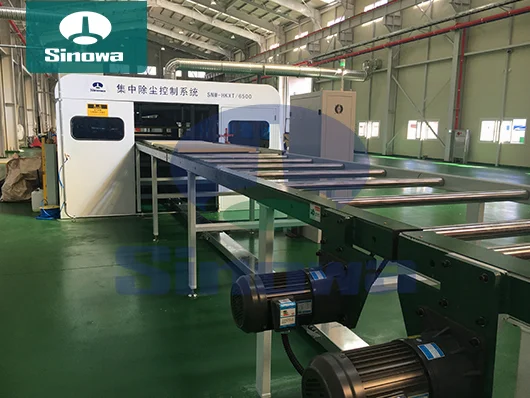
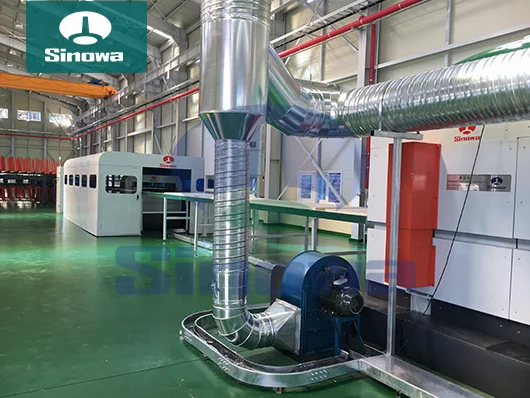
For more than ten years, relying on our innovative manufacturing concept and excellence in quality, reliable and trustworthy service to customers, we cooperate with customers all over the world, exported products to Canada, South Korea, Israel, Australia, the Middle East and other more than 20 countries and regions. contributed to building energy conservation and low-carbon production and have won widespread praise.
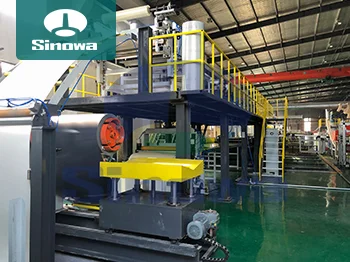
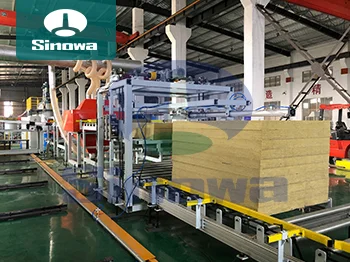
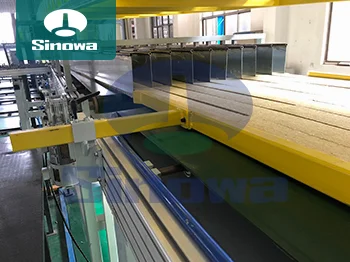
Sinowa has invested outstanding efforts in decorative pu sandwich panel production line, this is why our products are more efficiency, quality, automatic control technology, environmental protection, energy consumption indicators and the appearance and safety protection are comprehensively leading, some subversive design changes in many major technical points, these major innovations make our products excellent in price/performance and user experience.
The high-tech decorative PU sandwich panel production line represents a transformative leap in composite building material manufacturing, merging mechanical automation, chemical control, and surface finishing innovation to produce multi-functional decorative panels for modern architectural projects. Unlike conventional equipment focused solely on insulation performance, this system is engineered to prioritize visual quality alongside structural stability, recognizing that decorative cladding must deliver aesthetic appeal while maintaining reliable physical performance throughout its service life. The whole workflow is built as a continuous integrated system, connecting raw material unwinding, surface pretreatment, pattern forming, PU core foaming, lamination, curing, cutting and post-treatment into one streamlined sequence, minimizing manual handling and reducing the risk of surface scratches or uneven bonding. Each module communicates through synchronized control systems, automatically adjusting running speed and processing parameters when switching between different decorative styles or panel dimensions. Operators can modify production settings through a central control interface, altering surface textures, panel thickness and core density without lengthy equipment reconfiguration. This flexible design helps manufacturers respond quickly to diverse market demands, producing panels that mimic stone, brick, wood and other natural textures, replacing heavy traditional decorative materials with lightweight composite alternatives. As construction design increasingly favors prefabricated and energy-efficient exterior and interior wall solutions, this advanced production setup creates a stable foundation for scalable decorative panel production, bridging the gap between artistic building decoration and industrial mass production.
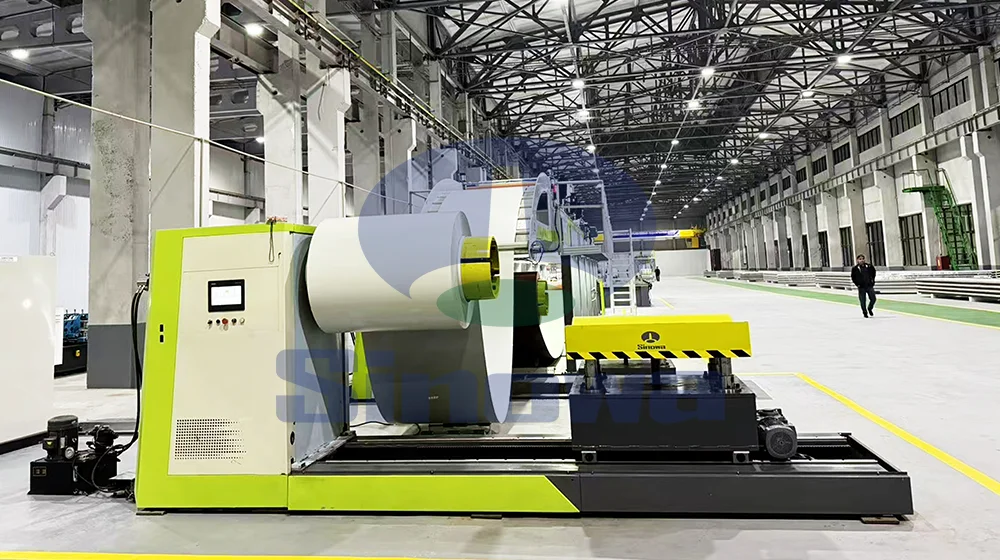
At the initial stage of production, the line handles surface substrate preparation, which is critical to the final decorative effect and long-term adhesion between the outer sheet and PU foam core. Coiled base materials are unwound steadily and fed into a multi-stage pretreatment unit, where surfaces are cleaned to remove dust, oil residues and minor impurities that could weaken composite bonding. Following cleaning, the material enters decorative forming stations equipped with interchangeable embossing and texturing rollers. These rollers imprint detailed patterns and depth onto the surface layer, generating realistic texture effects that become the visible decorative face of the finished panel. Temperature and pressure are carefully calibrated during embossing to avoid over-stretching or damaging the coating layer, preserving color uniformity and surface smoothness. A preheating unit then raises the substrate to a suitable temperature range, preparing it for the subsequent foaming and laminating process. This preheating step improves the compatibility between the surface sheet and liquid PU components, supporting tight molecular bonding once foaming begins. Every adjustment in this section directly affects the visual consistency of finished panels; minor fluctuations in roller pressure or feeding speed can lead to inconsistent pattern depth or color variation across batches. By automating substrate handling and decorative shaping in one continuous pass, the line eliminates defects often seen in semi-manual processing, ensuring every panel maintains sharp, clear decorative patterns and stable surface quality from the first piece to the last in a production run.
The foaming and material mixing unit serves as the technological heart of the high-tech decorative PU sandwich panel production line, governing the formation of the rigid foam core that delivers thermal insulation and structural support. Liquid polyol and isocyanate components, along with auxiliary additives, are delivered to a high-pressure metering system that precisely controls flow rates and mixing ratios. The blended liquid is dispensed evenly across the moving lower substrate through a traversing pouring head, spreading in a controlled layer before the upper decorative sheet is brought into position above it. The chemical reaction starts immediately after mixing, causing the PU mixture to expand steadily and fill the fixed gap between the two face layers. The expansion rate is carefully restrained to prevent voids, bubbles or uneven density distribution inside the core. A closed double-belt conveyor maintains consistent clamping pressure and spacing as the composite moves forward, defining the final thickness of the panel and keeping the decorative surface flat without distortion. The reaction environment is kept stable during foaming, protecting the embossed decorative surface from deformation or discoloration caused by sudden heat spikes. This precise foaming technology ensures that the PU core forms a seamless bond with both upper and lower facings, preventing delamination under normal environmental changes. Even for decorative panels with complex surface profiles, the adjustable pouring path adapts to varied substrate shapes and maintains uniform foam filling across the full width of each panel.
Continuous lamination and constant-temperature curing form the next critical phase, where the freshly formed composite structure solidifies into a stable decorative sandwich panel. After the PU liquid is injected between the two surface layers, the whole assembly travels through the double-belt laminator, which applies balanced pressure while transporting materials through a thermally controlled curing tunnel. Internal heating zones maintain a steady temperature profile to support the complete cross-linking reaction of the polyurethane foam. Temperature distribution across the tunnel is finely tuned; too much heat can damage the decorative coating, while insufficient heat leaves the foam incompletely cured and prone to shrinkage after production. The synchronized movement of upper and lower belts prevents relative sliding between the decorative face sheet and foam core, protecting delicate embossed patterns from abrasion or offset. During curing, the foam hardens into a closed-cell structure, locking the three-layer composite together into a unified panel. Operators monitor real-time data on temperature, belt speed and pressure, and the system can trigger automatic parameter adjustments if deviations appear. This continuous curing process removes the need for separate batch pressing and resting periods, greatly shortening production cycles. Once the composite exits the curing section, the foam has achieved its target mechanical strength and dimensional stability, retaining the sharp decorative textures formed in the earlier embossing stage without rebound or warping.
After curing, the continuous panel ribbon proceeds to fixed-length cutting, edge trimming and surface inspection processes, refining raw composite material into finished decorative panels ready for assembly. The cutting system follows preset length parameters, using precision cutting tools to separate the endless web into individual panels. Cutting speed synchronizes with the line travel speed to avoid jagged edges, surface tearing or pattern misalignment at cut ends. Edge trimming stations remove excess material from both sides, creating straight, uniform panel edges that simplify later installation and interlocking connection. After trimming, panels pass through visual and dimensional inspection stations. Automated sensors check panel flatness, thickness consistency, surface finish integrity and pattern continuity, flagging any products with scratches, indentations or uneven texture for rework. Defective pieces are separated automatically without halting the whole production flow. At this stage, protective film can be applied to the decorative surface to shield embossed patterns from abrasion and contamination during handling, transport and construction. This protective covering remains intact until panel installation, preserving the original decorative appearance. The finished panels then move to automatic stacking units, neatly arranging products for packaging. This integrated post-processing sequence reduces manual inspection workload and improves the uniformity of finished dimensions, ensuring that decorative panels match perfectly when installed side by side on building walls.
One of the most remarkable strengths of the high-tech decorative PU sandwich panel production line lies in its adaptability to diverse decorative design requirements, supporting flexible customization of surface appearance while retaining consistent core performance. By swapping embossing rollers and adjusting coating formulas, manufacturers can produce panels simulating different natural materials and artistic styles, ranging from rough stone textures and regular brickwork to delicate wood grain and abstract matte finishes. The system can also accommodate different facing materials, expanding the range of tactile and visual effects available for architectural designers. Beyond surface patterns, operators can adjust core thickness and foam density to balance thermal insulation capacity and panel weight according to application scenarios. For interior decorative projects, thinner panels with refined surface details can be produced, while exterior wall variants use thicker foam cores to deliver enhanced thermal performance. All these adjustments can be completed within a short time frame, allowing producers to switch between multiple product specifications without extensive equipment disassembly. This versatility makes the line suitable for small-batch customized orders and large-volume standardized production alike. It unlocks new possibilities for building aesthetics, allowing architects to achieve rich decorative effects without relying on heavy, expensive or hard-to-install traditional cladding materials.
Energy efficiency and operational stability are embedded into the design philosophy of this advanced decorative PU sandwich panel production line, addressing practical concerns of long-term factory operation. The heating system for curing and substrate preheating adopts targeted thermal circulation, reducing unnecessary heat loss compared with older oven designs. Temperature control zones work independently, so heat energy is delivered only where chemical reactions and surface treatment require it. The PU foaming system optimizes raw material consumption by accurate metering, cutting waste from over-dosing of liquid components and minimizing leftover chemical materials. The whole line uses interlinked safety and monitoring logic; abnormal vibration, pressure fluctuation or temperature drift will trigger gentle speed reduction and alert signals before serious defects emerge. Modular mechanical layout simplifies routine maintenance, with easily accessible wearing parts that can be replaced quickly. The control platform records production data continuously, tracking running parameters, output volume and defect rates for later review. Such data helps operators refine recipes and process settings over time, steadily improving product yield and reducing material waste. Lower waste generation and optimized energy use together reduce the environmental footprint of decorative panel manufacturing. Compared with traditional multi-step decorative material production, this continuous process cuts intermediate handling and storage needs, further lowering overall resource consumption throughout production.
The rise of high-tech decorative PU sandwich panel production lines reshapes the application prospect of decorative composite panels in modern construction, pushing the development of prefabricated decorative building systems forward. Finished panels combine decorative beauty, lightweight structure and thermal insulation, serving as ideal cladding materials for residential facades, commercial building exteriors, interior partition walls and modular building projects. On-site installation becomes simpler and faster because panels arrive as finished decorative units, eliminating painting, tiling or stone pasting work at construction sites. This reduces construction time and lowers site waste, aligning with the trend of modern building industrialization. As market demand for personalized architectural appearances keeps growing, the production technology continues to evolve, supporting finer surface textures and richer color options. Future upgrades will focus on deeper automation and smarter process prediction, further reducing human intervention and expanding the range of usable raw material combinations. This production system proves that industrial manufacturing can deliver both functional building performance and sophisticated decorative results. It creates a sustainable path for decorative wall materials, merging artistic design freedom with reliable mass production capability and supporting the continuous innovation of modern building envelope solutions.
« High-tech Decorative PU Sandwich Panel Production Line » Update Date: 2026/10/16
Tags: Decorative PU Sandwich Panel Production Line , decorative pu sandwich panel production line, decorative pu sandwich panel production line manufacturer, decorative pu sandwich panel production line supplier, decorative pu sandwich panel production line for sale, customized decorative pu sandwich panel production line, china decorative pu sandwich panel production line
- Sandwich Panel Foam Making Machine
- High-quality Sandwich Roof Wall Panel Making Machine
- Customized Sandwich Panel Production Machinery
- Systems For Glass Wool Production
- Metal Sandwich Panel Production Line Design
- PU Insulation Panel Production Line
- High-end PU Sandwich Panel Production Line
- High-end Metal Sandwich Panel Production Line
- Cheap Sandwich Panel Production Line
- Polyurethane Sandwich Panel Machine Design
- Cold Storage Sandwich Panel Production Line On Sales
- Corrugated Sandwich Panel Production Line For Sale
- Glass Wool Production Line From China
- Cheap PU Sandwich Panel Machine
- High-quality Continuous Sandwich Panel Production Line
- Glass Wool Sandwich Panel Line Factory
- High-quality Glass Wool Sandwich Panel Machine
- Metal Sandwich Panel Production Line
- High-end Fully Automatic PU Sandwich Panel Production Line
- High-quality Glass Wool Sandwich Panel Line
- Links:
- Sandwich Panel Continuous Production Line
- Automatic and Continuous Sandwich Panel Production Line
- Cheap and Low Price Sandwich Panel Production Line
- China Sandwich Panel Production Line Factory
- Color Steel Sandwich Panel Production Line For Cold Storage
- Continuous Composite Foam Sandwich Panel Production Line
- Continuous Production Line For Rockwool and Mineral Wool Sandwich Panels
- Continuous PU Phenolic Insulation Panel Production Line
- Continuous PU PIR Sandwich Panel Production Line
- Continuous PUF PUR Sandwich Panel Production Line
- Continuous Sandwich Panel Production Line For Roof and Wall
- Customized and Design Sandwich Panel Production Line
- Decorative Sandwich Panel Production Line For Glass Wool Boards
- High Quality Sandwich Panel Production Line For Sale
- Polyurethane(PU) Sandwich Panel Production Line
- Sandwich Panel Production Line Manufacturer and Supplier
- Sandwich Panel Production Machinery and Equipment