
Polyurethane Sandwich Panel Production Line For Wall
Sinowa is a well-known manufacturer and technical service provider of high-end polyurethane sandwich panel production line, learn more about polyurethane sandwich panel production line for wall, please contact Sinowa's technical engineer, tell us what you need, we will contact you as soon as possible!
Sinowa is committed to the development and manufacturing of high-end and high-efficiency polyurethane sandwich panel production line. Our polyurethane sandwich panel production line are leading the way in efficiency, automatic control, human-computer interaction, environmental protection and energy consumption. Using system integration and bus control technology, it realizes the automatic integrated linkage control of the entire polyurethane sandwich panel production line, and can achieve remote interactive communication, which has the world-class level and a comprehensive leading high-performance polyurethane sandwich panel production line in the market.
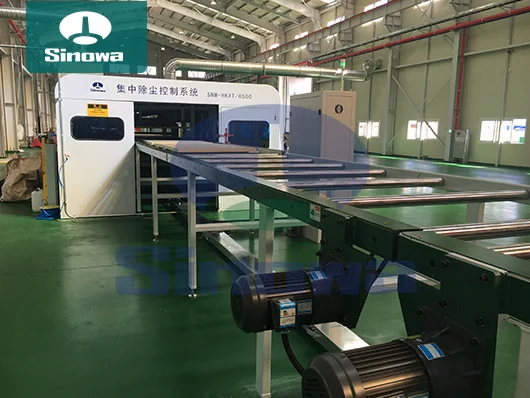
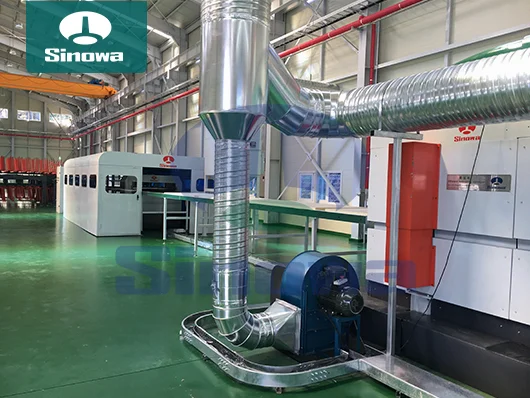
For more than ten years, relying on our innovative manufacturing concept and excellence in quality, reliable and trustworthy service to customers, we cooperate with customers all over the world, exported products to Canada, South Korea, Israel, Australia, the Middle East and other more than 20 countries and regions. contributed to building energy conservation and low-carbon production and have won widespread praise.
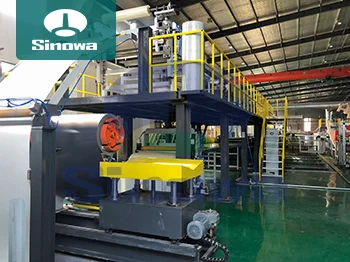
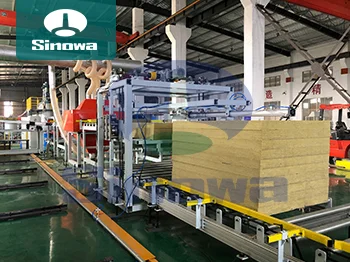
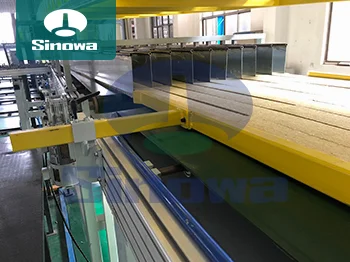
Sinowa has invested outstanding efforts in polyurethane sandwich panel production line, this is why our products are more efficiency, quality, automatic control technology, environmental protection, energy consumption indicators and the appearance and safety protection are comprehensively leading, some subversive design changes in many major technical points, these major innovations make our products excellent in price/performance and user experience.
In the modern construction industry, the demand for efficient, energy-saving, and durable wall materials has been steadily rising, driven by the global emphasis on sustainable development and green building standards. Among various building materials, polyurethane sandwich panels have emerged as a preferred choice for wall applications due to their exceptional combination of thermal insulation, structural strength, lightweight properties, and corrosion resistance. The production of these high-performance panels relies heavily on specialized equipment known as the polyurethane sandwich panel production line for wall, a sophisticated integrated system that combines mechanical, electrical, and chemical processes to ensure consistent quality and high production efficiency.
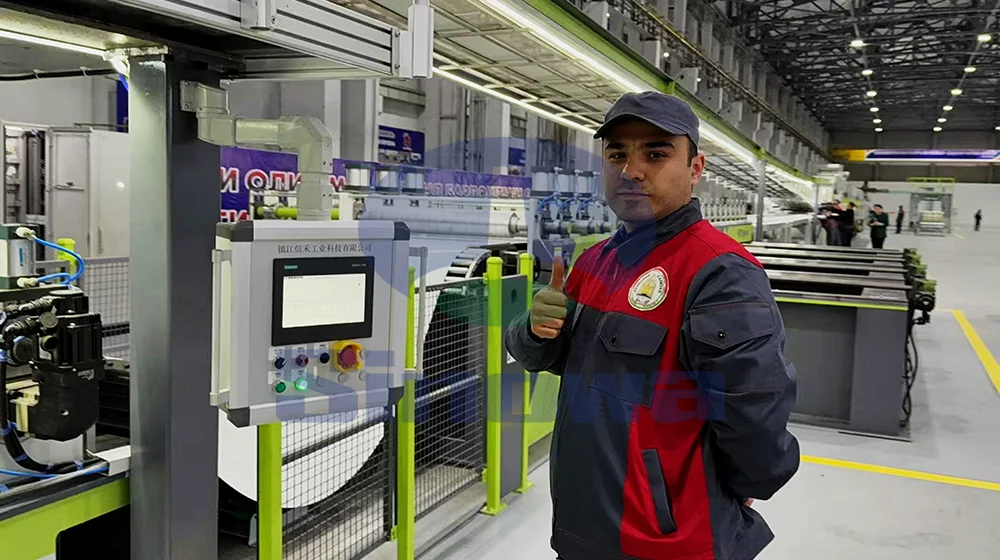
A polyurethane sandwich panel for wall is a composite material consisting of a rigid polyurethane foam core sandwiched between two outer facings, which can be metal sheets (such as color-coated steel, aluminum, or stainless steel), fiberglass, or other structural substrates. The unique structure of these panels grants them superior performance compared to traditional wall materials, including excellent thermal insulation, sound insulation, fire resistance, and weatherability. To mass-produce these panels with uniform quality and dimensional accuracy, the polyurethane sandwich panel production line for wall is designed as a continuous or semi-continuous system that integrates multiple processing steps into a seamless workflow. Unlike discontinuous production methods, continuous production lines minimize material waste, reduce labor intervention, and enable large-scale production, making them the mainstream choice for modern manufacturers.
The polyurethane sandwich panel production line for wall is composed of several core modules, each performing a specific function in the production cycle while maintaining synchronized operation to ensure a smooth workflow. The main components include the uncoiling and leveling unit, surface pretreatment system, foam mixing and pouring unit, composite forming and curing unit, trimming and cutting unit, and automatic stacking and packaging unit. Each module is engineered with precision to meet the strict requirements of polyurethane sandwich panel production, and the integration of these modules forms a highly automated system that reduces human error and improves production efficiency.
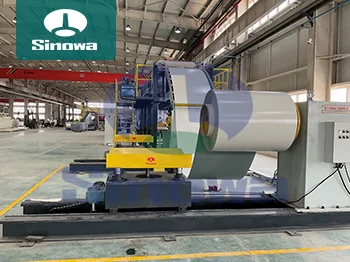
The uncoiling and leveling unit is the starting point of the production line, responsible for feeding the outer facing materials into the system. The facing materials are typically supplied in large coils, which are unrolled by an uncoiling machine. The uncoiled materials then pass through a leveling machine, which uses hydraulic or mechanical methods to eliminate wrinkles, deformations, and internal stress, ensuring a flat and consistent surface for subsequent processes. Precision cutting mechanisms may also be integrated into this unit to adjust the width of the facings according to the desired panel specifications, ensuring that the facings match the required dimensions of the final product. This step is crucial because any unevenness or deviation in the facing materials can affect the bonding between the facing and the foam core, leading to structural defects in the final panel.
Following the uncoiling and leveling process, the facing materials enter the surface pretreatment system. This system is designed to clean and condition the surface of the facings to enhance the bonding strength between the facing and the polyurethane foam core. The pretreatment process typically involves removing contaminants such as oil, dust, and oxide layers from the surface of the facings using high-pressure ion air or chemical cleaning methods. Some advanced production lines may also include a corona treatment or primer coating step to further improve the adhesion performance. This pretreatment step is essential because contaminants on the surface of the facings can prevent effective bonding, leading to delamination between the facing and the core over time, which compromises the structural integrity and service life of the wall panels.
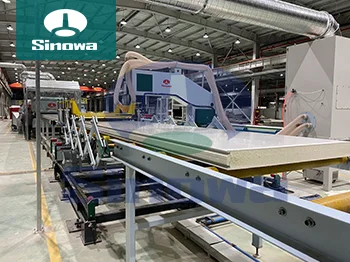
The foam mixing and pouring unit is the core of the production line, responsible for preparing the rigid polyurethane foam core and distributing it evenly between the two outer facings. Polyurethane foam is formed by the chemical reaction of two main components: isocyanate and polyol, along with various additives such as blowing agents, catalysts, flame retardants, and stabilizers. The mixing process is highly controlled to ensure the correct ratio of ingredients, as even minor deviations can affect the foam’s density, thermal insulation performance, and mechanical strength. High-pressure mixing heads are used to thoroughly mix the components, ensuring a homogeneous mixture that reacts quickly to form a rigid foam structure. The mixed foam is then poured evenly onto the lower facing material, which is being conveyed through the production line at a constant speed. The upper facing material is then fed onto the foam layer, forming a sandwich structure that moves forward to the composite forming and curing unit.
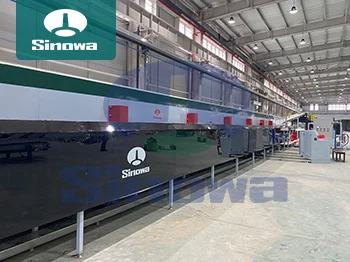
The composite forming and curing unit is where the sandwich structure is pressed and cured to form a solid, integrated panel. This unit typically consists of a double-track laminating machine with heating pressure plates and circulating steel strips on the upper and lower sides, forming an adjustable height forming channel. The sandwich structure passes through this channel, where it is subjected to controlled temperature and pressure. The temperature is precisely regulated to ensure that the polyurethane foam undergoes a complete curing reaction, which is critical for achieving the desired mechanical properties and thermal insulation performance. The curing process usually takes place in a continuous curing tunnel, which is 30 to 50 meters in length, allowing the foam sufficient time to cure and bond firmly with the outer facings. During the curing process, the foam expands to fill the entire space between the two facings, forming a dense, closed-cell structure that provides excellent thermal insulation and sound insulation.
After the curing process, the composite panel moves to the trimming and cutting unit. This unit is equipped with precision cutting tools, such as flying saws or circular saws, which are controlled by servo systems to ensure accurate cutting. The trimming process removes any excess material from the edges of the panel, ensuring that the panel has a smooth, uniform edge. The cutting process then cuts the continuous panel into individual panels of the desired length, with a cutting accuracy of ±1 mm. This precision is essential because wall panels need to fit together seamlessly during installation, and any dimensional deviations can lead to gaps or uneven surfaces, affecting the overall performance of the wall system. Some advanced production lines may also include a surface polishing or cleaning step to remove any burrs or contaminants from the cut edges, further improving the quality of the final product.
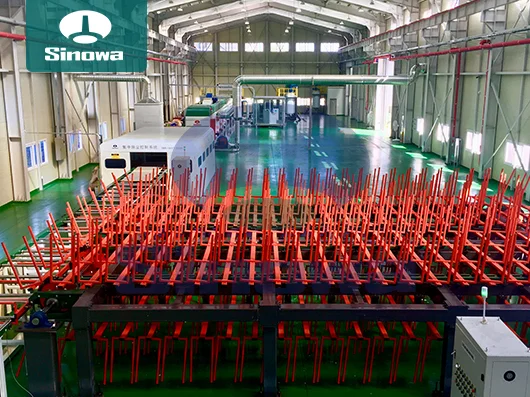
The final step in the production process is the automatic stacking and packaging unit. This unit uses robotic arms or vacuum suction cups to automatically stack the finished panels onto pallets, reducing labor intensity and improving efficiency. The stacked panels are then wrapped with protective film or packaging material to prevent damage during storage and transportation. The packaging also helps to keep the panels clean and free from moisture, ensuring that they maintain their performance until installation. Some production lines may also integrate a quality inspection system at this stage, which uses sensors or visual inspection to check for any defects such as delamination, uneven foam distribution, or dimensional deviations. Defective panels are removed from the production line to ensure that only high-quality products are delivered to customers.
The polyurethane sandwich panel production line for wall offers numerous advantages over traditional production methods, making it an indispensable tool for modern manufacturers. One of the key advantages is its high degree of automation, which reduces the need for manual labor and minimizes human error. Automated systems can operate continuously for long periods, improving production efficiency and reducing production costs. The continuous production process also ensures that the panels have consistent quality and dimensional accuracy, as each step is controlled by precision equipment and strict quality control measures. Another advantage is the flexibility of the production line, which can be adjusted to produce panels of different sizes, thicknesses, and specifications to meet the diverse needs of different construction projects. For example, the line can be adjusted to produce panels with different core densities, facing materials, and surface finishes, making it suitable for a wide range of wall applications.
In addition to automation and flexibility, the polyurethane sandwich panel production line for wall also offers environmental benefits. The production process uses environmentally friendly raw materials and additives, and advanced lines are equipped with dust removal and waste treatment systems to reduce environmental pollution. The polyurethane foam core is a recyclable material, and some production lines can recycle and reuse waste foam, reducing material waste and promoting sustainable production. Furthermore, the energy efficiency of the production line is continuously improved through the adoption of energy-saving technologies, such as heat recovery systems and variable frequency drives, which reduce energy consumption and lower carbon emissions.
The polyurethane sandwich panels produced by this line are widely used in various construction applications, including industrial plants, logistics warehouses, commercial buildings, residential buildings, modular houses, and cold storage facilities. In industrial plants and logistics warehouses, the panels are used as external walls and internal partitions, providing excellent thermal insulation and sound insulation, which helps to maintain a stable indoor environment and reduce energy consumption. In commercial buildings, the panels are valued for their lightweight properties and aesthetic appeal, allowing for flexible design and rapid construction. In residential buildings, the panels are used as external wall insulation systems, helping to improve the energy efficiency of the building and reduce heating and cooling costs. In cold storage facilities, the panels’ excellent thermal insulation performance helps to maintain low temperatures, reducing energy consumption and ensuring the quality of stored goods.
The performance of the polyurethane sandwich panels produced by the production line is closely related to the design and operation of the line. The thermal insulation performance of the panels is determined by the density and closed-cell rate of the polyurethane foam core, which is controlled by the mixing ratio of the raw materials and the curing conditions. The mechanical strength of the panels is determined by the quality of the facing materials and the bonding strength between the facing and the core, which is influenced by the surface pretreatment process and the forming pressure. The fire resistance of the panels can be improved by adding flame retardants to the foam mixture, and the weatherability is enhanced by choosing high-quality facing materials with anti-corrosion and anti-ultraviolet properties.
As the construction industry continues to develop towards green, energy-saving, and intelligent directions, the polyurethane sandwich panel production line for wall is also undergoing continuous technological innovation and upgrading. One of the main development trends is the integration of intelligent technologies, such as the Internet of Things (IoT), big data, and artificial intelligence (AI). Intelligent production lines are equipped with sensors and controllers that can monitor the production process in real-time, collect data on parameters such as temperature, pressure, and mixing ratio, and make automatic adjustments to ensure optimal production conditions. This not only improves production efficiency and product quality but also enables remote monitoring and fault diagnosis, reducing maintenance costs and downtime.
Another development trend is the improvement of energy efficiency and environmental protection. Manufacturers are continuously optimizing the production process to reduce energy consumption and waste emissions. For example, the adoption of high-efficiency mixing heads and heat recovery systems reduces energy consumption, while the use of environmentally friendly blowing agents and recyclable materials reduces environmental impact. In addition, the development of modular production lines allows for easier installation, maintenance, and expansion, making it more convenient for manufacturers to adapt to changing market demands.
The miniaturization and customization of production lines are also emerging trends. With the increasing demand for small-batch, customized wall panels, some manufacturers are developing small-scale, flexible production lines that can produce panels of different specifications with minimal adjustment. These miniaturized lines are suitable for small and medium-sized enterprises, reducing the initial investment and operating costs. At the same time, the customization of production lines allows manufacturers to meet the specific needs of different customers, such as panels with special surface finishes, core densities, or fire resistance levels.
In conclusion, the polyurethane sandwich panel production line for wall is a sophisticated and essential equipment in the modern construction material manufacturing industry. It integrates multiple advanced technologies to produce high-performance polyurethane sandwich panels that meet the growing demand for energy-saving, durable, and environmentally friendly wall materials. The production line’s high automation, flexibility, and environmental friendliness make it a preferred choice for manufacturers, while the excellent performance of the produced panels makes them widely used in various construction applications. As technology continues to advance, the polyurethane sandwich panel production line for wall will continue to evolve, becoming more intelligent, energy-efficient, and flexible, contributing to the sustainable development of the construction industry. With the continuous improvement of global building standards and the increasing emphasis on green construction, the demand for polyurethane sandwich panels and their production lines will continue to grow, creating new opportunities for manufacturers and promoting the innovation and development of the industry.
« Polyurethane Sandwich Panel Production Line For Wall » Update Date: 2026/4/17
- Customized Glass Wool Line
- PU Sandwich Panel Making Machine For Sale
- Custom Sandwich Panel Foam Making Machine
- High-quality Sandwich Panel Foam Making Machine
- Continuous Sandwich Panel Line For Building
- High-end PU Insulation Board Production Line
- High-end Sandwich Panel Foam Production Line
- PU Sandwich Panel Production Line For Sale
- Cheap Cold Room Sandwich Panel Production Line
- Fully Automatic PU Sandwich Panel Production Line Price
- PUF Panel Manufacturing Machine Factory
- Sandwich Roof Panel Production Line Factory
- Sandwich Panel Production Line Manufacturer
- Fully Automatic Sandwich Panel Making Machine In China
- High-end Cold Storage Sandwich Panel Production Line
- PIR Insulated Panel Production Line Design
- High Efficiency PU Insulation Board Production Line
- Polyurethane Sandwich Panel Machinery For Wall
- Sandwich Panel Making Equipment Supplier
- PU Board Production Line Supplier
- Links:
- Sandwich Panel Continuous Production Line
- Automatic and Continuous Sandwich Panel Production Line
- Cheap and Low Price Sandwich Panel Production Line
- China Sandwich Panel Production Line Factory
- Color Steel Sandwich Panel Production Line For Cold Storage
- Continuous Composite Foam Sandwich Panel Production Line
- Continuous Production Line For Rockwool and Mineral Wool Sandwich Panels
- Continuous PU Phenolic Insulation Panel Production Line
- Continuous PU PIR Sandwich Panel Production Line
- Continuous PUF PUR Sandwich Panel Production Line
- Continuous Sandwich Panel Production Line For Roof and Wall
- Customized and Design Sandwich Panel Production Line
- Decorative Sandwich Panel Production Line For Glass Wool Boards
- High Quality Sandwich Panel Production Line For Sale
- Polyurethane(PU) Sandwich Panel Production Line
- Sandwich Panel Production Line Manufacturer and Supplier