
Sandwich Panel Production Line Supplier
Sinowa is a well-known manufacturer and technical service provider of high-end sandwich panel production line, learn more about sandwich panel production line supplier, please contact Sinowa's technical engineer, tell us what you need, we will contact you as soon as possible!
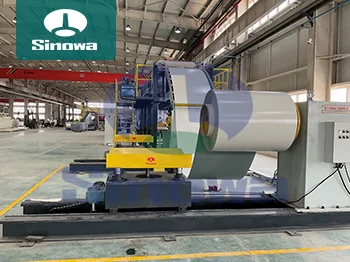
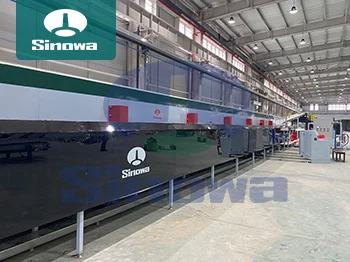
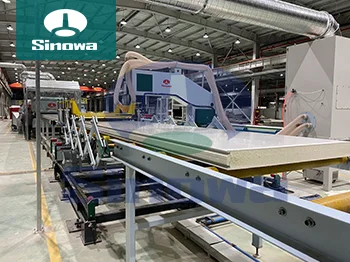
Sinowa is committed to the development and manufacturing of high-end and high-efficiency sandwich panel production line. Our sandwich panel production line are leading the way in efficiency, automatic control, human-computer interaction, environmental protection and energy consumption. Using system integration and bus control technology, it realizes the automatic integrated linkage control of the entire sandwich panel production line, and can achieve remote interactive communication, which has the world-class level and a comprehensive leading high-performance sandwich panel production line in the market.
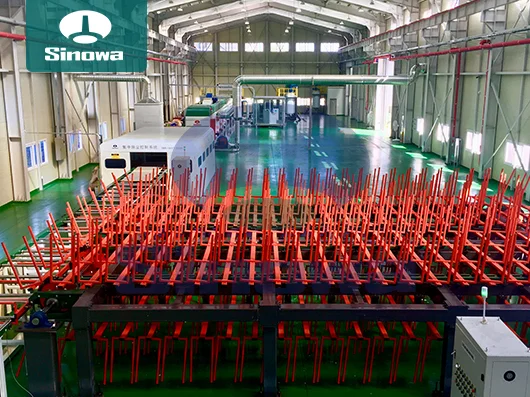
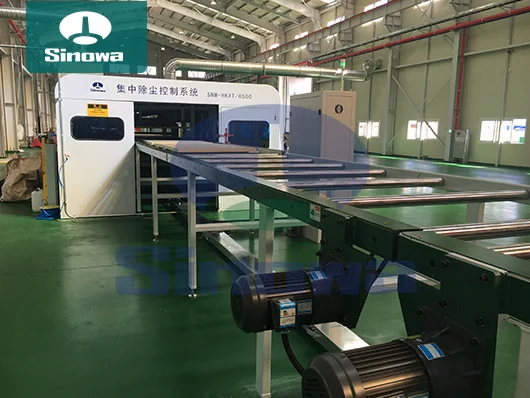
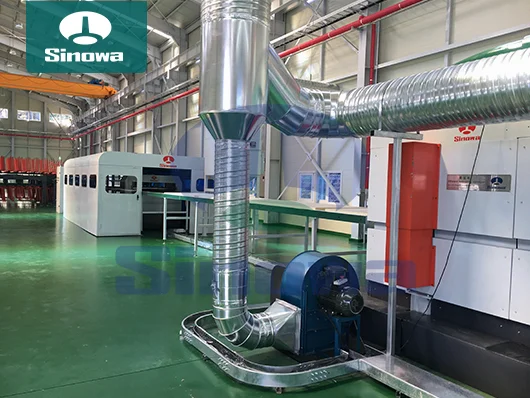
For more than ten years, relying on our innovative manufacturing concept and excellence in quality, reliable and trustworthy service to customers, we cooperate with customers all over the world, exported products to Canada, South Korea, Israel, Australia, the Middle East and other more than 20 countries and regions. contributed to building energy conservation and low-carbon production and have won widespread praise.
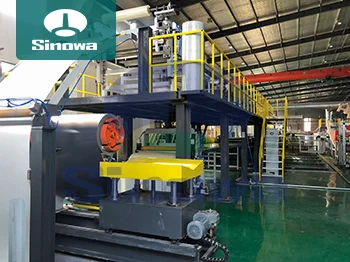
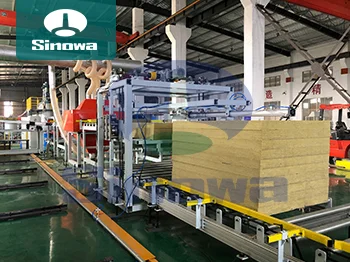
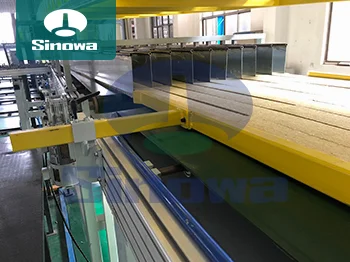
Sinowa has invested outstanding efforts in sandwich panel production line, this is why our products are more efficiency, quality, automatic control technology, environmental protection, energy consumption indicators and the appearance and safety protection are comprehensively leading, some subversive design changes in many major technical points, these major innovations make our products excellent in price/performance and user experience.
In the modern construction and manufacturing industry, sandwich panels have become an indispensable material due to their excellent comprehensive performance, and the demand for high-quality sandwich panel production lines is constantly rising. As a professional supplier focusing on sandwich panel production line research, development, and supply, we are committed to providing integrated and efficient production solutions that meet the diverse needs of different industries, helping enterprises improve production efficiency, reduce operational costs, and enhance product competitiveness. Our focus is on integrating advanced technology, reliable quality, and flexible customization to create production lines that adapt to the changing market demands, covering various types of sandwich panels and meeting the production needs of different scales of enterprises.
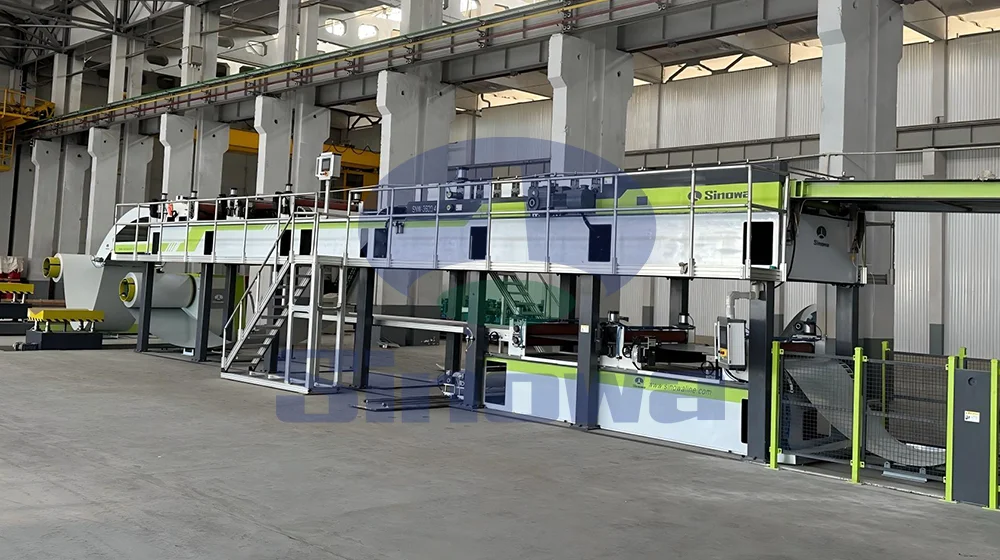
A high-quality sandwich panel production line is a complex integrated system that combines mechanical engineering, electrical control, hydraulic technology, and material processing science, and each component plays a crucial role in ensuring the stability and efficiency of the production process. The core of the production line lies in its modular design, which allows each subsystem to work in harmony while ensuring easy maintenance and flexible adjustment. From the raw material feeding system to the final product stacking, every link is carefully designed and optimized to achieve a seamless connection between processes, minimizing manual intervention and reducing the impact of human factors on product quality. This integrated design not only improves production efficiency but also ensures the consistency of product specifications and performance, laying a solid foundation for enterprises to produce high-quality sandwich panels.
The raw material processing system is the starting point of the sandwich panel production line, and its performance directly affects the quality of the final product. We design the feeding system according to the characteristics of different raw materials, including chain plate conveyors and lifting devices equipped with frequency conversion control technology, which can minimize vibration during transportation and prevent damage to raw materials such as rock wool slabs or metal coils. For metal raw materials such as color steel plates or aluminum coils, the uncoiling system adopts a double winding machine design, which can process upper and lower panel materials simultaneously, and is equipped with an automatic correction device to ensure the alignment accuracy of materials, with an error control within ±1 mm. In addition, the pre-treatment cleaning device in the feeding system can effectively remove surface oil stains and impurities, enhancing the bonding strength between the surface layer and the core material, and ensuring the structural stability of the sandwich panels.
The core material processing system is another key part of the production line, which is designed to adapt to different types of core materials such as polyurethane (PU), rock wool, phenolic (PF), and expanded polystyrene (EPS). For rock wool core materials, the automatic slitting system is equipped with precision rolling blades driven by an AC asynchronous motor, with a tool spacing adjuster that can flexibly adjust the strip width according to production requirements, and the slitting gap is controlled to approximately 3.3 mm to ensure clean and smooth cuts and reduce material waste. After slitting, the rock wool strips are transferred to a 90-degree flipping device, which reorients the strips through continuous rotary motion to make their fiber direction vertical, thereby significantly enhancing the structural strength and load-bearing capacity of the final sandwich panels. For polyurethane core materials, the high-pressure foaming machine with a working pressure of 150-250 bar is adopted, equipped with an accurate metering system for polyol and isocyanate, with a proportion error of less than 1%, and a temperature control system to maintain the optimal reaction temperature of raw materials at 18-25 ℃, ensuring the uniformity and stability of the foam core.
The forming and composite system is the core link of the sandwich panel production line, which determines the appearance, structure, and performance of the final product. The forming system is equipped with multiple sets of high-precision forming rollers, usually 16-24 sets, which are made of CNC processed hardened steel, with a service life of up to 5 million meters. The quick replaceable mold system allows enterprises to switch between different plate types and thicknesses quickly, adapting to the production needs of various specifications of sandwich panels. The composite compression system adopts a double belt continuous press, with a pressure range of 5-15 tons per square meter, and is equipped with an electric heating or thermal oil heating system to promote the rapid solidification of the core material and enhance the bonding strength between the surface layer and the core material. The speed synchronization control system ensures the flatness of the upper and lower board surfaces, avoiding unevenness or warping of the panels.
The cutting and post-processing system is responsible for cutting the continuous sandwich panels into the required length and conducting edge treatment to ensure the dimensional accuracy and appearance quality of the products. The cutting system adopts a hydraulic or servo-driven high-speed flying saw, with a cutting accuracy of ±1 mm and an angle error of less than 0.5°, which can realize automatic cutting without stopping the production line, greatly improving production efficiency. The automatic trimming machine and edge sealing device can effectively trim the edges of the panels and seal the gaps, improving the fire resistance and waterproof performance of the sandwich panels. In addition, the automatic stacker crane can stack the finished panels to a height of up to 2 meters, reducing manual labor and improving the efficiency of product storage and transportation. The automatic waste recycling device can collect and reuse the waste generated during the production process, reducing material waste and realizing green production.
Intelligent control is an important feature of modern sandwich panel production lines, and we integrate advanced PLC + human-machine interface control systems into the production lines to realize full-process automatic control. The control system has a fault self-diagnosis function, which can quickly identify and prompt faults in each link, reducing the time for fault handling and ensuring the continuous and stable operation of the production line. Operators can monitor the production process in real-time through the touch screen, adjust parameters such as production speed, temperature, and pressure, and realize remote interaction and control, which greatly improves the convenience and efficiency of operation. The automatic thickness adjustment system adopts a servo lifting mechanism, which replaces the traditional hydraulic control, improving the adjustment accuracy by 30%, and ensuring the consistency of the thickness of each sandwich panel.
We understand that different enterprises have different production needs due to factors such as production scale, product type, and application field, so we provide flexible customization services to tailor production lines according to the specific needs of each customer. Whether it is a small-scale production line suitable for small and medium-sized enterprises with a daily output of several hundred square meters, or a large-scale continuous production line suitable for large enterprises with a daily output of 1500-4500 square meters (8 hours), we can provide personalized design solutions. In terms of product specifications, the production line can produce sandwich panels with a thickness range of 30-200 mm, a width of 600-1200 mm (customizable), and a length of up to 16 meters, meeting the needs of different application scenarios. In addition, we can also configure special equipment such as steel wire mesh welding machines according to customer needs to enhance the bending strength of the panels, making them suitable for building load-bearing structures.
The sandwich panels produced by our production lines are widely used in various fields such as construction, cold chain logistics, industrial manufacturing, and special environments. In the construction field, they are used as exterior walls, roofs, partitions, and ceilings of industrial plants, warehouses, high-rise buildings, and residential buildings, with excellent thermal insulation, sound insulation, and fire resistance performance, which can improve the energy efficiency and comfort of buildings. In the cold chain logistics field, polyurethane sandwich panels produced by the production lines are used as insulation materials for cold storage, refrigerated trucks, and containers, which can maintain a constant temperature in an environment of -40 ℃ to 120 ℃, ensuring the quality and safety of goods. In the industrial manufacturing field, the sandwich panels are used as enclosure materials for industrial plants, garages, and mobile homes, as well as insulation panels for various refrigeration and freezing equipment, meeting the diverse needs of industrial production. In special environments such as purification workshops, chemical and energy facilities, the sandwich panels are favored due to their excellent insulation performance and fire safety, providing reliable protection for these environments.
In addition to providing high-quality production lines, we also pay great attention to the after-sales service and technical support for the production lines, ensuring that customers can use the equipment stably and efficiently. We have a professional technical team with rich experience in equipment installation, commissioning, and maintenance, which can provide on-site installation and commissioning services for customers, and conduct professional training for operators to help them master the operation skills, daily maintenance methods, and common fault handling methods of the production line. We also establish a detailed maintenance plan for customers, including daily inspection, weekly maintenance, monthly maintenance, quarterly maintenance, and annual maintenance, guiding customers to conduct scientific maintenance of the equipment, extending the service life of the equipment, and reducing maintenance costs.
Daily inspection is the foundation of fault prevention, which needs to implement the three links of "before shift, during shift, and after shift". Before the shift, operators need to check whether the power supply is connected normally, whether the fasteners of each component are loose, whether the tension and wear of belts and chains are normal, and whether the signals of sensors and limit switches are sensitive, and add specified lubricants to the standard scale. During the shift, operators need to observe the operation sound, temperature, and material conveying status of the equipment in real-time, prohibit overloading operation, and stop the machine immediately to handle any abnormalities. After the shift, operators need to clean the residual materials on the surface and inside of the equipment, close the power supply and air source, sort out tools, and record the abnormal operation of the day.
Regular maintenance is an important guarantee for the stable operation of the production line. Weekly maintenance focuses on cleaning transmission components such as chains, gears, and rollers, removing oil stains and impurities, checking the alignment of pulleys and sprockets, and testing the effectiveness of emergency stop buttons and safety protection devices. Monthly maintenance includes replacing lubricating oil for key parts such as motor bearings and reducers, checking for aging and damage of electrical lines, and calibrating the accuracy of measuring instruments and sensors. Quarterly maintenance involves disassembling vulnerable parts, checking the internal wear, cleaning filters, and testing the insulation resistance of the motor. Annual maintenance includes fully disassembling the core components of the equipment, replacing severely worn parts, recalibrating the accuracy of the equipment, and conducting dust and moisture-proof treatment on the electrical system.
Lubrication management is crucial to reducing component wear. We guide customers to select the appropriate type of lubricant according to different components, avoid mixing different brands or types of lubricants, control the dosage of lubricants, and clean the components before lubrication to prevent the formation of oil sludge caused by excessive lubrication or increased wear caused by insufficient lubrication. For vulnerable parts such as belts, chains, and rollers, we help customers establish a dynamic management mechanism, establish an inventory list, regularly check the wear degree, and replace them in time when the wear exceeds the design threshold, and analyze the wear reasons to optimize the operation and maintenance plan.
We also pay attention to the energy conservation and environmental protection of the production lines, integrating a variety of energy-saving and environmental protection technologies into the design and production process. The production lines adopt an energy-efficient design with adjustable settings, and the average energy consumption is 0.8-1.2 kwh/㎡, which can effectively reduce the energy consumption of enterprises. In the foaming process, we use pentane foaming technology to replace traditional fluorine, with a zero ODP value, which is environmentally friendly and pollution-free. For cement foam insulation board production lines, we use industrial waste such as fly ash as raw materials, with no wastewater or exhaust emissions, realizing the recycling of resources and meeting the requirements of green production.
As a professional sandwich panel production line supplier, we have always adhered to the concept of customer-centricity, focusing on technological innovation and quality improvement, and continuously optimizing our products and services. We closely follow the development trend of the industry, pay attention to the research and application of new technologies, new materials, and new processes, and constantly improve the performance and functionality of the production lines. We have rich experience in the design, production, and after-sales service of sandwich panel production lines, and have provided high-quality production solutions for many enterprises in different industries, winning the trust and praise of customers.
In the future, we will continue to uphold the spirit of innovation and pragmatism, continue to invest in research and development, improve the technical content and added value of our products, and provide more high-quality, efficient, energy-saving, and environmental protection sandwich panel production lines for customers around the world. We will also strengthen cooperation with customers, understand their actual needs in depth, provide more personalized and professional solutions, and work together with customers to promote the healthy and sustainable development of the sandwich panel industry.
« Sandwich Panel Production Line Supplier » Update Date: 2026/4/13
Tags: Continuous PUR Sandwich Panel Production Line , Continuous PUF Sandwich Panel Production Line , Insulated Sandwich Panel Production Line , PUF Sandwich Panel Production Line , Wall Sandwich Panel Production Line , Roof Sandwich Panel Production Line , Cold Room Sandwich Panel Production Line , Cold Storage Sandwich Panel Production Line , Metal Sandwich Panel Production Line , Metal Carved Insulated Sandwich Panel Production Line , Isolation Sandwich Panel Production Line , Corrugated Sandwich Panel Production Line , Fully Automatic Rock Wool Sandwich Panel Production Line , Fully Automatic PU Sandwich Panel Production Line , Foam Sandwich Panel Production Line , Decorative PU Sandwich Panel Production Line , Continuous PU Sandwich Panel Production Line , PUR Sandwich Panel Production Line , PIR Sandwich Panel Production Line , Sandwich Panel Production Line , Soundproofing Sandwich Panel Production Line , Rock Wool Sandwich Panel Production Line , Mineral Wool Sandwich Panel Production Line , Rockwool Sandwich Panel Production Line , Glass Wool Sandwich Panel Production Line , Continuous Sandwich Panel Production Line , Composite Sandwich Panel Production Line , Color Steel Sandwich Panel Production Line , Automatic Sandwich Panel Production Line , Polyurethane Sandwich Panel Production Line , PU Sandwich Panel Production Line ,
- Sandwich Panel Production Line Factory
- High-tech PUF Panel Making Machine
- Continuous PUF Panel Production Line For Sale
- Polyurethane Sandwich Panel Production Line Supplier
- Decorative PU Sandwich Panel Production Line Price
- High-end Glass Wool Equipment
- Sandwich Wall Panel Production Line From China
- Cheap PUR Sandwich Panel Production Line
- Polyurethane Insulation Panel Production Line
- Cheap Isolation PU Sandwich Panel Line
- Foam Core Sandwich Panel Line Supplier
- PIR Sandwich Panel Machine Design
- Polyurethane Sandwich Panel Machinery
- Decorative Sandwich Panel Line On Sales
- High-tech Sandwich Roof Panel Production Line
- High-end Color Steel Sandwich Panel Production Line
- Cheap Polyurethane Sandwich Panel Machine
- Wall Sandwich Panel Production Line Factory
- Insulated Sandwhich Panel Production Line Design
- Cheap Polyurethane Sandwich Panel Manufacturing Line
- Links:
- Sandwich Panel Continuous Production Line
- Automatic and Continuous Sandwich Panel Production Line
- Cheap and Low Price Sandwich Panel Production Line
- China Sandwich Panel Production Line Factory
- Color Steel Sandwich Panel Production Line For Cold Storage
- Continuous Composite Foam Sandwich Panel Production Line
- Continuous Production Line For Rockwool and Mineral Wool Sandwich Panels
- Continuous PU Phenolic Insulation Panel Production Line
- Continuous PU PIR Sandwich Panel Production Line
- Continuous PUF PUR Sandwich Panel Production Line
- Continuous Sandwich Panel Production Line For Roof and Wall
- Customized and Design Sandwich Panel Production Line
- Decorative Sandwich Panel Production Line For Glass Wool Boards
- High Quality Sandwich Panel Production Line For Sale
- Polyurethane(PU) Sandwich Panel Production Line
- Sandwich Panel Production Line Manufacturer and Supplier