
Continuous PU Sandwich Panel Line For Clean Room
Sinowa is a well-known manufacturer and technical service provider of high-end continuous pu sandwich panel line, learn more about continuous pu sandwich panel line for clean room, please contact Sinowa's technical engineer, tell us what you need, we will contact you as soon as possible!
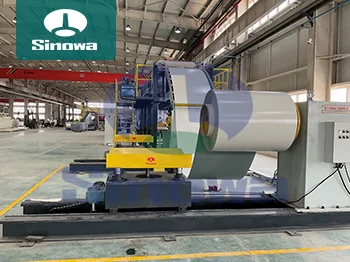
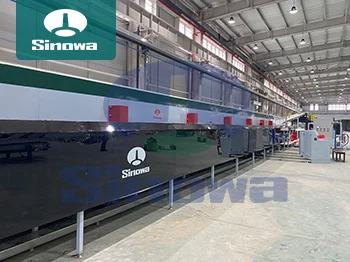
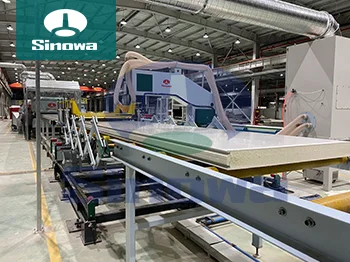
Sinowa is committed to the development and manufacturing of high-end and high-efficiency continuous pu sandwich panel line. Our continuous pu sandwich panel line are leading the way in efficiency, automatic control, human-computer interaction, environmental protection and energy consumption. Using system integration and bus control technology, it realizes the automatic integrated linkage control of the entire continuous pu sandwich panel line, and can achieve remote interactive communication, which has the world-class level and a comprehensive leading high-performance continuous pu sandwich panel line in the market.
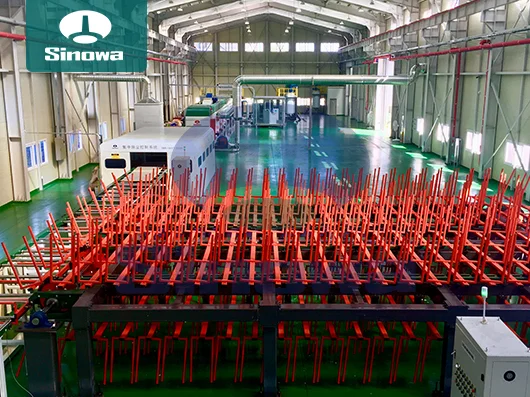
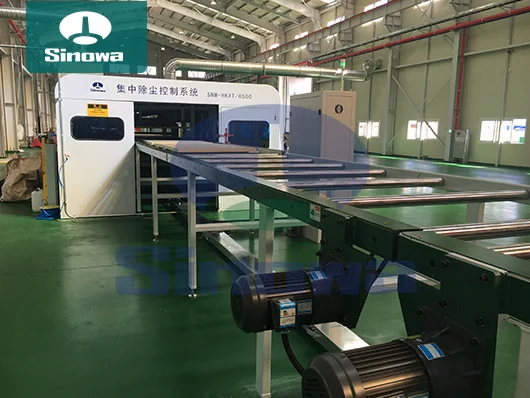
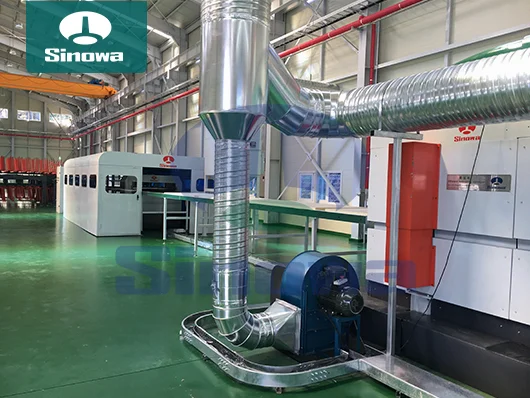
For more than ten years, relying on our innovative manufacturing concept and excellence in quality, reliable and trustworthy service to customers, we cooperate with customers all over the world, exported products to Canada, South Korea, Israel, Australia, the Middle East and other more than 20 countries and regions. contributed to building energy conservation and low-carbon production and have won widespread praise.
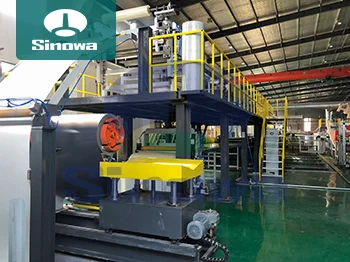
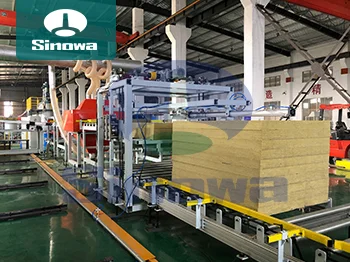
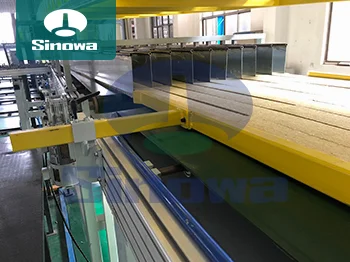
Sinowa has invested outstanding efforts in continuous pu sandwich panel line, this is why our products are more efficiency, quality, automatic control technology, environmental protection, energy consumption indicators and the appearance and safety protection are comprehensively leading, some subversive design changes in many major technical points, these major innovations make our products excellent in price/performance and user experience.
In the modern industrial landscape, clean rooms have become indispensable hubs for industries such as pharmaceuticals, electronics, food processing, and precision manufacturing. The integrity of these controlled environments relies heavily on the quality of their enclosure structures, where the demand for materials that offer superior insulation, airtightness, structural stability, and ease of sanitization has driven the development of advanced manufacturing technologies. Among these, the continuous PU sandwich panel line stands out as a cornerstone in producing the specialized cladding materials that meet the stringent requirements of clean room construction. This production system integrates precision engineering, automated processes, and material science to create panels that not only form the physical barrier of clean rooms but also contribute significantly to maintaining the controlled conditions essential for high-precision operations.
The fundamental advantage of a continuous PU sandwich panel line lies in its ability to produce homogeneous, high-performance panels in a streamlined, efficient manner. Unlike discrete production methods, which are prone to inconsistencies and lower throughput, continuous production ensures that each panel maintains uniform properties throughout its structure, from the core to the surface layers. PU, or polyurethane, serves as the ideal core material for clean room applications due to its exceptional thermal insulation properties, low density, and excellent sealing capabilities. When combined with appropriate facing materials such as galvanized steel, aluminum, or stainless steel through a continuous line, the resulting sandwich panels offer a synergistic blend of functionality and durability that is difficult to achieve with alternative materials or production techniques.
The operation of a continuous PU sandwich panel line involves a series of interconnected processes, each meticulously controlled to ensure the final product meets the exacting standards of clean room use. The process begins with the preparation and handling of the facing materials. These facing materials, which form the outer surfaces of the sandwich panels, undergo careful inspection and pre-treatment to remove any contaminants, oils, or oxides that could compromise adhesion to the PU core. Pre-treatment typically includes degreasing, phosphating, or passivation, followed by a drying process to ensure the surfaces are clean and dry. This step is critical for clean room applications, as any residual contaminants on the panel surfaces could become sources of particle emission or microbial growth once installed in the controlled environment.
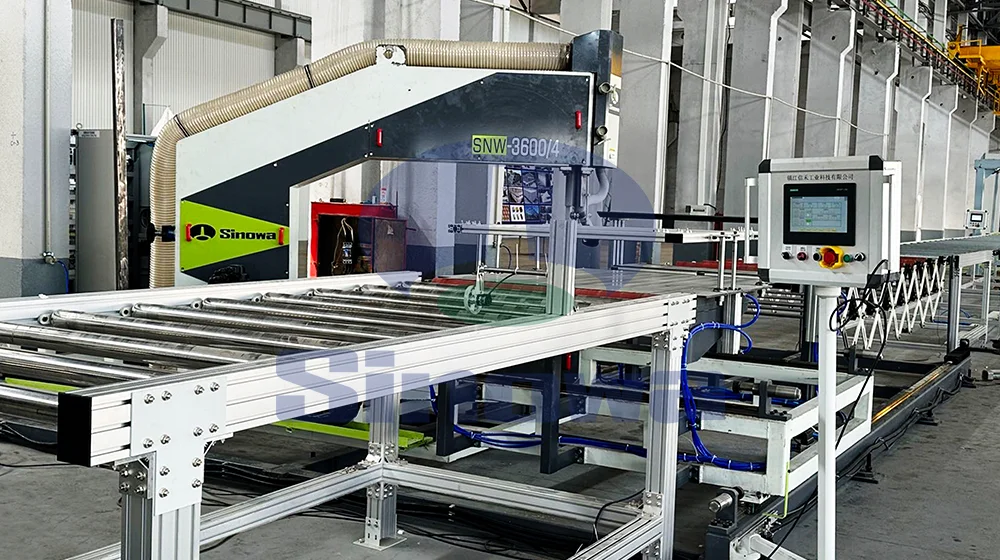
After pre-treatment, the facing materials are fed into the line via unwinding units equipped with tension control systems. These systems ensure that the facing materials are fed at a consistent speed and tension, preventing wrinkling, stretching, or misalignment during the composite process. Depending on the specific requirements of the clean room, the facing materials may also undergo pre-heating to optimize the bonding process with the PU core. Pre-heating helps to activate the adhesive properties of the materials and ensures that the PU foam, when injected, cures uniformly at the interface, creating a strong, seamless bond that enhances the panel's airtightness.
The core of the continuous production process is the foaming and lamination stage, where the PU core is formed and bonded to the facing materials. This stage begins with the precise metering and mixing of the PU raw materials, including polyols, isocyanates, catalysts, foaming agents, and additives such as flame retardants. The metering system, typically controlled by advanced computerized systems, ensures that the raw materials are mixed in exact proportions to achieve the desired foam properties, such as density, thermal conductivity, and compressive strength. For clean room panels, the foam density is usually controlled within the range of 30-45 kg/m³, balancing structural integrity with lightweight properties.
Once mixed, the PU foam is continuously extruded onto the lower facing material as it moves through the production line. The upper facing material is then fed over the foam, and the entire assembly is passed through a pair of continuous belts in a lamination unit. These belts apply uniform pressure to the assembly, ensuring that the foam spreads evenly and adheres tightly to both facing materials. The lamination unit is also equipped with temperature control systems that maintain the optimal curing temperature for the PU foam, typically between 45 and 60 degrees Celsius. This controlled curing environment ensures that the foam develops its full insulation and structural properties, with a closed-cell structure that minimizes air permeability. The closed-cell content of the PU core, often exceeding 95%, is a key attribute for clean room panels, as it prevents moisture absorption and reduces the risk of microbial growth within the core.
Following lamination and initial curing, the continuous panel web moves to the trimming and cutting stage. Here, precision cutting tools trim the edges of the panel to the required width, ensuring clean, straight edges that facilitate seamless installation. The panel web is then cut into individual panels of predetermined lengths using automated tracking saws that move in synchronization with the line speed. This precision cutting eliminates dimensional variations, ensuring that each panel fits perfectly during assembly, which is crucial for maintaining the airtightness of the clean room envelope. Any waste material generated during trimming is typically collected and recycled, contributing to the sustainability of the production process.
After cutting, the panels undergo a post-curing process to ensure the PU core is fully cured and stable. Post-curing may involve passing the panels through a controlled environment where temperature and humidity are regulated to accelerate the curing process, or simply allowing them to cure naturally for a specified period. Fully cured panels exhibit enhanced mechanical properties, including improved compressive strength (typically ≥150 kPa) and bending resistance, making them suitable for use in both wall and ceiling applications in clean rooms. The surface of the panels is also inspected at this stage to ensure it is smooth, free of defects such as dents, scratches, or uneven coating, which could harbor particles or impede cleaning.
The panels produced by a continuous PU sandwich panel line offer a range of properties that make them uniquely suited for clean room environments. One of the most critical properties is their thermal insulation performance. With a thermal conductivity as low as 0.022-0.024 W/(m·K), PU core panels provide exceptional insulation, reducing heat transfer between the clean room and the external environment. This minimizes the energy consumption required to maintain the constant temperature and humidity levels within the clean room, contributing to operational efficiency and cost savings. In addition, the excellent insulation properties help to prevent condensation, which can lead to moisture buildup and microbial growth—two factors that are detrimental to clean room integrity.
Airtightness is another key attribute of panels produced by continuous PU sandwich panel lines. The seamless bonding between the PU core and the facing materials, combined with the precision-cut edges and specialized joining systems, creates a highly airtight barrier. This prevents the ingress of external air, which may contain dust, particles, or contaminants, and also minimizes the leakage of conditioned air from the clean room. For clean rooms that require strict control over particle counts, such as ISO 5 or higher classification, this airtightness is essential to maintaining the required cleanliness levels. The panels' airtightness also contributes to energy efficiency by reducing the load on the HVAC (Heating, Ventilation, and Air Conditioning) systems.
The surface properties of the panels are tailored to meet the sanitization requirements of clean rooms. The facing materials, often coated with specialized finishes such as epoxy or fluorocarbon, are smooth, non-porous, and resistant to chemicals. This allows for easy cleaning and disinfection using the harsh chemicals often required in pharmaceutical and food processing clean rooms, without damaging the panel surfaces. The smooth surface also minimizes particle accumulation, as there are no crevices or uneven areas where dust or microbes can hide. In some cases, the facing materials may be treated with anti-static coatings to prevent electrostatic discharge, which is critical in electronic manufacturing clean rooms where static electricity can damage sensitive components.
Structural stability is another important consideration for clean room panels, as they must support their own weight, as well as any additional loads such as ceiling fixtures, ductwork, or equipment. Panels produced by continuous lines exhibit consistent structural properties, with a bending load capacity of 1.5-2.0 kN/m², making them suitable for both wall and ceiling applications. Their lightweight nature, typically 10-15 kg/m², reduces the overall load on the clean room structure, allowing for more flexible design and potentially lower construction costs. Despite their light weight, the panels offer excellent impact resistance, protecting the clean room from damage during installation or daily operations.
The versatility of continuous PU sandwich panel lines allows for customization to meet the specific needs of different clean room applications. For example, in pharmaceutical clean rooms where fire safety is a top priority, the PU core can be formulated with flame retardants to achieve a high level of fire resistance. In food processing clean rooms, where corrosion resistance is essential due to frequent cleaning with water and chemicals, stainless steel facing materials may be used. The line can also produce panels of varying thicknesses (typically 20-120 mm) and widths (up to 1200 mm), allowing for tailored insulation and structural performance based on the specific requirements of the clean room.
In addition to producing high-quality panels, continuous PU sandwich panel lines offer significant operational advantages for manufacturers. The automated nature of the line reduces the need for manual intervention, minimizing the risk of human error and ensuring consistent product quality. The high throughput of continuous production, which can reach up to 4300 square meters per hour for certain configurations, allows manufacturers to meet large-scale orders efficiently. This efficiency is particularly beneficial for clean room construction projects, which often require large quantities of panels to be delivered within tight timelines. The modular design of many continuous lines also allows for easy expansion or modification, enabling manufacturers to adapt to changing market demands or new product specifications.
The integration of advanced control systems into continuous PU sandwich panel lines further enhances their performance and reliability. These control systems monitor and adjust key process parameters such as temperature, pressure, line speed, and material mixing ratios in real time, ensuring that the production process remains within optimal limits. Operators can access real-time data and make adjustments remotely, improving operational efficiency and reducing downtime. The control systems also include safety features such as emergency stop buttons and safety interlocks, ensuring the safety of personnel and equipment.
When it comes to the installation of PU sandwich panels in clean rooms, the benefits of continuous production become even more apparent. The precise dimensions and consistent quality of the panels allow for quick and easy installation, reducing construction time and labor costs. The panels are typically installed using specialized joining systems such as tongue-and-groove connections or concealed fasteners, which further enhance airtightness and reduce the number of potential particle traps. The lightweight panels can be installed without the need for heavy lifting equipment, making the installation process safer and more efficient. Once installed, the panels require minimal maintenance, contributing to the long-term operational efficiency of the clean room.
The long-term performance and durability of PU sandwich panels produced by continuous lines make them a cost-effective choice for clean room construction. The panels' resistance to corrosion, moisture, and microbial growth ensures that they maintain their performance over an extended period, reducing the need for frequent replacement. The excellent insulation properties of the panels also result in ongoing energy savings, which can offset the initial investment in a relatively short time. In addition, the recyclability of the panels at the end of their service life contributes to the sustainability of clean room operations, aligning with the growing focus on environmental responsibility in industrial processes.
As industries continue to advance and the requirements for clean rooms become increasingly stringent, the role of continuous PU sandwich panel lines in supporting these environments will only grow in importance. The ability to produce high-performance, customizable panels efficiently and consistently makes these production lines an essential component of the clean room construction supply chain. Whether for a pharmaceutical facility requiring sterile conditions, an electronic manufacturing plant needing anti-static environments, or a food processing facility demanding easy-to-clean surfaces, continuous PU sandwich panel lines deliver the materials that enable these critical operations to thrive.
In conclusion, the continuous PU sandwich panel line represents a convergence of precision manufacturing and material innovation, specifically tailored to meet the unique demands of clean room environments. Through its integrated, automated processes, it produces panels that offer superior insulation, airtightness, structural stability, and sanitization capabilities—all essential attributes for maintaining the controlled conditions required in high-precision industries. As the need for clean rooms continues to expand across various sectors, the continuous PU sandwich panel line will remain a vital technology, enabling the construction of reliable, efficient, and sustainable controlled environments that drive innovation and quality in modern manufacturing.
« Continuous PU Sandwich Panel Line For Clean Room » Update Date: 2026/1/12
- High-end Continuous PU Sandwich Panel Line
- High-quality Sandwich Panel Foam Production Line
- Fully Automatic Sandwich Panel Making Machine Supplier
- High-end Polyurethane Sandwich Panel Manufacturing Line
- Color Steel Sandwich Panel Production Line In China
- PU Sandwich Panel Making Machine For Construction
- PU Sandwich Panel Machine On Sales
- Sandwich Panel Making Equipment Price
- Continuous PUF Panel Production Line Design
- Insulated Sandwhich Panel Production Line Manufacturer
- Highly Intelligent Polyurethane Insulation Panel Production Line
- Soundproofing Sandwich Panel Production Line On Sales
- High Efficiency Sandwich Panel Integrated Production Line
- Isolation Sandwich Panel Production Line Price
- Customized Foam Sandwich Panel Production Line
- Sandwich Roof Panel Production Line Design
- High-quality Cold Storage Sandwich Panel Production Line
- High-tech Composite Sandwich Panel Production Line
- PIR Sandwich Panel Line For Roof
- Continuous Sandwich Panel Line Design
- Links:
- Sandwich Panel Continuous Production Line
- Automatic and Continuous Sandwich Panel Production Line
- Cheap and Low Price Sandwich Panel Production Line
- China Sandwich Panel Production Line Factory
- Color Steel Sandwich Panel Production Line For Cold Storage
- Continuous Composite Foam Sandwich Panel Production Line
- Continuous Production Line For Rockwool and Mineral Wool Sandwich Panels
- Continuous PU Phenolic Insulation Panel Production Line
- Continuous PU PIR Sandwich Panel Production Line
- Continuous PUF PUR Sandwich Panel Production Line
- Continuous Sandwich Panel Production Line For Roof and Wall
- Customized and Design Sandwich Panel Production Line
- Decorative Sandwich Panel Production Line For Glass Wool Boards
- High Quality Sandwich Panel Production Line For Sale
- Polyurethane(PU) Sandwich Panel Production Line
- Sandwich Panel Production Line Manufacturer and Supplier