
Customized PUR Sandwich Panel Machine
Sinowa is a well-known manufacturer and technical service provider of high-end pur sandwich panel machine, learn more about customized pur sandwich panel machine, please contact Sinowa's technical engineer, tell us what you need, we will contact you as soon as possible!
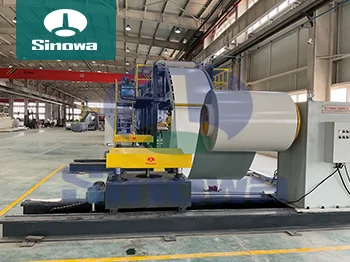
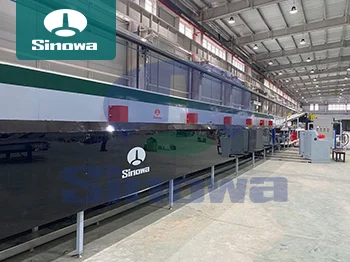
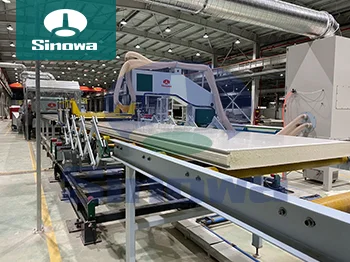
Sinowa is committed to the development and manufacturing of high-end and high-efficiency pur sandwich panel machine. Our pur sandwich panel machine are leading the way in efficiency, automatic control, human-computer interaction, environmental protection and energy consumption. Using system integration and bus control technology, it realizes the automatic integrated linkage control of the entire pur sandwich panel machine, and can achieve remote interactive communication, which has the world-class level and a comprehensive leading high-performance pur sandwich panel machine in the market.
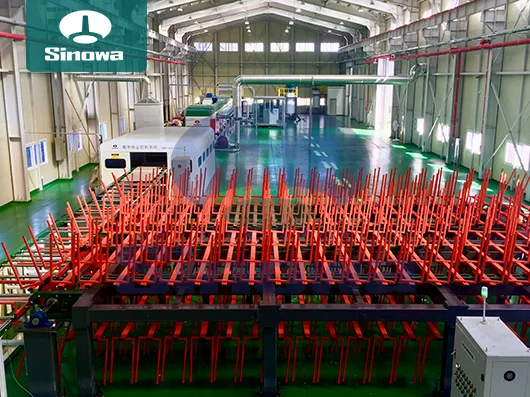
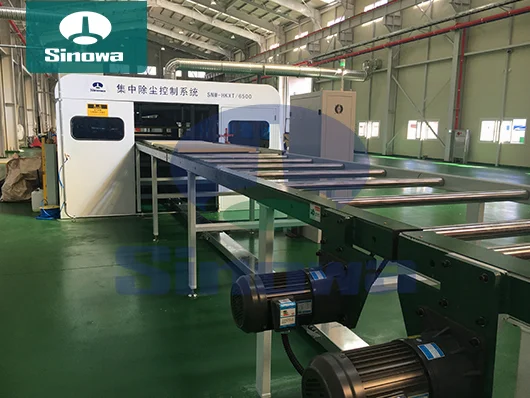
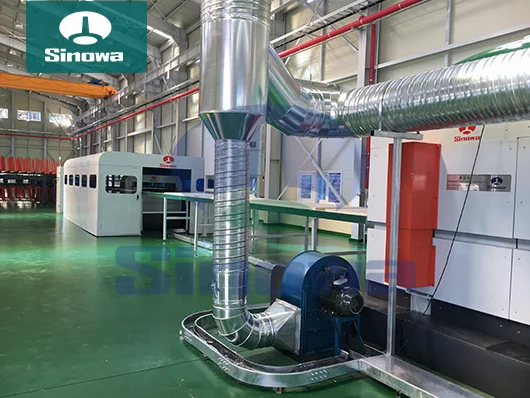
For more than ten years, relying on our innovative manufacturing concept and excellence in quality, reliable and trustworthy service to customers, we cooperate with customers all over the world, exported products to Canada, South Korea, Israel, Australia, the Middle East and other more than 20 countries and regions. contributed to building energy conservation and low-carbon production and have won widespread praise.
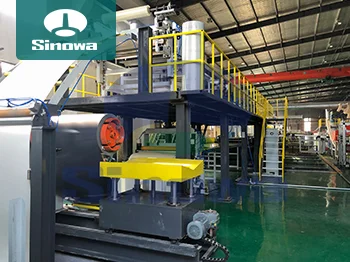
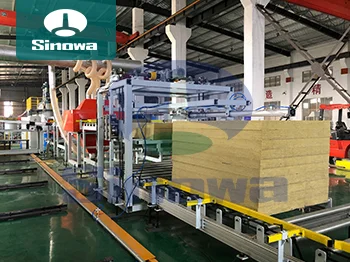
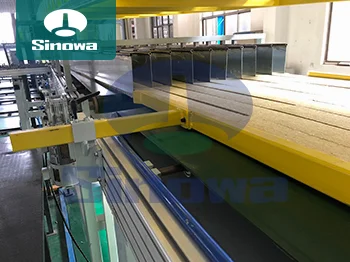
Sinowa has invested outstanding efforts in pur sandwich panel machine, this is why our products are more efficiency, quality, automatic control technology, environmental protection, energy consumption indicators and the appearance and safety protection are comprehensively leading, some subversive design changes in many major technical points, these major innovations make our products excellent in price/performance and user experience.
The customized PUR sandwich panel machine stands as a flexible manufacturing solution built to adapt to diverse production requirements for composite panel fabrication. Unlike standard equipment that follows fixed parameters and limited adjustment ranges, this type of machine is engineered with modular structures that allow operators to alter core processing sections according to the intended panel design. At the heart of its operation lies the PUR foaming and lamination system, which controls the mixing, distribution and curing of polyurethane reactive adhesive between surface facings and insulation cores. Each customizable component can be fine-tuned to match variations in panel thickness, facing material texture and core material density, removing the rigid boundaries that restrict generic production lines. Production teams gain the ability to shift between different panel specifications without extensive downtime or complicated retrofitting work. The precision of the PUR application system directly affects the bonding uniformity across the entire panel surface, preventing uneven glue layers, voids or weak adhesion points that would compromise long-term panel performance. Operators can adjust flow rates, spray patterns and curing timings through integrated control interfaces, making it simpler to achieve consistent results even when switching between multiple product variants. This adaptive design makes the equipment suitable for workshops that handle mixed orders with differing panel dimensions and performance expectations, rather than focusing solely on mass production of a single standardized product type. Every modification to the machine layout is planned around the practical workflow of the production site, taking into account material feeding sequences, space layout and downstream handling steps to create a smooth, continuous production cycle.
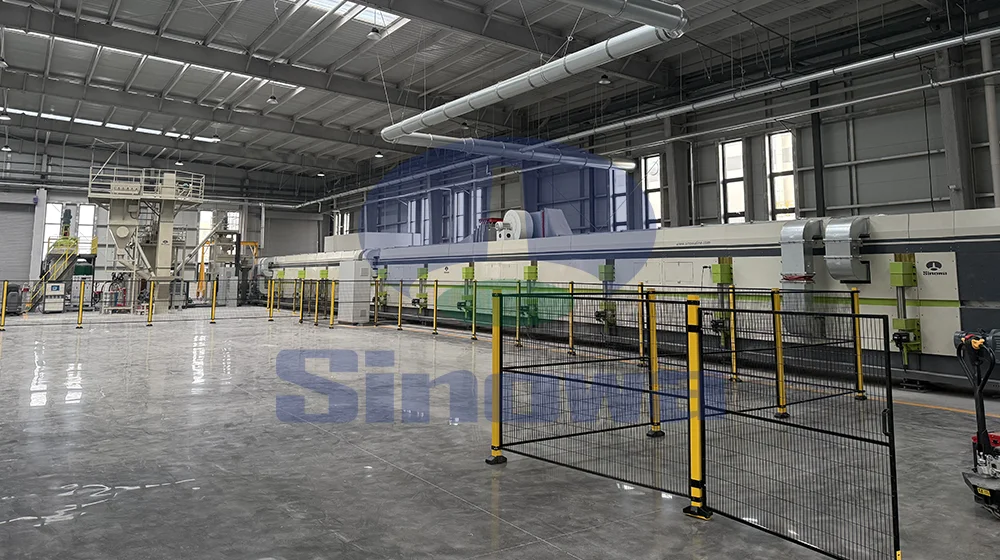
Material compatibility represents one of the most valuable advantages brought by the customized PUR sandwich panel machine, as it can be calibrated to work with a broad spectrum of facing and core materials that are common in composite panel manufacturing. Surface facings may include metal sheets, fiber cement boards, decorative boards and other sheet substrates, each carrying unique surface tension, rigidity and heat transfer characteristics that demand tailored PUR application settings. Core materials range from rigid foam boards to mineral-based insulation substrates, all of which respond differently to PUR adhesive contact and curing conditions. Customization allows the feeding, guiding and pressing mechanisms to be reconfigured to accommodate different material hardness and surface properties, avoiding scratching, deformation or misalignment during the lamination phase. The pressing section can adjust pressure distribution across the full width and length of panels, ensuring that softer core materials do not collapse while denser substrates receive enough contact pressure for reliable bonding. Special guiding rollers and tension control units can be added where thin or flexible facings are used, maintaining flat material travel and eliminating wrinkles that would ruin finished panel appearance and structural integrity. By matching machine functions to material traits, manufacturers can expand their product portfolio and serve more application scenarios without investing in separate standalone production lines for each material combination. This level of material flexibility reduces redundant capital expenditure and gives producers greater freedom to test new composite combinations as market demands evolve over time.
Precision control of the PUR reaction process is central to stable panel quality when operating a customized PUR sandwich panel machine, and the adjustable control architecture supports careful management of the chemical reaction that forms the adhesive bond. The two-component PUR raw materials are metered and mixed inside the machine’s dispensing unit, with adjustable ratio settings to suit different environmental conditions and bonding targets. Temperature control modules are integrated along the material path and within the mixing chamber, maintaining stable conditions for the PUR reaction regardless of fluctuations in workshop ambient temperature. Since PUR cures through chemical cross-linking after contact, timing for dispensing, lay-up and pressing must be precisely coordinated, and the customized machine’s control system synchronizes these stages to fit the working time window of the selected PUR formulation. Sensors track material feed speed, adhesive output and panel travel speed in real time, automatically making minor corrections to keep production parameters within the preset range. Manual intervention is reduced during normal running, though the control panel retains straightforward adjustment options for technicians when product specifications change. When parameters are properly set, the cured PUR layer forms a continuous, resilient bond that transfers load evenly between facings and core, supporting the structural stability of finished panels. Consistent reaction control also minimizes material waste from poorly mixed adhesive or premature curing, helping production operations run with better material efficiency and fewer rejected finished panels.
The mechanical layout of a customized PUR sandwich panel machine can be rearranged to fit different workshop layouts and production throughput targets, creating a production line that aligns naturally with existing material handling workflows. Some production spaces prioritize compact footprint, so the machine can be arranged with stacked or folded unit arrangements to save floor area, while facilities targeting high continuous output adopt extended linear layouts with separate stations for feeding, PUR dispensing, lamination, curing, trimming and panel take-off. Auxiliary stations such as edge trimming, surface cleaning and panel cutting can be integrated or detached based on what finishing work the finished panels require. The drive system uses synchronized motor units to coordinate all moving sections, so variations in line speed do not create mismatches between adhesive application and panel advancement. Support frames, safety guards and material support tables are built to match the maximum panel width and length defined in the customization plan, ensuring stable support throughout the forming process. Quick-release connection points between modular sections make maintenance and component replacement much easier, and wear parts can be accessed without disassembling large sections of the production line. Engineers designing the customized configuration also consider material loading and finished panel unloading methods, matching the machine height and transfer speed to forklift, conveyor or manual handling routines used on site. This thoughtful layout customization prevents bottlenecks at transfer points and keeps the whole production flow steady from raw material input to finished panel collection.
Operational efficiency gains from a customized PUR sandwich panel machine extend beyond flexible product switching, covering energy consumption, labor allocation and overall line uptime in daily production cycles. The adjustable drive and heating systems only deliver power to match the current production load, rather than running at fixed high output for every batch, which cuts unnecessary energy draw during runs of thinner panels or lower production volumes. Automated material tracking and fault alert functions notify operators of irregularities such as blocked feed paths, low adhesive supply or pressure deviations before these issues lead to batches of defective panels. Operators can store multiple parameter profiles for different panel types within the control system, recalling saved settings in a short time when repeating previous orders and removing the need to re-calibrate every setting manually. Training for the operating team is structured around the specific configuration of the customized machine, focusing on the unique adjustment points and safety features fitted to their line, so staff build clear familiarity with the equipment’s capabilities and limits. Planned maintenance schedules can also be customized according to the actual working intensity of each component, with high-wear parts inspected at appropriate intervals to avoid unexpected breakdowns. Over long production runs, these efficiency features combine to shorten changeover time between orders, lower the rate of defective output and let the production team meet shifting delivery schedules with greater reliability.
Quality consistency of sandwich panels produced on a customized PUR sandwich panel machine is reinforced by the machine’s ability to maintain uniform processing conditions across every panel, even amid frequent specification changes. The lamination press applies evenly distributed pressure over the panel area, eliminating localized gaps where adhesive fails to contact both facing and core. The PUR dispensing system maintains consistent coating weight across the full panel width, avoiding heavy glue buildup along edges or sparse coverage in the middle regions. Finished panels from a single production batch show consistent thickness, flatness and bond strength, which simplifies downstream installation and assembly work for end users. Built-in inspection checkpoints can be added as part of the customization scope, allowing non-destructive checks of bonding quality and dimensional accuracy while panels move along the line. Any deviation from target dimensions or surface quality triggers alerts, so non-conforming panels can be separated early instead of moving further into finishing and packaging stages. This consistent output helps manufacturers build reliable product performance, as customers receive panels that behave predictably during installation and service. When new panel designs are introduced, technicians can test and lock in a new set of machine parameters, then replicate those results reliably for subsequent batches. The repeatability embedded in the customized design removes much of the variability that comes from manually adjusting generic equipment for unfamiliar panel designs.
Safety and usability features are integrated into the customized PUR sandwich panel machine alongside production functions, with protective structures and control logic tailored to match the line’s specific layout and operation mode. Moving mechanical parts are fitted with protective barriers and interlock switches that pause machine movement if access doors are opened during operation, reducing exposure risks for maintenance and operating staff. Emergency stop controls are positioned at multiple points along the production line, within easy reach wherever personnel may work or inspect panels. Ventilation structures can be added near the PUR dispensing and curing zone to maintain suitable air conditions in the working area, supporting comfortable and safe working conditions during continuous production. The human-machine interface uses clear visual indicators and simplified menus, avoiding overly complex navigation that could lead to incorrect parameter adjustments. All adjustment mechanisms are designed for controlled, predictable movement, so changes to pressure, speed or adhesive flow happen gradually rather than with sudden shifts that might damage materials or equipment. Customization also accounts for the skill level of the on-site team, adding automated assist functions for less experienced operators or expanding manual fine-tuning options for skilled technicians requiring precise control. These safety elements do not hinder production flexibility; instead, they create a stable operating environment where the full adjustable capability of the machine can be used securely every production day.
Looking ahead, the customized PUR sandwich panel machine continues to evolve to match emerging trends in composite panel applications, remaining adaptable as market expectations for panel performance and production sustainability shift. New customization options focus on reducing raw material waste, optimizing PUR usage and supporting the processing of recycled or low-carbon substrate materials that are gaining traction in composite manufacturing. Control systems can be upgraded over time with enhanced data recording functions, capturing production parameters for each batch to support internal quality review and process refinement. Modular construction means that new functional units can be added to an existing line after installation, such as advanced surface treatment stations or automated packaging modules, without replacing the core PUR dispensing and lamination system. This upgrade potential extends the usable service life of the machine and protects the initial investment against rapid shifts in product requirements. As end applications for sandwich panels diversify, producers rely on this kind of adaptable equipment to turn new material concepts into finished panels that meet practical performance needs. The core value of the customized PUR sandwich panel machine stays rooted in its ability to serve unique production visions, balancing dependable PUR bonding technology with the freedom to reshape production workflows around changing product goals, rather than forcing product designs to fit the limits of rigid, one-size-fits-all manufacturing equipment.
« Customized PUR Sandwich Panel Machine » Update Date: 2026/10/21
Tags: PUR Sandwich Panel Machine , pur sandwich panel machine, pur sandwich panel machine manufacturer, pur sandwich panel machine supplier, pur sandwich panel machine for sale, customized pur sandwich panel machine, china pur sandwich panel machine
- Continuous PU Sandwich Panel Production Line For Roof
- High-quality PIR Insulation Panel Production Line
- Custom PIR Insulated Panel Production Line
- PU Foam Production Line Material
- Customized PIR Wall Panel Production Line
- Fully Automatic PU Sandwich Panel Machine Supplier
- High-quality PIR Sandwich Panel Production Line
- PU Sandwich Panel Production Line For Building
- High Efficiency PU Sandwich Panel Production Line
- Polyurethane Foam Production Line From China
- Cold Room Sandwich Panel Production Line Price
- Low Price Automatic Sandwich Panel Production Line
- Polyurethane Insulation Panel Production Line Factory
- PU Board Production Line
- Polyurethane Sandwich Panel Machine From China
- Continuous PU Sandwich Panel Line For Sale
- High-end Decorative Sandwich Panel Line
- High-end Sandwich Panel Foam Making Machine
- Sandwich Panel Line In China
- Equipment For Glass Wool Production
- Links:
- Sandwich Panel Continuous Production Line
- Automatic and Continuous Sandwich Panel Production Line
- Cheap and Low Price Sandwich Panel Production Line
- China Sandwich Panel Production Line Factory
- Color Steel Sandwich Panel Production Line For Cold Storage
- Continuous Composite Foam Sandwich Panel Production Line
- Continuous Production Line For Rockwool and Mineral Wool Sandwich Panels
- Continuous PU Phenolic Insulation Panel Production Line
- Continuous PU PIR Sandwich Panel Production Line
- Continuous PUF PUR Sandwich Panel Production Line
- Continuous Sandwich Panel Production Line For Roof and Wall
- Customized and Design Sandwich Panel Production Line
- Decorative Sandwich Panel Production Line For Glass Wool Boards
- High Quality Sandwich Panel Production Line For Sale
- Polyurethane(PU) Sandwich Panel Production Line
- Sandwich Panel Production Line Manufacturer and Supplier
- Sandwich Panel Production Machinery and Equipment