
Polyurethane Sandwich Panel Machine From China
Sinowa is a well-known manufacturer and technical service provider of high-end polyurethane sandwich panel machine, learn more about polyurethane sandwich panel machine from china, please contact Sinowa's technical engineer, tell us what you need, we will contact you as soon as possible!
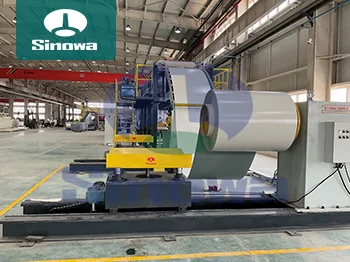
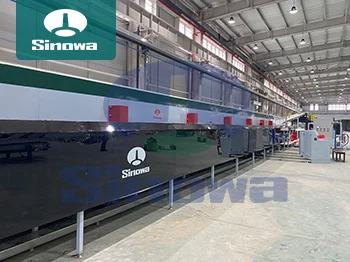
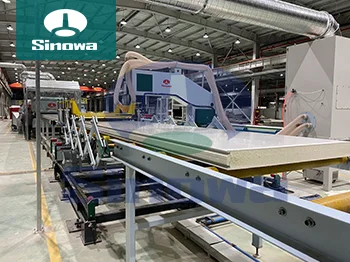
Sinowa is committed to the development and manufacturing of high-end and high-efficiency polyurethane sandwich panel machine. Our polyurethane sandwich panel machine are leading the way in efficiency, automatic control, human-computer interaction, environmental protection and energy consumption. Using system integration and bus control technology, it realizes the automatic integrated linkage control of the entire polyurethane sandwich panel machine, and can achieve remote interactive communication, which has the world-class level and a comprehensive leading high-performance polyurethane sandwich panel machine in the market.
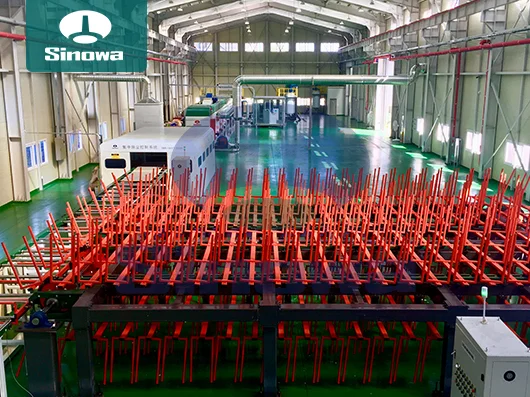
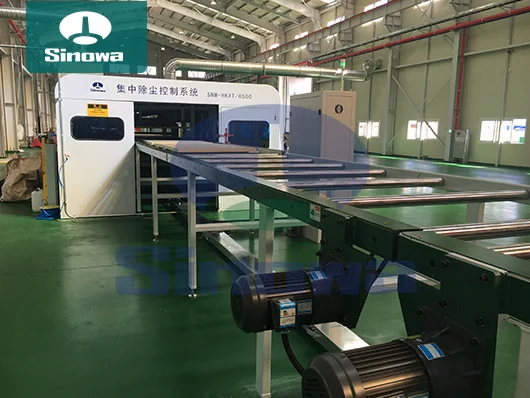
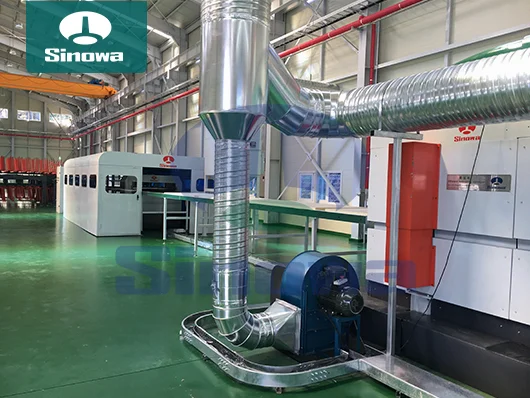
For more than ten years, relying on our innovative manufacturing concept and excellence in quality, reliable and trustworthy service to customers, we cooperate with customers all over the world, exported products to Canada, South Korea, Israel, Australia, the Middle East and other more than 20 countries and regions. contributed to building energy conservation and low-carbon production and have won widespread praise.
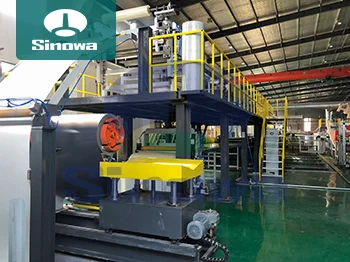
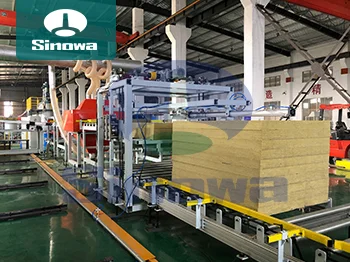
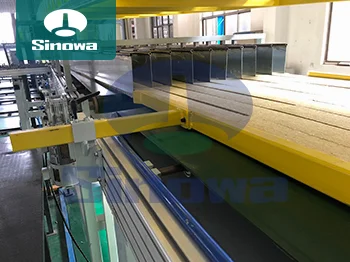
Sinowa has invested outstanding efforts in polyurethane sandwich panel machine, this is why our products are more efficiency, quality, automatic control technology, environmental protection, energy consumption indicators and the appearance and safety protection are comprehensively leading, some subversive design changes in many major technical points, these major innovations make our products excellent in price/performance and user experience.
In the global construction and industrial insulation materials sector, polyurethane sandwich panels have emerged as a cornerstone product, prized for their exceptional thermal insulation, structural stability, lightweight durability, and versatile application across residential, commercial, industrial, and cold storage infrastructure. As demand for high-performance, energy-efficient building materials surges worldwide, driven by global sustainability goals and the need for faster, more cost-effective construction solutions, the machinery used to manufacture these panels has become a critical focal point for manufacturers across every continent. Among the leading sources of advanced, reliable, and scalable polyurethane sandwich panel machines, China has solidified its position as a top global supplier, combining decades of manufacturing expertise, continuous technical innovation, and a deep understanding of international production needs to deliver equipment that balances precision, efficiency, and adaptability. Unlike niche or regionally limited machinery providers, Chinese manufacturers of these production lines have invested heavily in refining core technologies, optimizing production workflows, and aligning machine design with the diverse operational requirements of global buyers, from small-scale local producers to large-scale industrial manufacturing facilities.
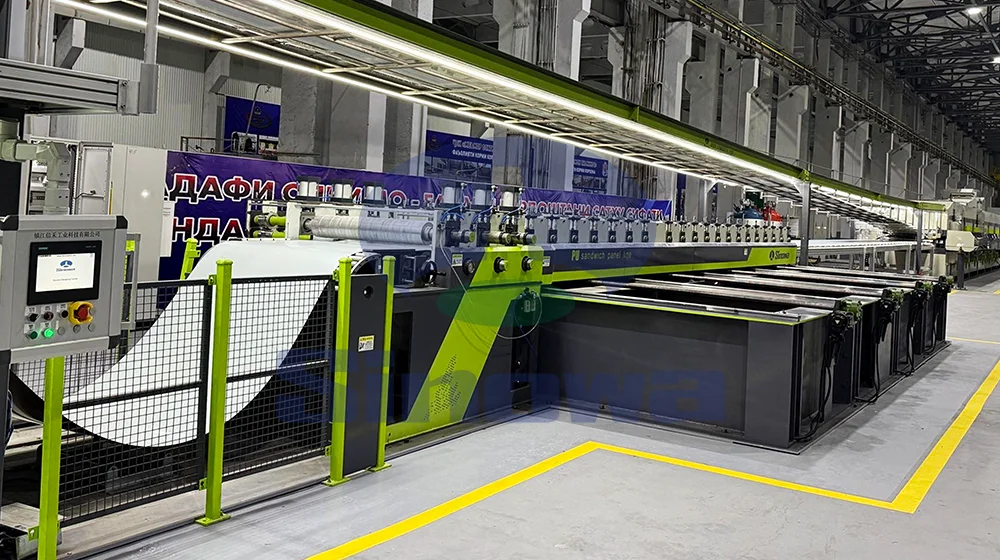
To fully grasp the significance of Chinese-made polyurethane sandwich panel machines, it is essential to first understand the core production process of polyurethane sandwich panels and the key technical requirements that define high-quality manufacturing equipment. Polyurethane sandwich panels are composite building materials consisting of two rigid outer facing layers—typically metal sheets, though other durable materials can be used—and a dense, closed-cell polyurethane foam core that provides superior thermal resistance, sound insulation, and structural support. The manufacturing process is a seamless, integrated sequence that demands precise control over every stage, from material preparation and feeding to foaming, lamination, curing, cutting, and finishing. A well-designed production machine must synchronize all these stages into a continuous, uninterrupted workflow, minimizing downtime, reducing material waste, and ensuring consistent panel quality across every unit produced. Chinese manufacturers have mastered this complex production logic, developing machines that integrate automated material handling, precise chemical mixing and foaming, controlled temperature and pressure regulation, and accurate dimension cutting into a single, cohesive system. Unlike outdated, semi-automated equipment that requires extensive manual intervention and carries a high risk of inconsistent panel quality, modern polyurethane sandwich panel machines from China prioritize full-process automation and intelligent control, allowing operators to monitor and adjust production parameters in real time to maintain optimal performance.
One of the most prominent advantages of polyurethane sandwich panel machines from China is their exceptional technical precision, which directly translates to consistent, high-quality end products. The core of any polyurethane sandwich panel production line lies in the foaming and lamination system, where liquid polyurethane raw materials are mixed in exact proportions, injected onto the lower facing layer, and then bonded with the upper facing layer under controlled pressure and temperature to form a rigid, uniform core. Chinese engineering teams have spent years refining the raw material mixing and delivery systems, ensuring that the polyol and isocyanate components— the two primary ingredients of polyurethane foam—are blended with pinpoint accuracy, eliminating variations in foam density, adhesion strength, or insulation performance. This precision is critical, as even minor inconsistencies in material mixing can lead to weak spots in the panel core, poor bonding between the core and outer layers, or reduced thermal efficiency, all of which compromise the panel’s usability and lifespan. The foaming chambers and double-belt lamination units integrated into these machines are designed to maintain stable temperature and pressure levels throughout the curing process, allowing the polyurethane foam to expand evenly and cure uniformly without warping, bubbling, or delamination. This level of control ensures that every panel produced meets strict structural and performance standards, whether it is intended for wall cladding, roofing, cold storage warehouses, prefabricated buildings, or industrial facility construction.
Beyond technical precision, polyurethane sandwich panel machines from China are engineered for unmatched production efficiency and scalability, making them suitable for manufacturers of all sizes and production capacities. Global buyers often face the challenge of balancing output volume with operational costs, and Chinese machine designers have addressed this by creating equipment that offers flexible production speeds and customizable configurations to match specific business needs. Whether a buyer requires a compact, medium-capacity line for local market production or a high-speed, fully automated line for large-scale industrial output, these machines can be tailored to adjust panel thickness, width, and length, as well as production speed, without sacrificing quality. The continuous production design eliminates the need for batch processing, a common limitation of older machinery, allowing for non-stop panel manufacturing that significantly boosts daily and annual output. Additionally, the automated material feeding and finishing systems reduce reliance on manual labor, streamlining the entire production workflow and cutting down on human error. Material loading, leveling of the outer facing sheets, foam application, lamination, curing, precision cutting, and panel stacking are all integrated into a single continuous line, minimizing material handling and reducing waste from off-cuts or defective panels. This efficiency not only lowers overall production costs for end users but also shortens lead times for fulfilling customer orders, a key advantage in the fast-paced global construction market where timely delivery of materials directly impacts project timelines.
Another key strength of Chinese polyurethane sandwich panel machines is their robust structural design and long-term operational reliability, built to withstand the demands of continuous industrial use in diverse environmental conditions. Manufacturing equipment for composite building materials must endure constant operation, exposure to chemical raw materials, and varying temperature and humidity levels, so durability and low maintenance requirements are essential for long-term value. Chinese manufacturers use high-grade, wear-resistant materials for critical machine components, such as the lamination belts, cutting blades, material conveyors, and mixing heads, ensuring that the equipment can operate consistently for extended periods without frequent breakdowns or part replacements. The mechanical structures are engineered for stability, reducing vibration during production and maintaining alignment of all moving parts to prevent performance degradation over time. Maintenance protocols are designed to be straightforward and accessible, with easy access to key components for routine inspections, cleaning, and minor repairs, minimizing downtime and ensuring maximum uptime for production facilities. This focus on durability and ease of maintenance makes these machines a practical investment for global buyers, particularly those operating in regions with limited access to specialized technical support, as the equipment can operate reliably with basic upkeep and does not require highly specialized training for daily operation.
Adaptability is a defining feature of polyurethane sandwich panel machines from China, as they are designed to cater to the diverse application needs and regulatory expectations of global markets across North America, Europe, Asia, Africa, and South America. Different regions have unique requirements for building materials, ranging from thermal insulation performance for cold climates to structural strength for seismic-prone areas, and these machines can be adjusted to produce panels that meet these varied needs without extensive modifications. The flexibility to work with different types of outer facing materials, including various thicknesses of steel, aluminum, and other durable sheets, further expands the range of end products that can be manufactured. Additionally, the machines support the production of different panel profiles, such as flat panels, corrugated panels, and interlocking tongue-and-groove panels, which are used for specific applications like roofing, wall partitions, cold room construction, and prefabricated housing. This adaptability means that global buyers do not need to invest in multiple specialized machines to serve different market segments; a single well-configured production line can accommodate a wide range of panel types and specifications, maximizing the machine’s utility and return on investment. Chinese manufacturers also prioritize user-centric design, with intuitive control interfaces that simplify operation for teams with varying levels of technical experience, reducing the learning curve and allowing production facilities to ramp up operations quickly after installation.
Sustainability and environmental compliance have become non-negotiable factors in global industrial manufacturing, and polyurethane sandwich panel machines from China are engineered to align with these modern priorities. As the world shifts toward low-carbon, eco-friendly industrial practices, manufacturers of building materials are under increasing pressure to reduce energy consumption, minimize material waste, and limit emissions during production. Chinese-made these machines integrate energy-efficient components and optimized production workflows to lower overall energy usage compared to older, less efficient machinery. The precise material mixing and application systems reduce excess foam waste, and the automated cutting systems minimize off-cuts, ensuring that raw materials are used efficiently and reducing the amount of industrial waste sent to landfills. The closed-cell foaming technology used in these production lines also supports the creation of panels with exceptional thermal efficiency, which in turn helps end-use buildings reduce energy consumption for heating and cooling over their lifespan, contributing to broader global sustainability goals. Additionally, the machine designs prioritize safe handling of chemical raw materials, with sealed mixing and foaming systems that prevent harmful emissions or leaks, creating a safer working environment for production line staff and reducing environmental impact. This focus on sustainability not only meets the environmental standards expected by global buyers but also positions the end products—polyurethane sandwich panels—as a green building material choice for eco-conscious construction projects.
The global supply chain and logistical advantages of sourcing polyurethane sandwich panel machines from China further enhance their appeal to international buyers. China’s well-established manufacturing infrastructure allows for efficient production and timely delivery of machinery, with streamlined logistics networks that support reliable shipping to every corner of the globe. Manufacturers work closely with buyers to ensure that equipment is packaged securely for international transport, reducing the risk of damage during shipping and ensuring that the machine arrives on-site in ready-to-install condition. Beyond delivery, comprehensive pre-sales and after-sales support is a core component of the value proposition, with technical teams providing guidance on machine configuration, installation, and initial operation to help buyers set up their production facilities smoothly. While technical support is tailored to the needs of each buyer, it focuses on practical, actionable assistance that ensures the machine operates at peak performance from day one. This end-to-end support eliminates many of the logistical and operational challenges that international buyers often face when sourcing industrial machinery, making the procurement process straightforward and stress-free.
In the global market, polyurethane sandwich panel machines from China stand out not just for their technical and operational advantages, but also for their ability to deliver consistent value without compromising on quality. In an industry where production efficiency, product consistency, and long-term durability directly impact a manufacturer’s competitiveness, these machines offer a balanced solution that meets the needs of both small and large-scale producers. Unlike equipment that prioritizes either low cost at the expense of performance or high performance at an unattainable cost, Chinese-made polyurethane sandwich panel machines strike a harmonious balance between quality, efficiency, and practical affordability, making them accessible to manufacturers looking to upgrade their production capabilities or enter the insulation panel market for the first time. This balance has made China a trusted source for such machinery, with buyers across the globe relying on these production lines to meet growing demand for high-quality polyurethane sandwich panels.
Looking ahead, the role of polyurethane sandwich panel machines from China in the global construction and insulation materials industry is set to grow even more significant, driven by ongoing technological innovation and shifting global market demands. Continuous advancements in automation, intelligent control systems, and material processing technology are being integrated into new generations of these machines, further enhancing production efficiency, precision, and sustainability. As global demand for energy-efficient, sustainable building materials continues to rise—fueled by urbanization, infrastructure development, and stricter environmental regulations—manufacturers worldwide will need reliable, high-performance machinery to meet this demand. Chinese manufacturers are committed to ongoing research and development, refining existing designs and incorporating new technologies to address emerging market needs, such as faster production speeds, compatibility with new eco-friendly raw materials, and enhanced automation for even greater operational efficiency. This commitment to innovation ensures that polyurethane sandwich panel machines from China will remain at the forefront of the global market, adapting to new challenges and opportunities while maintaining the core principles of quality, efficiency, and reliability.
It is also important to recognize the broader industrial impact of these machines beyond individual manufacturing facilities. By enabling the efficient, large-scale production of high-quality polyurethane sandwich panels, Chinese-made machinery supports the growth of sustainable construction practices worldwide. These panels are a key component of modern, energy-efficient buildings, reducing reliance on traditional, less sustainable building materials and lowering the long-term carbon footprint of residential and commercial structures. Cold storage facilities, which are critical for global food supply chains, rely heavily on polyurethane sandwich panels for their superior thermal insulation, and the availability of reliable production machinery ensures that these essential facilities can be built quickly and efficiently to support food security and distribution. Prefabricated and modular construction, which is gaining traction globally for its speed and cost-effectiveness, also depends heavily on consistent, high-quality sandwich panels, making these production machines a vital part of the broader construction ecosystem.
In conclusion, polyurethane sandwich panel machines from China represent a pinnacle of industrial manufacturing expertise, combining technical precision, operational efficiency, durability, adaptability, and sustainability to meet the diverse needs of the global insulation panel market. These machines are not just pieces of production equipment; they are strategic investments for manufacturers looking to compete in a fast-growing, demand-driven industry, offering consistent quality, scalable output, and long-term reliability. China’s rise as a leading supplier of these machines is rooted in decades of manufacturing experience, continuous technical refinement, and a deep understanding of what global buyers need: equipment that performs reliably, produces high-quality end products, and delivers tangible value over its lifespan. As the global demand for energy-efficient, sustainable building materials continues to surge, polyurethane sandwich panel machines from China will remain a critical resource for manufacturers worldwide, supporting infrastructure development, sustainability goals, and industrial growth across every continent. With ongoing innovation and a focus on meeting evolving market needs, these machines will continue to shape the future of the polyurethane sandwich panel industry, providing a reliable, efficient, and adaptable solution for production facilities around the world.
« Polyurethane Sandwich Panel Machine From China » Update Date: 2026/3/24
Tags: Polyurethane Sandwich Panel Machine , Polyurethane Sandwich Panel Machinery ,
- Customized Composite Panel Production Line
- PIR Sandwich Panel Machine Price
- Cheap Foam Sandwich Panel Machine
- High Efficiency Polyurethane Insulation Panel Production Line
- Polyurethane Sandwich Panel Machine For Cold Storage
- Low Price Fully Automatic PU Sandwich Panel Machine
- High-tech Decorative PU Sandwich Panel Production Line
- Polyurethane Sandwich Panel Machinery Factory
- Low Price Composite Panel Production Line
- Fully Automatic Sandwich Panel Making Machine Manufacturer
- Isolation PU Sandwich Panel Line Factory
- Continuous Sandwich Panel Manufacturing Line Supplier
- Decorative PU Sandwich Panel Production Line Manufacturer
- Sandwich Wall Panel Production Line Supplier
- Decorative Sandwich Panel Line Price
- High-tech Isolation PU Sandwich Panel Line
- High-end Sandwich Panel Production Line
- High-quality Decorative Sandwich Panel Line
- Sandwich Panel Production Machinery For Sale
- Cold Room Sandwich Panel Production Line
- Links:
- Sandwich Panel Continuous Production Line
- Automatic and Continuous Sandwich Panel Production Line
- Cheap and Low Price Sandwich Panel Production Line
- China Sandwich Panel Production Line Factory
- Color Steel Sandwich Panel Production Line For Cold Storage
- Continuous Composite Foam Sandwich Panel Production Line
- Continuous Production Line For Rockwool and Mineral Wool Sandwich Panels
- Continuous PU Phenolic Insulation Panel Production Line
- Continuous PU PIR Sandwich Panel Production Line
- Continuous PUF PUR Sandwich Panel Production Line
- Continuous Sandwich Panel Production Line For Roof and Wall
- Customized and Design Sandwich Panel Production Line
- Decorative Sandwich Panel Production Line For Glass Wool Boards
- High Quality Sandwich Panel Production Line For Sale
- Polyurethane(PU) Sandwich Panel Production Line
- Sandwich Panel Production Line Manufacturer and Supplier