
Continuous PU Sandwich Panel Production Line For Roof
Sinowa is a well-known manufacturer and technical service provider of high-end continuous pu sandwich panel production line, learn more about continuous pu sandwich panel production line for roof, please contact Sinowa's technical engineer, tell us what you need, we will contact you as soon as possible!
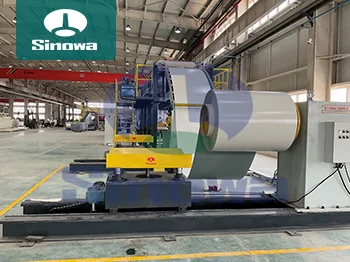
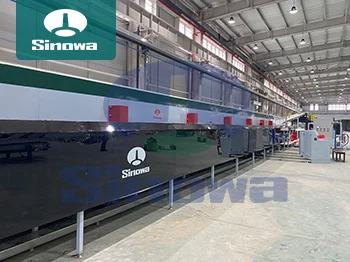
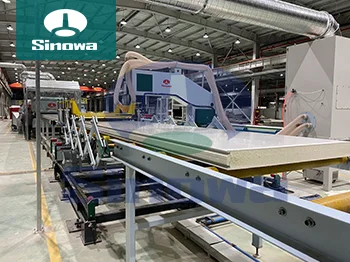
Sinowa is committed to the development and manufacturing of high-end and high-efficiency continuous pu sandwich panel production line. Our continuous pu sandwich panel production line are leading the way in efficiency, automatic control, human-computer interaction, environmental protection and energy consumption. Using system integration and bus control technology, it realizes the automatic integrated linkage control of the entire continuous pu sandwich panel production line, and can achieve remote interactive communication, which has the world-class level and a comprehensive leading high-performance continuous pu sandwich panel production line in the market.
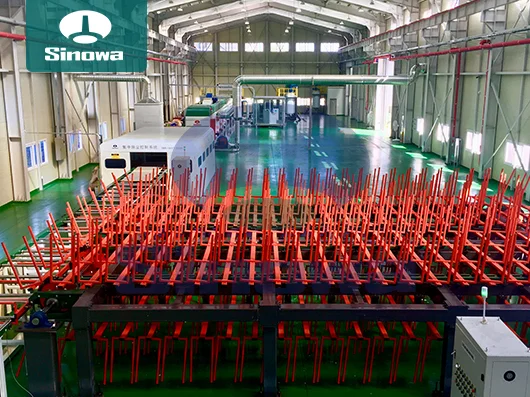
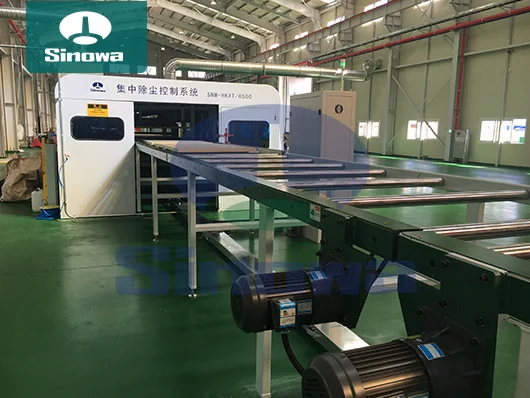
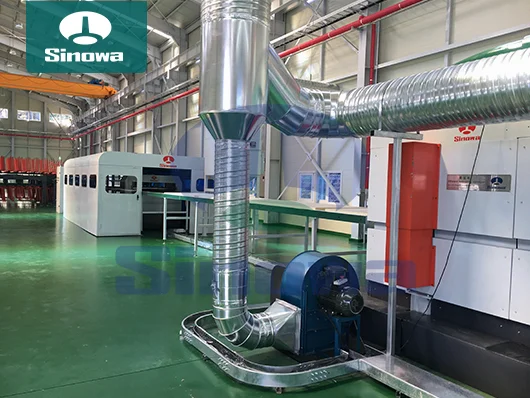
For more than ten years, relying on our innovative manufacturing concept and excellence in quality, reliable and trustworthy service to customers, we cooperate with customers all over the world, exported products to Canada, South Korea, Israel, Australia, the Middle East and other more than 20 countries and regions. contributed to building energy conservation and low-carbon production and have won widespread praise.
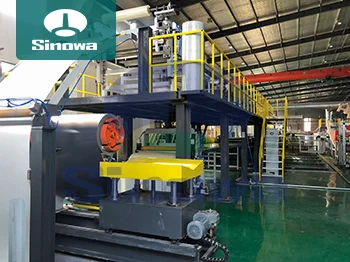
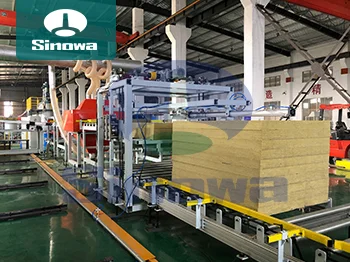
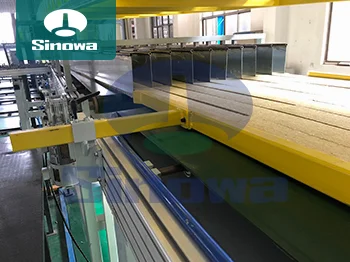
Sinowa has invested outstanding efforts in continuous pu sandwich panel production line, this is why our products are more efficiency, quality, automatic control technology, environmental protection, energy consumption indicators and the appearance and safety protection are comprehensively leading, some subversive design changes in many major technical points, these major innovations make our products excellent in price/performance and user experience.
The continuous production line for polyurethane (PU) sandwich panels dedicated to roofing applications represents a sophisticated integration of mechanical engineering and material science, designed to manufacture composite panels with consistent quality and multi-functional properties. These production lines operate through a series of automated processes that transform raw materials into integrated roofing solutions, combining structural integrity, thermal insulation, and weather resistance in a single product. Unlike traditional discrete manufacturing methods, continuous production ensures uniform bonding between layers, precise dimensional control, and high throughput, making it the preferred approach for large-scale construction projects across various industries. The core advantage of such production lines lies in their ability to produce panels that function as a single unit encompassing load-bearing, insulation, and waterproofing capabilities, eliminating the need for separate installation of multiple components and significantly reducing construction time and labor costs.
The structure of a continuous PU sandwich panel production line for roofing is composed of several interconnected modules, each performing a specific function in the manufacturing process. The line typically starts with uncoiling and feeding units, which handle the metal facings that form the upper and lower surfaces of the sandwich panels. These facings are usually made of galvanized steel, galvalume, or aluminum coils, which are uncoiled by automated decoilers and fed into the next stage with consistent tension to prevent deformation. Following the decoiling process, the metal coils pass through roll forming stations, where a series of tandem rolling stands gradually bend and shape the sheets into predefined profiles. The profile design varies based on application needs, with corrugated or ribbed patterns being common for roofing panels to enhance rigidity, drainage efficiency, and load-bearing capacity. The roll forming process uses cold forming technology, which preserves the mechanical properties of the metal without compromising its structural strength through heat treatment.
After the metal facings are formed, they move to the foam injection and lamination section, which is the core of the production line. This section consists of a high-pressure metering and mixing system that precisely blends the liquid PU components—polyol and isocyanate—along with additives to control foam density, curing time, and performance characteristics. The mixed PU solution is continuously injected between the upper and lower metal facings as they move through a laminating zone. To ensure uniform foam distribution and bonding, the production line is equipped with a double belt laminating system that applies consistent pressure to the panels as the PU foam expands and cures. The laminating belts also maintain the flatness of the panels during the curing process, preventing warping or uneven thickness. Following foam injection, the panels enter a cooling and curing tunnel, where controlled temperature and airflow accelerate the solidification of the PU foam core, ensuring it bonds firmly to the metal facings and achieves its full structural and insulation properties. The final stages of the production line include automatic cutting units that trim the continuous panel into custom lengths, followed by stacking and packaging modules to prepare the finished products for transportation.
The performance of panels produced by continuous PU sandwich panel production lines is determined by the synergy between the metal facings, PU foam core, and the precision of the manufacturing process. One of the most notable performance attributes is thermal insulation efficiency, driven by the low thermal conductivity of the PU foam core. The closed-cell structure of rigid PU foam minimizes heat transfer through conduction, convection, and radiation, making it far more effective than traditional insulation materials. This property translates to significant energy savings for buildings, as it reduces the load on heating and cooling systems by maintaining stable internal temperatures. For example, a moderately thick PU sandwich panel can achieve the same insulation effect as a much thicker layer of concrete or mineral wool, while also reducing the overall weight of the roof structure.
Structural performance is another critical characteristic of these roofing panels. The combination of rigid metal facings and a high-density PU foam core creates a composite structure with excellent load-bearing capacity relative to its weight. The metal facings resist tensile and compressive forces, while the foam core provides lateral stability and distributes loads evenly across the panel surface. This allows the panels to withstand various environmental loads, including snow accumulation, wind pressure, and minor impacts, without deformation or failure. Additionally, the continuous bonding between the metal facings and foam core ensures structural integrity over time, preventing delamination even under cyclic temperature changes and humidity fluctuations. The lightweight nature of the panels also reduces the structural load on the building’s frame, enabling more cost-effective design of the supporting structure, especially for large-span buildings such as warehouses and exhibition halls.
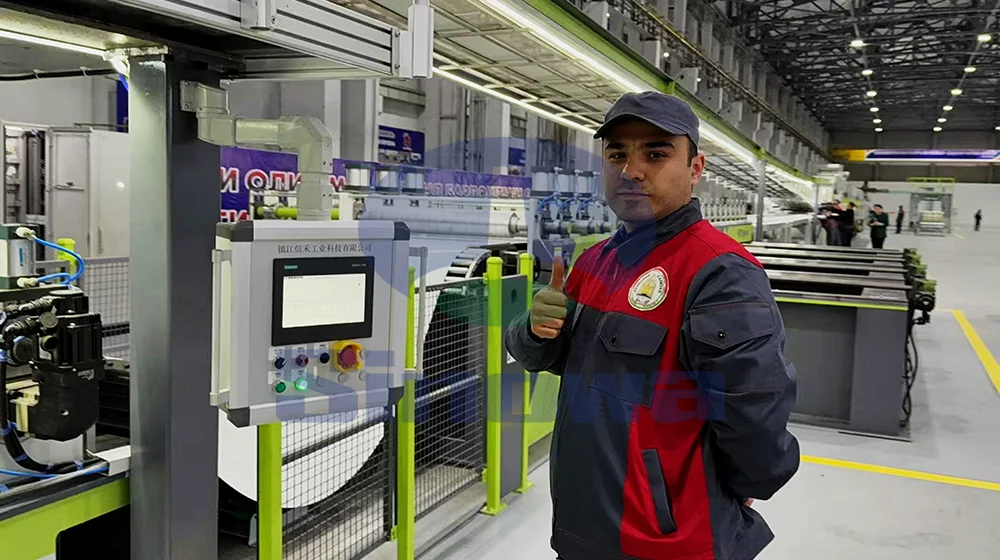
Weather resistance and durability are key performance factors for roofing applications, and continuous PU sandwich panels excel in both areas. The metal facings are treated with anti-corrosion coatings to resist rust, UV radiation, and chemical exposure, while the PU foam core is inherently resistant to moisture absorption, mold growth, and degradation from environmental factors. The lap joint designs of the panels, often incorporating concealed fasteners and edge-sealing technology, enhance waterproofing performance by preventing water infiltration at the connections. This ensures that the panels maintain their performance characteristics over a long service life, with minimal maintenance requirements. Furthermore, the panels exhibit good sound insulation properties, as the foam core absorbs and dampens sound waves, reducing noise transmission from external sources such as traffic, machinery, or environmental noise into the building interior.
Continuous PU sandwich panel production lines can manufacture a variety of panel types tailored to specific roofing requirements, classified based on core material variations, facing profiles, joint designs, and performance enhancements. One common classification is based on the core material, with pure PU foam cores being the standard option for applications prioritizing thermal insulation and lightweight properties. For projects with higher fire safety requirements, production lines can be configured to produce panels with PU-edge sealed mineral wool cores, combining the insulation efficiency of PU with the fire resistance of mineral wool. These hybrid cores provide a balance between thermal performance and fire protection, making them suitable for public buildings and industrial facilities with strict safety regulations.
Based on facing profiles, the panels can be categorized into corrugated, ribbed, and flat types. Corrugated panels feature wave-like profiles that enhance drainage and rigidity, making them ideal for areas with heavy rainfall or snowfall. Ribbed panels, with raised parallel ribs, offer improved load-bearing capacity and are often used for large-span roofs and areas where solar panels may be installed. Flat panels have a smooth surface, providing an aesthetically pleasing finish for commercial buildings and are easier to clean and maintain. Another classification is based on joint design, with concealed fastener panels and exposed fastener panels being the two main types. Concealed fastener panels use hidden connections that eliminate visible screws, enhancing waterproofing and aesthetic appeal, while exposed fastener panels are simpler to install and are commonly used for industrial buildings where aesthetics are less of a priority.
Production lines can also be customized to produce panels with specialized performance features, such as enhanced fire retardancy, improved sound insulation, or compatibility with solar mounting systems. For example, adding fire retardant additives to the PU foam core can improve the panel’s fire performance, slowing the spread of flame and reducing smoke production. Panels designed for solar integration may have reinforced ribs or mounting points to support the weight of solar panels without compromising structural integrity. Additionally, the facing materials can be customized to include reflective coatings for improved UV resistance and heat reflection, or decorative finishes to match the architectural style of the building.
The versatility of continuous PU sandwich panels for roofing is reflected in their wide range of applications across multiple industries, driven by their integrated performance and installation efficiency. Industrial buildings are one of the primary application areas, including manufacturing facilities, warehouses, and logistics centers. These buildings often require large-span roofs with efficient insulation to maintain stable internal temperatures for equipment operation and product storage. The lightweight and quick installation of PU sandwich panels make them ideal for these projects, as they reduce construction time and minimize disruption to ongoing operations. Additionally, the sound insulation properties of the panels help reduce noise from machinery, creating a more comfortable working environment.
Cold storage and refrigeration facilities represent another critical application for roof PU sandwich panels. The exceptional thermal insulation performance of the PU foam core is essential for maintaining low temperatures inside cold storage units, reducing energy consumption and ensuring the integrity of perishable goods. The moisture resistance of the panels also prevents condensation and mold growth, which is crucial for food processing and pharmaceutical storage facilities that require strict hygiene standards. The panels can be manufactured with thicker foam cores for ultra-low temperature applications, such as frozen food warehouses, while still maintaining structural stability and easy installation.
Commercial and public buildings, including shopping centers, exhibition halls, sports stadiums, and transportation hubs, benefit from the aesthetic flexibility and performance of PU sandwich roofing panels. These buildings often require roofing solutions that balance functionality with visual appeal, and the customizable facing profiles and finishes of PU sandwich panels meet this demand. The large-span capability of the panels makes them suitable for stadiums and exhibition halls, while the thermal insulation properties help reduce energy costs for these high-traffic buildings. Concealed fastener designs enhance the architectural appearance by creating a seamless roof surface, while the durability of the panels ensures long-term performance in high-traffic areas.
Agricultural buildings, such as greenhouses, livestock barns, and crop storage facilities, also utilize PU sandwich roofing panels. For greenhouses, the thermal insulation properties help maintain optimal growing temperatures year-round, extending the growing season and improving crop yields. Livestock barns require good ventilation and temperature control to ensure animal welfare, and the panels’ insulation and sound absorption properties create a more comfortable environment for livestock. Additionally, the panels’ resistance to moisture and corrosion makes them suitable for agricultural environments where exposure to humidity, fertilizers, and animal waste is common.
Prefabricated and modular buildings have emerged as a fast-growing application area for continuous PU sandwich panels. The prefabricated nature of the panels aligns with the modular construction approach, allowing for off-site manufacturing of roof components that can be quickly assembled on-site. This significantly reduces construction time, labor costs, and waste, making modular buildings more sustainable and cost-effective. Prefabricated houses, temporary construction sites, and modular offices all benefit from the lightweight, durable, and insulated properties of PU sandwich roofing panels, which provide comfortable and energy-efficient living and working spaces.
Specialized applications include clean rooms, pharmaceutical facilities, and data centers, where strict environmental control is required. Clean rooms in electronics and pharmaceutical manufacturing need stable temperatures, low humidity, and minimal particle contamination, and PU sandwich panels provide an airtight, insulated solution that supports these requirements. Data centers generate significant heat from server equipment, and the thermal insulation properties of the panels help manage cooling systems efficiently, reducing energy consumption and ensuring equipment reliability. The panels’ smooth surfaces are also easy to clean and sanitize, making them suitable for environments with strict hygiene standards.
The adoption of continuous PU sandwich panel production lines for roofing is driven by the growing demand for sustainable and energy-efficient building solutions. As global efforts to reduce carbon emissions intensify, the energy-saving properties of PU sandwich panels have become increasingly important, as they help lower the operational carbon footprint of buildings. The production process itself is also becoming more sustainable, with advancements in material technology reducing waste and improving the recyclability of the panels. Additionally, the long service life of the panels minimizes the need for replacement, reducing the environmental impact associated with building maintenance and renovation.
Future developments in continuous PU sandwich panel production lines are focused on enhancing performance, improving sustainability, and increasing customization capabilities. Advances in foam technology are leading to PU cores with even lower thermal conductivity and higher fire resistance, while innovations in metal facing materials are improving corrosion resistance and durability. Automation and digitalization are also transforming production lines, with the integration of sensors and control systems enabling real-time monitoring of panel quality, foam density, and bonding strength. This ensures consistent product quality and allows for quick adjustments to production parameters to meet specific project requirements. Furthermore, the development of hybrid production lines that can manufacture panels with different core materials and profiles in a single continuous process is expanding the versatility of these systems, making them suitable for an even wider range of roofing applications.
In conclusion, continuous PU sandwich panel production lines for roofing play a pivotal role in modern construction by delivering high-performance, versatile, and energy-efficient roofing solutions. The integrated structure of the production lines ensures consistent quality and efficiency, while the resulting panels combine structural strength, thermal insulation, weather resistance, and aesthetic flexibility. With a wide range of types tailored to specific requirements and applications across industrial, commercial, agricultural, and specialized sectors, these panels have become a preferred choice for architects, engineers, and contractors seeking cost-effective and sustainable building solutions. As technology continues to advance, continuous PU sandwich panel production lines will further evolve to meet the growing demand for high-performance, eco-friendly roofing materials, shaping the future of the construction industry.
« Continuous PU Sandwich Panel Production Line For Roof » Update Date: 2026/1/24
- Cheap Polyurethane Sandwich Panel Production Line
- Sandwich Panel Machines Production
- Low Price Foam Core Sandwich Panel Line
- Polyurethane Insulation Panel Production Line Price
- Color Steel Sandwich Panel Production Line On Sales
- Glass Wool Panel Production Line Manufacturer
- Roof Sandwich Panel Production Line Design
- High-end PU Board Production Line
- Cheap Continuous Sandwich Panel Line
- PIR Sandwich Panel Machine For House
- Insulated Sandwhich Panel Production Line For Sale
- High Efficiency Glass Wool Equipment
- Customized Polyurethane Sandwich Panel Machine
- Isolation Sandwich Panel Production Line Factory
- Fully Automatic PU Sandwich Panel Line From China
- Highly Intelligent PU Sandwich Panel Line
- Continuous Sandwich Panel Line Price
- PU Sandwich Panel Making Machine For Construction
- Wall Sandwich Panel Production Line On Sales
- PU Board Production Line From China
- Links:
- Sandwich Panel Continuous Production Line
- Automatic and Continuous Sandwich Panel Production Line
- Cheap and Low Price Sandwich Panel Production Line
- China Sandwich Panel Production Line Factory
- Color Steel Sandwich Panel Production Line For Cold Storage
- Continuous Composite Foam Sandwich Panel Production Line
- Continuous Production Line For Rockwool and Mineral Wool Sandwich Panels
- Continuous PU Phenolic Insulation Panel Production Line
- Continuous PU PIR Sandwich Panel Production Line
- Continuous PUF PUR Sandwich Panel Production Line
- Continuous Sandwich Panel Production Line For Roof and Wall
- Customized and Design Sandwich Panel Production Line
- Decorative Sandwich Panel Production Line For Glass Wool Boards
- High Quality Sandwich Panel Production Line For Sale
- Polyurethane(PU) Sandwich Panel Production Line
- Sandwich Panel Production Line Manufacturer and Supplier