
Decorative PU Sandwich Panel Production Line Factory
Sinowa is a well-known manufacturer and technical service provider of high-end decorative pu sandwich panel production line, learn more about decorative pu sandwich panel production line factory, please contact Sinowa's technical engineer, tell us what you need, we will contact you as soon as possible!
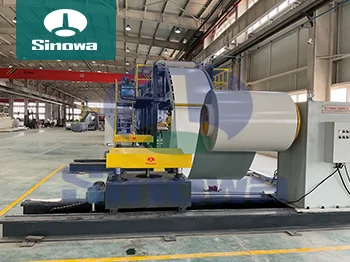
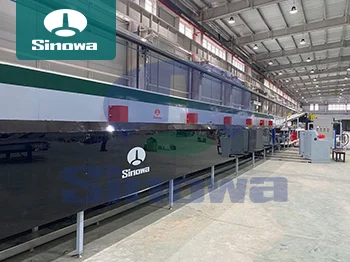
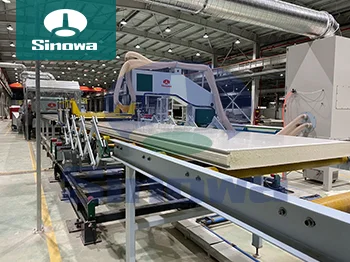
Sinowa is committed to the development and manufacturing of high-end and high-efficiency decorative pu sandwich panel production line. Our decorative pu sandwich panel production line are leading the way in efficiency, automatic control, human-computer interaction, environmental protection and energy consumption. Using system integration and bus control technology, it realizes the automatic integrated linkage control of the entire decorative pu sandwich panel production line, and can achieve remote interactive communication, which has the world-class level and a comprehensive leading high-performance decorative pu sandwich panel production line in the market.
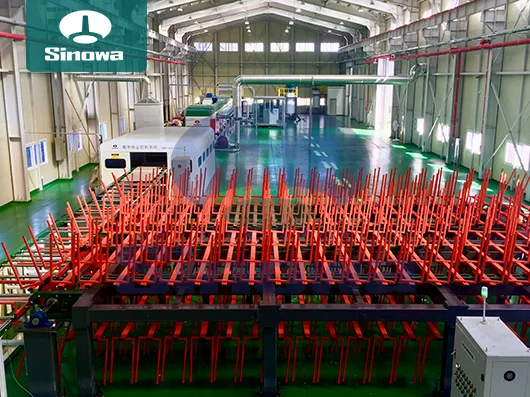
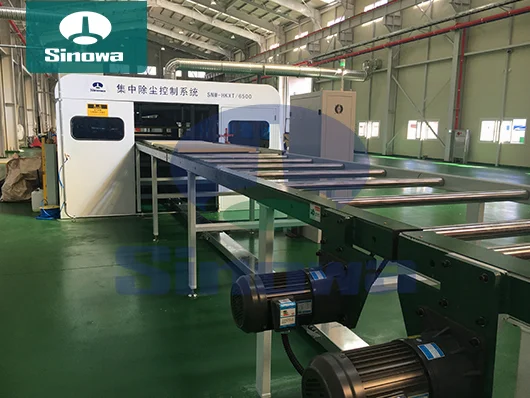
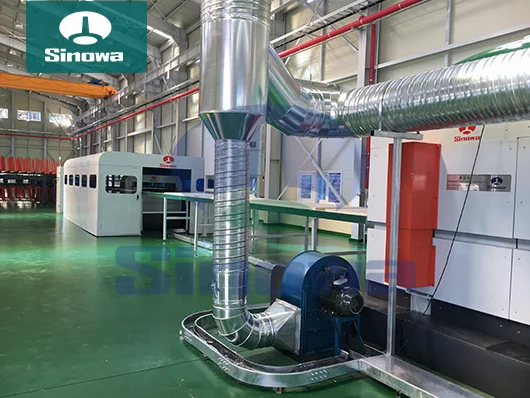
For more than ten years, relying on our innovative manufacturing concept and excellence in quality, reliable and trustworthy service to customers, we cooperate with customers all over the world, exported products to Canada, South Korea, Israel, Australia, the Middle East and other more than 20 countries and regions. contributed to building energy conservation and low-carbon production and have won widespread praise.
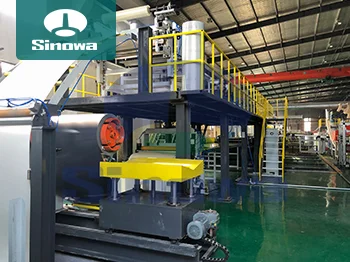
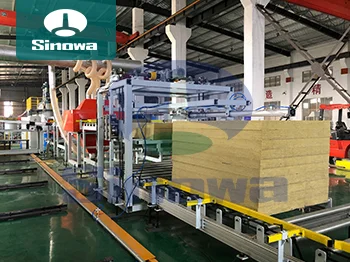
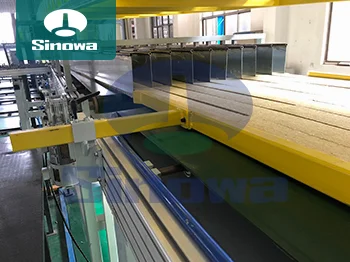
Sinowa has invested outstanding efforts in decorative pu sandwich panel production line, this is why our products are more efficiency, quality, automatic control technology, environmental protection, energy consumption indicators and the appearance and safety protection are comprehensively leading, some subversive design changes in many major technical points, these major innovations make our products excellent in price/performance and user experience.
A decorative PU sandwich panel production line factory serves as a comprehensive manufacturing hub dedicated to building material equipment that merges structural performance with visual aesthetics. Unlike conventional sandwich panel machinery that focuses purely on insulation and strength, this type of production system is built to handle decorative surface treatments alongside continuous PU foaming and composite lamination. Inside the factory workshop, raw material storage zones occupy a large area, where metal coils and decorative surface rolls are stored in controlled environments to avoid deformation, scratches and moisture damage before entering the production workflow. Operators oversee material feeding and preliminary inspection, checking surface flatness and coating integrity to reduce defects at the source. The factory layout is planned to support smooth material flow from decoiling, embossing and forming to foaming, curing, cutting and finished panel collection, minimizing cross-traffic and handling losses. Each functional zone is separated logically so maintenance teams can access mechanical parts without disrupting ongoing production runs. The factory invests heavily in workshop environment management, maintaining steady temperature and ventilation because the PU foaming reaction is sensitive to ambient conditions. Small fluctuations in temperature or humidity may alter foam expansion rate, leading to uneven core density and poor bonding between foam and decorative face sheets. By stabilizing workshop conditions, the factory creates a reliable foundation for consistent panel appearance and physical performance, ensuring decorative textures stay clear and uniform across every batch produced on the line.
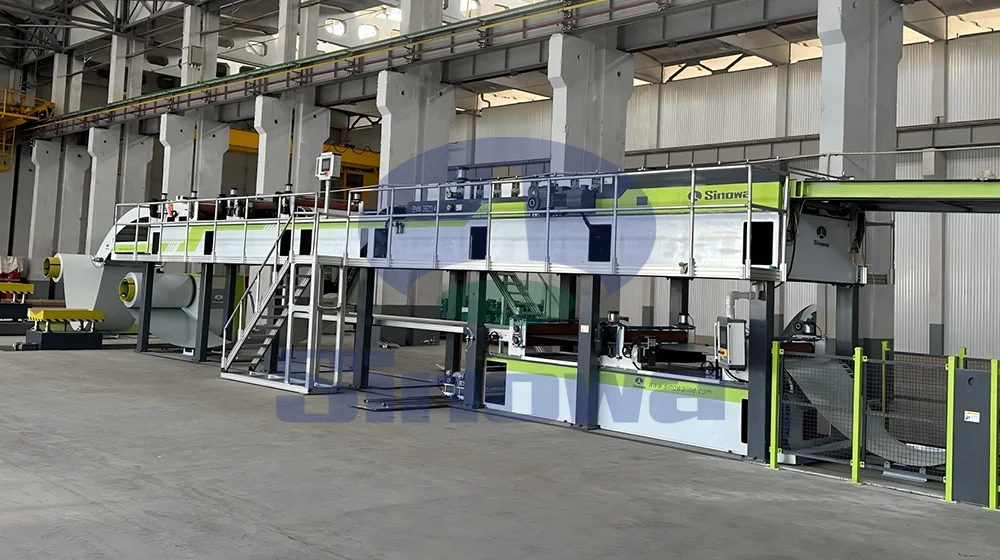
The first core segment of the decorative PU sandwich panel production line is the surface material processing module, which defines the visual character of finished panels. This stage begins with decoilers that release continuous rolls of facing material at adjustable speeds, feeding sheets into embossing and profiling units. Embossing rollers are crafted to replicate diverse surface textures, including brick patterns, wood grain, stone textures and simple geometric designs, pressing detailed textures onto the sheet surface in a single continuous pass. The pressure and speed of embossing can be fine-tuned to control pattern depth, avoiding over-stretching or cracking of the decorative coating. After embossing, forming rollers shape the edge profiles of the face sheets, creating interlocking joints that simplify later panel installation on building walls. This pre-forming step is critical for decorative panels because neatly matched edges reduce gaps on finished facades and preserve the continuity of surface patterns. All moving rollers and servo drives in this section are synchronized with downstream units through a central control system. Any mismatch in line speed will cause wrinkling, pattern distortion or misalignment when the decorative sheet meets the PU foam core. Skilled technicians regularly calibrate roller clearance and pressure, replacing worn molds and rollers to keep decorative details sharp. This module turns plain flat coils into patterned building skins, ready to combine with polyurethane foam and form integrated composite panels for exterior and interior decoration projects.
Following surface preparation, the PU foaming and mixing unit represents the technical heart of the entire decorative sandwich panel line. Liquid polyol and isocyanate components are delivered from storage tanks to a high-pressure mixing head, where the two raw materials blend rapidly before being dispensed evenly onto the moving lower decorative sheet. The mixing system controls raw material ratios, flow rate and injection position precisely, as even tiny deviations can create inconsistent foam hardness, voids or weak adhesion between foam and decorative facings. As the liquid mixture flows across the sheet, it starts foaming and expanding immediately, filling the space between the upper and lower decorative face sheets. The assembled composite then enters a long double-belt conveyor that maintains constant pressure and temperature during the curing phase. The double belts hold the panel flat while the PU foam completes its chemical reaction, forming a rigid, closed-cell core that bonds tightly to both decorative surfaces without additional adhesive. The length of the curing tunnel is designed according to line running speed, giving foam enough time to fully cure before cutting. Operators monitor real-time data on material pressure, temperature and line speed through the central control interface, adjusting parameters quickly if abnormal readings emerge. This continuous foaming process eliminates intermittent manual casting, greatly raising output capacity while keeping the thickness of the PU core consistent, which directly affects thermal performance and flatness of decorative panels.
Lamination and curing stabilization determine the long-term quality of decorative PU sandwich panels after foaming. Inside the double-belt conveyor system, uniform pressure presses the upper and lower decorative sheets against the expanding foam core, preventing bubbles, separation or warping during curing. Temperature control along the conveyor path is segmented, supporting gradual chemical transformation rather than sudden heating, which protects delicate decorative coatings from discoloration or texture damage. If temperature rises too fast, foam may expand too quickly and create internal cavities; if temperature stays too low, curing becomes incomplete and panel layers can peel apart over time. As the composite travels forward, the foam gradually solidifies into a continuous rigid core, forming an integrated structure instead of three separate stuck-together layers. This integration property is one major advantage of decorative PU sandwich panels, because the bonded structure resists delamination under temperature cycling and minor structural vibration. During production, sampling checks are carried out periodically to examine cross-sections of semi-finished panels, verifying foam density, bonding interface and the integrity of decorative patterns. Any detected issue triggers parameter adjustments before large quantities of defective products are generated. This stage balances chemical reaction control and mechanical restraint, turning liquid raw materials and patterned metal sheets into solid composite panels that retain both decorative beauty and stable physical properties.
Once the composite panel exits the curing tunnel, the automatic cutting and finishing module processes continuous long boards into customized lengths. Servo-driven flying cutters follow the movement of the panel, cutting materials without stopping the main production line, which avoids productivity loss caused by frequent start-and-stop operations. Before cutting, the system reads preset length data and tracks panel travel position to ensure cutting accuracy. After cutting, edge trimming devices clean rough edges and adjust panel width, removing excess foam and uneven sheet edges that would affect assembly. Some optional units can add sealing treatment along panel edges to reduce moisture penetration into the PU core. Finished panels then move onto discharge tables, where sorting equipment separates products according to specifications. Workers at the discharge station conduct visual inspection, checking decorative surfaces for scratches, pattern distortion, stains or edge defects. Panels with visible flaws are picked out for re-evaluation, while qualified ones are stacked neatly and wrapped with protective films to guard decorative surfaces during storage and transportation. This finishing phase turns endless composite strips into individual finished building panels, ready to be packaged and delivered. The design of this module prioritizes protection of decorative surfaces, because surface scratches or dents will ruin the visual effect even when insulation and structural performance remain fully functional.
The factory’s control and automation system unifies every functional section of the decorative PU sandwich panel production line into one coordinated system. A central PLC platform synchronizes decoiling, embossing, foaming, lamination, curing and cutting, linking all servo motors, sensors and actuators. Operators input production parameters such as panel thickness, line speed, decorative pattern selection and cutting length through a touchscreen interface. The system automatically adjusts the corresponding equipment parameters, reducing manual setup work and human error. Real-time sensors collect data including raw material pressure, workshop temperature, belt tension and panel speed, feeding information back to the controller for dynamic adjustment. When abnormal conditions appear, warning signals pop up on the interface and the system can slow or halt the line to prevent mass defective production. Data logs record each production run, tracking parameter settings and output volume for later review. This digital control framework makes it easier to switch between different panel specifications, allowing the line to produce multiple styles of decorative panels within a single working day. Maintenance technicians can also access operational records to identify worn components or recurring operational problems. By automating core processes, the factory lowers reliance on manual operation while maintaining stable decorative effect and panel consistency across different product variants.
Material selection and formulation research occupy an important position within the factory’s daily operations, supporting diversified decorative PU sandwich panel development. The factory evaluates different decorative facing materials, testing their coating durability, flexibility and compatibility with the PU foaming process. Some surface materials are suitable for deep embossing with heavy texture, while others are better for fine printed decorative patterns. The PU core formulation is also adjusted to match different application scenarios, balancing rigidity, thermal insulation and bonding ability with decorative facings. Material test benches inside the factory simulate long-term environmental exposure, observing how composite samples respond to temperature changes and humidity shifts. These tests help refine raw material combinations and avoid premature fading, coating peeling or core aging after panels are installed. The factory also explores options to optimize raw material usage, reducing waste generated during foaming and trimming without sacrificing panel quality. Waste materials collected during production are handled in designated areas following proper management practices. Continuous material testing helps expand the range of decorative styles available on the production line, enabling customers to pick panel appearances matching their architectural design concepts. This ongoing exploration of materials keeps the production line adaptable to evolving market demands for decorative cladding solutions.
After equipment assembly and testing, the factory provides technical support for clients who deploy decorative PU sandwich panel production lines in their own manufacturing sites. Before delivery, each complete production line undergoes full-load trial runs inside the factory workshop, simulating continuous production of decorative panels to verify synchronization, stability and finished product quality. Engineers check every mechanical assembly, sensor response and control function, fixing hidden faults before shipment. Once the equipment arrives at the client’s facility, technical teams guide installation, alignment and on-site commissioning. They help adjust the line according to local workshop conditions and train local operators on routine startup, parameter adjustment, cleaning and maintenance. Training sessions cover common troubleshooting methods, teaching operators to identify early warning signs and handle minor malfunctions. Long-term technical consultation remains available after commissioning, supporting clients when they intend to develop new decorative patterns or adjust panel specifications. The factory also supplies guidance on spare part replacement schedules to extend the service life of the whole line. This after-sale support system helps clients achieve stable mass production of decorative PU sandwich panels. Beyond selling production machinery, the factory builds cooperative relationships, helping new panel manufacturers master the full workflow from raw material preparation to finished decorative panel output and successfully bring attractive, high-performance building cladding products to market.
« Decorative PU Sandwich Panel Production Line Factory » Update Date: 2026/10/16
Tags: Decorative PU Sandwich Panel Production Line , decorative pu sandwich panel production line, decorative pu sandwich panel production line manufacturer, decorative pu sandwich panel production line supplier, decorative pu sandwich panel production line for sale, customized decorative pu sandwich panel production line, china decorative pu sandwich panel production line
- PU Sandwich Panel Making Machine On Sales
- Polyurethane Sandwich Panel Production Line Supplier
- Customized PIR Sandwich Panel Line
- High-tech Foam Sandwich Panel Machine
- Custom PU Sandwich Panel Making Machine
- PIR Sandwich Panel Machine For Cold Storage
- Custom Sandwich Panel Production Machinery
- PU Insulated Panel Production Line Manufacturer
- Polyurethane Insulation Panel Production Line
- High-tech Polyurethane Foam Production Line
- Composite Panel Production Line On Sales
- Low Price PIR Insulated Panel Production Line
- Polyurethane Sandwich Panel Production Line For House
- Sandwich Panel Production Line Factory
- High-tech PUF Panel Making Machine
- Polyurethane Sandwich Panel Machinery
- Continuous PUF Panel Production Line For Sale
- Decorative PU Sandwich Panel Production Line Price
- High-end Glass Wool Equipment
- Sandwich Wall Panel Production Line From China
- Links:
- Sandwich Panel Continuous Production Line
- Automatic and Continuous Sandwich Panel Production Line
- Cheap and Low Price Sandwich Panel Production Line
- China Sandwich Panel Production Line Factory
- Color Steel Sandwich Panel Production Line For Cold Storage
- Continuous Composite Foam Sandwich Panel Production Line
- Continuous Production Line For Rockwool and Mineral Wool Sandwich Panels
- Continuous PU Phenolic Insulation Panel Production Line
- Continuous PU PIR Sandwich Panel Production Line
- Continuous PUF PUR Sandwich Panel Production Line
- Continuous Sandwich Panel Production Line For Roof and Wall
- Customized and Design Sandwich Panel Production Line
- Decorative Sandwich Panel Production Line For Glass Wool Boards
- High Quality Sandwich Panel Production Line For Sale
- Polyurethane(PU) Sandwich Panel Production Line
- Sandwich Panel Production Line Manufacturer and Supplier
- Sandwich Panel Production Machinery and Equipment