
Polyurethane Sandwich Panel Production Line Supplier
Sinowa is a well-known manufacturer and technical service provider of high-end polyurethane sandwich panel production line, learn more about polyurethane sandwich panel production line supplier, please contact Sinowa's technical engineer, tell us what you need, we will contact you as soon as possible!
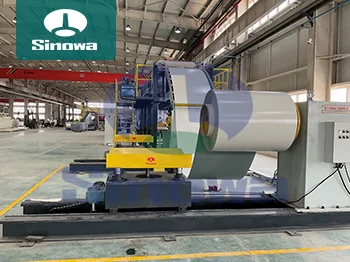
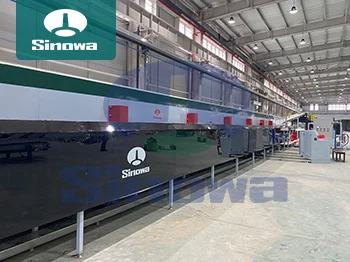
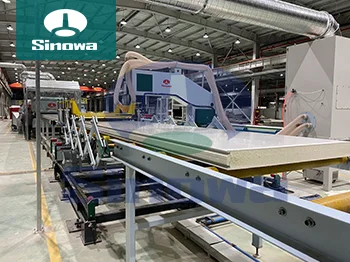
Sinowa is committed to the development and manufacturing of high-end and high-efficiency polyurethane sandwich panel production line. Our polyurethane sandwich panel production line are leading the way in efficiency, automatic control, human-computer interaction, environmental protection and energy consumption. Using system integration and bus control technology, it realizes the automatic integrated linkage control of the entire polyurethane sandwich panel production line, and can achieve remote interactive communication, which has the world-class level and a comprehensive leading high-performance polyurethane sandwich panel production line in the market.
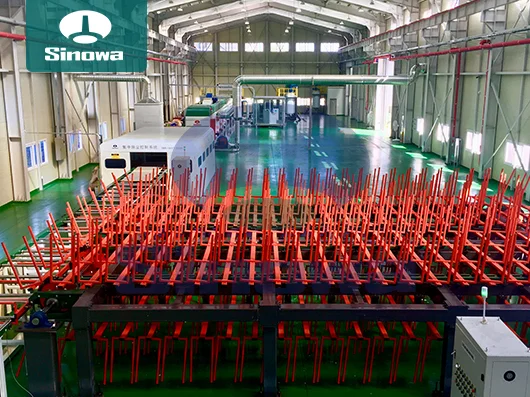
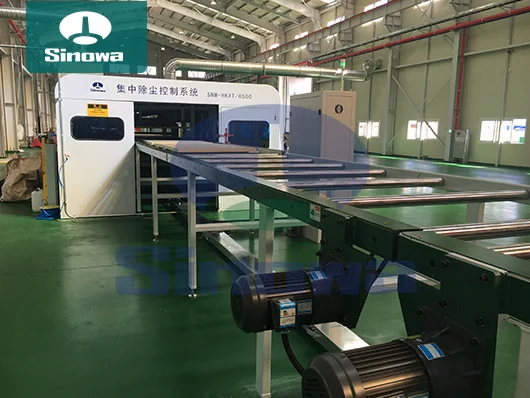
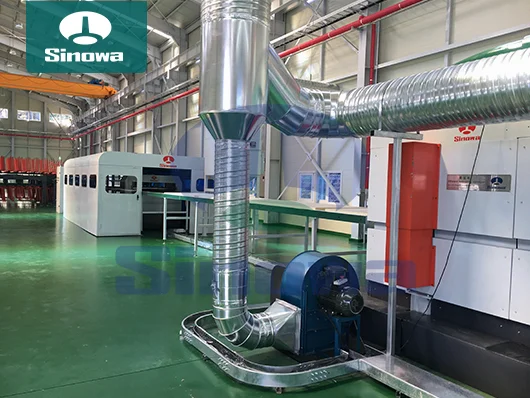
For more than ten years, relying on our innovative manufacturing concept and excellence in quality, reliable and trustworthy service to customers, we cooperate with customers all over the world, exported products to Canada, South Korea, Israel, Australia, the Middle East and other more than 20 countries and regions. contributed to building energy conservation and low-carbon production and have won widespread praise.
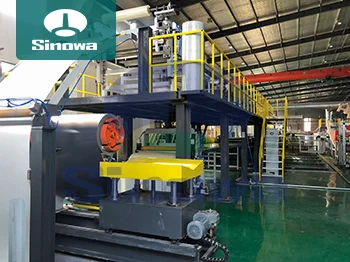
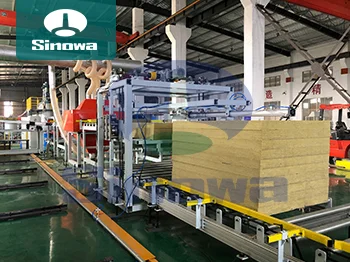
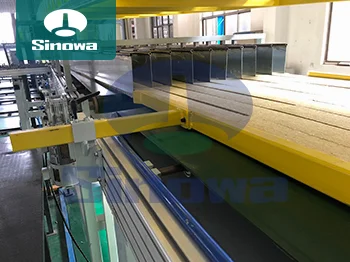
Sinowa has invested outstanding efforts in polyurethane sandwich panel production line, this is why our products are more efficiency, quality, automatic control technology, environmental protection, energy consumption indicators and the appearance and safety protection are comprehensively leading, some subversive design changes in many major technical points, these major innovations make our products excellent in price/performance and user experience.
In the context of global industrial upgrading and the increasing emphasis on energy conservation and environmental protection, polyurethane sandwich panels have emerged as a crucial composite material widely used in construction, cold chain logistics, industrial insulation, and many other fields. These panels, composed of two outer structural layers and a polyurethane foam core in the middle, combine excellent thermal insulation, fire resistance, weather resistance, and structural stability, making them an indispensable choice for modern engineering projects. Behind the mass production of high-quality polyurethane sandwich panels lies the support of advanced production lines, which integrate mechanical engineering, material science, and automatic control technology to realize efficient, continuous, and stable production. As a professional provider of such production solutions, the focus is on delivering reliable, flexible, and high-performance production line systems that meet the diverse needs of different industries.
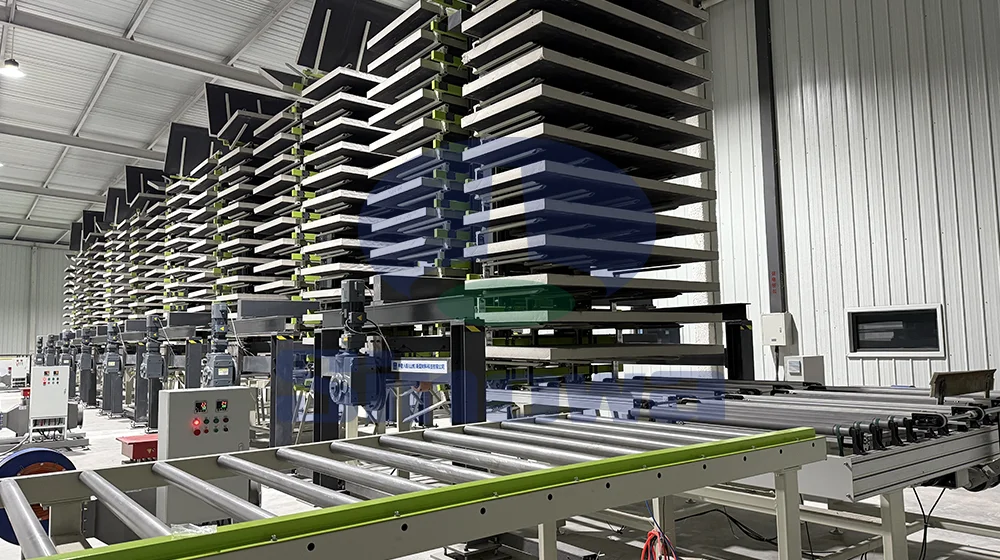
A polyurethane sandwich panel production line is a highly integrated system consisting of multiple functional modules that work in coordination to complete the entire production process from raw material processing to finished product packaging. Each module undertakes specific and critical tasks, and the seamless connection between them directly determines the production efficiency, product quality, and operational stability of the entire line. Unlike traditional discrete production methods, modern production lines adopt continuous operation modes, which not only greatly improve production efficiency but also ensure the consistency of product specifications and performance, laying a solid foundation for the large-scale application of polyurethane sandwich panels.
The raw material processing module is the starting point of the entire production line and a key link to ensure product quality. The outer structural layers of polyurethane sandwich panels are usually made of metal coils such as color-coated steel, galvanized steel, or aluminum sheets, and the processing of these raw materials requires precise and standardized operations. The raw material processing module mainly includes unwinding machines, precision leveling machines, online cleaning devices, and drying systems. The unwinding machine adopts hydraulic tensioning technology, which can stably unfold metal coils with a thickness of 0.3-1.2 mm and a maximum roll weight of 10 tons, ensuring that the coils do not deviate during the unwinding process. After unwinding, the metal sheets enter the precision leveling machine, which uses a 7-13 roller structure to correct the deformation of the sheets, achieving a flatness of up to 0.5 mm/m, which is essential for the subsequent forming and composite processes. The online cleaning device uses a three-tank alkaline degreasing system combined with high-pressure spraying (with a pressure of 0.3-0.5 MPa) to remove oil stains, dust, and other impurities on the surface of the metal sheets, preventing these impurities from affecting the bonding effect between the surface layer and the core material. After cleaning, the metal sheets are sent to the drying system, where hot air circulation drying is used to control the temperature within the range of 80-120 ℃ ± 5 ℃, ensuring that the surface of the sheets is completely dry before entering the next process. In addition, some production lines are also equipped with optional film laminating machines, which can bond protective films on the surface of the metal sheets to prevent scratches and corrosion during processing and transportation.
The forming unit is another core component of the production line, as it directly affects the appearance, structural strength, and installation performance of the final polyurethane sandwich panels. The forming process mainly involves shaping the processed metal sheets into the required profiles, such as corrugated, flat, or ribbed shapes, to meet the needs of different application scenarios. The forming unit is mainly composed of rolling forming machines, quick mold changing systems, edge bending machines, and online detection systems. The rolling forming machine is equipped with 12-24 sets of rolling mill units, driven by servo motors, with a synchronous forming speed accuracy of ± 0.5%, ensuring that the formed metal sheets have consistent dimensions and smooth surfaces. The quick mold changing system adopts hydraulic clamping, which can complete mold replacement in less than 30 minutes, greatly improving production flexibility and enabling the production line to quickly switch between different panel specifications. The edge bending machine is used to form male and female connection structures on the edges of the metal sheets, with an angle accuracy of ± 0.5 °, ensuring that the panels can be tightly spliced during installation, reducing cold bridges and improving thermal insulation performance. The online detection system uses laser rangefinders to real-time monitor the forming size deviation of the metal sheets, and once an abnormality is detected, it will send an alarm signal in time to facilitate operators to adjust parameters, ensuring the qualification rate of the formed products.
The polyurethane foaming system is the core technology of the entire production line, as the quality of the polyurethane foam core directly determines the thermal insulation, fire resistance, and mechanical properties of the sandwich panels. The foaming system mainly includes high-pressure foaming machines, temperature control systems, mixing heads, measurement systems, and foam platforms. The high-pressure foaming machine works at a pressure of 120-200 bar, with a flow control accuracy of ± 1.5%, which can accurately mix isocyanate and polyol, the main raw materials of polyurethane, according to a certain proportion. The temperature control system uses plate heat exchangers to control the temperature of the raw materials with an accuracy of ± 1 ℃, because the temperature of the raw materials has a significant impact on the foaming reaction speed and the quality of the foam core. The mixing head is self-cleaning, with a mixing efficiency of more than 98% and a service life of over 500,000 times, ensuring that the raw materials are fully mixed and avoiding uneven foaming caused by insufficient mixing. The measurement system adopts a mass flow meter driven by a servo motor, with a proportioning accuracy of ± 1%, ensuring the stability of the raw material ratio and the consistency of the foam core density. The foam platform is of double-track type, with an adjustable pressure of 0.05-0.3 MPa and a temperature control of 30-60 ℃, providing a stable environment for the foaming and solidification of polyurethane raw materials. During the production process, the mixed polyurethane raw materials are evenly poured onto the bottom metal sheet, and then the upper metal sheet is covered, and the two are sent to the foam platform together to complete the foaming and solidification reaction, forming a tight bond between the core material and the surface layer.
The composite pressurization and curing system is responsible for ensuring the tight bonding between the polyurethane foam core and the upper and lower metal sheets, as well as the complete curing of the foam core. This system mainly includes a double-track laminator and a heating curing system. The double-track laminator is usually 18-24 meters long, with precision hydraulic lifting and insulation units. The chain plate of the laminator is made of high-quality alloy steel, which has been quenched and ground to ensure smooth operation and uniform pressure. During the conveying process of the laminator, the upper and lower chain plates apply uniform pressure to the composite sheet, making the foam core and the surface layer closely bonded without gaps. The heating curing system uses hot air circulation to maintain the temperature inside the laminator at 60-70 ℃, which is the optimal temperature range for the curing of polyurethane foam. Under this temperature condition, the polyurethane foam can fully cure within a certain time, forming a stable closed-cell structure, which gives the sandwich panel excellent thermal insulation and moisture resistance. The curing time can be adjusted according to the thickness of the panel and the performance requirements of the foam core, ensuring that the final product has sufficient structural strength and performance stability.
The post-processing system is the last link of the production line, mainly responsible for trimming, cutting, cooling, stacking, and packaging the cured composite panels to form finished products that meet the requirements. The post-processing system includes edge trimming machines, automatic tracking cutting machines, cooling conveyors, automatic palletizing machines, and packaging systems. The edge trimming machine trims the edges of the composite panels to ensure that the width of the panels is consistent and the edges are smooth, facilitating subsequent installation. The automatic tracking cutting machine adopts servo drive and photoelectric detection technology, which can accurately cut the composite panels into the required length according to the set parameters, with a cutting accuracy of ± 1 mm. After cutting, the panels are sent to the cooling conveyor for natural cooling or forced cooling, so that the temperature of the panels drops to room temperature, ensuring that the structure of the panels is stable and not deformed. The automatic palletizing machine can stack the cooled panels neatly according to the set specifications, reducing manual labor intensity and improving stacking efficiency. Finally, the packaging system wraps the stacked panels with waterproof and dustproof packaging materials to prevent damage during transportation and storage.
Modern polyurethane sandwich panel production lines are characterized by high automation, strong production flexibility, energy conservation, and environmental protection. The entire production process is controlled by an intelligent PLC control system, which integrates human-machine interaction interfaces, allowing operators to set and adjust production parameters such as production speed, panel thickness, and cutting length through the touch screen. The system can real-time monitor the operation status of each module, collect and analyze production data, and timely alarm and handle faults, ensuring the stable operation of the production line. The high degree of automation not only reduces the need for manual operation, reduces labor costs, but also avoids human errors, improving the stability and qualification rate of product quality. In terms of production flexibility, the production line can be customized according to the needs of different customers, producing polyurethane sandwich panels of different widths, thicknesses, and surface profiles. The width of the panels can usually be adjusted within the range of 400-1220 mm, and the thickness can be adjusted from 20 mm to 300 mm, which can meet the needs of different application scenarios such as general industrial plants, cold storage, and clean rooms. In addition, the production line adopts environmentally friendly production technologies, such as using cyclopentane instead of CFC as a foaming agent, which does not damage the ozone layer and meets the global environmental protection requirements. At the same time, the production line is equipped with dust removal and waste treatment devices, which can effectively reduce the emission of dust and waste during the production process, protecting the environment and the health of operators.
The application scope of polyurethane sandwich panels produced by the production line is extremely wide, covering multiple fields such as construction, cold chain logistics, industrial insulation, and special environments. In the construction field, polyurethane sandwich panels are widely used as wall and roof materials for industrial plants, stadiums, prefabricated buildings, and residential buildings. Their lightweight and high-strength characteristics can reduce the load of the building structure, shorten the construction period, and their excellent thermal insulation performance can reduce building energy consumption, meeting the requirements of green buildings. In the cold chain logistics field, polyurethane sandwich panels are used to build cold storage, refrigerated trucks, and container insulation compartments. Their low thermal conductivity (as low as 0.022-0.027 W/(m·K)) and excellent moisture resistance can effectively maintain a low-temperature environment, ensuring the quality and freshness of goods during storage and transportation. In the industrial insulation field, the panels are used for the insulation of industrial equipment, pipelines, and tanks, reducing heat loss and improving energy utilization efficiency. In special environments such as clean rooms in the electronic and pharmaceutical industries, the panels have the characteristics of easy cleaning and antibacterial properties, which can meet the high cleanliness requirements of the environment. In addition, polyurethane sandwich panels are also used in agricultural buildings, sports facilities, and portable shelters, showing strong versatility.
The operation and maintenance of the polyurethane sandwich panel production line are crucial to ensuring its long-term stable operation and extending its service life. Regular maintenance of the production line includes checking the wear of mechanical parts, lubricating the transmission system, calibrating the measurement and detection equipment, and cleaning the foaming system and conveyor belts. For example, the mixing head of the foaming machine needs to be cleaned regularly to prevent the accumulation of raw materials from affecting the mixing effect; the roller of the rolling forming machine needs to be checked and replaced regularly to ensure the forming accuracy; the electrical system needs to be inspected to prevent short circuits and other faults. In addition, operators need to receive professional training to be familiar with the working principle and operation specifications of the production line, so that they can quickly handle various faults during the operation process and ensure the smooth progress of production. At the same time, the production line should be operated in strict accordance with the production process and safety regulations to avoid safety accidents and equipment damage.
With the continuous development of the global economy and the increasing emphasis on energy conservation and environmental protection, the demand for polyurethane sandwich panels in various industries is constantly growing, which also puts higher requirements on the performance and quality of polyurethane sandwich panel production lines. In the future, the production line will develop in the direction of higher automation, intelligence, and environmental protection. On the one hand, the integration of intelligent technologies such as artificial intelligence and the Internet of Things will be strengthened to realize real-time monitoring, remote control, and predictive maintenance of the production line, further improving production efficiency and reducing maintenance costs. On the other hand, more environmentally friendly raw materials and production processes will be adopted to reduce the environmental impact of production and meet the increasingly strict environmental protection standards. In addition, the production line will be more flexible and customizable to meet the personalized needs of different customers and different application scenarios, promoting the continuous development and upgrading of the polyurethane sandwich panel industry.
In summary, the polyurethane sandwich panel production line is a highly integrated, efficient, and stable industrial equipment system, which plays a vital role in the mass production of high-quality polyurethane sandwich panels. From raw material processing to finished product packaging, each link of the production line is closely connected and mutually restricted, requiring precise control and scientific operation. As a provider of production line solutions, the focus is on continuously optimizing the structure and performance of the production line, improving production efficiency and product quality, and providing reliable support for the development of various industries. With the continuous progress of technology and the expansion of application fields, the polyurethane sandwich panel production line will surely play a more important role in the future, making greater contributions to energy conservation, environmental protection, and industrial upgrading.
« Polyurethane Sandwich Panel Production Line Supplier » Update Date: 2026/4/16
- PU Sandwich Panel Production Line For Cold Room
- High-tech Color Steel Sandwich Panel Production Line
- Continuous Sandwich Panel Line Supplier
- PIR Sandwich Panel Machine Manufacturer
- Soundproofing Sandwich Panel Production Line Factory
- High Efficiency Insulated Sandwhich Panel Production Line
- Cheap Polyurethane Sandwich Panel Production Line
- Low Price Foam Core Sandwich Panel Line
- PIR Sandwich Panel Line For Building
- Fully Automatic Sandwich Panel Line
- Polyurethane Insulation Panel Production Line Price
- Color Steel Sandwich Panel Production Line On Sales
- Glass Wool Panel Production Line Manufacturer
- Roof Sandwich Panel Production Line Design
- PUF Insulation Sandwich Panel Line
- Cheap Continuous Sandwich Panel Line
- Insulated Sandwhich Panel Production Line For Sale
- High Efficiency Glass Wool Equipment
- Polyurethane Sandwich Panel Line For Clean Room
- Sandwich Panel Machines Production
- Links:
- Sandwich Panel Continuous Production Line
- Automatic and Continuous Sandwich Panel Production Line
- Cheap and Low Price Sandwich Panel Production Line
- China Sandwich Panel Production Line Factory
- Color Steel Sandwich Panel Production Line For Cold Storage
- Continuous Composite Foam Sandwich Panel Production Line
- Continuous Production Line For Rockwool and Mineral Wool Sandwich Panels
- Continuous PU Phenolic Insulation Panel Production Line
- Continuous PU PIR Sandwich Panel Production Line
- Continuous PUF PUR Sandwich Panel Production Line
- Continuous Sandwich Panel Production Line For Roof and Wall
- Customized and Design Sandwich Panel Production Line
- Decorative Sandwich Panel Production Line For Glass Wool Boards
- High Quality Sandwich Panel Production Line For Sale
- Polyurethane(PU) Sandwich Panel Production Line
- Sandwich Panel Production Line Manufacturer and Supplier