
Custom Sandwich Panel Production Machinery
Sinowa is a well-known manufacturer and technical service provider of high-end sandwich panel production machinery, learn more about custom sandwich panel production machinery, please contact Sinowa's technical engineer, tell us what you need, we will contact you as soon as possible!
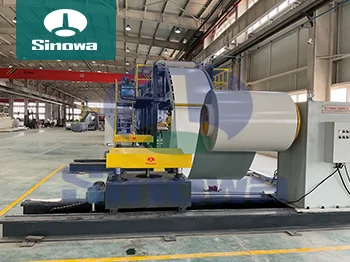
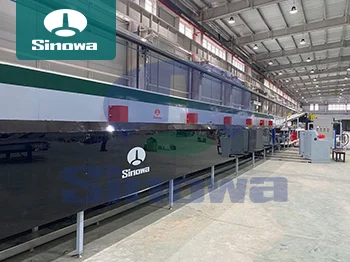
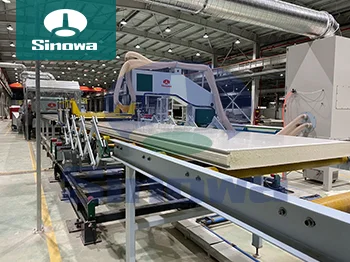
Sinowa is committed to the development and manufacturing of high-end and high-efficiency sandwich panel production machinery. Our sandwich panel production machinery are leading the way in efficiency, automatic control, human-computer interaction, environmental protection and energy consumption. Using system integration and bus control technology, it realizes the automatic integrated linkage control of the entire sandwich panel production machinery, and can achieve remote interactive communication, which has the world-class level and a comprehensive leading high-performance sandwich panel production machinery in the market.
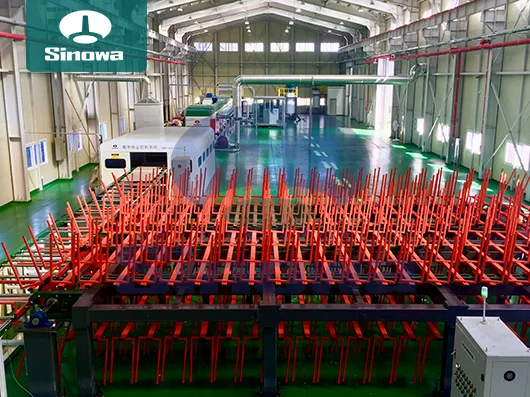
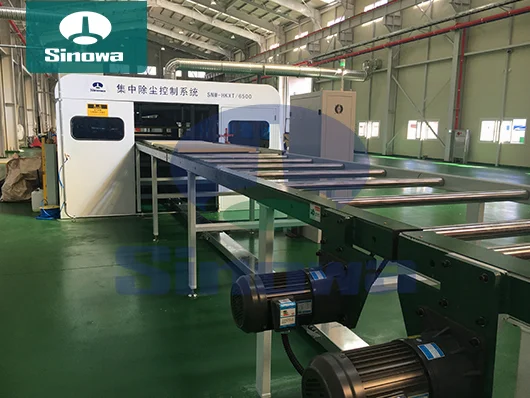
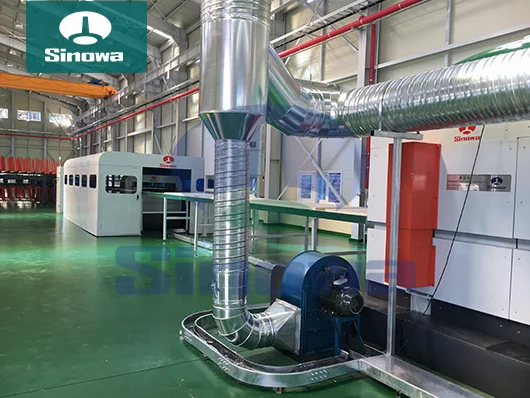
For more than ten years, relying on our innovative manufacturing concept and excellence in quality, reliable and trustworthy service to customers, we cooperate with customers all over the world, exported products to Canada, South Korea, Israel, Australia, the Middle East and other more than 20 countries and regions. contributed to building energy conservation and low-carbon production and have won widespread praise.
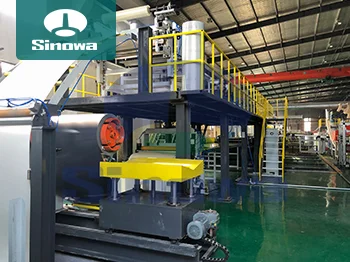
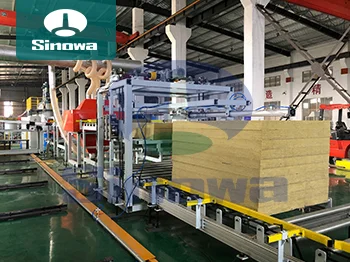
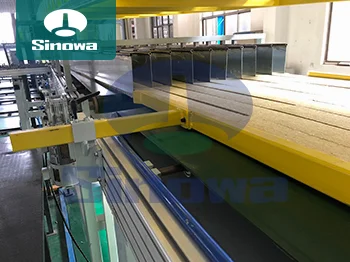
Sinowa has invested outstanding efforts in sandwich panel production machinery, this is why our products are more efficiency, quality, automatic control technology, environmental protection, energy consumption indicators and the appearance and safety protection are comprehensively leading, some subversive design changes in many major technical points, these major innovations make our products excellent in price/performance and user experience.
The demand for custom sandwich panel production machinery continues to expand as construction and manufacturing sectors seek flexible solutions to meet diverse project requirements. Unlike standard equipment built for fixed panel specifications, custom sandwich panel production machinery is engineered to adapt to varying core materials, facing materials, thickness ranges and panel dimensions according to specific production targets. Manufacturers of this type of machinery focus on modular design principles, allowing individual functional units to be adjusted, added or removed without complete reconstruction of the whole production line. Each production system integrates material feeding, continuous laminating, pressing, cutting and conveying segments, and every component can be modified to handle different raw material properties. Operators can adjust process parameters through central control interfaces, which helps maintain consistent bonding quality even when switching between different panel types. Customisation also covers mechanical frame structures, driving systems and safety configurations to match the space layout and operational rhythm of individual production workshops. Enterprises investing in custom machinery gain the ability to produce specialised sandwich panels that serve unique application scenarios, rather than being limited to mass-produced standard products. This tailored approach reduces unnecessary material waste and shortens the transition time between different product batches, bringing tangible improvements to overall production efficiency. Careful communication between machinery designers and end users is essential in the early development phase, as detailed production requirements form the foundation of every customised mechanical adjustment.
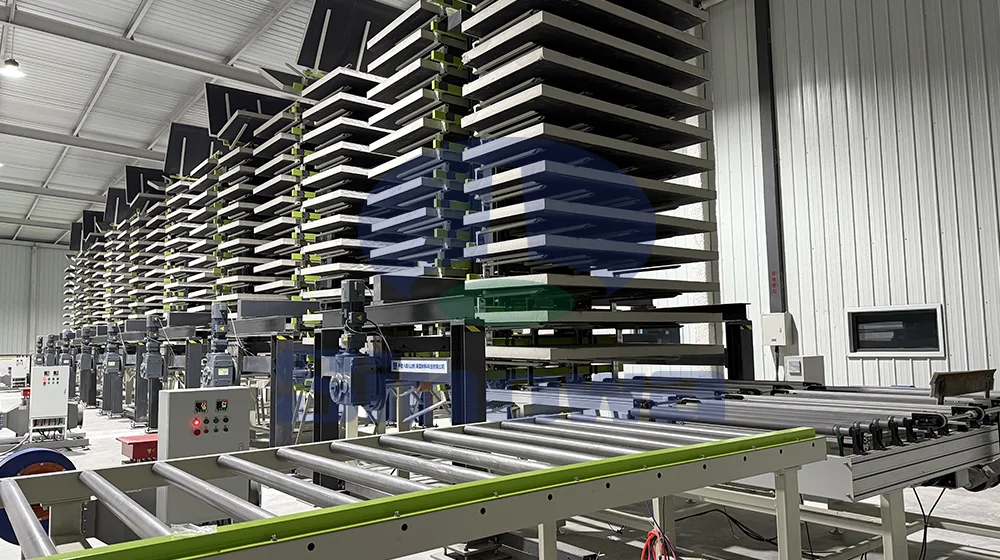
Material compatibility stands as one of the core considerations during the design of custom sandwich panel production machinery. Different core and skin materials require distinct pressure levels, temperature settings and feeding speeds to achieve stable bonding and structural integrity. Some raw materials are lightweight and porous, demanding gentle handling systems to avoid deformation during transportation and pressing stages, while denser materials need reinforced feeding rollers and stronger pressing assemblies. Custom machinery designers select appropriate roller surfaces, heating modules and adhesive application systems based on the physical characteristics of the selected materials. The adhesive distribution mechanism can be calibrated to control coating thickness precisely, ensuring uniform coverage without excess glue overflow that may affect panel surface quality. Specialised guiding devices are incorporated to keep facing sheets aligned as they move through the production line, preventing offset and uneven lamination. Machinery components that come into direct contact with raw materials can also be treated with surface protection measures to resist abrasion and chemical corrosion from adhesives. By matching mechanical performance to material traits, custom production lines can avoid common defects such as delamination, bubbling or uneven thickness on finished sandwich panels. This level of adaptability means a single customised line can process multiple combinations of materials, supporting product diversification for panel manufacturers and reducing the need to purchase separate standalone machines for different product lines.
Automation integration plays a vital role in modern custom sandwich panel production machinery, reshaping daily production workflows and reducing reliance on manual intervention. Customised control systems are programmed to synchronise the speed of each section of the production line, ensuring that feeding, heating, pressing and cutting operations coordinate smoothly. Sensors placed at key monitoring points continuously collect real-time data about material position, pressure values and temperature conditions, feeding information back to the central control unit for automatic adjustment. When minor deviations from preset parameters appear, the system can make immediate corrections without stopping the whole production process, lowering the rate of defective products. Custom automation layouts can be scaled according to expected output volumes, from compact semi-automatic setups for small-batch production to fully automated continuous lines designed for high daily throughput. Human-machine interfaces are customised to match the operation habits of on-site staff, simplifying parameter modification and equipment status checking. Remote monitoring functions can also be integrated into the machinery design, allowing technical teams to review operational data and diagnose potential mechanical issues from off-site locations. While automation improves operational consistency, the machinery still retains manual override functions to handle unexpected situations safely. The combination of custom mechanical structures and tailored automation systems balances production capacity, product precision and operational convenience for panel producers.
Precision cutting and forming modules are important customisable parts within sandwich panel production machinery, directly determining the dimensional accuracy of finished panels. Standard cutting equipment often has fixed cutting ranges, but customised cutting systems can be built to accommodate custom lengths, widths and edge profiles as required by panel buyers. Cutting tools are selected and adjusted according to the hardness and layered structure of sandwich panels to achieve clean cuts without tearing facing sheets or crushing inner core materials. Moving cutting frames travel synchronously with continuously moving panels, maintaining stable cutting accuracy while keeping the production line running continuously. Custom edge trimming units can be added to shape panel edges into different forms, preparing panels for easier assembly during later construction. Positioning markers and measurement sensors work together to verify panel dimensions before cutting, reducing errors caused by material stretching or movement. Operators can input new dimension parameters quickly when switching product orders, and the machinery adjusts cutting positions automatically. Wear-resistant tool materials are chosen for cutting components to extend service life and keep stable cutting precision over long operating hours. Regular tool maintenance routines are supported by the mechanical design, with easy access to cutting assemblies for inspection and replacement. Well-designed custom cutting modules minimise post-processing work on finished panels and help manufacturers deliver products that meet strict dimensional requirements for specialised projects.
Energy efficiency and thermal management are carefully addressed when developing custom sandwich panel production machinery, especially for lines that rely on thermal bonding processes. Heating sections in custom machinery can be sized and distributed to match the width and speed of panel production, avoiding excessive energy consumption from oversized heating zones. Insulation structures are built around heating chambers to reduce heat loss and maintain stable internal temperature, which also creates a more comfortable working environment around the equipment. Temperature zones can be divided and controlled independently, so different parts of the sandwich panel receive appropriate heat levels based on bonding requirements. Custom power supply configurations match the local power supply conditions of the production site, reducing energy loss during power conversion. Machinery designers also optimise the movement resistance of rollers and transmission parts to lower power consumption from driving systems. Energy monitoring modules can be installed to track power use during different production batches, helping operators identify opportunities to optimise running parameters. While prioritising energy saving, the thermal system must maintain reliable performance to guarantee consistent adhesive curing and panel bonding quality. Balancing energy consumption and production stability becomes a key target in custom machinery design, supporting long-term operational cost control for panel manufacturers. Sustainable mechanical design also reduces unnecessary heat emissions and resource waste during daily continuous operation.
Structural stability and long-term operational durability are essential attributes of custom sandwich panel production machinery, as these systems often run for extended continuous production cycles. The main frame of custom machinery uses selected structural materials and reinforced welding or connection methods to resist deformation under long-term load from pressing and material transportation. Stress points across the whole line are analysed during the design phase, and local reinforcement structures are added where heavy mechanical force concentrates. Rotating components such as rollers, chains and bearings are sized according to the expected production load and working hours, reducing wear and the frequency of part replacement. Vibration damping structures can be integrated into the base design to reduce vibration transmission during operation, protecting both mechanical precision and surrounding workshop facilities. Custom machinery layouts also take maintenance accessibility into account, leaving sufficient space for technicians to inspect, lubricate and replace worn components. Clear structural separation between driving, heating and electrical parts lowers the risk of damage caused by heat or debris. Machinery designers simulate long-duration operating conditions to assess potential fatigue issues before manufacturing the final equipment. Strong and stable custom production lines reduce unexpected shutdowns, preserve production continuity and extend the overall service life of the whole investment. Reliable mechanical performance helps manufacturers maintain stable output schedules even under heavy and continuous production workloads.
Safety design features are fully customised alongside functional requirements in sandwich panel production machinery, creating secure working environments for workshop staff. Safety protection devices are arranged around moving parts, high-temperature sections and cutting zones according to the specific layout of each custom line. Emergency stop controls are placed at multiple accessible locations along the production line, allowing operators to halt equipment rapidly in emergency situations. Safety interlock systems prevent machinery from starting when protective covers are opened or inspection doors remain unlocked, avoiding accidental contact with moving components. Temperature monitoring and overheat protection mechanisms shut down heating units automatically when abnormal temperature levels are detected, lowering fire risk. Custom alarm systems use visual and audio alerts to notify operators of mechanical faults, parameter abnormalities or blocked material feeding. All safety elements are integrated naturally into the machinery structure rather than added as simple after-market attachments, ensuring protection does not interfere with normal production workflows. Training-friendly design features also help operators understand safe operation procedures quickly. Machinery designers evaluate potential operational risks specific to each custom production layout and adjust protective configurations accordingly. A complete custom safety system reduces workplace hazards while preserving the flexibility and productivity that custom sandwich panel machinery provides.
After-sales technical support and continuous service frameworks form a necessary complement to custom sandwich panel production machinery, as customised equipment requires targeted technical assistance over its service life. Since every custom production line has unique mechanical and control configurations, service teams carry out detailed documentation covering the structure, parameters and maintenance requirements of each delivered system. Technical guidance is available for equipment installation, commissioning and initial trial production to help operators master the customised workflow. Training sessions cover routine inspection, parameter adjustment, minor troubleshooting and standard maintenance procedures tailored to the specific machinery design. Spare part recommendations are provided based on the custom component selection, making replacement parts easier to source when needed. When mechanical faults occur, technical support teams analyse the situation using equipment operational records and offer targeted solutions. As manufacturers update their product ranges, the custom machinery can often undergo partial upgrades to support new panel specifications without full replacement. Long-term service also includes periodic performance reviews to check mechanical precision, safety functions and energy consumption status. This ongoing support maximises the value of investment in custom sandwich panel production machinery, helping production lines maintain stable performance through years of changing market demands and evolving product requirements. Close technical cooperation between equipment suppliers and panel producers continues long after machinery delivery, sustaining the flexible production capability that custom-built systems are designed to deliver.
« Custom Sandwich Panel Production Machinery » Update Date: 2026/10/20
Tags: Sandwich Panel Production Machinery , sandwich panel production machinery, sandwich panel production machinery manufacturer, sandwich panel production machinery supplier, sandwich panel production machinery for sale, customized sandwich panel production machinery, china sandwich panel production machinery
- PUR Sandwich Panel Production Line On Sales
- Continuous PUF Panel Production Line For Cold Storage
- PIR Sandwich Panel Machine Factory
- High-tech Metal Sandwich Panel Production Line
- Continuous PU Sandwich Panel Production Line For Cold Room
- Fully Automatic PU Sandwich Panel Production Line
- High-tech Continuous Sandwich Panel Production Line
- High-tech Fully Automatic PU Sandwich Panel Production Line
- Custom Polyurethane Sandwich Panel Machinery
- Corrugated Sandwich Panel Production Line On Sales
- Fully Automatic PU Sandwich Panel Line
- Polyurethane Sandwich Panel Machine For Sale
- Glass Wool Equipment
- Fully Automatic Sandwich Panel Making Machine Price
- Continuous Sandwich Panel Manufacturing Line Price
- Foam Sandwich Panel Production Line
- PU Sandwich Panel Production Line On Sales
- PIR Sandwich Panel Production Line Price
- Sandwich Panel Making Equipment Factory
- PIR Insulated Panel Production Line From China
- Links:
- Sandwich Panel Continuous Production Line
- Automatic and Continuous Sandwich Panel Production Line
- Cheap and Low Price Sandwich Panel Production Line
- China Sandwich Panel Production Line Factory
- Color Steel Sandwich Panel Production Line For Cold Storage
- Continuous Composite Foam Sandwich Panel Production Line
- Continuous Production Line For Rockwool and Mineral Wool Sandwich Panels
- Continuous PU Phenolic Insulation Panel Production Line
- Continuous PU PIR Sandwich Panel Production Line
- Continuous PUF PUR Sandwich Panel Production Line
- Continuous Sandwich Panel Production Line For Roof and Wall
- Customized and Design Sandwich Panel Production Line
- Decorative Sandwich Panel Production Line For Glass Wool Boards
- High Quality Sandwich Panel Production Line For Sale
- Polyurethane(PU) Sandwich Panel Production Line
- Sandwich Panel Production Line Manufacturer and Supplier
- Sandwich Panel Production Machinery and Equipment