
Continuous PU Sandwich Panel Line For Sale
Sinowa is a well-known manufacturer and technical service provider of high-end continuous pu sandwich panel line, learn more about continuous pu sandwich panel line for sale, please contact Sinowa's technical engineer, tell us what you need, we will contact you as soon as possible!
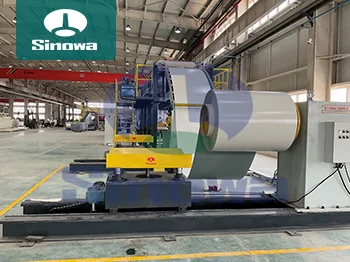
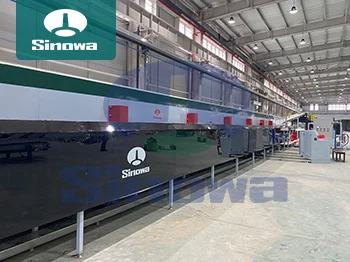
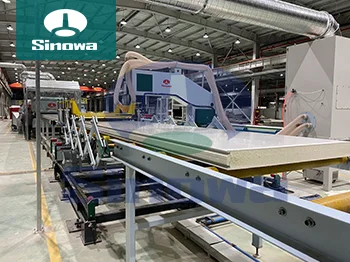
Sinowa is committed to the development and manufacturing of high-end and high-efficiency continuous pu sandwich panel line. Our continuous pu sandwich panel line are leading the way in efficiency, automatic control, human-computer interaction, environmental protection and energy consumption. Using system integration and bus control technology, it realizes the automatic integrated linkage control of the entire continuous pu sandwich panel line, and can achieve remote interactive communication, which has the world-class level and a comprehensive leading high-performance continuous pu sandwich panel line in the market.
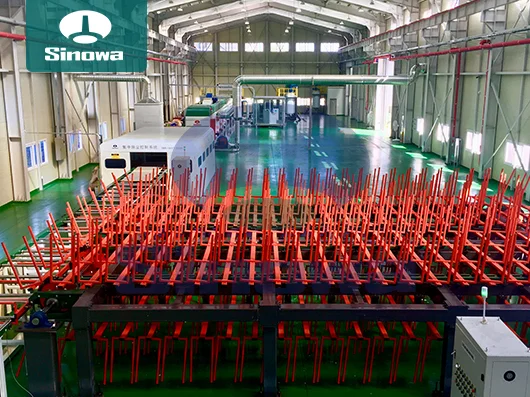
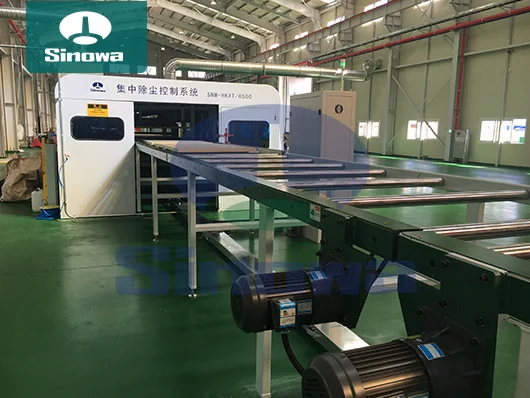
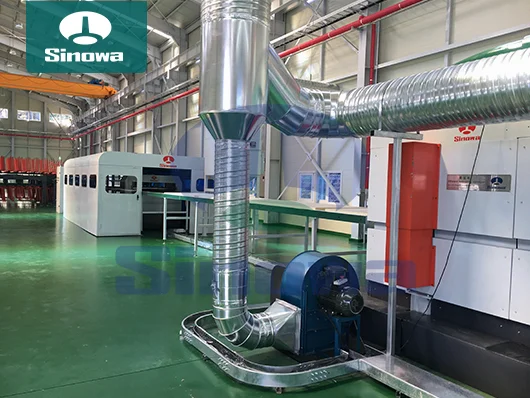
For more than ten years, relying on our innovative manufacturing concept and excellence in quality, reliable and trustworthy service to customers, we cooperate with customers all over the world, exported products to Canada, South Korea, Israel, Australia, the Middle East and other more than 20 countries and regions. contributed to building energy conservation and low-carbon production and have won widespread praise.
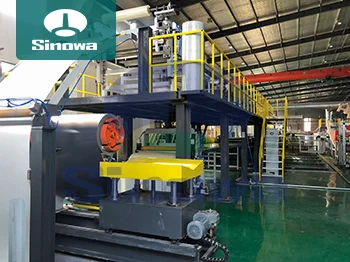
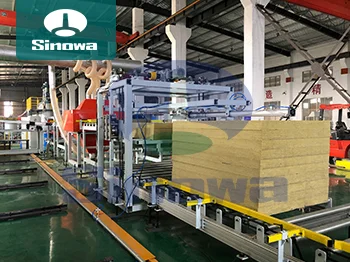
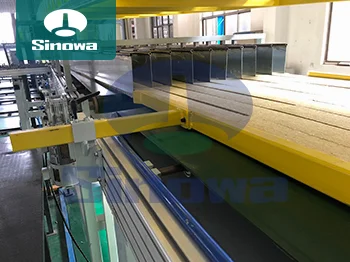
Sinowa has invested outstanding efforts in continuous pu sandwich panel line, this is why our products are more efficiency, quality, automatic control technology, environmental protection, energy consumption indicators and the appearance and safety protection are comprehensively leading, some subversive design changes in many major technical points, these major innovations make our products excellent in price/performance and user experience.
Continuous PU sandwich panel lines stand as core equipment in the production of composite insulation panels, integrating multiple processing technologies to realize automated and efficient manufacturing of polyurethane (PU) sandwich panels. Unlike traditional manual or discontinuous production methods, these lines complete the entire process from raw material feeding to finished product packaging in a seamless flow, ensuring consistent product quality while significantly improving production efficiency. The rationality of their structural design directly determines production stability, product precision, and adaptability to different specifications, making structure a fundamental factor affecting the overall performance of the line.
The basic structure of a continuous PU sandwich panel line consists of several functional systems that work in coordination to achieve the production cycle. The uncoiling system is the starting point, responsible for stably unwinding coiled surface materials—commonly color-coated steel plates, aluminum foils, or non-woven fabrics—with tension control devices to prevent material deformation or wrinkling during unwinding. This system ensures that the surface materials enter the subsequent process at a uniform speed and stable state, laying a foundation for consistent panel thickness and flatness. Following the uncoiling system is the forming system, which shapes the surface materials into desired profiles through a series of tandem rolling stands. The rollers in this system are precision-processed and undergo heat treatment and surface hardening to maintain shape stability under long-term high-load operation. By adjusting the spacing and angle of the rollers, the system can produce panels with different cross-sectional shapes, such as corrugated, trapezoidal, or flat profiles, to meet diverse application needs.
The foaming and laminating system is the core of the entire production line, responsible for mixing PU raw materials and injecting the foam between the upper and lower surface materials. This system includes a metering and mixing unit that accurately controls the ratio of polyol and isocyanate, the main components of PU foam, to ensure uniform foaming and stable core material performance. The high-pressure foaming technology adopted in most lines enables the foam to fill the gap between surface materials quickly and evenly, with a closed-cell rate maintained at a high level. The double-belt laminating unit then applies constant pressure to the composite panel during the foaming process, ensuring tight bonding between the PU core and surface materials while keeping the panel surface flat. The belts in this unit are made of high-temperature and wear-resistant materials, capable of withstanding the heat generated during foam curing and maintaining stable operation for long periods.
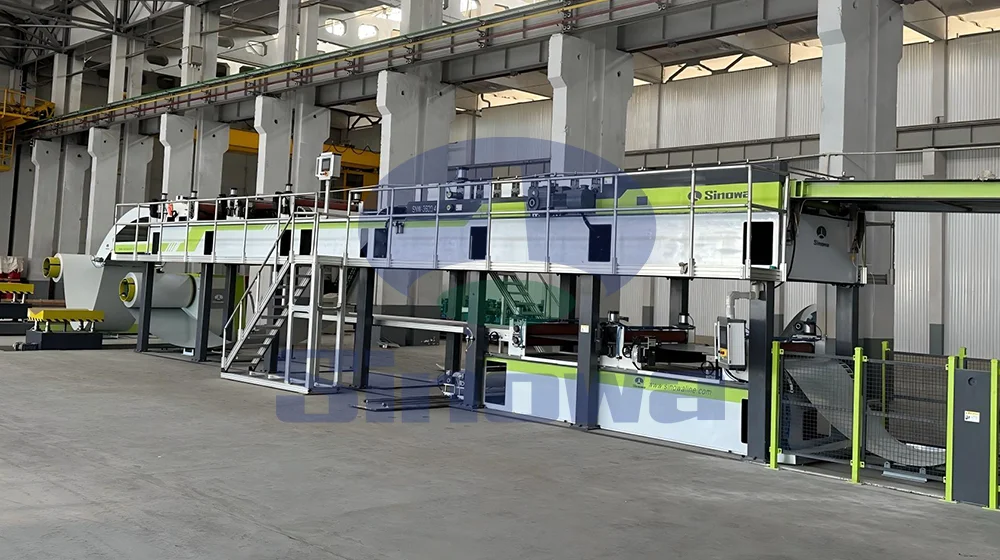
Subsequent to foaming and laminating is the curing and cooling system. The composite panel with uncured PU foam passes through a continuous curing tunnel, where controlled temperature and humidity conditions accelerate the polymerization reaction of the foam, transforming it from a liquid state to a solid, rigid core. The curing tunnel is equipped with energy-saving heating devices and uniform air circulation systems to ensure consistent curing degree across the entire panel, avoiding local softening or deformation. After curing, the panel enters the cooling system, which uses forced air cooling or water cooling to reduce the panel temperature to room temperature. This step is crucial to prevent thermal deformation of the finished product and ensure dimensional stability, especially for panels used in cold storage or high-precision applications.
The cutting and stacking system marks the final stage of production. A high-precision band saw or circular saw cutting device trims the continuous panel into fixed lengths according to preset specifications, with automatic positioning functions to ensure cutting accuracy and reduce material waste. The stacking system then arranges the cut panels neatly, with adjustable stacking height and spacing to accommodate different panel sizes. Some advanced lines are also equipped with automatic packaging units that wrap the stacked panels with protective films or waterproof materials to prevent damage during storage and transportation. Additionally, the control system serves as the "brain" of the entire production line, integrating computer control and sensor technology to monitor and adjust parameters such as production speed, temperature, pressure, and foam ratio in real time. The user-friendly interface allows operators to set production parameters, track production progress, and troubleshoot faults quickly, realizing intelligent management of the production process.
The performance of a continuous PU sandwich panel line is reflected in multiple aspects, including production efficiency, product quality stability, operational flexibility, and energy consumption. Production efficiency is a key indicator, with advanced lines capable of achieving a production speed of several meters per minute, far exceeding the output of manual or discontinuous production. This high efficiency is attributed to the seamless connection between each system and the reduction of manual intervention, which not only increases output but also lowers labor costs. Product quality stability is another prominent advantage—automated control ensures consistent parameters throughout the production process, resulting in uniform core density, stable bonding strength between surface materials and core, and consistent panel dimensions. The bonding strength of panels produced by such lines usually exceeds 0.15 MPa, with compressive strength not less than 200 kPa, enabling them to withstand external impacts and cargo stacking pressure.
Operational flexibility refers to the line's ability to adapt to different product specifications and core materials. By adjusting parameters such as roller spacing, foaming ratio, and cutting length, the same line can produce panels with thicknesses ranging from 30 mm to 250 mm and widths up to 1200 mm or more. Moreover, many lines support the replacement of core materials, allowing the production of panels with PU, polyisocyanurate (PIR), rock wool, or mineral wool cores by modifying the foaming or feeding system. This flexibility enables manufacturers to meet diverse market demands without large-scale equipment upgrades. Energy efficiency is also an important performance feature—modern lines adopt energy-saving heating devices, heat recovery systems, and precise material metering to reduce energy consumption and material waste. The closed-cell structure of PU foam produced by high-pressure foaming technology further enhances the thermal insulation performance of the finished product, contributing to energy conservation in end applications.
Continuous PU sandwich panel lines can be classified into different types based on core material compatibility, production capacity, and functional configurations. According to core material, the lines are mainly divided into PU-specific lines, PU/PIR dual-purpose lines, and multi-core material lines. PU-specific lines are designed for the exclusive production of PU sandwich panels, with optimized foaming systems to ensure the best performance of PU cores. PU/PIR dual-purpose lines, on the other hand, can switch between PU and PIR foaming by adjusting the raw material ratio and curing parameters. PIR foam has higher heat resistance and fire resistance than PU, making these lines suitable for manufacturers serving high-demand markets such as fire-resistant buildings and high-temperature insulation facilities. Multi-core material lines offer greater versatility, supporting the production of panels with organic cores (PU/PIR) and inorganic cores (rock wool/mineral wool) by integrating additional feeding and processing units for inorganic materials.
Based on production capacity, continuous lines are categorized into small, medium, and large-scale models. Small-scale lines are suitable for small and medium-sized enterprises with moderate output requirements, featuring compact structure, low floor space occupation, and flexible installation. They are ideal for producing customized panels in small batches. Medium-scale lines balance production capacity and investment cost, with stable output and wide adaptability to different specifications, making them the most commonly used type in the market. Large-scale lines are designed for mass production, equipped with high-speed processing units, automatic material handling systems, and intelligent monitoring systems to achieve high-volume, continuous production. These lines are typically adopted by large manufacturers supplying panels for large-scale construction projects or cold chain logistics parks.
In terms of functional configurations, lines can be divided into standard lines and customized lines. Standard lines cover the basic production processes, meeting the general needs of most manufacturers for conventional panels. Customized lines are tailored to specific production requirements, such as adding embossing units to create decorative surface patterns, integrating edge-sealing devices to improve panel waterproof performance, or installing online testing equipment to detect panel thickness, density, and bonding strength in real time. These customized configurations enable manufacturers to produce high-value-added panels for specialized applications, enhancing their market competitiveness.
The wide range of applications of continuous PU sandwich panel lines stems from the excellent performance of the panels they produce, which are widely used in construction, cold chain logistics, industrial manufacturing, and other fields. In the construction industry, PU sandwich panels produced by these lines are commonly used as roof panels, wall panels, and partition boards for industrial workshops, warehouses, commercial complexes, and prefabricated buildings. The panels' integrated performance of load-bearing, thermal insulation, and waterproofing reduces construction time and secondary decoration costs, making them a preferred material for fast-track construction projects. In cold chain logistics, the superior thermal insulation performance of PU sandwich panels is highly valued—panels with a 5 cm thick PU core can achieve the same insulation effect as 1 m thick concrete, with thermal conductivity as low as 0.018-0.025 W/(m·k). This makes them ideal for cold storage warehouses, refrigerated trucks, and pharmaceutical storage facilities, where strict temperature control is required. The closed-cell structure of the PU core also provides excellent moisture resistance, ensuring stable performance in high-humidity environments such as coastal areas.
In industrial manufacturing, PU sandwich panels are used in the construction of clean rooms, food processing plants, and chemical workshops. The panels' smooth surface is easy to clean and disinfect, meeting the hygiene requirements of clean rooms and food processing facilities. By adding flame retardants to the PU core, the panels can achieve high fire resistance, with an oxygen index of over 28, making them suitable for chemical workshops and other high-risk areas. Additionally, the panels are used in the automotive industry for manufacturing insulated truck compartments and in the infrastructure sector for subway ventilation ducts and pipeline insulation.
The application scope of continuous PU sandwich panel lines is still expanding with the development of new materials and processing technologies. As the global focus on energy conservation and environmental protection intensifies, the demand for high-performance insulation panels is growing, driving the upgrading of continuous production lines. Future lines will tend to be more intelligent, with the integration of artificial intelligence and Internet of Things technology to realize predictive maintenance, automatic parameter optimization, and full-process data tracing. At the same time, environmental-friendly raw materials and energy-saving technologies will be more widely adopted to reduce the environmental impact of production processes. The development of lightweight and high-strength surface materials will also enable the production of more efficient and durable sandwich panels, expanding their application in emerging fields such as modular buildings and green construction.
When selecting a continuous PU sandwich panel line, manufacturers need to consider multiple factors including their production scale, product specifications, target application markets, and investment budget. Small and medium-sized enterprises focusing on customized or small-batch production may opt for small-scale or medium-scale standard lines to balance cost and flexibility. Large manufacturers engaged in mass production for large projects should choose large-scale lines with high automation and stable output. For manufacturers targeting high-end markets such as fire-resistant buildings or pharmaceutical cold storage, dual-purpose lines or customized lines with advanced configurations are more suitable. Additionally, factors such as equipment operation difficulty, maintenance requirements, and after-sales support should be taken into account to ensure long-term stable operation of the line.
In conclusion, continuous PU sandwich panel lines play an irreplaceable role in the modern production of insulation panels, with their rational structural design, excellent performance, diverse types, and wide applications driving the development of the composite panel industry. As technology continues to advance, these lines will become more intelligent, efficient, and environmentally friendly, providing strong support for the production of high-quality insulation panels and contributing to the promotion of energy-saving and green construction worldwide. Whether for large-scale industrial production or small-batch customized manufacturing, continuous PU sandwich panel lines offer a reliable and efficient solution, meeting the evolving needs of various industries and markets.
« Continuous PU Sandwich Panel Line For Sale » Update Date: 2026/1/24
Tags: Discontinuous PU Sandwich Panel Line , Continuous PU Sandwich Panel Line ,
- Insulated Sandwhich Panel Production Line For Sale
- High Efficiency Glass Wool Equipment
- Width Pur Panel Machines
- Customized Polyurethane Sandwich Panel Machine
- High-tech Discontinuous PU Sandwich Panel Line
- Polyurethane Sandwich Panel Line For Wall
- Isolation Sandwich Panel Production Line Factory
- Fully Automatic PU Sandwich Panel Line From China
- Highly Intelligent PU Sandwich Panel Line
- Polyurethane Insulation Panel Production Line For Construction
- Continuous Sandwich Panel Line Price
- Wall Sandwich Panel Production Line On Sales
- PU Board Production Line From China
- Polyurethane Sandwich Panel Manufacturing Line For Construction
- High-end PU Sandwich Panel Making Machine
- PU Panel Machine Factory
- Sandwich Foam Panel Making Machine For Sale
- PUF Panel Machine Supplier
- High-end Glass Wool Sandwich Panel Line
- Glass Wool Sandwich Panel Line From China