
Rock Wool Board Production Line For Sale
Sinowa is a well-known manufacturer and technical service provider of high-end rock wool board production line, learn more about rock wool board production line for sale, please contact Sinowa's technical engineer, tell us what you need, we will contact you as soon as possible!
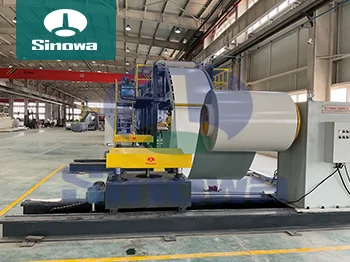
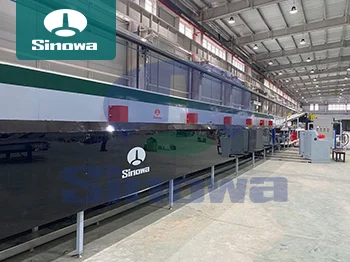
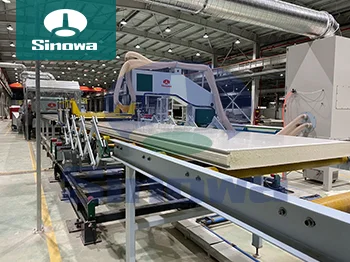
Sinowa is committed to the development and manufacturing of high-end and high-efficiency rock wool board production line. Our rock wool board production line are leading the way in efficiency, automatic control, human-computer interaction, environmental protection and energy consumption. Using system integration and bus control technology, it realizes the automatic integrated linkage control of the entire rock wool board production line, and can achieve remote interactive communication, which has the world-class level and a comprehensive leading high-performance rock wool board production line in the market.
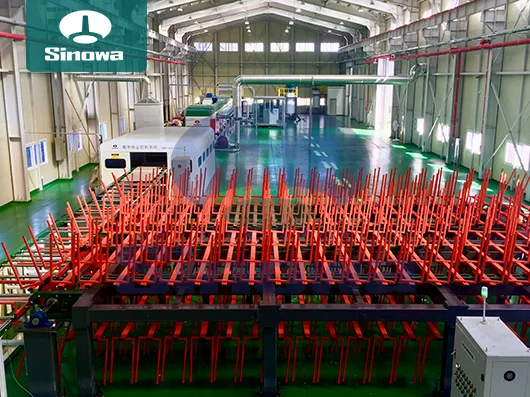
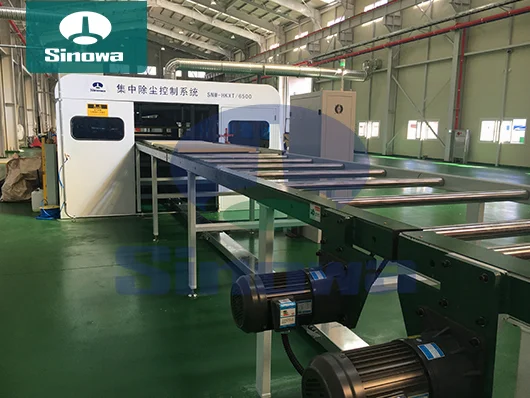
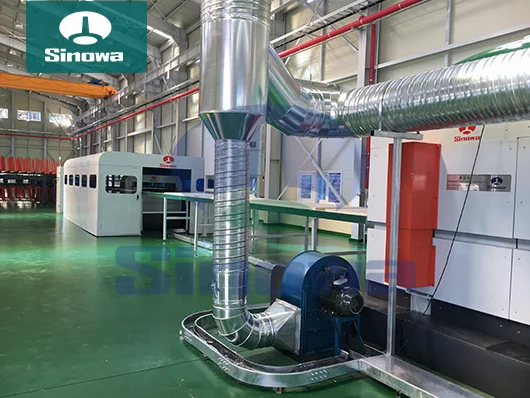
For more than ten years, relying on our innovative manufacturing concept and excellence in quality, reliable and trustworthy service to customers, we cooperate with customers all over the world, exported products to Canada, South Korea, Israel, Australia, the Middle East and other more than 20 countries and regions. contributed to building energy conservation and low-carbon production and have won widespread praise.
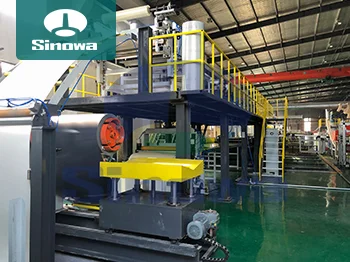
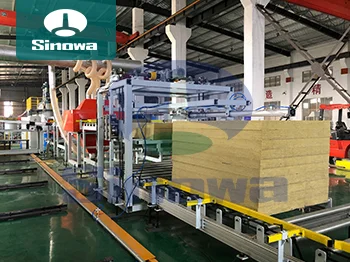
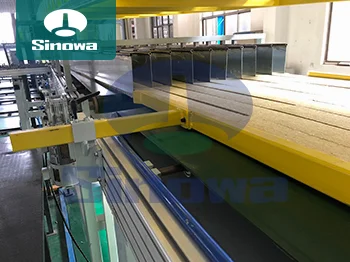
Sinowa has invested outstanding efforts in rock wool board production line, this is why our products are more efficiency, quality, automatic control technology, environmental protection, energy consumption indicators and the appearance and safety protection are comprehensively leading, some subversive design changes in many major technical points, these major innovations make our products excellent in price/performance and user experience.
The rock wool board production line represents a complete integrated manufacturing system built to transform natural mineral raw materials into functional fibrous insulation boards, and it stands ready for deployment for operators looking to enter or expand within the insulation material manufacturing sector. At its core, the line is structured to deliver continuous, streamlined operation across every manufacturing stage, starting from raw material preparation and extending all the way to finished product trimming and handling. The initial section focuses on raw material screening, crushing, proportioning and automatic feeding, where bulk mineral materials are processed into particles of consistent size to support stable melting performance. Uniform particle size avoids irregular melting inside the furnace, which would otherwise create inconsistent fiber quality and compromise the final board texture. Material flow is managed through metering systems that maintain steady feed rates, reducing fluctuations that could disrupt downstream processes. Operators can adjust mixing ratios according to the target product characteristics, tailoring the base material foundation for different application scenarios. This front-end preparation stage is easy to overlook, yet it establishes the baseline stability for the whole production cycle, minimizing waste and lowering the frequency of unexpected shutdowns once the line runs at full capacity. New plant owners often prioritize melting and forming sections, but reliable raw material handling directly supports long-run efficiency and consistent output quality over extended operating shifts.
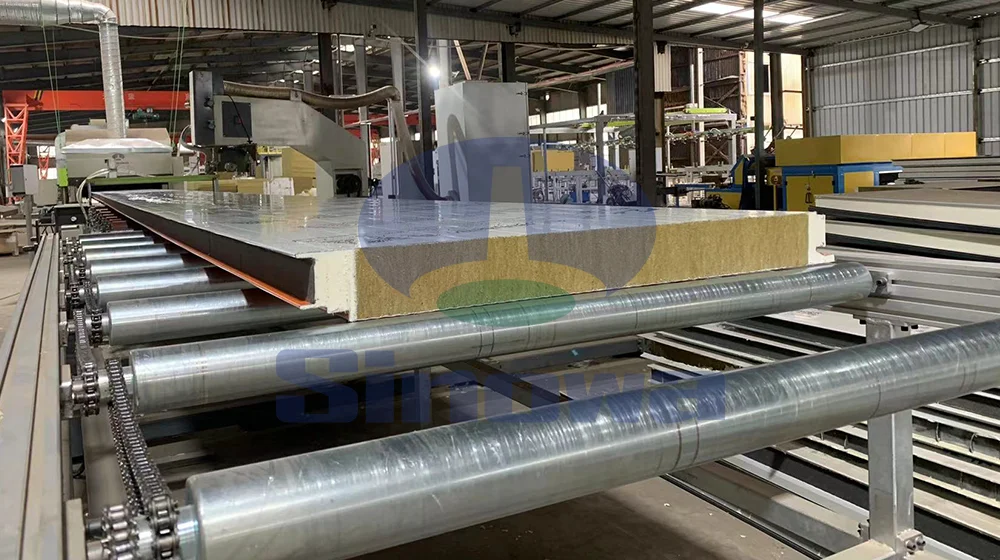
The high-temperature melting furnace serves as the central unit of the entire rock wool board production line, responsible for converting prepared mineral particles into homogeneous molten liquid under sustained intense heat. The furnace body is constructed with heavy-duty heat-resistant lining materials to contain extreme internal temperatures and cut down on outward heat loss, improving overall energy efficiency during continuous operation. As solid mineral feedstock enters the furnace chamber, it gradually softens and melts into a flowing liquid state with controlled viscosity. Stable liquid outflow from the furnace spout is critical; sudden surges or drips will interfere with the fiber-forming process and lead to uneven fiber thickness. The furnace system is fitted with monitoring assemblies that track key operating conditions, allowing operators to fine-tune combustion and thermal input without halting the whole line. Proper thermal management also protects the furnace structure from premature wear, extending the service life of this high-value component. Well-maintained melting equipment can maintain steady output for long continuous runs, which is essential for manufacturers targeting high-volume board production. Investing time to calibrate furnace parameters before full production starts helps avoid batches of substandard fiber and reduces unnecessary energy consumption during routine operation.
Once molten mineral liquid flows out of the furnace, it immediately moves into the centrifugal fiber forming unit, the process that turns thick liquid stream into countless fine inorganic fibers. High-speed rotating wheels exert powerful centrifugal force to tear and stretch the melt stream, drawing it into thin, flexible fibers of carefully controlled diameter. Simultaneously, an atomized binder solution is evenly dispersed across the newly formed fiber cloud, coating individual fibers to create bonding points that will hold the finished board structure together later. Precision in binder dosing matters greatly: too little binder results in brittle boards prone to crumbling, while excessive binder can make the finished product denser and reduce its insulating performance. Airflow channels around the fiberizing chamber guide the newly formed fibers toward the collection conveyor, shaping the initial loose wool mat. The quality of fiber formation defines many core traits of rock wool boards, including thermal resistance, sound absorption capacity and structural resilience. Operators can adjust rotational speed, airflow pressure and binder spray volume to shift fiber characteristics, giving them flexibility to produce boards suited for different end-use environments without major mechanical rework.
Following fiber formation and binder application, the loose fiber mat passes through pendulum laying and pre-pressing stations to build up a uniform layered wool structure before curing. The pendulum laying mechanism distributes fibers in overlapping cross directions, creating a three-dimensional interlocked fiber network instead of a simple flat stacked layer. This cross-laid fiber arrangement greatly improves the finished board’s compressive strength and dimensional stability, lowering the tendency to sag or deform under sustained load after installation. After laying, adjustable roller presses gently compress the wool mat to reach the target thickness and density profile, smoothing out soft spots and density variations across the width of the mat. Adjustable gap settings on the pressing rollers allow the line to switch between producing lighter, softer boards and denser, mechanically stronger boards as market demand changes. Trimmings and loose fiber scraps generated at this stage are captured by a recycling pipeline and fed back into the fiber collection zone, cutting raw material waste and improving the overall material utilization rate of the line. This forming segment bridges the gap between loose fiber production and rigid board creation, turning disordered fibrous material into a stable semi-finished mat ready for thermal curing.
The curing oven is where the coated fiber mat undergoes controlled thermal treatment to activate the binder and lock the layered structure into a solid rock wool board. Inside the insulated oven chamber, circulating hot air maintains a consistent thermal environment across the entire width and length of the moving mat, ensuring uniform curing of the binder throughout the board. Residence time inside the oven is matched with temperature settings to achieve full polymerization of the binder without damaging the delicate inorganic fiber structure. If curing is incomplete, boards will remain soft and lose shape after leaving the oven; over-curing can make the binder overly brittle and reduce the board’s impact resistance. Modern versions of this production line use distributed temperature sensing and adjustable air circulation fans to eliminate hot zones and cold spots within the oven tunnel. After exiting the curing zone, the newly hardened rock wool board moves through a gradual cooling section to bring surface temperature down before cutting, preventing thermal warping that could distort final dimensions. The curing process is a carefully balanced thermal cycle, and consistent oven control is the key to producing boards that retain stable physical performance for years after leaving the factory floor.
After cooling, the continuous solid rock wool slab enters the cutting and sizing section, where multi-axis cutting tools trim edges and divide the wide slab into individual boards of custom length and width. Edge trimming removes uneven border sections formed during fiber laying, ensuring straight, clean edges on every finished board and simplifying later installation for end users. Cross-cutting units operate in synchronization with the line conveyor speed, adjusting cut positions automatically to match preset board dimensions. Some configurations include slitting tools to produce narrower strips for special construction details or industrial insulation fittings. All trim waste generated during cutting is routed back into the recycling loop, supporting sustainable operation and lowering material costs over time. The cutting system can store multiple size recipes, so operators can switch between standard and custom board dimensions with minimal downtime between production runs. Precision cutting reduces on-site modification work for builders and installers, making the finished rock wool boards more convenient to integrate into building envelope systems and industrial insulation assemblies. Smooth, consistent cut surfaces also help boards fit tightly together when installed, reducing thermal bridging gaps that would weaken overall insulation performance.
The whole rock wool board production line is coordinated by a centralized control architecture that synchronizes the speed, timing and parameter settings of every linked machine module across the workflow. A main control interface displays real-time operating data from feeding, melting, fiberizing, laying, curing and cutting sections, allowing supervisors to monitor line status from one station. Alarm functions flag abnormal readings such as temperature deviations, material blockages or pressure changes before they escalate into equipment faults or defective batches. The automation level can be adapted according to operational needs; some setups rely on more manual oversight for small-batch flexible production, while highly automated configurations support long unattended runs with only periodic inspection. Safety interlock systems protect operators by stopping upstream feeding and fiberizing functions if downstream conveyors jam or critical access doors are opened during operation. This integrated control framework lowers reliance on skilled labor at every individual station and makes staff training easier for new manufacturing teams. Operators can review historical production logs to identify recurring issues and fine-tune operating parameters gradually, steadily lifting yield and lowering defect rates over months of continuous operation.
When evaluating a rock wool board production line available for sale, prospective buyers should assess not only output capacity and automation features but also service accessibility, maintenance requirements and compatibility with local operational conditions. Different layouts can be arranged to fit factory spaces of varying dimensions, with some designs arranged in a compact linear layout and others spread out to facilitate easier maintenance access around heavy units like the melting furnace and curing oven. Spare component availability for wear parts such as centrifuge wheels, conveyor belts, spray nozzles and cutting blades directly affects long-term uptime, as these components will require periodic replacement under regular use. Training support for maintenance teams helps operators understand routine inspection schedules, lubrication points and troubleshooting procedures, extending the usable life of the entire line. The finished rock wool boards generated by this equipment serve broad markets, supporting thermal insulation, sound absorption and passive fire safety needs in building construction and industrial facilities. Investing in this production line offers a pathway to enter the growing insulation materials market, with the flexibility to adjust product specifications to respond to shifting market preferences and evolving project demands across different application sectors. Careful planning around factory layout, power supply and raw material storage will help new owners achieve smooth commissioning and unlock the full production potential of the line once installed and commissioned.
« Rock Wool Board Production Line For Sale » Update Date: 2026/10/23
Tags: Rock Wool Board Production Line , rock wool board production line, rock wool board production line manufacturer, rock wool board production line supplier, rock wool board production line for sale, customized rock wool board production line, china rock wool board production line
- Rock Wool Sandwich Panel Machine For Cold Storage
- Mineral Wool Line For Sale
- Rock Wool Sandwich Panel Machine Design
- Rock Wool Line On Sales
- High-tech Rockwool Machine
- Automatic Rock Wool Production Line
- Customized Rockwool Sandwich Panel Machine
- Cheap Sandwich Panel Rock Wool Production Line
- Mineral Wool Production Line Factory
- Fully Automatic Rock Wool Sandwich Panel Machine In China
- Rock Wool Panel Production Line
- Rock Wool Production Line For Wall
- Custom Rock Wool Board Production Line
- High-end Rock Wool Production Line
- High-quality Rockwool Sandwich Panel Line
- Sandwich Panel Rock Wool Production Line Design
- Mineral Wool Line Manufacturer
- Rock Wool Sandwich Panel Production Line Design
- Rock Wool Sandwich Panel Line For Clean Room
- Rock Wool Board Production Line Manufacturer
- Links:
- Sandwich Panel Continuous Production Line
- Automatic and Continuous Sandwich Panel Production Line
- Cheap and Low Price Sandwich Panel Production Line
- China Sandwich Panel Production Line Factory
- Color Steel Sandwich Panel Production Line For Cold Storage
- Continuous Composite Foam Sandwich Panel Production Line
- Continuous Production Line For Rockwool and Mineral Wool Sandwich Panels
- Continuous PU Phenolic Insulation Panel Production Line
- Continuous PU PIR Sandwich Panel Production Line
- Continuous PUF PUR Sandwich Panel Production Line
- Continuous Sandwich Panel Production Line For Roof and Wall
- Customized and Design Sandwich Panel Production Line
- Decorative Sandwich Panel Production Line For Glass Wool Boards
- High Quality Sandwich Panel Production Line For Sale
- Polyurethane(PU) Sandwich Panel Production Line
- Sandwich Panel Production Line Manufacturer and Supplier
- Sandwich Panel Production Machinery and Equipment