
Rock Wool Sandwich Panel Machine For Building
Sinowa is a well-known manufacturer and technical service provider of high-end rock wool sandwich panel machine, learn more about rock wool sandwich panel machine for building, please contact Sinowa's technical engineer, tell us what you need, we will contact you as soon as possible!
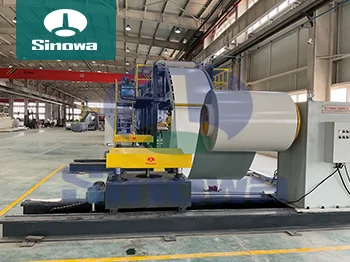
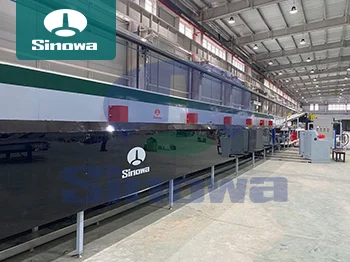
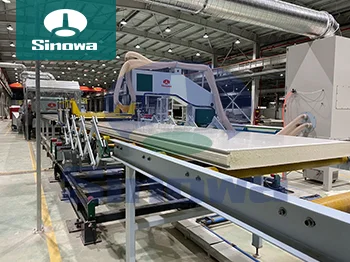
Sinowa is committed to the development and manufacturing of high-end and high-efficiency rock wool sandwich panel machine. Our rock wool sandwich panel machine are leading the way in efficiency, automatic control, human-computer interaction, environmental protection and energy consumption. Using system integration and bus control technology, it realizes the automatic integrated linkage control of the entire rock wool sandwich panel machine, and can achieve remote interactive communication, which has the world-class level and a comprehensive leading high-performance rock wool sandwich panel machine in the market.
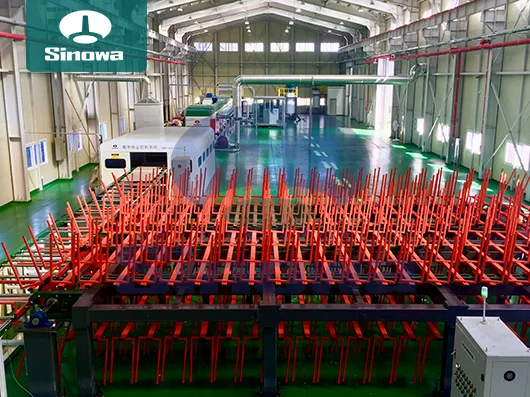
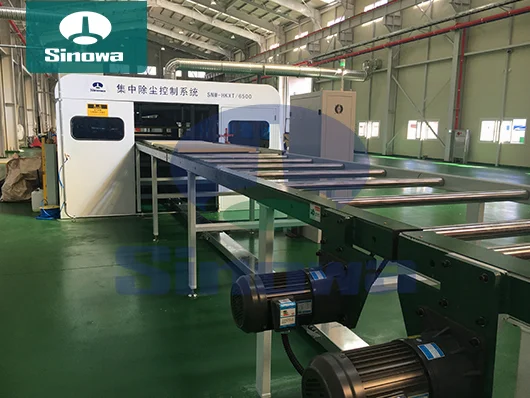
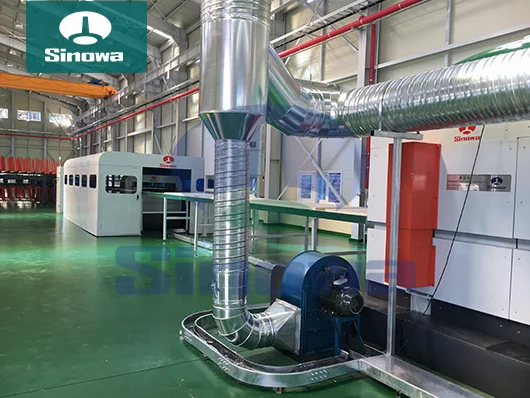
For more than ten years, relying on our innovative manufacturing concept and excellence in quality, reliable and trustworthy service to customers, we cooperate with customers all over the world, exported products to Canada, South Korea, Israel, Australia, the Middle East and other more than 20 countries and regions. contributed to building energy conservation and low-carbon production and have won widespread praise.
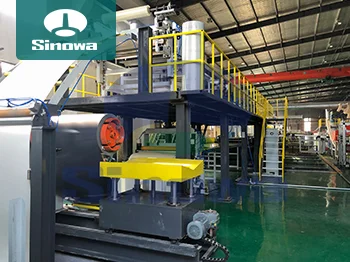
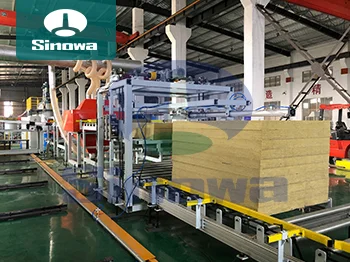
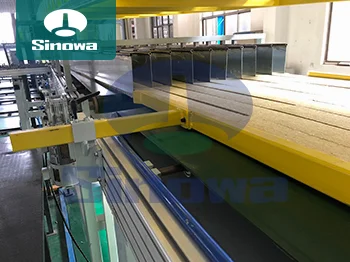
Sinowa has invested outstanding efforts in rock wool sandwich panel machine, this is why our products are more efficiency, quality, automatic control technology, environmental protection, energy consumption indicators and the appearance and safety protection are comprehensively leading, some subversive design changes in many major technical points, these major innovations make our products excellent in price/performance and user experience.
Rock wool sandwich panel machine stands as a core piece of production equipment for modern building enclosure material manufacturing, designed to assemble rock wool core materials with metal surface sheets into integrated composite panels with stable structural performance. The whole production line works through a continuous workflow, where raw material feeding is the starting point to prepare rock wool strips and coated metal coils separately before they enter the forming section. The rock wool raw material itself carries inherent heat insulation and fire-resistant characteristics, yet these advantages cannot be fully retained without precise mechanical processing. This machine aligns the rock wool layers neatly, eliminates gaps and uneven distribution inside the core layer, and ensures consistent thickness across the entire finished panel. During operation, the metal sheets are uncoiled, leveled, and pre-shaped to match the contour of the sandwich structure, so both sides of the metal face can tightly bond with the rock wool core. Operators adjust running speed and pressing pressure according to target panel specifications, avoiding excessive compression that would damage the internal fiber structure of rock wool or insufficient pressure that leads to weak bonding. Every moving part of the equipment is calibrated to maintain synchronization; if one segment falls out of pace, defects such as wrinkled metal surfaces or delamination between layers will emerge on the final panels. The basic design philosophy of this machine focuses on balancing production efficiency and product quality, allowing manufacturers to produce building panels that fit the demands of different construction projects without sacrificing the natural functional traits of rock wool.
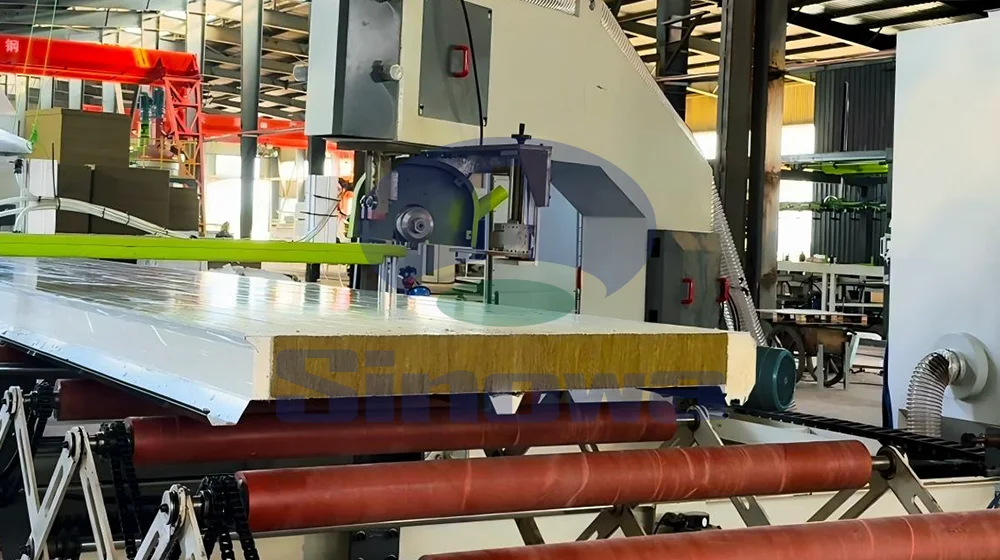
The material bonding process represents one of the most critical stages within the rock wool sandwich panel machine, directly determining the long-term usability of finished building panels. As rock wool cores and metal skins move forward along the production track, adhesive is applied evenly onto the contact surfaces under controlled dosage, preventing excessive glue overflow or partial areas lacking bonding agent. Uniform glue spreading requires stable mechanical spraying devices that adapt to variations in line speed, ensuring every section of the panel receives an identical coating. After glue application, the multi-layer assembly enters the pressing zone, where continuous pressure holds the composite structure together for a set period to complete curing. Rock wool fibers are porous, which means the adhesive needs a short time to penetrate slightly into the outer fiber layer without soaking through the whole core. Improper bonding treatment will cause separation between metal sheets and rock wool after long-term use, especially when panels face temperature changes and slight structural vibration on building walls and roofs. The machine’s pressing system maintains steady pressure distribution across the full width of the panel, rather than concentrating force only in the middle area. Temperature control inside the pressing section also supports adhesive curing, creating a reliable composite body that combines the toughness of metal sheets and the thermal performance of rock wool. This integrated bonding process removes manual bonding uncertainty and reduces human error that commonly appears in small-scale hand assembly work.
Forming and cutting modules integrated into the rock wool sandwich panel machine turn continuous long composite materials into panels of custom lengths required for building construction. After bonding and preliminary curing, the endless composite strip moves toward the cutting unit, which is programmed to trigger cutting actions once the material reaches the preset dimension. The cutting tool moves synchronously with the running panel during cutting, so the production line does not need to stop repeatedly, which greatly improves continuous output capacity. The cutting mechanism handles both the metal outer layer and fibrous rock wool core at the same time, delivering clean edges without heavy fiber shedding or bent metal rims. Rough edges would create troubles during on-site installation, as uneven panel ends complicate seam connection and leave weak points vulnerable to moisture penetration. Before cutting, positioning sensors track the forward movement of the panel material constantly, feeding real-time data to the control system to adjust cutting timing accurately. Operators can modify length parameters through the control interface to produce panels for wall sections, roof sections or special partition parts of buildings. Beyond straight cutting, auxiliary shaping components can create edge profiles on panel sides, making interlocking joints between adjacent panels easier to fit during construction. This automated forming and cutting stage streamlines the whole production sequence and reduces secondary trimming work needed after panels come off the production line.
Automation control systems serve as the central nervous system of the rock wool sandwich panel machine, coordinating every functional unit across the whole production line. The system collects real-time data including line speed, raw material feed volume, pressing pressure and working temperature from sensors installed at different stations. All operational parameters can be viewed and adjusted from a central control interface, allowing operators to monitor production status without walking back and forth between individual mechanical sections. When abnormal conditions such as material jamming or sudden pressure fluctuation occur, the control system can send alerts and trigger protective actions to reduce damage to equipment and avoid batches of defective products. Well-designed control logic keeps different segments synchronized; for example, if rock wool feeding slows down, the metal uncoiling and glue spreading units will automatically reduce speed accordingly. This synchronization prevents mismatched material supply that would lead to waste of raw materials. The control system also supports saving parameter settings for different panel types. Once a suitable parameter group is confirmed for a certain panel specification, operators can call it up directly for subsequent batch production, cutting down debugging time between product switches. Even though the system handles most routine adjustments, skilled operators still need to oversee running conditions and perform regular checks to maintain stable long-term operation of the machine.
Maintenance and daily upkeep play an indispensable role in extending the service life of rock wool sandwich panel machine and keeping consistent product quality. Regular maintenance covers multiple parts of the equipment, including transmission rollers, glue delivery pipelines, cutting blades and sensor components. Transmission rollers carry continuous friction as panel materials slide over their surfaces, so surface cleaning and lubrication at scheduled intervals prevent sticking and uneven movement. Residual adhesive can harden inside pipelines and nozzles if not cleaned after production shutdown, which may block glue flow and result in uneven glue application in the next production run. Cutting blades gradually wear down after repeated cutting of metal and rock wool materials, so periodic inspection and sharpening or replacement are necessary to preserve clean cutting quality. Sensors, exposed to floating rock wool fibers and fine dust during operation, need dust removal on a regular basis, because accumulated dust may interfere with signal detection and cause inaccurate measurement. Maintenance work also includes checking fasteners and structural frames to identify loose connections that may develop vibration during high-speed running. A complete maintenance routine reduces unexpected shutdowns that interrupt production schedules. Equipment operators and maintenance personnel follow a cyclic inspection schedule, recording working conditions and worn parts, to detect potential mechanical issues before they develop into major breakdowns.
The finished panels produced by rock wool sandwich panel machine fit a wide array of building application scenarios, taking advantage of the composite structure formed by automated production. These panels are widely used for exterior wall cladding, roof coverings, internal partition walls and temporary building enclosures. The metal outer surface offers protection against physical impact and environmental exposure, while the rock wool core delivers thermal insulation performance that helps stabilize indoor temperature, lowering energy consumption for heating and cooling within buildings. The composite structure also brings good sound absorption properties, which is beneficial for buildings located in noisy surrounding environments. Thanks to the machine’s precise manufacturing, panels feature consistent dimensions, which simplifies transportation and on-site assembly. Construction teams can install these panels quickly, shortening the overall construction period compared with traditional layered building methods. When installed properly, the connected panel seams form a continuous enclosure system that reduces the risk of water infiltration. Different surface treatments of metal sheets can be selected to adapt to different environmental conditions, while the rock wool core remains stable inside the composite panel. The versatility of these finished panels makes the rock wool sandwich panel machine a valuable investment for manufacturers supplying enclosure materials for many types of building projects.
Energy consumption and operational efficiency are important considerations when running a rock wool sandwich panel machine in long-term production. The whole line consumes power for material conveying, pressing, cutting, glue circulation and control systems, and reasonable equipment operation settings can optimize overall energy use. Maintaining stable continuous operation is more energy-efficient than frequent start-stop cycles, because repeated startup processes consume extra power and place additional mechanical stress on components. Matching production speed to actual order demand also helps avoid unnecessary idle running. Modern machine designs incorporate optimized transmission structures that reduce mechanical friction loss, lowering energy waste during power transfer. Meanwhile, proper thermal management within the pressing zone ensures adhesive curing achieves expected effects without excessive energy input for heating. Efficient operation not only cuts operational costs for manufacturers but also supports steady output of qualified panels. Operators learn to balance production throughput and energy input by monitoring equipment running data. As production technology advances, updated versions of this type of equipment keep improving energy utilization, helping material producers operate in a more resource-efficient way while meeting the market demand for building composite panels.
Looking ahead, the development trend of rock wool sandwich panel machine continues to focus on improving production flexibility, operational stability and finished product performance. Market demands for building enclosure materials keep evolving, requiring manufacturers to switch between different panel specifications more conveniently. New generations of equipment adopt more modular structural designs, making it easier to adjust or replace individual functional sections to expand production capacity or process new material combinations. Upgraded sensing and control technologies deliver more precise real-time monitoring, further lowering the rate of defective panels. Machine design also puts more attention on dust suppression during production, as rock wool processing generates fine fibers, and improved containment systems create a cleaner working environment for on-site workers. Better integration between different production stations reduces manual intervention required in the whole workflow. As building projects keep seeking composite materials with reliable thermal and mechanical performance, the rock wool sandwich panel machine will remain vital equipment for producing high-performance building panels. Continuous refinement in mechanical design and control technology will help this equipment adapt to changing market needs and support the development of modern building enclosure systems for years to come.
« Rock Wool Sandwich Panel Machine For Building » Update Date: 2026/10/20
Tags: Fully Automatic Rock Wool Sandwich Panel Machine , Rock Wool Sandwich Panel Machine , rock wool sandwich panel machine, rock wool sandwich panel machine manufacturer, rock wool sandwich panel machine supplier, rock wool sandwich panel machine for sale, customized rock wool sandwich panel machine, china rock wool sandwich panel machine
- Fully Automatic Rock Wool Sandwich Panel Machine Factory
- Automatic Rock Wool Production Line On Sales
- Mineral Wool Sandwich Panel Machine For Cold Room
- High-quality Mineral Wool Board Production Line
- Rock Wool Sandwich Panel Machine For Wall
- Mineral Wool Production Line Manufacturer
- Custom Rock Wool Line
- Rock Wool Board Production Line Supplier
- Low Price Rockwool Panel Production Line
- Rock Wool Sandwich Panel Machine For Clean Room
- High Efficiency Rock Wool Production Line
- Low Price Rock Wool Insulation Panel Production Line
- Mineral Wool Sandwich Panel Production Line For Cold Storage
- Customized Rockwool Sandwich Panel Line
- Rockwool Insulated Panel Manufacturing Line
- Rock Wool Sandwich Panel Production Line For Wall
- High-tech Automatic Rock Wool Production Line
- Rock Wool Sandwich Panel Machine On Sales
- High-end Automatic Rock Wool Production Line
- High-quality Sandwich Panel Rock Wool Production Line
- Links:
- Sandwich Panel Continuous Production Line
- Automatic and Continuous Sandwich Panel Production Line
- Cheap and Low Price Sandwich Panel Production Line
- China Sandwich Panel Production Line Factory
- Color Steel Sandwich Panel Production Line For Cold Storage
- Continuous Composite Foam Sandwich Panel Production Line
- Continuous Production Line For Rockwool and Mineral Wool Sandwich Panels
- Continuous PU Phenolic Insulation Panel Production Line
- Continuous PU PIR Sandwich Panel Production Line
- Continuous PUF PUR Sandwich Panel Production Line
- Continuous Sandwich Panel Production Line For Roof and Wall
- Customized and Design Sandwich Panel Production Line
- Decorative Sandwich Panel Production Line For Glass Wool Boards
- High Quality Sandwich Panel Production Line For Sale
- Polyurethane(PU) Sandwich Panel Production Line
- Sandwich Panel Production Line Manufacturer and Supplier
- Sandwich Panel Production Machinery and Equipment