
Rock Wool Sandwich Panel Machine For Roof
Sinowa is a well-known manufacturer and technical service provider of high-end rock wool sandwich panel machine, learn more about rock wool sandwich panel machine for roof, please contact Sinowa's technical engineer, tell us what you need, we will contact you as soon as possible!
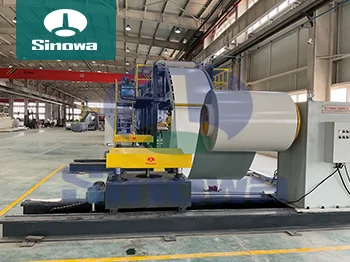
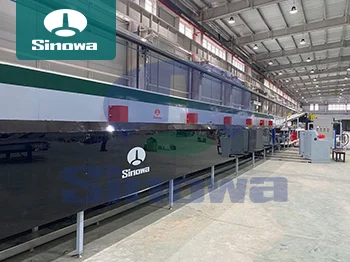
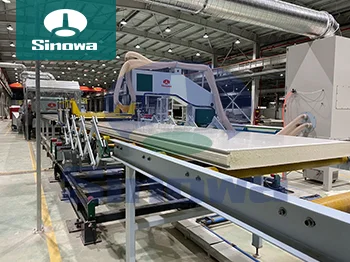
Sinowa is committed to the development and manufacturing of high-end and high-efficiency rock wool sandwich panel machine. Our rock wool sandwich panel machine are leading the way in efficiency, automatic control, human-computer interaction, environmental protection and energy consumption. Using system integration and bus control technology, it realizes the automatic integrated linkage control of the entire rock wool sandwich panel machine, and can achieve remote interactive communication, which has the world-class level and a comprehensive leading high-performance rock wool sandwich panel machine in the market.
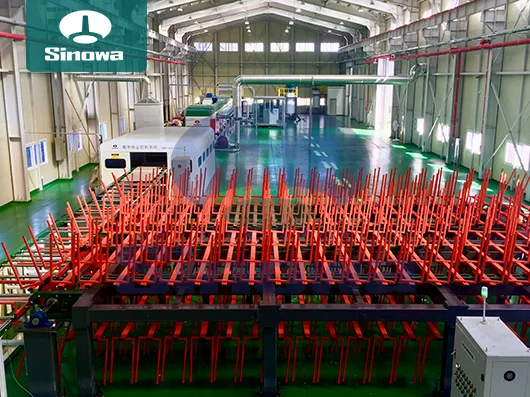
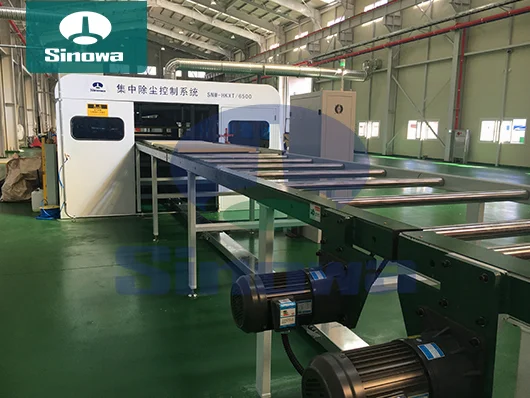
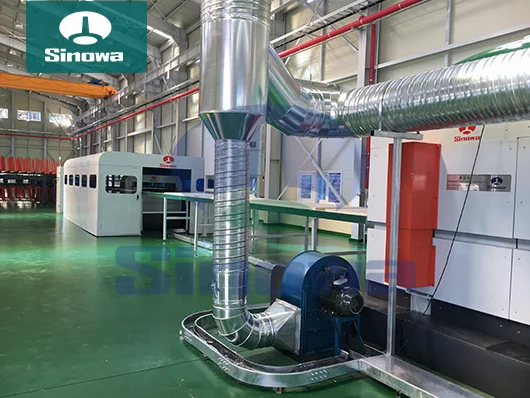
For more than ten years, relying on our innovative manufacturing concept and excellence in quality, reliable and trustworthy service to customers, we cooperate with customers all over the world, exported products to Canada, South Korea, Israel, Australia, the Middle East and other more than 20 countries and regions. contributed to building energy conservation and low-carbon production and have won widespread praise.
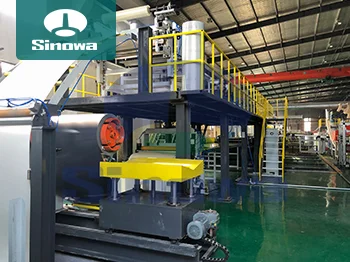
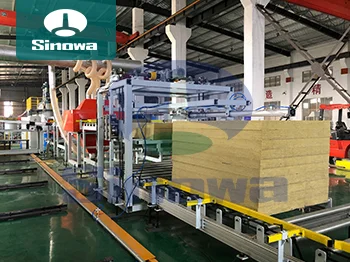
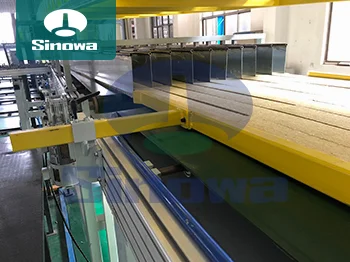
Sinowa has invested outstanding efforts in rock wool sandwich panel machine, this is why our products are more efficiency, quality, automatic control technology, environmental protection, energy consumption indicators and the appearance and safety protection are comprehensively leading, some subversive design changes in many major technical points, these major innovations make our products excellent in price/performance and user experience.
The demand for reliable and efficient building envelope solutions has grown steadily as construction projects pursue balanced performance between thermal insulation, structural stability and fast installation, and rock wool sandwich panel machines designed for roof applications have become a core piece of equipment supporting this trend. These machines are purpose-built to shape and assemble composite panels that fit the unique working conditions of roof structures, where exposure to changing weather, sustained wind loads and long-term temperature fluctuations places strict requirements on finished panel quality. Unlike general-purpose sandwich panel production lines, roof-focused models are engineered with special forming sections that create the proper profile and overlap structure along panel edges, ensuring tight connections when panels are laid side by side on roof frames. The core working flow starts with the continuous feeding of metal surface sheets, which pass through leveling and embossing units to achieve consistent surface flatness before entering the rock wool filling zone. Rock wool raw material is arranged in a controlled manner to maintain uniform density across the panel cross-section, avoiding gaps or uneven distribution that would weaken insulation performance. Adhesive application is calibrated precisely to bond the metal skins and rock wool core firmly without excess glue overflow that affects surface appearance or causes waste. Operators can adjust running speed and material feeding parameters according to the target panel thickness and width, giving the production line flexibility to match different roof design requirements. Every moving part of the machine is coordinated through a linked control system, reducing manual intervention and lowering the chance of human error during continuous production runs. This level of coordination directly helps manufacturers maintain stable product consistency, which is essential because poorly formed roof panels may lead to leakage risks and reduced service life once installed on building tops.
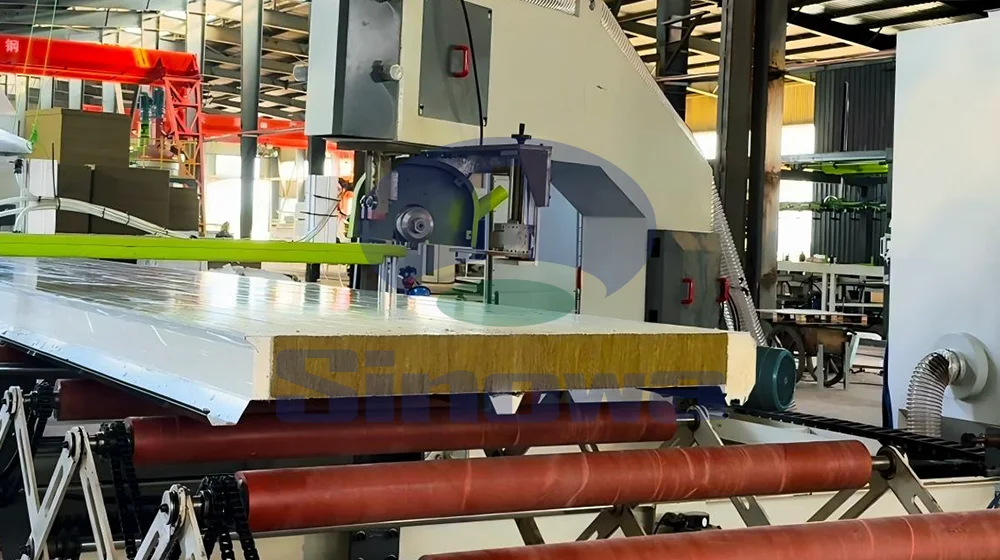
Consistent material handling is one of the most critical functions of a rock wool sandwich panel machine for roof use, as rock wool material carries unique physical traits that demand careful handling throughout the forming process. Rock wool fibers are brittle and prone to scattering if conveying speed or pressure is not properly managed, so the internal conveying structure uses soft guiding components to hold the wool core intact as it moves between the upper and lower metal sheets. Before lamination, the machine compresses the rock wool layer to a suitable compression ratio, a step tailored specifically for roof panels because roof systems need to resist compression from foot traffic, snow accumulation and mounting loads for rooftop equipment. Too much compression will break the internal fiber structure and degrade thermal insulation, while insufficient compression leaves the core loose and prone to shifting after installation. The lamination section applies steady, even pressure across the entire width of the panel, ensuring the adhesive forms a complete bond interface rather than isolated bonding points. After lamination, the composite material moves forward to the curing area, where controlled ambient conditions allow the adhesive to set gradually without rapid temperature changes that could create internal stress inside the panel. Once curing reaches the required state, the continuous panel strip advances to the cutting unit, which executes clean, straight cuts according to preset length values. The cutting mechanism operates without generating heavy burrs on the metal edges, which saves time during on-site installation and prevents sharp edges from injuring construction workers. Well-managed material handling not only reduces raw material loss but also improves the overall texture and structural integrity of every finished roof panel coming off the line.
The structural design of rock wool sandwich panel machines for roof applications also takes practical on-site installation habits into deep consideration, which separates these machines from equipment made for wall panel production. Roof panels need interlocking side profiles to form watertight seams after installation, and the roll forming stations integrated into the machine are shaped to stamp these interlocking edges directly onto the metal skins during production. These profiled edges fit neatly together when panels are joined, limiting rainwater penetration even under heavy rainfall conditions. Some profile options include an extra drip groove feature formed into the panel edge, which guides water away from the joint area and further lowers the possibility of moisture seeping into the panel core. The machine’s roll forming sets can be swapped or fine-tuned to produce different profile shapes, supporting varied roof slope designs from low-slope rooftops to steeper pitched roofs. The frame of the whole machine is built with high rigidity to resist vibration during high-speed roll forming, because vibration would create wavy surfaces and inconsistent profile dimensions on the metal sheets. Support rollers are placed at reasonable intervals under the metal sheet path to prevent sagging, especially when producing wider roof panels that cover larger roof areas with fewer individual pieces. Stable frame performance keeps the entire production line running smoothly over long shifts, and it also extends the working lifespan of forming rollers and other wearing parts. When the finished panels arrive at construction sites, their precisely formed profiles make alignment much simpler for installation teams, shortening the overall roofing construction cycle and cutting down labor input on site.
Operational control systems integrated into roof rock wool sandwich panel machines simplify daily production management while supporting real-time adjustment of key production variables. The central control interface displays running speed, material feed status, adhesive flow rate, cutting length and fault prompts in a clear layout, allowing operators to monitor the whole production sequence from one station. When changing from one panel specification to another, authorized personnel can input new dimension parameters instead of manually adjusting dozens of mechanical parts one by one, which greatly shortens the product changeover time. The system also includes safety interlock functions that pause machine movement if a feeding jam, material shortage or abnormal pressure reading is detected, stopping damage to rollers, cutting blades and unfinished panels before serious issues develop. Data tracking features record total production output for each batch, which helps plant managers organize production schedules and calculate raw material consumption accurately. Operators do not need advanced specialized knowledge of mechanical design to complete routine tasks, though basic training is still required to understand parameter limits and safety protocols. Remote signal feedback enables maintenance teams to locate abnormal conditions quickly when troubleshooting, reducing downtime and keeping production schedules on track. A reliable control system creates a stable operating foundation, and it makes mass customized production of roof sandwich panels achievable for manufacturers serving diverse building projects of different scales and styles.
Maintenance and wear management represent an important part of owning and operating a rock wool sandwich panel machine for roof panels, as continuous production inevitably creates friction and abrasion on contact parts. Roll forming rollers, guiding wheels, cutting blades and adhesive nozzles are the components that see the most frequent contact with metal sheets, rock wool fibers and bonding agents, and these parts require regular inspection and cleaning. Rock wool dust can accumulate inside the machine enclosure over time, and scheduled cleaning routines prevent dust buildup from interfering with sensor readings or jamming moving joints. Lubrication points are distributed along transmission chains and rotating shafts, and following a fixed lubrication schedule keeps movement smooth and reduces wear caused by dry friction. Many structural parts are designed for easy disassembly, so worn components can be replaced without taking apart large sections of the whole production line. Operators are advised to conduct visual checks at the start of each shift, looking for abnormal noise, uneven sheet feeding or glue blockages before full-speed production begins. Keeping detailed maintenance logs helps identify patterns of part wear, so replacement parts can be prepared in advance rather than waiting for unexpected breakdowns. Good maintenance practices not only preserve the dimensional accuracy of finished roof panels but also extend the usable life of the machine, helping production facilities maintain steady output and avoid unplanned shutdowns that delay order fulfillment for roofing projects.
Environmental and operational safety features built into modern roof rock wool sandwich panel machines address common concerns in composite panel manufacturing workshops. Rock wool fiber dust is a natural byproduct during material feeding and forming, so many machine configurations include enclosed hoods and dust collection ports positioned near rock wool feeding and cutting sections. These structures capture scattered fibers before they spread across the workshop space, improving air quality for on-site workers and reducing fiber contamination on finished panel surfaces. The adhesive supply system is sealed to minimize volatile substance release, and leakage collection trays are fitted under glue pipelines to catch drips that would otherwise contaminate the machine base or the workshop floor. All rotating rollers and moving belts are fitted with protective guards to prevent accidental contact, and emergency stop buttons are installed at multiple positions along the production line for quick response in risky situations. The machine’s power distribution layout follows orderly separation of power cables and signal cables to reduce signal interference and lower electrical fault risks. Waste trimmings generated during cutting are collected in dedicated containers for centralized handling, supporting tidy workshop organization. These safety and environmental features do not slow down normal production efficiency; instead, they create a more stable working environment, reduce health risks for production staff, and help manufacturing facilities maintain orderly daily operations while producing roof panels for commercial, industrial and public building roofing systems.
The quality characteristics of roof rock wool sandwich panels directly reflect the performance of the production machine, and consistent machine performance translates into tangible benefits for end users of the roofing systems. Well-produced panels maintain stable thermal resistance across the entire roof area, limiting heat transfer between the building interior and external outdoor air. In hot weather, the roof slows heat gain into the building, and in cold seasons, it reduces heat loss through the rooftop, supporting more balanced indoor temperatures and lowering the load on temperature control systems inside buildings. The rock wool core also brings favorable fire performance attributes to the finished roof panels, a key advantage for roof assemblies that cover large open spaces such as warehouses and factory buildings. Proper bonding from the machine’s lamination unit keeps the metal skins attached firmly to the rock wool core even under repeated temperature cycling, which prevents delamination that would ruin the insulation and structural performance of the panel. The metal outer surface formed by the machine offers good resistance against ultraviolet radiation and rainfall when paired with suitable surface coating options, extending the service life of the roof covering. Uniform panel dimensions and precise edge profiles make the finished roof surface neat and continuous after installation, supporting both functional performance and clean visual appearance for the building exterior. Every parameter adjustment on the production machine shapes these final qualities, showing how the equipment acts as the foundation for high-performance roof sandwich panel products.
Looking ahead, the evolution of rock wool sandwich panel machines for roof applications continues to follow the shifting needs of the wider construction sector. Construction methods keep moving toward faster assembly, prefabricated components and higher long-term building performance, which pushes machine designers to refine production capacity, precision and adaptability. New improvements focus on smoother rock wool fiber distribution mechanisms, more energy-efficient heating and curing sections, and smarter monitoring that can predict component wear ahead of failure. Upgraded models will support an even wider range of roof panel profiles, thickness combinations and surface treatments, matching the creative and functional requirements of modern architectural designs. At the same time, design efforts continue to reduce energy consumption per unit of finished panel, cutting the operational resource demand of production lines. As more building owners prioritize durable, low-maintenance roof systems that deliver steady thermal performance over decades, the role of these specialized sandwich panel machines will remain central. The value of the equipment lies not only in its ability to turn raw materials into finished roof panels at scale, but also in its capacity to support reliable, high-quality roofing solutions that fit into the future direction of the construction industry, balancing practical function, installation convenience and long-term building performance for all kinds of rooftop projects.
« Rock Wool Sandwich Panel Machine For Roof » Update Date: 2026/10/26
Tags: Fully Automatic Rock Wool Sandwich Panel Machine , Rock Wool Sandwich Panel Machine , rock wool sandwich panel machine, rock wool sandwich panel machine manufacturer, rock wool sandwich panel machine supplier, rock wool sandwich panel machine for sale, customized rock wool sandwich panel machine, china rock wool sandwich panel machine
- Rock Wool Sandwich Panel Line For Sale
- Cheap Mineral Wool Board Production Line
- Rock Wool Sandwich Panel Production Line For Construction
- Rock Wool Insulation Panel Production Line Factory
- Rockwool Sandwich Panel Production Line For Cold Room
- High-tech Rock Wool Machine
- Mineral Wool Sandwich Panel Machine For Clean Room
- Rockwool Panel Production Line For Sale
- Highly Intelligent Mineral Wool Sandwich Panel Machine
- Mineral Wool Sandwich Panel Machine Manufacturer
- Rock Wool Insulation Panel Production Line Price
- Low Price Mineral Wool Sandwich Panel Line
- Rock Wool Sandwich Panel Line From China
- Rock Wool Panel Production Line For House
- Fully Automatic Rock Wool Sandwich Panel Machine Design
- High-quality Rock Wool Machine
- Cheap Rock Wool Sandwich Panel Machine
- Customized Rockwool Panel Production Line
- Mineral Wool Sandwich Panel Production Line Manufacturer
- Rock Wool Machine Manufacturer
- Links:
- Sandwich Panel Continuous Production Line
- Automatic and Continuous Sandwich Panel Production Line
- Cheap and Low Price Sandwich Panel Production Line
- China Sandwich Panel Production Line Factory
- Color Steel Sandwich Panel Production Line For Cold Storage
- Continuous Composite Foam Sandwich Panel Production Line
- Continuous Production Line For Rockwool and Mineral Wool Sandwich Panels
- Continuous PU Phenolic Insulation Panel Production Line
- Continuous PU PIR Sandwich Panel Production Line
- Continuous PUF PUR Sandwich Panel Production Line
- Continuous Sandwich Panel Production Line For Roof and Wall
- Customized and Design Sandwich Panel Production Line
- Decorative Sandwich Panel Production Line For Glass Wool Boards
- High Quality Sandwich Panel Production Line For Sale
- Polyurethane(PU) Sandwich Panel Production Line
- Sandwich Panel Production Line Manufacturer and Supplier
- Sandwich Panel Production Machinery and Equipment