
Rock Wool Sandwich Panel Production Line For Cold Room
Sinowa is a well-known manufacturer and technical service provider of high-end rock wool sandwich panel production line, learn more about rock wool sandwich panel production line for cold room, please contact Sinowa's technical engineer, tell us what you need, we will contact you as soon as possible!
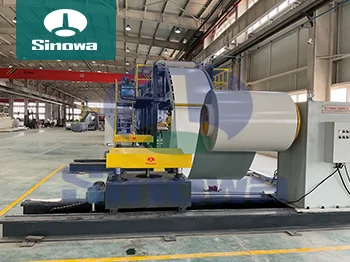
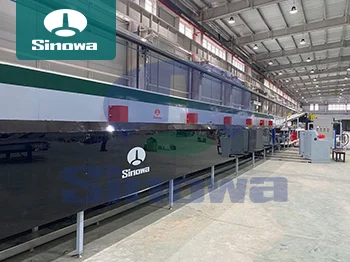
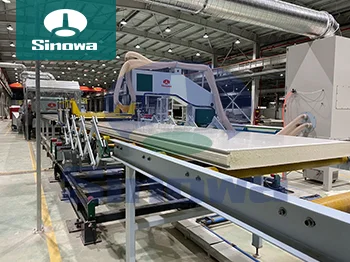
Sinowa is committed to the development and manufacturing of high-end and high-efficiency rock wool sandwich panel production line. Our rock wool sandwich panel production line are leading the way in efficiency, automatic control, human-computer interaction, environmental protection and energy consumption. Using system integration and bus control technology, it realizes the automatic integrated linkage control of the entire rock wool sandwich panel production line, and can achieve remote interactive communication, which has the world-class level and a comprehensive leading high-performance rock wool sandwich panel production line in the market.
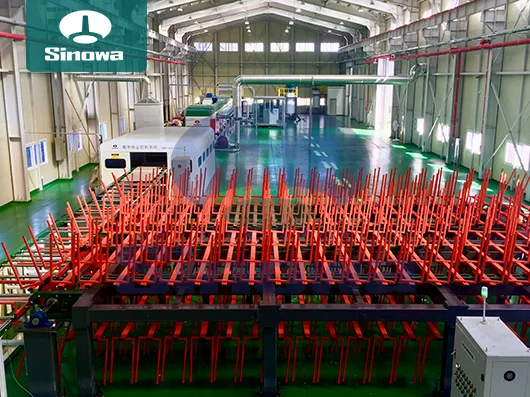
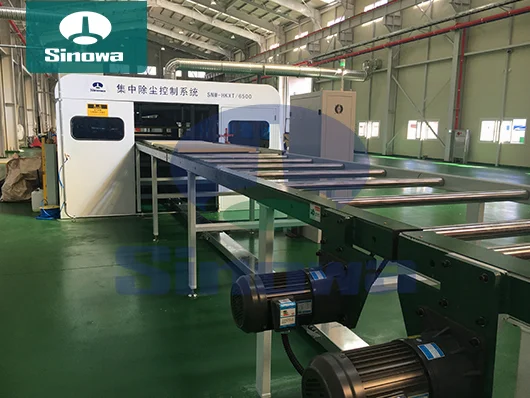
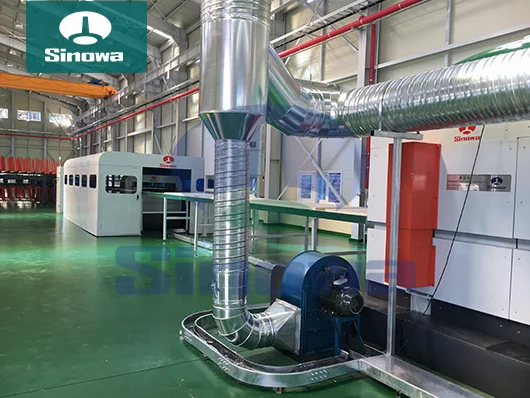
For more than ten years, relying on our innovative manufacturing concept and excellence in quality, reliable and trustworthy service to customers, we cooperate with customers all over the world, exported products to Canada, South Korea, Israel, Australia, the Middle East and other more than 20 countries and regions. contributed to building energy conservation and low-carbon production and have won widespread praise.
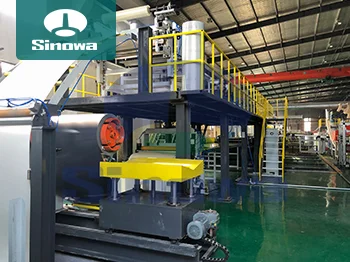
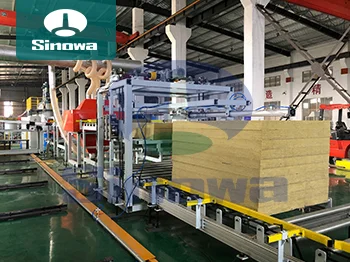
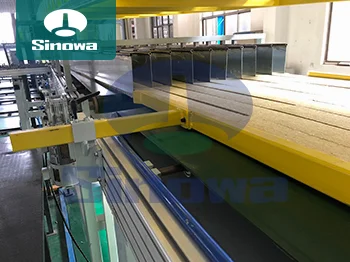
Sinowa has invested outstanding efforts in rock wool sandwich panel production line, this is why our products are more efficiency, quality, automatic control technology, environmental protection, energy consumption indicators and the appearance and safety protection are comprehensively leading, some subversive design changes in many major technical points, these major innovations make our products excellent in price/performance and user experience.
The rock wool sandwich panel production line built specifically for cold room construction represents a sophisticated continuous manufacturing system that combines mechanical processing, material compounding and automated control to produce composite panels balancing thermal retention, mechanical strength and fire performance. Cold room structures face unique operating challenges, including persistent temperature differences between interior and exterior spaces, moisture penetration risks and long-duration structural load, which place stricter demands on panel uniformity and bonding stability compared to ordinary building cladding panels. Unlike production lines designed for general architectural applications, this customized line is optimized to handle thicker core layers and tighter seam profiles required for cold storage assembly. The whole workflow starts from metal coil unwinding, where raw metal facings are released steadily and fed into multi-stage leveling rollers to remove internal stress and surface irregularities accumulated during coil storage and transport. Minor dents, uneven bending and residual tension on metal sheets will undermine adhesive attachment later, so this pretreatment stage cannot be simplified. After leveling, the metal surfaces go through cleaning to eliminate oil residues and fine particles, preparing the substrate to form a durable bond with adhesives. Every movement of metal facings is synchronized with the rock wool core feeding system, so that surface materials and core layers can enter the composite station at matching speeds. This coordinated operation avoids misalignment, edge deviation and uneven glue distribution, which are common defects that can create thermal bridges inside finished cold room panels and reduce energy efficiency throughout the service life of cold storage facilities. Maintaining consistent material feeding rhythm is the foundation of stable production, and each mechanical unit is interlocked to prevent sudden speed fluctuations that compromise panel quality.
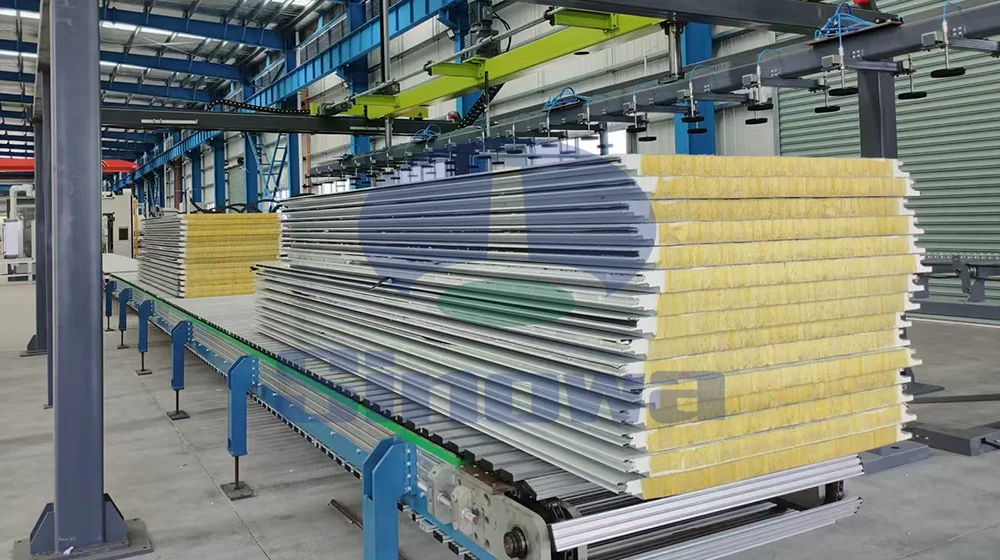
Parallel to metal facing processing, the rock wool core preparation station processes bulk rock wool slabs into standardized strips suitable for cold room sandwich panels. Rock wool, formed by melting natural stone materials and turning molten streams into fine inorganic fibers, delivers low thermal conductivity and strong fire resistance, making it well suited for cold rooms where both energy saving and fire safety matter. Within the production line, large rock wool blocks are cut, trimmed and arranged to adjust fiber orientation. Aligning fibers perpendicular to the panel surface raises compressive resistance and improves the overall structural integrity of finished panels, an essential feature when panels bear stacking loads and temperature-induced deformation in cold storage. The cutting mechanism precisely controls core thickness and width according to planned cold room dimensions, removing broken fiber segments and loose edges that would weaken local insulation. The arranged rock wool strips are transported through adjustable conveyor supports to maintain flatness before entering the gluing zone. Any gaps or discontinuities in rock wool arrangement may form hidden thermal leakage paths, so sensors monitor core material continuity and trigger minor adjustments automatically. The rock wool feeding module can adapt to different core thickness settings, allowing the same line to produce panels for low-temperature freezer sections and medium-temperature storage areas. By refining core material handling, the production line ensures that the insulating medium remains intact, without fiber collapse or voids after composite pressing, preserving long-term thermal performance for cold room operation.
The adhesive application stage serves as the critical connection point joining metal facings and rock wool cores. The line adopts automatic glue spraying equipment that spreads adhesive evenly across the inner surfaces of both upper and lower metal sheets. Uniform glue coverage is vital; insufficient adhesive leads to partial delamination, while excessive glue overflows panel edges and creates hard-to-clean residues that interfere with on-site assembly. The adhesive formulation is selected to withstand repeated temperature cycling inside cold rooms, resisting degradation under continuous alternation between low internal temperatures and ambient external humidity. After glue coating, the rock wool core is accurately positioned between the two treated metal facings, forming a preliminary three-layer composite structure. Guide rollers and positioning fixtures keep all components centered as they move toward the double-belt pressing and curing unit. This continuous composite section applies steady, uniform pressure across the full panel width, squeezing the assembly without crushing rock wool fibers or distorting metal profiles. Pressure distribution is carefully calibrated, because uneven pressure causes inconsistent bonding and warped panels that fail to fit tightly during cold room installation. The pressing process also helps expel trapped air between layers, reducing bubble formation that would impair insulation and weaken adhesion. Every parameter related to glue flow rate, pressing force and running speed is centrally managed, so each batch of panels maintains consistent bonding quality required for cold room enclosure systems.
Heating and curing takes place inside the continuous double-belt system, where temperature and dwell time are controlled to complete adhesive hardening while protecting the physical properties of rock wool and metal facings. Cold room panels need fully cured adhesive to maintain structural stability under long-term thermal stress, and incomplete curing may cause gradual separation between metal skins and rock wool cores after installation. The curing tunnel maintains stable thermal conditions along its length, avoiding localized overheating that could damage coating layers on metal surfaces or alter fiber structure of rock wool. As the composite assembly travels through this section, the adhesive undergoes polymerization and develops full bonding strength, locking metal facings and rock wool into a unified rigid panel. Conveyor speed is matched to curing duration based on panel thickness; thicker panels require longer residence time to ensure bonding reaches the panel center. Sensors distributed along the tunnel track thermal conditions and feed data back to the main control system, making real-time adjustments if deviations appear. This continuous curing design eliminates interruptions common in batch production, improving throughput while keeping dimensional stability. After exiting the curing zone, the semi-finished long panel assembly has achieved integrated composite performance, ready to move to the cutting and finishing stage, where it will be divided into individual panels matching cold room design specifications.
Precision fixed-length cutting is performed by a synchronous tracking cutting unit that follows the moving panel without stopping the whole production line. This non-stop cutting design preserves continuous production efficiency while achieving accurate length control, which is extremely valuable for cold room projects that demand panels cut to exact dimensions for tight interlocking assembly. The cutting tool travels at the same linear speed as the panel, reducing dimensional errors and generating neat, clean edges without jagged fiber breakage. Cold room panels often feature interlocking tongue-and-groove profiles along edges, which are pre-formed in the roll forming stage to support airtight joints after installation. Clean cuts protect these edge profiles, ensuring panels fit together snugly to minimize air infiltration and moisture transfer, both of which are major enemies of cold room energy performance. After cutting, edge trimming units remove stray rock wool fibers and excess adhesive burrs from panel sides. Trimming also inspects edge straightness, rejecting pieces with skew or irregular contours that would compromise sealing during cold room construction. The cutting station supports flexible length programming, so operators can quickly switch between panel sizes for wall sections, ceiling sections and partition panels within a single cold storage project. The ability to produce varied panel dimensions on demand reduces material waste and shortens preparation cycles for cold room construction projects.
Post-cutting inspection and protective film lamination form the next phase of the workflow, designed to preserve panel surface quality before packaging and transport. An online visual inspection system scans panel surfaces, bonding lines and edge profiles to spot surface scratches, uneven bonding, core voids or edge defects. Any non-conforming panels are flagged and separated automatically, preventing flawed products from being packed and delivered to cold room construction sites. Once inspection passes, a thin protective film is applied to the outer metal surface to avoid abrasion, scratches and contamination during handling, stacking and transportation. This film remains in place until panel installation at the cold room site, shielding the metal coating from mechanical damage that could create corrosion starting points. After film application, finished panels are transferred to the automatic stacking area. Stacking equipment arranges panels neatly with separating supports to prevent surface compression and edge damage. Stack height and panel spacing are controlled to avoid permanent deformation of rock wool cores or metal facings under dead weight. At this stage, operators can carry out random sampling checks on finished panel flatness and bonding integrity, verifying that output meets the performance expectations of cold room enclosure construction. This final inspection sequence acts as a quality barrier, reducing the risk of on-site problems once panels arrive for cold room assembly.
The central control system serves as the operational brain of the entire rock wool sandwich panel production line for cold rooms, integrating data from every mechanical module and sensor station. Operators manage production parameters from a central interface, adjusting running speed, glue output, pressure settings, curing temperature and cutting lengths according to target panel specifications. The system records key process data throughout each production run, enabling traceability and supporting troubleshooting when unexpected quality variations emerge. Interlock protection functions stop feeding or composite operations automatically if abnormal signals appear, such as material jams, pressure loss or temperature drift, preventing equipment damage and mass defective output. The control architecture supports coordinated operation between decoiling, core feeding, gluing, pressing, curing and cutting, maintaining synchronization across dozens of mechanical units. Compared with manually operated discrete equipment, this integrated control lowers human error and reduces reliance on skilled operators to adjust individual machines separately. The control logic is optimized specifically for cold room panel characteristics, prioritizing dimensional precision, bonding reliability and insulation integrity over simple output speed. Operators can save parameter presets for frequently used cold room panel specifications, allowing rapid changeover between different panel thicknesses and profiles. This flexibility helps manufacturers respond quickly to diverse cold room project requirements, from small-scale storage spaces to large continuous cold storage complexes.
The adoption of rock wool sandwich panel production lines continues to transform how cold room facilities are built, bringing clear advantages in production consistency, material efficiency and long-term cold storage operational performance. Cold rooms built with panels from this line gain stable thermal insulation and effective fire resistance, reducing continuous cooling load and supporting safer storage conditions for temperature-sensitive goods. The automated continuous process cuts down material waste compared to manual assembly methods, as precise cutting and controlled gluing minimize leftover rock wool and adhesive consumption. Uniform panel quality also simplifies on-site installation; tightly matched interlocking edges speed up assembly and reduce extra sealing work required to fix gaps. Over the operational lifespan of a cold room, well-made rock wool sandwich panels slow heat ingress and resist moisture accumulation within wall and ceiling structures, lowering maintenance frequency and preserving stable interior temperatures. As demand grows for reliable temperature-controlled storage spaces, the specialized production line remains a key technical solution for manufacturing high-performance composite panels tailored to cold room environments. By refining every production step from raw material preparation to finished panel stacking, the system delivers panels that balance mechanical durability, thermal performance and fire protection, forming robust enclosure structures that underpin dependable cold storage operations across many industrial and commercial applications.
« Rock Wool Sandwich Panel Production Line For Cold Room » Update Date: 2026/10/17
Tags: Fully Automatic Rock Wool Sandwich Panel Production Line , Rock Wool Sandwich Panel Production Line , rock wool sandwich panel production line, rock wool sandwich panel production line manufacturer, rock wool sandwich panel production line supplier, rock wool sandwich panel production line for sale, customized rock wool sandwich panel production line, china rock wool sandwich panel production line
- Rockwool Sandwich Panel Production Line For Building
- High-end Mineral Wool Line
- Rockwool Sandwich Panel Production Line For Sale
- Mineral Wool Sandwich Panel Machine
- Rock Wool Panel Production Line Manufacturer
- High Efficiency Rockwool Production Line
- High-end Mineral Wool Sandwich Panel Line
- Rock Wool Panel Production Line For Cold Room
- Mineral Wool Production Line Supplier
- Rock Wool Machine From China
- High-quality Rockwool Panel Production Line
- Rock Wool Panel Production Line For Sale
- Rock Wool Insulation Panel Production Line For Sale
- Mineral Wool Board Production Line Design
- High Efficiency Automatic Rock Wool Production Line
- Rock Wool Line Supplier
- Rockwool Machine Manufacturer
- Mineral Wool Sandwich Panel Machine For Cold Room
- Rockwool Sandwich Panel Machine Factory
- Rock Wool Sandwich Panel Machine For Wall
- Links:
- Sandwich Panel Continuous Production Line
- Automatic and Continuous Sandwich Panel Production Line
- Cheap and Low Price Sandwich Panel Production Line
- China Sandwich Panel Production Line Factory
- Color Steel Sandwich Panel Production Line For Cold Storage
- Continuous Composite Foam Sandwich Panel Production Line
- Continuous Production Line For Rockwool and Mineral Wool Sandwich Panels
- Continuous PU Phenolic Insulation Panel Production Line
- Continuous PU PIR Sandwich Panel Production Line
- Continuous PUF PUR Sandwich Panel Production Line
- Continuous Sandwich Panel Production Line For Roof and Wall
- Customized and Design Sandwich Panel Production Line
- Decorative Sandwich Panel Production Line For Glass Wool Boards
- High Quality Sandwich Panel Production Line For Sale
- Polyurethane(PU) Sandwich Panel Production Line
- Sandwich Panel Production Line Manufacturer and Supplier
- Sandwich Panel Production Machinery and Equipment