
Rockwool Sandwich Panel Production Line For House
Sinowa is a well-known manufacturer and technical service provider of high-end rockwool sandwich panel production line, learn more about rockwool sandwich panel production line for house, please contact Sinowa's technical engineer, tell us what you need, we will contact you as soon as possible!
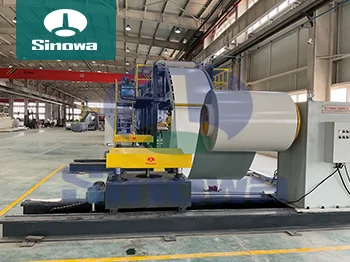
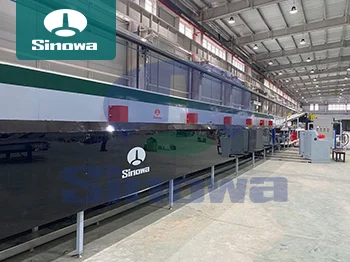
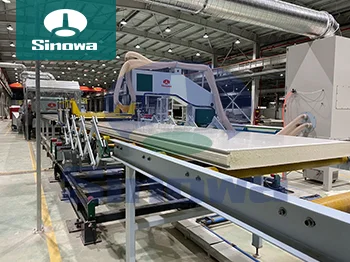
Sinowa is committed to the development and manufacturing of high-end and high-efficiency rockwool sandwich panel production line. Our rockwool sandwich panel production line are leading the way in efficiency, automatic control, human-computer interaction, environmental protection and energy consumption. Using system integration and bus control technology, it realizes the automatic integrated linkage control of the entire rockwool sandwich panel production line, and can achieve remote interactive communication, which has the world-class level and a comprehensive leading high-performance rockwool sandwich panel production line in the market.
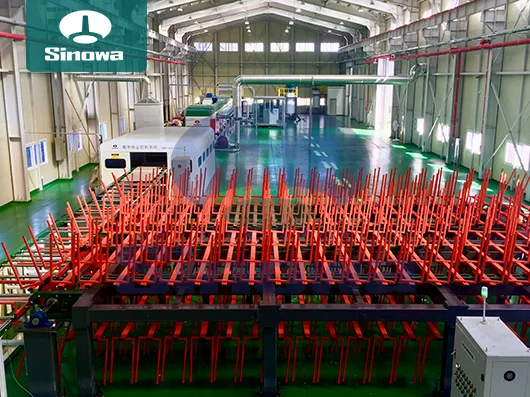
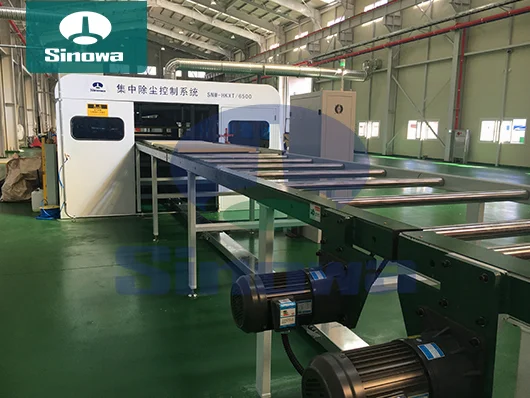
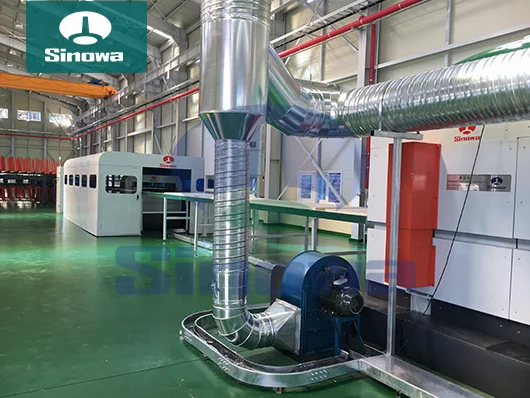
For more than ten years, relying on our innovative manufacturing concept and excellence in quality, reliable and trustworthy service to customers, we cooperate with customers all over the world, exported products to Canada, South Korea, Israel, Australia, the Middle East and other more than 20 countries and regions. contributed to building energy conservation and low-carbon production and have won widespread praise.
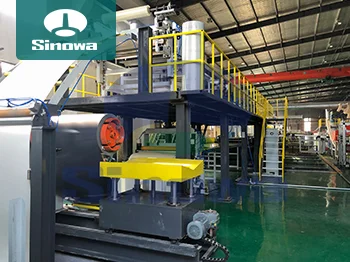
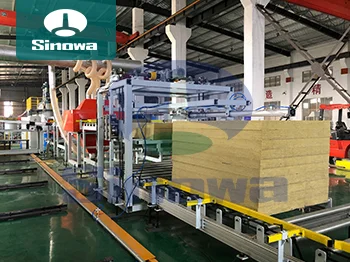
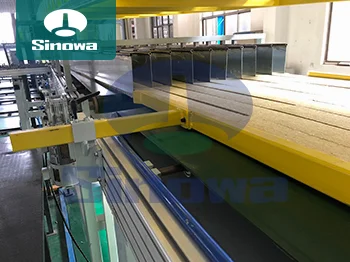
Sinowa has invested outstanding efforts in rockwool sandwich panel production line, this is why our products are more efficiency, quality, automatic control technology, environmental protection, energy consumption indicators and the appearance and safety protection are comprehensively leading, some subversive design changes in many major technical points, these major innovations make our products excellent in price/performance and user experience.
Modern building construction keeps searching for efficient and reliable material solutions that balance structural performance, thermal comfort and fast installation, and rockwool sandwich panel production lines have become a core equipment system for manufacturing wall and roof panels used in residential housing projects. These production systems are specially configured to turn raw rockwool core materials and metal surface sheets into finished sandwich panels that fit the requirements of house construction, covering continuous feeding, forming, laminating and cutting processes in one streamlined workflow. The whole production setup is designed to maintain stable bonding between the rockwool core and metal facings, which directly decides the long-term stability of panels after they are mounted on house structures. Operators can adjust key parameters on the production line according to different housing design demands, such as changing panel thickness and width to match exterior walls, interior partition walls and sloped roof applications for various house types. Unlike discontinuous manufacturing methods, this continuous production mode greatly reduces manual intervention during material handling, lowers the chance of inconsistent product quality and shortens the total manufacturing cycle for housing panels. Houses built with these finished rockwool sandwich panels can gain obvious advantages in heat preservation, sound insulation and fire resistance, so the production line itself acts as an important bridge connecting raw mineral materials and practical residential building needs. Every part of the line is arranged to support steady mass production while keeping flexibility to handle custom panel sizes that are often requested by residential building designers.
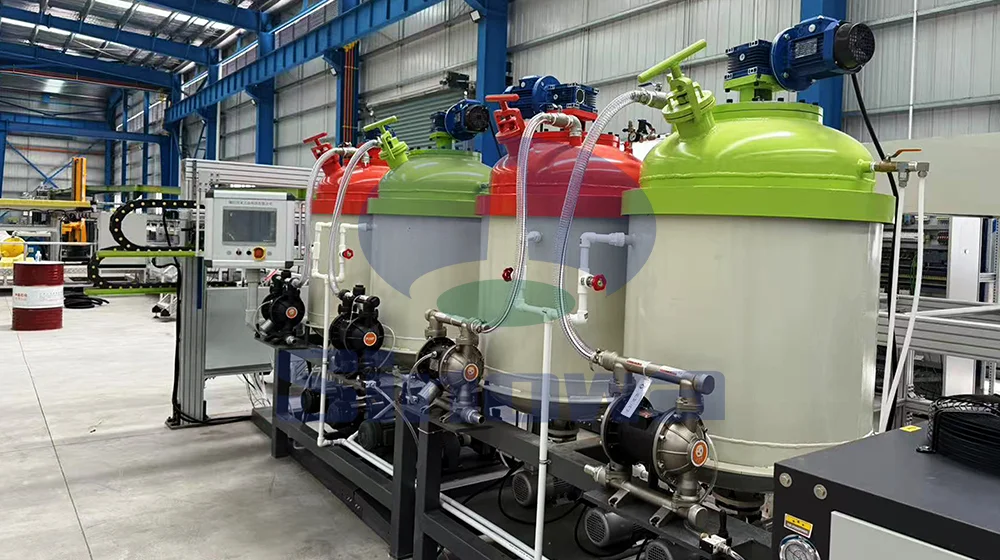
The raw material feeding section forms the starting point of the rockwool sandwich panel production line for house use, and this area handles the orderly supply of metal sheets and rockwool strips before the lamination stage. Metal coils are placed on unwinding racks, which release the surface sheets at a controlled speed while carrying out preliminary leveling and surface cleaning work to remove dust and oil contaminants that may weaken adhesive bonding. Meanwhile, rockwool core materials are transported through dedicated conveying equipment, where automatic alignment devices arrange rockwool strips tightly side by side to avoid gaps between adjacent core pieces, a critical detail for house panels because gaps would reduce thermal and acoustic performance of finished wall sections. Adhesive application units distribute bonding compound evenly on both sides of the rockwool core or inner sides of metal sheets, with the coating amount precisely regulated to prevent excessive glue overflow or insufficient bonding strength. Synchronized speed control between metal sheet feeding and rockwool transport ensures that core layers and surface sheets move forward at matching rates, preventing offset or wrinkling during the combining process. For residential building panels, raw material preparation must maintain consistent density and alignment of rockwool, as uneven core arrangement will create weak points in house walls. The feeding system also includes simple inspection stations to spot damaged metal sheets or broken rockwool blocks early, so defective raw materials can be removed before they enter the forming and pressing stages and waste production resources.
After raw materials are fully prepared and aligned, the continuous pressing and curing section takes over to combine metal facings and rockwool cores into integrated sandwich panels, which is the most important stage in the whole production line for house panels. The stacked composite material enters a long double-belt pressing machine, which applies uniform pressure across the full width of the panel while maintaining stable temperature conditions to activate the adhesive and promote solid bonding. Pressure and temperature settings are calibrated carefully to suit rockwool’s physical characteristics, avoiding excessive compression that would crush the porous rockwool structure and reduce its insulation ability, while ensuring enough pressure to create permanent adhesion between rockwool and metal skins. As the composite moves through the pressing zone, the adhesive gradually cures, locking all layers together into a single rigid panel unit suitable for house wall assembly. This continuous pressing process avoids localized pressure differences that often appear in batch pressing equipment, so every section of the finished panel maintains consistent mechanical performance. Panels produced here can withstand normal loads encountered in residential buildings, including wind pressure and light structural loads on exterior walls and roofs. Operators monitor real-time data from sensors mounted on the pressing machine to track temperature, pressure and running speed, making minor adjustments promptly if parameters drift away from target ranges, to guarantee every batch of house panels keeps reliable bonding quality.
Once the bonded composite panel exits the pressing and curing zone, it moves to the cutting and shaping section, where continuous long panels are cut into fixed lengths to meet the dimension requirements of house construction projects. High-speed flying saw cutting equipment operates without stopping the main production line, which preserves the high efficiency of continuous manufacturing. The cutting system receives length data input in advance and executes clean, straight cuts through both metal sheets and rockwool core at the same time, minimizing edge chipping of the rockwool material and preventing deformation of metal panel edges. After cutting, optional edge trimming and grooving units can process panel ends to create interlocking profiles. These interlocking edges make onsite installation much easier for construction teams building houses, allowing panels to fit tightly together without large gaps between adjacent wall or roof units. The cutting area also includes simple sorting and conveying mechanisms to move cut panels forward for inspection, while scraps generated during cutting are collected separately for later disposal or recycling. Accurate length cutting and edge processing reduce additional machining work at the construction site, which shortens the overall house construction timeline. Good edge quality also helps maintain the sealing performance of assembled house walls after installation, lowering the risk of air leakage that would weaken thermal performance of the finished building envelope.
Quality inspection runs through the whole rockwool sandwich panel production line for house manufacturing, with dedicated offline and inline checks to verify that finished panels meet the practical demands of residential construction. Inline sensors continuously check panel thickness, flatness and surface appearance as panels travel along conveyors, quickly flagging products with uneven surfaces, thickness deviation or visible bonding defects. After cutting, finished panels go through a further manual visual inspection, where workers examine panel edges, surface coating integrity and core continuity to identify any hidden flaws that automated sensors may miss. Selected sample panels are taken periodically to carry out physical tests that evaluate bonding strength, bending resistance and insulation-related properties, ensuring panels can perform reliably once installed on houses. Any non-conforming panels are separated immediately and will not proceed to packaging, preventing low-quality products from being delivered to building sites. Inspection records are kept for each production batch, providing traceability when house builders need to confirm product consistency. This layered inspection framework is essential because residential buildings require long-term stability, and defects in sandwich panels may lead to performance decline years after house completion. The inspection workflow balances thorough quality control with production speed, so the line can maintain high output without compromising the dependability of house panels.
Packaging and handling systems form the final stage of the rockwool sandwich panel production line, preparing finished panels for safe transportation to house construction sites. After inspection, qualified panels are arranged into neat stacks, with protective films placed on metal surfaces to prevent scratches, abrasion and dust contamination during transit. Spacer materials are inserted between stacked panels to avoid direct contact and edge damage when bundles are lifted or moved. Automatic bundling equipment fastens panel stacks securely, keeping panels aligned inside each bundle and reducing shifting risks during truck delivery. Conveyors and lifting devices move bundled panels to storage areas, where finished goods are organized according to panel specifications ordered for different housing projects. Proper packaging matters greatly because sandwich panels for house construction often spend days in transit and may be stored outdoors temporarily before installation. Damaged surface coatings or cracked rockwool cores caused by poor packaging can ruin panel performance, even if the panels came out of production with perfect quality. The handling system is designed to reduce manual lifting of heavy panel stacks, lowering workplace safety risks for factory staff. Well-organized packaged panels also simplify loading and unloading work at construction sites, helping building crews start wall and roof assembly quickly after materials arrive.
Using rockwool sandwich panels produced by this dedicated line brings multiple practical advantages to house construction projects, reshaping the way residential buildings are built in many regions. Compared with traditional masonry wall construction, panel-based house assembly cuts down onsite construction time significantly, since most complex material forming work is completed inside the factory. Onsite work mainly involves positioning, fixing and sealing prefabricated panels, which reduces the amount of wet construction work and cuts the need for many skilled trades on site. The rockwool core inside these panels delivers effective thermal insulation, helping houses maintain stable indoor temperatures and reduce energy consumption for heating and cooling throughout the year. The material also provides effective sound attenuation, creating quieter indoor living environments for residents. Panels can be used for exterior walls, interior partitions and pitched roofs, supporting many different house styles from simple single-story homes to multi-unit residential buildings. Prefabricated panel construction also produces less construction waste at building sites, supporting cleaner building practices. Homeowners benefit from consistent building envelope performance, while builders gain better control over project schedules. As demand for fast, energy-efficient housing grows, production lines for rockwool sandwich panels continue to be a valuable manufacturing solution for modern residential construction.
Looking ahead, rockwool sandwich panel production lines for house manufacturing keep evolving to adapt to changing demands in residential building markets. Equipment developers keep optimizing line control systems, introducing more intelligent monitoring functions that can automatically adjust running parameters according to raw material variations, further stabilizing product consistency. New upgrades to feeding and pressing mechanisms aim to reduce raw material waste during production, improving the overall resource efficiency of panel manufacturing. Production lines are also designed with greater flexibility, making it simpler to switch between different panel dimensions and surface finishes to meet diverse house design preferences. Improved automation lowers long-term labor requirements in factories and reduces human error during production operations. Meanwhile, advances in adhesive formulas and rockwool processing methods support better long-term durability of finished panels, so houses built with these materials can maintain good performance over decades. As more builders recognize the benefits of prefabricated sandwich panel housing, these production systems will continue to be refined to match the evolving needs of residential construction. The continuous development of such production equipment helps expand the application range of rockwool sandwich panels, supporting the construction of comfortable, reliable houses that fit modern living requirements around the world.
« Rockwool Sandwich Panel Production Line For House » Update Date: 2026/10/20
Tags: Rockwool Sandwich Panel Production Line , rockwool sandwich panel production line, rockwool sandwich panel production line manufacturer, rockwool sandwich panel production line supplier, rockwool sandwich panel production line for sale, customized rockwool sandwich panel production line, china rockwool sandwich panel production line
- High Efficiency Rock Wool Production Line
- Low Price Rock Wool Insulation Panel Production Line
- Customized Rockwool Sandwich Panel Line
- Highly Intelligent Rockwool Sandwich Panel Production Line
- High-tech Automatic Rock Wool Production Line
- Rock Wool Sandwich Panel Production Line For Clean Room
- Rock Wool Sandwich Panel Machine On Sales
- High-end Automatic Rock Wool Production Line
- High-quality Sandwich Panel Rock Wool Production Line
- High-tech Mineral Wool Board Production Line
- Rock Wool Board Production Line For Construction
- Sandwich Panel Rock Wool Production Line On Sales
- Cheap Rock Wool Line
- Mineral Wool Sandwich Panel Line Manufacturer
- Low Price Rockwool Machine
- Mineral Wool Sandwich Panel Machine Design
- Customized Mineral Wool Production Line
- High-end Rockwool Sandwich Panel Machine
- Rockwool Sandwich Panel Machine For Building
- Rock Wool Sandwich Panel Machine Factory
- Links:
- Sandwich Panel Continuous Production Line
- Automatic and Continuous Sandwich Panel Production Line
- Cheap and Low Price Sandwich Panel Production Line
- China Sandwich Panel Production Line Factory
- Color Steel Sandwich Panel Production Line For Cold Storage
- Continuous Composite Foam Sandwich Panel Production Line
- Continuous Production Line For Rockwool and Mineral Wool Sandwich Panels
- Continuous PU Phenolic Insulation Panel Production Line
- Continuous PU PIR Sandwich Panel Production Line
- Continuous PUF PUR Sandwich Panel Production Line
- Continuous Sandwich Panel Production Line For Roof and Wall
- Customized and Design Sandwich Panel Production Line
- Decorative Sandwich Panel Production Line For Glass Wool Boards
- High Quality Sandwich Panel Production Line For Sale
- Polyurethane(PU) Sandwich Panel Production Line
- Sandwich Panel Production Line Manufacturer and Supplier
- Sandwich Panel Production Machinery and Equipment