
Rockwool Sandwich Panel Production Line On Sales
Sinowa is a well-known manufacturer and technical service provider of high-end rockwool sandwich panel production line, learn more about rockwool sandwich panel production line on sales, please contact Sinowa's technical engineer, tell us what you need, we will contact you as soon as possible!
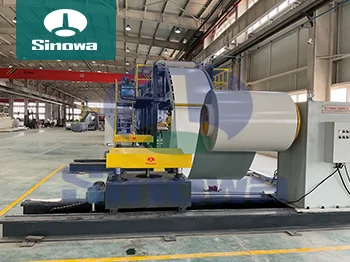
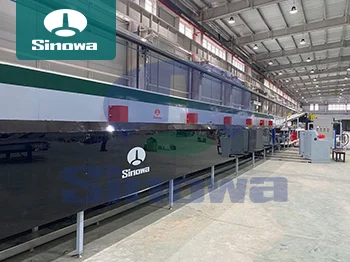
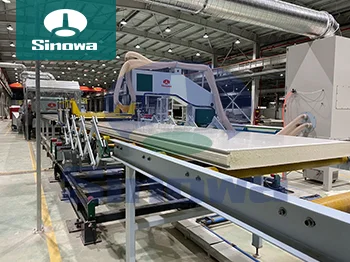
Sinowa is committed to the development and manufacturing of high-end and high-efficiency rockwool sandwich panel production line. Our rockwool sandwich panel production line are leading the way in efficiency, automatic control, human-computer interaction, environmental protection and energy consumption. Using system integration and bus control technology, it realizes the automatic integrated linkage control of the entire rockwool sandwich panel production line, and can achieve remote interactive communication, which has the world-class level and a comprehensive leading high-performance rockwool sandwich panel production line in the market.
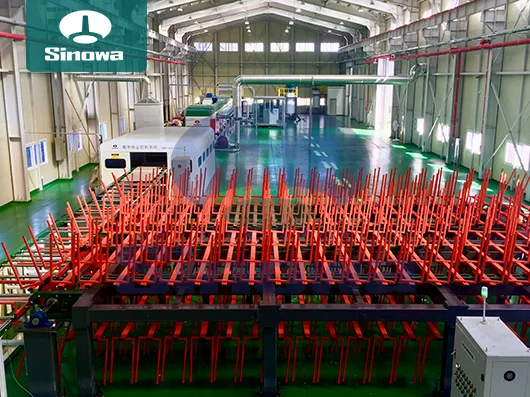
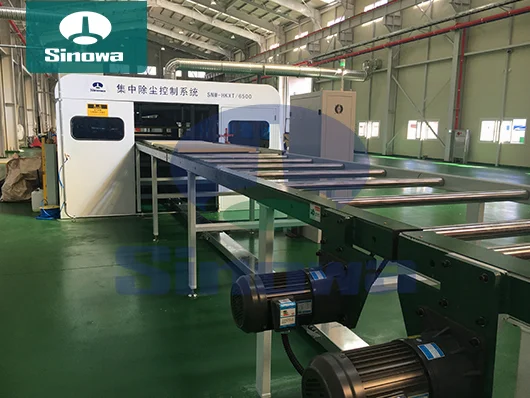
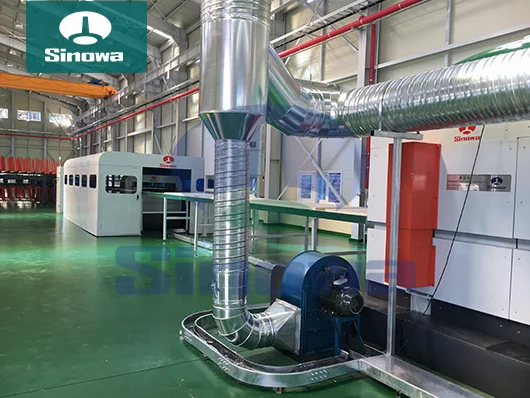
For more than ten years, relying on our innovative manufacturing concept and excellence in quality, reliable and trustworthy service to customers, we cooperate with customers all over the world, exported products to Canada, South Korea, Israel, Australia, the Middle East and other more than 20 countries and regions. contributed to building energy conservation and low-carbon production and have won widespread praise.
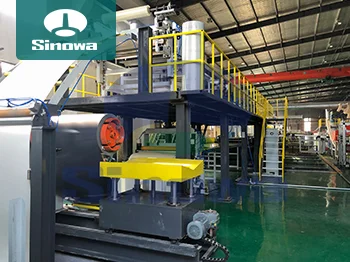
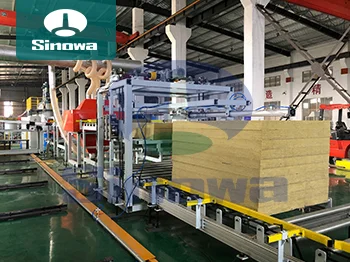
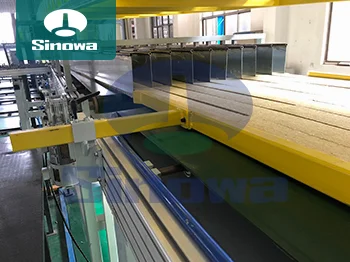
Sinowa has invested outstanding efforts in rockwool sandwich panel production line, this is why our products are more efficiency, quality, automatic control technology, environmental protection, energy consumption indicators and the appearance and safety protection are comprehensively leading, some subversive design changes in many major technical points, these major innovations make our products excellent in price/performance and user experience.
Rockwool sandwich panel production line on sales has become a sought-after industrial solution for manufacturers aiming to deliver composite building panels with integrated thermal and acoustic performance. Unlike discrete semi-manual equipment, this continuous production system links every processing phase together to turn raw metal coils and rockwool blocks into finished panels in one uninterrupted workflow. At the very beginning of operation, the uncoiling station releases metal sheet coils, feeding flat strips toward roll forming units that shape the outer facings into required profiles for wall or roof applications. Rockwool core materials are separately transported, trimmed and oriented so fiber structures align to maximize the panel’s compressive strength and sound absorption. Adhesive is evenly sprayed onto inner surfaces of metal sheets before rockwool segments are positioned between upper and lower facings. Every motion across feeding, profiling and core placement is synchronized to avoid material waste and inconsistent bonding. Business operators choose this type of line because it reduces heavy reliance on manual handling, shortens cycle times and supports steady output for large-volume orders. The whole setup is built to adapt to changing panel dimensions, which helps producers respond to diverse demands from construction projects without full reconfiguration of the workshop layout. Investing in such a production system allows material makers to shift from small batch fabrication toward continuous mass production while maintaining uniform panel appearance and physical performance.
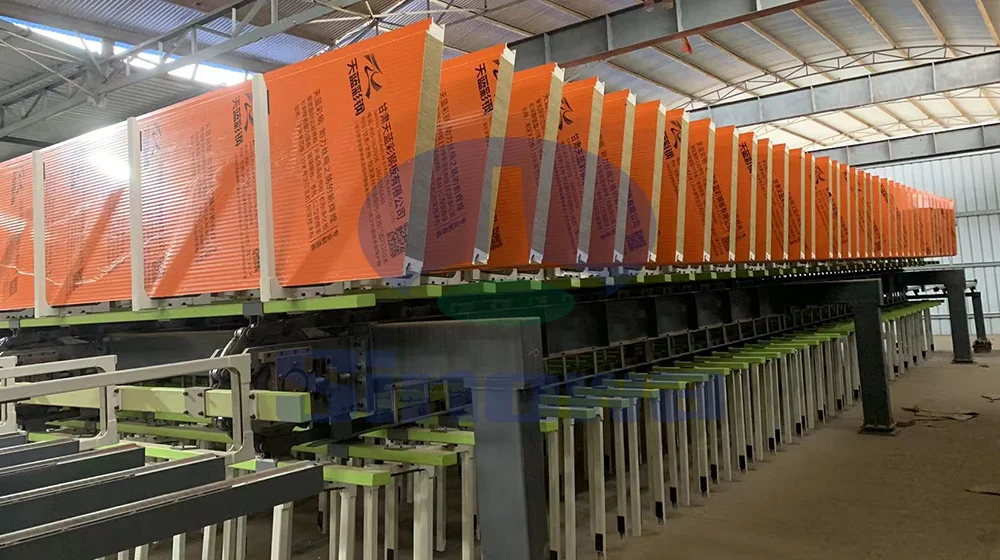
The core mechanical structure of the rockwool sandwich panel production line relies on lamination and curing modules to lock rockwool cores and metal skins into a solid composite structure. After raw materials meet in the composite zone, the assembly moves through a double-belt pressing section that applies stable pressure across the entire panel width. This step removes trapped air pockets and ensures adhesive spreads fully between fiber core and metal surface, lowering risks of delamination during long-term service. Controlled thermal treatment follows to activate the bonding agent and solidify the composite structure evenly. Temperature and pressure parameters can be fine-tuned to match different adhesive formulas and rockwool densities, giving users flexibility to adjust product characteristics according to target application scenarios. Vibration reduction structures are fitted on key transmission parts to keep running smooth and reduce mechanical wear over extended operating hours. Dust collection devices work alongside rockwool cutting stations to capture fine fiber debris generated during core trimming, maintaining cleaner workshop environments and protecting operating staff. All these functional modules are engineered to operate cooperatively, so one faulty segment will not immediately damage the whole product stream. This integrated mechanical design forms the backbone of reliable panel manufacturing and explains why many buyers prioritize robust lamination and curing performance when evaluating available production lines.
Intelligent control systems serve as the central brain of the rockwool sandwich panel production line on sales, managing speed, material feeding, temperature and cutting length throughout continuous manufacturing. A touchscreen interface enables operators to input production parameters, monitor real-time status and trigger manual adjustments when needed. Synchronization algorithms coordinate roll forming speed, glue spraying volume and conveyor movement to keep material progress matched across every station. Built-in sensing components detect material breakage, coil depletion and abnormal pressure values, sending instant alerts to operators before defective panels accumulate. Historical production data can be stored and reviewed, helping managers analyze output trends, identify recurring quality deviations and optimize operating settings for better material utilization. The control platform supports simple switching between different panel specifications, so factories can quickly transition from producing thin wall panels to thicker roof panels without lengthy mechanical rework. Even less experienced operators can learn basic operation after short training because the interface simplifies complex parameter management. Safety interlock functions stop machine movement automatically when protective covers are opened or abnormal conditions arise, lowering potential hazards during daily operation. Such digital control features greatly improve operational predictability and reduce human error, which directly stabilizes finished panel quality and raises overall plant productivity.
Material flexibility stands out as a major advantage of the rockwool sandwich panel production line, allowing manufacturers to create panels with varied core thicknesses, metal surface options and panel widths. Rockwool blocks can be cut into customized widths and arranged in segmented layouts to fill profiled metal grooves completely, eliminating empty spaces inside finished roof panels. Different surface coating types on metal coils can be processed through the same line, as long as surface tension meets adhesive requirements. Operators can adjust core feeding mechanisms to change rockwool density distribution inside panels, balancing mechanical strength, thermal insulation and sound dampening according to end-user preferences. Some production configurations support combined production workflows, enabling periodic switching between rockwool core and other insulation core types without full equipment replacement. This versatility helps production plants expand their product catalog and serve more market segments, from temporary enclosures to permanent industrial buildings. Raw material consumption can also be optimized through precise cutting controls, reducing leftover rockwool scraps and metal offcuts. When market demands shift toward thicker panels for cold storage facilities or thinner panels for interior partition walls, the line can adapt by modifying cutting lengths and core feeding parameters. This adaptability lowers the risk of equipment idling and protects the long-term value of capital investment for material producers.
Finished panel post-processing units complete the production sequence after composite panels leave the curing and pressing zone. Panels travel to a precision cutting station that trims continuous composite strips into preset lengths, ensuring dimensional consistency for construction assembly. Edge trimming mechanisms smooth uneven sides and remove excess adhesive or protruding rockwool fibers, improving panel fitting during on-site installation. After cutting, panels move through a cooling section to stabilize internal temperature before stacking, which prevents surface deformation during storage and transportation. Automatic stacking equipment lifts and arranges finished panels neatly on pallets, replacing heavy manual lifting work and lowering the chance of surface scratches or edge damage. Optional wrapping modules can apply protective film around stacked panels to shield surfaces from dust, moisture and minor abrasion during delivery. Inspection ports are arranged along the output path so quality teams can randomly check bonding condition, surface flatness and dimension accuracy without halting full production. Once inspection passes, finished panel stacks are ready for warehousing and shipment. The entire post-processing chain is designed to maintain production rhythm, so cutting, cooling and stacking do not become bottlenecks limiting the continuous output capacity of the main line.
When evaluating rockwool sandwich panel production line on sales, buyers should pay close attention to long-term operational efficiency and maintenance requirements rather than focusing only on maximum output speed. High-performance lines are built with wear-resistant components at high-friction points such as roller bearings, conveyor belts and cutting blades to extend service cycles and reduce replacement frequency. Centralized lubrication systems simplify routine maintenance by delivering lubricant to key moving parts at set intervals, cutting downtime caused by manual lubrication work. Maintenance access doors are placed at convenient positions so technicians can inspect, clean or replace components without large-scale disassembly of surrounding frames. Energy-saving designs optimize heating and power consumption by adjusting thermal load according to actual production speed instead of running at full power continuously. Spare part availability and technical support services also matter greatly for buyers, since delayed component supply can stop production for days or weeks. Many equipment providers offer guidance for routine inspection schedules and troubleshooting training to help plant teams handle common operational issues independently. Careful assessment of maintainability helps buyers reduce total operating cost and avoid unexpected shutdowns after putting the line into formal production.
Panels manufactured by this type of production line hold strong market appeal thanks to balanced thermal insulation, sound absorption and fire-resisting characteristics. The porous fiber structure of rockwool core slows heat transfer between interior and exterior spaces, assisting building owners to stabilize indoor temperature and reduce energy use for heating and cooling. At the same time, intertwined rockwool fibers absorb airborne noise, making finished panels suitable for spaces that require noise reduction. The inorganic nature of rockwool core delivers reliable performance under high-temperature exposure, without releasing large volumes of harmful smoke when exposed to flame. The composite metal skin protects the fiber core from moisture and mechanical impact, preserving insulation performance over decades of building service. Pre-fabricated sandwich panels cut on-site construction time significantly, as large wall and roof sections arrive ready for quick assembly. This benefit attracts contractors working on industrial workshops, warehouses, clean rooms and agricultural facilities. As more construction projects prioritize energy conservation and building safety, market demand for rockwool core panels keeps expanding, creating stable business opportunities for manufacturers equipped with capable continuous production lines.
Choosing a suitable rockwool sandwich panel production line is a strategic business decision that shapes the competitiveness of panel manufacturers in the long run. Buyers need to match line capacity with projected market demand, avoiding overinvestment in oversized equipment that will run underutilized, or selecting undersized systems that cannot fulfill growing order volumes. Workshop layout, available power supply and raw material storage space must be considered during planning to ensure smooth installation and material logistics. Before final selection, it is useful to review real operation cases of similar production lines and examine finished panel samples produced by target equipment, to evaluate bonding quality, surface finish and dimensional stability. Training for operators and maintenance technicians should be arranged alongside equipment delivery, so teams can master startup procedures, parameter tuning and daily inspection quickly. Once commissioned properly, the line can steadily turn raw materials into high-value rockwool sandwich panels and support sustainable business growth for many years. With rising market interest in prefabricated insulated building materials, well-selected production equipment helps manufacturers seize market opportunities and build a reputation for consistent product quality among contractors and end building owners.
« Rockwool Sandwich Panel Production Line On Sales » Update Date: 2026/10/17
Tags: Rockwool Sandwich Panel Production Line , rockwool sandwich panel production line, rockwool sandwich panel production line manufacturer, rockwool sandwich panel production line supplier, rockwool sandwich panel production line for sale, customized rockwool sandwich panel production line, china rockwool sandwich panel production line
- High-quality Mineral Wool Sandwich Panel Line
- Rockwool Sandwich Panel Machine Price
- Rock Wool Sandwich Panel Production Line Exporter
- High Efficiency Mineral Wool Board Production Line
- Low Price Rock Wool Line
- Rock Wool Sandwich Panel Line For Wall
- High-end Rock Wool Sandwich Panel Production Line
- Cheap Rockwool Machine
- Equipment For Mineral Wool Production Lines
- Mineral Wool Sandwich Panel Line Design
- Sandwich Panel Rock Wool Production Line
- High-quality Rockwool Sandwich Panel Machine
- High-quality Rock Wool Sandwich Panel Machine
- Automatic Rock Wool Production Line Supplier
- Machinery For Rock Wool Production
- Equipment For Mineral Wool Production
- Cheap Mineral Wool Sandwich Panel Machine
- Custom Sandwich Panel Rock Wool Production Line
- Highly Intelligent Rockwool Sandwich Panel Line
- High Precision Rockwool Sandwich Panel Machine For Sale
- Links:
- Sandwich Panel Continuous Production Line
- Automatic and Continuous Sandwich Panel Production Line
- Cheap and Low Price Sandwich Panel Production Line
- China Sandwich Panel Production Line Factory
- Color Steel Sandwich Panel Production Line For Cold Storage
- Continuous Composite Foam Sandwich Panel Production Line
- Continuous Production Line For Rockwool and Mineral Wool Sandwich Panels
- Continuous PU Phenolic Insulation Panel Production Line
- Continuous PU PIR Sandwich Panel Production Line
- Continuous PUF PUR Sandwich Panel Production Line
- Continuous Sandwich Panel Production Line For Roof and Wall
- Customized and Design Sandwich Panel Production Line
- Decorative Sandwich Panel Production Line For Glass Wool Boards
- High Quality Sandwich Panel Production Line For Sale
- Polyurethane(PU) Sandwich Panel Production Line
- Sandwich Panel Production Line Manufacturer and Supplier
- Sandwich Panel Production Machinery and Equipment