
Rockwool Sandwich Panel Production Line Price
Sinowa is a well-known manufacturer and technical service provider of high-end rockwool sandwich panel production line, learn more about rockwool sandwich panel production line price, please contact Sinowa's technical engineer, tell us what you need, we will contact you as soon as possible!
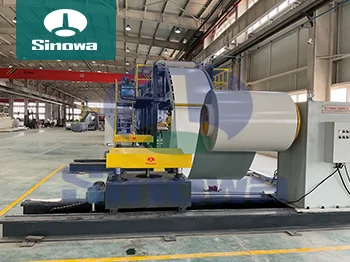
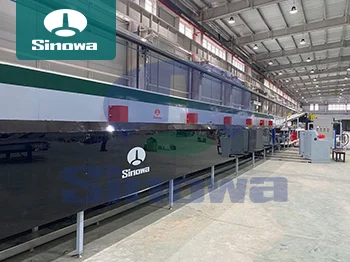
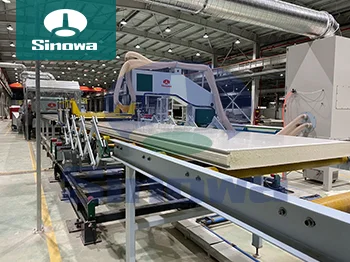
Sinowa is committed to the development and manufacturing of high-end and high-efficiency rockwool sandwich panel production line. Our rockwool sandwich panel production line are leading the way in efficiency, automatic control, human-computer interaction, environmental protection and energy consumption. Using system integration and bus control technology, it realizes the automatic integrated linkage control of the entire rockwool sandwich panel production line, and can achieve remote interactive communication, which has the world-class level and a comprehensive leading high-performance rockwool sandwich panel production line in the market.
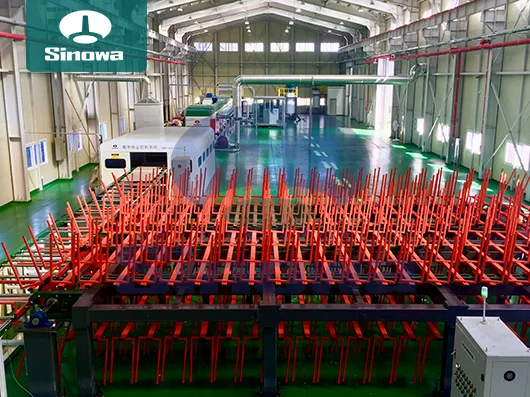
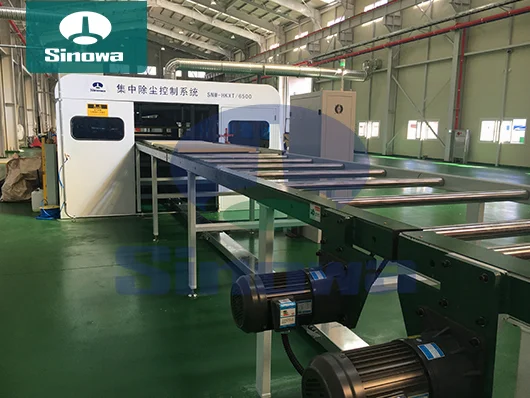
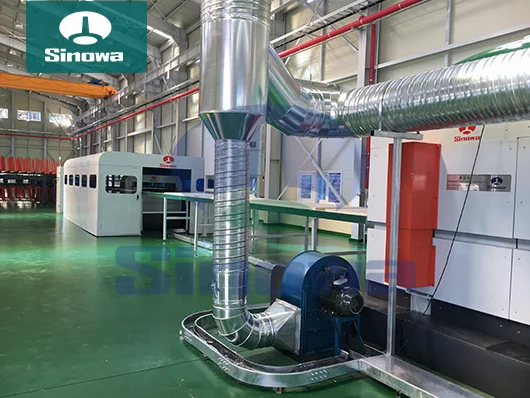
For more than ten years, relying on our innovative manufacturing concept and excellence in quality, reliable and trustworthy service to customers, we cooperate with customers all over the world, exported products to Canada, South Korea, Israel, Australia, the Middle East and other more than 20 countries and regions. contributed to building energy conservation and low-carbon production and have won widespread praise.
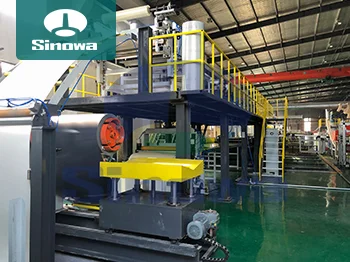
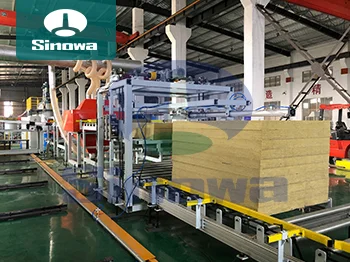
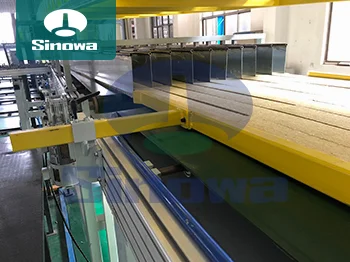
Sinowa has invested outstanding efforts in rockwool sandwich panel production line, this is why our products are more efficiency, quality, automatic control technology, environmental protection, energy consumption indicators and the appearance and safety protection are comprehensively leading, some subversive design changes in many major technical points, these major innovations make our products excellent in price/performance and user experience.
When buyers start exploring rockwool sandwich panel production line price, they often focus on a single figure without fully understanding how the complete system is structured and what value each functional module brings. A rockwool sandwich panel line is not a single machine but a series of interconnected units that turn metal coil and rockwool core materials into finished composite panels. The whole workflow begins with uncoiling metal sheets, followed by roll forming to shape the metal surface profiles, rockwool cutting and alignment, adhesive spraying, continuous pressing and heating curing, online length cutting, finished panel conveying, and final stacking. Every section directly affects the stability of continuous operation, product surface quality and bonding performance. Many new investors mistakenly compare price only by checking the number of machine frames, ignoring the differences in transmission structures, servo adjustment systems and material guiding mechanisms. Even lines with similar outward appearances can have very different overall investment requirements, because internal mechanical rigidity, material processing accuracy and wear resistance of key parts vary greatly. When evaluating the cost of the equipment, purchasers need to assess whether each station can coordinate speed steadily during long shifts, reduce material deviation, minimize waste of rockwool strips and adhesive, and lower manual intervention. This holistic view helps avoid selecting low-cost equipment that may lead to frequent shutdowns, unstable panel bonding and higher long-term operating expenses.
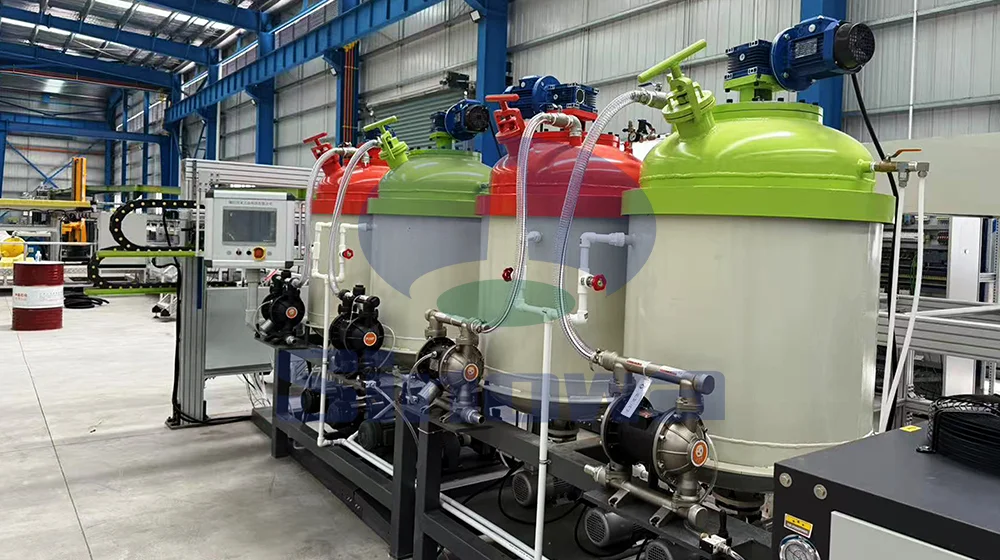
The automation level of rockwool sandwich panel production equipment stands as one of the most influential elements shaping overall investment. Basic semi-automatic setups require more workers to feed rockwool materials, adjust glue flow, monitor panel movement and collect finished products manually. These simpler configurations have fewer sensors, limited real-time parameter feedback and rely heavily on operator experience to maintain consistent output. Highly automated production systems adopt centralized control interfaces, servo motors for synchronized speed control, automatic rockwool slitting and positioning, closed-loop glue metering, continuous flying cutting and robotic stacking. Advanced automation can automatically adjust production parameters when switching panel specifications, reduce human errors and maintain stable product quality during long continuous production cycles. Although higher automation raises the initial investment, it cuts ongoing labor costs, lowers material scrap rates and shortens downtime caused by manual misoperation. Buyers need to balance expected production volume, available workshop labor and long-term operational targets. If the factory plans to run multiple shifts and produce various panel sizes frequently, upgrading the automation configuration will create better economic returns over time, while small-scale intermittent production may not need the full set of intelligent modules.
Production capacity directly affects the selection of rockwool sandwich panel production line configuration and the corresponding investment range. Lines designed for low output operate at slower running speeds and have shorter pressing and curing sections, which are sufficient for small-batch orders and intermittent production schedules. Medium and high-capacity systems feature extended double-belt pressing and curing zones, stronger driving systems and larger material handling units to sustain faster line speeds without sacrificing composite quality. The curing section is especially critical because rockwool composite panels need enough time under stable pressure and temperature to complete adhesive solidification. Insufficient curing length will weaken bonding between rockwool core and metal facings, which may trigger quality complaints after panels are delivered. Higher-capacity lines also require heavier structural frames and more powerful cooling and conveying systems to handle continuous mass production. Investors must match line capacity with actual market demand, because overbuying a high-output line will leave much equipment idle and increase depreciation costs, while undersized equipment cannot fulfill large orders and limits business expansion. Careful calculation of expected daily and annual output helps select a properly sized line and prevents unreasonable investment either way.
Customization requirements are another major factor that changes the overall cost of rockwool sandwich panel production equipment. Standardized lines support common panel widths and thickness ranges and can produce typical wall and roof panels without extra modifications. Customized solutions are requested when manufacturers need to produce special profile shapes, extra-thick rockwool cores, adjusted edge sealing structures or multi-type panel formats on the same line. Customization may involve redesigning roll forming dies, modifying rockwool feeding and slitting mechanisms, adjusting pressing clearance ranges and upgrading control programs to switch between different product specifications quickly. Each customized mechanical component and control program adjustment adds engineering work, manufacturing time and testing procedures. Some buyers also ask for auxiliary systems such as dust collection for rockwool processing, waste recycling devices and safety protection structures tailored to their workshop layout. Customized equipment can improve production flexibility and help capture diversified market orders, yet it extends delivery cycles and increases upfront spending. Before confirming custom modifications, buyers should evaluate how frequently they will produce non-standard panels and decide whether the added flexibility can bring enough revenue to offset extra investment.
Material selection for manufacturing machine frames and key components creates obvious gaps in rockwool sandwich panel production line investment. Equipment built with thinner steel structures and ordinary transmission parts can reduce initial costs, but these components tend to deform under long-term continuous load and wear quickly. Frequent maintenance, part replacement and unexpected shutdowns will appear after a relatively short running period. High-quality production lines use thickened reinforced frames, precision machined guide components, heavy-duty bearings and durable sealing parts for the pressing and gluing stations. These materials resist deformation, maintain stable pressure distribution and extend the service life of the whole line. The adhesive spraying system also shows big differences: simple spray structures may cause uneven glue distribution, wasting raw materials and resulting in partial bonding defects, while precision metering spray systems control adhesive dosage evenly across rockwool surfaces and edges. Choosing premium materials does not merely mean higher purchase spending; it stabilizes production consistency and cuts maintenance frequency. When comparing equipment offers, buyers should examine the material specifications of core stressed parts instead of only checking exterior appearance, as this decision strongly influences total cost of ownership across the equipment service cycle.
After-sales support and technical service packages are often overlooked when comparing rockwool sandwich panel production line cost, yet they exert a substantial impact on the total expenditure throughout equipment operation. Basic service packages usually cover equipment assembly guidance, startup debugging and limited training for operators. More comprehensive service includes extended on-site technical training, remote real-time troubleshooting, regular inspection visits, spare part supply agreements and long-term technical support for upgrading control programs. Rockwool sandwich panel production involves multiple coordinated mechanical, pneumatic and electrical systems, and improper operation or minor faults can halt the whole production process. Without reliable technical support, factory teams may struggle to diagnose problems quickly, leading to lost production days and missed delivery deadlines. Some service packages also include training on routine maintenance, which helps internal staff identify mechanical wear and adjust process parameters independently. Buyers should distinguish between equipment price and attached service value. A seemingly low-priced line with minimal after-sales support may become costly later when spare parts are expensive and technical assistance is slow to arrive. Reasonable service arrangements protect continuous production and reduce hidden operational risks for panel manufacturers.
Workshop preparation and auxiliary facility matching also need to be included in the overall budget planning for a rockwool sandwich panel production line, even though these costs are separate from the main machine purchase. The complete line occupies a long continuous workshop space, requiring sufficient floor area, flat load-bearing ground and rational layout for raw material storage, production flow and finished panel stacking. Power supply capacity is another key point: high-automation and high-capacity lines need stable power input to support driving, heating, control and auxiliary systems. Inadequate power configuration will cause unstable operation and damage electrical components. Factories also need to prepare lifting tools for installing heavy machine sections, ventilation systems to handle fine rockwool dust generated during slitting, and waste collection areas for leftover rockwool strips and trimming scraps. Some sites need to adjust gate sizes, internal transport channels and safety guard zones to fit equipment movement and daily operation. Many new investors only budget for the main line and underestimate workshop renovation and auxiliary setup costs, which delays project launch. Planning these supporting works in advance helps build a complete and functional production environment and prevents unexpected extra spending during project implementation.
Long-term operational efficiency and return on investment should serve as the core standard to judge whether rockwool sandwich panel production line spending is reasonable, rather than only focusing on the upfront payment. Once the equipment is put into operation, ongoing costs include power consumption, rockwool and adhesive raw material loss, wearing part replacement, maintenance labor and daily workshop management. Well-designed production lines keep energy consumption at a reasonable level, reduce material waste and maintain stable output quality, which directly improves profit margins of finished panels. Poorly matched or low-quality equipment causes continuous material waste, frequent downtime and more frequent component replacement, compressing profit margins even if initial purchase was cheap. Market demand fluctuations also affect the payback cycle. When demand for insulated building panels grows steadily, a properly selected line can reach full capacity and recover investment within a predictable period. Buyers should model production output, raw material usage rate, labor and maintenance expenses for different equipment configurations. This comprehensive financial assessment helps avoid impulsive decisions driven only by price. The goal is to select a rockwool sandwich panel production line that balances initial investment, stable operation capacity and long-term production benefits, supporting sustainable development for panel manufacturing businesses.
« Rockwool Sandwich Panel Production Line Price » Update Date: 2026/10/16
Tags: Rockwool Sandwich Panel Production Line , rockwool sandwich panel production line, rockwool sandwich panel production line manufacturer, rockwool sandwich panel production line supplier, rockwool sandwich panel production line for sale, customized rockwool sandwich panel production line, china rockwool sandwich panel production line
- High Efficiency Rock Wool Production Line
- Low Price Rock Wool Insulation Panel Production Line
- Mineral Wool Sandwich Panel Production Line For Roof
- Customized Rockwool Sandwich Panel Line
- High-tech Automatic Rock Wool Production Line
- Highly Intelligent Rockwool Sandwich Panel Production Line
- Rock Wool Sandwich Panel Machine On Sales
- Rock Wool Sandwich Panel Production Line For Clean Room
- High-end Automatic Rock Wool Production Line
- High-quality Sandwich Panel Rock Wool Production Line
- High-tech Mineral Wool Board Production Line
- Sandwich Panel Rock Wool Production Line On Sales
- Cheap Rock Wool Line
- Mineral Wool Sandwich Panel Line Manufacturer
- Low Price Rockwool Machine
- Rock Wool Board Production Line For Construction
- Mineral Wool Sandwich Panel Machine Design
- Customized Mineral Wool Production Line
- High-end Rockwool Sandwich Panel Machine
- Rock Wool Sandwich Panel Machine Factory
- Links:
- Sandwich Panel Continuous Production Line
- Automatic and Continuous Sandwich Panel Production Line
- Cheap and Low Price Sandwich Panel Production Line
- China Sandwich Panel Production Line Factory
- Color Steel Sandwich Panel Production Line For Cold Storage
- Continuous Composite Foam Sandwich Panel Production Line
- Continuous Production Line For Rockwool and Mineral Wool Sandwich Panels
- Continuous PU Phenolic Insulation Panel Production Line
- Continuous PU PIR Sandwich Panel Production Line
- Continuous PUF PUR Sandwich Panel Production Line
- Continuous Sandwich Panel Production Line For Roof and Wall
- Customized and Design Sandwich Panel Production Line
- Decorative Sandwich Panel Production Line For Glass Wool Boards
- High Quality Sandwich Panel Production Line For Sale
- Polyurethane(PU) Sandwich Panel Production Line
- Sandwich Panel Production Line Manufacturer and Supplier
- Sandwich Panel Production Machinery and Equipment