
Sandwich Panel Making Equipment Manufacturer
Sinowa is a well-known manufacturer and technical service provider of high-end sandwich panel making equipment, learn more about sandwich panel making equipment manufacturer, please contact Sinowa's technical engineer, tell us what you need, we will contact you as soon as possible!
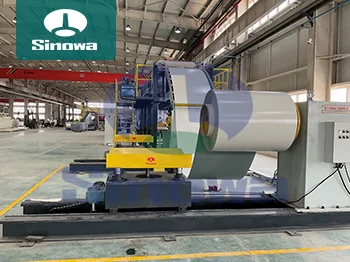
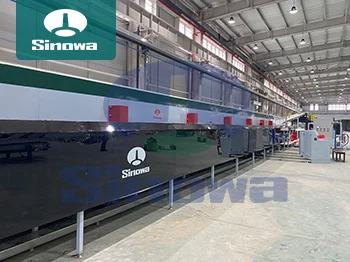
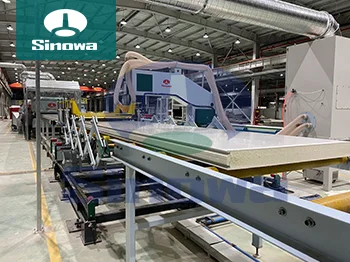
Sinowa is committed to the development and manufacturing of high-end and high-efficiency sandwich panel making equipment. Our sandwich panel making equipment are leading the way in efficiency, automatic control, human-computer interaction, environmental protection and energy consumption. Using system integration and bus control technology, it realizes the automatic integrated linkage control of the entire sandwich panel making equipment, and can achieve remote interactive communication, which has the world-class level and a comprehensive leading high-performance sandwich panel making equipment in the market.
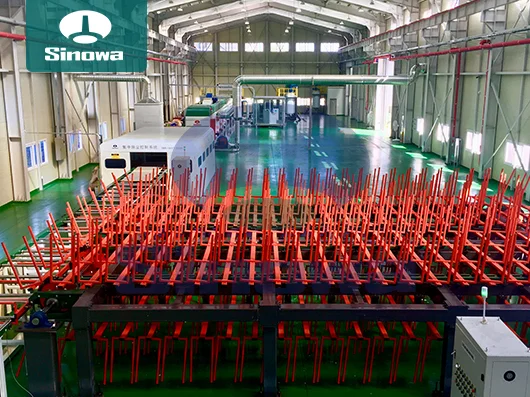
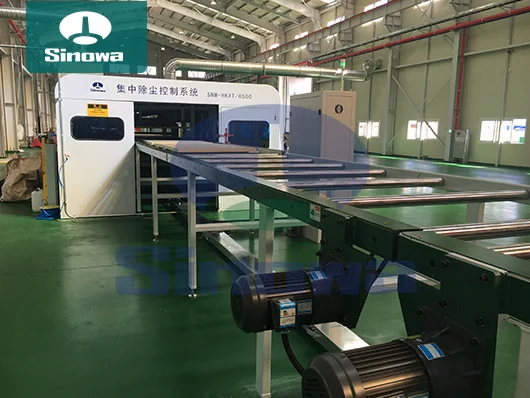
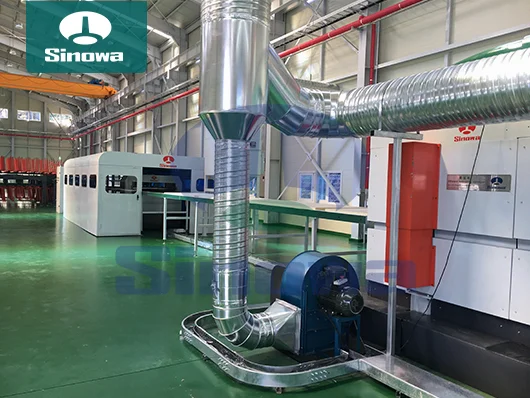
For more than ten years, relying on our innovative manufacturing concept and excellence in quality, reliable and trustworthy service to customers, we cooperate with customers all over the world, exported products to Canada, South Korea, Israel, Australia, the Middle East and other more than 20 countries and regions. contributed to building energy conservation and low-carbon production and have won widespread praise.
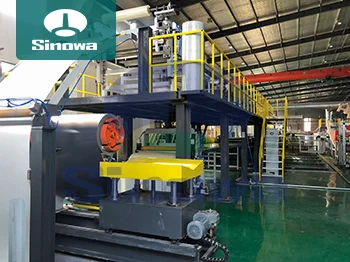
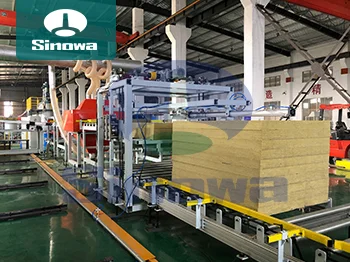
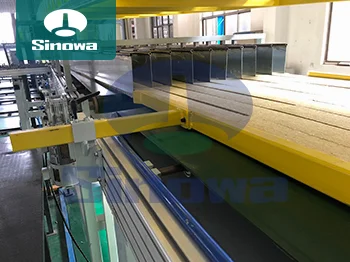
Sinowa has invested outstanding efforts in sandwich panel making equipment, this is why our products are more efficiency, quality, automatic control technology, environmental protection, energy consumption indicators and the appearance and safety protection are comprehensively leading, some subversive design changes in many major technical points, these major innovations make our products excellent in price/performance and user experience.
Sandwich panel making equipment represents a sophisticated integrated automated production system designed for the efficient manufacturing of composite sandwich panels, which are widely adopted in modern construction, industrial manufacturing and cold chain industries. Unlike discrete processing machinery that handles single production steps, this full-line equipment integrates multiple functional mechanical modules to realize continuous and streamlined production from raw material feeding to finished product output. It is engineered to bond durable surface materials with lightweight insulating core materials through precise mechanical pressing, constant-temperature curing and fixed-size cutting, forming integrated panels with excellent structural stability and thermal insulation performance. As the core hardware for composite panel production, modern sandwich panel making equipment has evolved from traditional semi-manual operation to highly intelligent and automated production modes, effectively solving the problems of uneven product quality, low production efficiency and high labor dependence in traditional manufacturing processes. It adapts to diverse production demands for different panel specifications and core material types, becoming an indispensable foundational equipment for the composite building material industry’s upgrading and high-quality development.
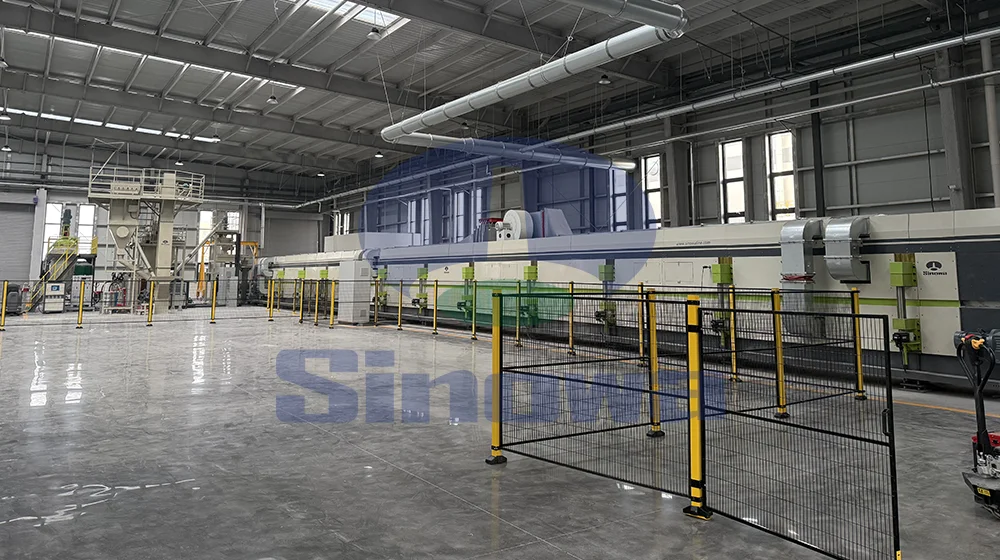
The structural composition of professional sandwich panel equipment is systematic and modular, with each functional unit designed for precise coordination to support uninterrupted mass production. The entire production line mainly consists of an automatic unwinding system, material pretreatment module, glue mixing and spraying unit, core material laying mechanism, high-pressure composite pressing system, constant-temperature curing channel, precise cutting device and finished product sorting mechanism. The unwinding system serves as the front-end feeding unit, equipped with high-precision tension control components to ensure smooth and stable unfolding of coiled surface materials without deformation or deviation, laying a foundation for subsequent uniform processing. The material pretreatment module is responsible for cleaning and surface conditioning of metal or non-metal surface plates, removing dust and impurities to enhance the bonding tightness between surface layers and core materials. The glue mixing and spraying unit adopts dynamic proportional mixing technology to ensure uniform adhesive distribution, avoiding local hollowing or weak bonding of panels. All modules are connected through a synchronous linkage system, which unifies the operating rhythm of each link, eliminates production gaps, and greatly improves the overall continuity and stability of panel manufacturing.
The complete working process of sandwich panel making equipment follows a standardized and automated procedural flow, realizing one-step integrated molding of composite panels. The production process starts with the automatic feeding of surface coiled materials and bulk core materials, where the tension control system precisely adjusts the feeding speed to match the operating frequency of subsequent processes. After pretreatment, the surface materials enter the glue spraying area, where the automated spraying system coats a uniform adhesive layer on the inner surface of upper and lower plates. Meanwhile, the core material conveying system orderly arranges and paves insulating core materials between the two surface layers, with automatic leveling devices ensuring consistent core material thickness and flatness. The semi-finished composite materials then enter the high-pressure pressing unit, where stable mechanical pressure is applied to make the surface layers and core materials closely fitted without gaps. Subsequently, the materials pass through the constant-temperature curing channel, where adjustable temperature parameters promote rapid adhesive solidification and stable composite molding. Finally, the precision cutting system cuts the continuous panel strips into customized fixed sizes, and the finished panels are automatically output and sorted, completing the entire closed-loop production process.
Intelligent control technology has become the core upgrading direction of modern sandwich panel making equipment, fundamentally optimizing production efficiency and product consistency. Advanced equipment is equipped with a centralized intelligent control platform that integrates real-time data collection, parameter adjustment, operation monitoring and fault early warning functions. Multiple high-sensitivity sensors are installed in key production links such as feeding, pressing, curing and cutting, which continuously collect operating data including material transmission speed, pressing pressure, curing temperature and cutting accuracy. The system automatically compares the collected data with preset production parameters and makes real-time fine adjustments to eliminate errors caused by manual operation and mechanical vibration. In addition, the intelligent system supports customized parameter setting for different panel types, allowing operators to switch production modes quickly through simple program debugging. It also has an automatic fault diagnosis function, which can timely identify abnormal conditions such as material jamming, uneven glue spraying and temperature deviation, and trigger early warnings or automatic shutdown protection, effectively reducing equipment failure rates and production loss risks.
High-quality sandwich panel making equipment features strong material compatibility, supporting the production of diversified composite panels with different surface and core material combinations. In terms of surface materials, the equipment is adaptable to various metal materials such as color-coated steel sheets, galvanized steel sheets and aluminum alloy sheets, as well as lightweight non-metal decorative plates, meeting the differentiated usage demands of architectural exterior walls, interior decoration and industrial enclosure structures. For core materials, the production line can be adjusted and optimized to adapt to mainstream insulating and fireproof core materials including polyurethane foam, rock wool, glass wool and polystyrene. The equipment’s adjustable structural design enables flexible switching between different core material production processes, such as special fiber loosening and uniform distribution devices for fibrous core materials to ensure continuous and flat laying, and sealed foaming structures for foam core materials to guarantee uniform density. This excellent compatibility enables a single set of equipment to meet the diversified product layout needs of manufacturers, avoiding the need for multiple sets of professional equipment and effectively reducing production investment costs and site occupation.
Modern sandwich panel making equipment delivers prominent production performance and product quality advantages compared with traditional semi-automatic production devices. In terms of production efficiency, the fully automated continuous production mode realizes uninterrupted operation, greatly improving daily output and shortening the production cycle of customized orders. The precise mechanical control system ensures consistent thickness, flatness and bonding strength of each panel, effectively avoiding common quality defects such as uneven core material distribution, warped plates and incomplete bonding that occur in manual or semi-mechanical production. In terms of product performance stability, the constant-temperature curing and high-pressure composite molding process enhances the overall structural integrity of the panels, improving their wind resistance, compression resistance and thermal insulation stability during long-term use. Moreover, the optimized mechanical structure reduces material waste in the production process, realizing precise utilization of raw materials. The automated operation mode also reduces manual intervention links, lowers labor intensity and human error rates, and helps manufacturers achieve standardized and large-scale production management.
The application scenarios of products manufactured by advanced sandwich panel making equipment cover multiple downstream industries, driving the iterative development of composite building materials. In the construction industry, the produced lightweight and high-strength sandwich panels are widely used in prefabricated building exterior walls, roof panels, partition walls and temporary engineering buildings, supporting the rapid construction and energy-saving transformation of modern buildings. In the cold chain and logistics industry, insulated sandwich panels with excellent thermal insulation performance serve as the core materials for cold storage warehouses, refrigerated truck compartments and thermal insulation container manufacturing, ensuring stable internal temperature and reducing energy consumption. In industrial manufacturing, fireproof and sound-insulating sandwich panels are applied to factory workshop enclosures, equipment isolation shields and clean workshop partitions, meeting industrial production’s requirements for fire safety, sound insulation and dust prevention. In addition, the panels are also used in municipal engineering, transportation facilities and outdoor enclosure projects, with diversified product functions fully matching the personalized needs of different fields.
With the continuous development of the composite material industry, sandwich panel making equipment is evolving toward higher intelligence, energy efficiency and functional diversification. The current industry development trend focuses on optimizing automated production logic, further improving equipment linkage efficiency and reducing energy consumption per unit of output. Equipment manufacturers are constantly upgrading intelligent sensing and control systems to realize full-process unmanned monitoring and digital production management, improving production refinement and flexibility. At the same time, environmental protection and energy-saving design have become key optimization directions, with new-generation equipment adopting low-energy heating systems and dust-free glue spraying structures to reduce production pollution and energy loss. In addition, the equipment is developing toward multi-functional integration, realizing the integrated production of multi-specification and multi-performance panels through modular function expansion. This continuous technological upgrading will further expand the application scope of sandwich panels and promote the sustainable and high-quality development of the entire composite building material manufacturing industry.
« Sandwich Panel Making Equipment Manufacturer » Update Date: 2026/8/13
Tags: Sandwich Panel Making Equipment ,
- Glass Wool Sandwich Panel Production Line In China
- Soundproofing Sandwich Panel Production Line For Sale
- PUF Panel Manufacturing Machine Supplier
- PUR Sandwich Panel Machine From China
- Low Price Glass Wool Line
- Foam Core Sandwich Panel Line Price
- PIR Insulated Panel Production Line On Sales
- Soundproofing Sandwich Panel Production Line Supplier
- PIR Wall Panel Production Line Design
- PU Sandwich Panel Production Line For House
- High Efficiency Color Steel Sandwich Panel Production Line
- PIR Sandwich Panel Production Line Supplier
- High-quality Foam Core Sandwich Panel Line
- Polyurethane Sandwich Panel Manufacturing Line Design
- Fully Automatic PU Sandwich Panel Production Line Design
- Low Price Insulated Sandwhich Panel Production Line
- High-tech Polyurethane Insulation Panel Production Line
- Color Steel Sandwich Panel Production Line For Sale
- Polyurethane Foam Production Line For Cold Room
- Automatic Sandwich Panel Production Line From China
- Links:
- Sandwich Panel Continuous Production Line
- Automatic and Continuous Sandwich Panel Production Line
- Cheap and Low Price Sandwich Panel Production Line
- China Sandwich Panel Production Line Factory
- Color Steel Sandwich Panel Production Line For Cold Storage
- Continuous Composite Foam Sandwich Panel Production Line
- Continuous Production Line For Rockwool and Mineral Wool Sandwich Panels
- Continuous PU Phenolic Insulation Panel Production Line
- Continuous PU PIR Sandwich Panel Production Line
- Continuous PUF PUR Sandwich Panel Production Line
- Continuous Sandwich Panel Production Line For Roof and Wall
- Customized and Design Sandwich Panel Production Line
- Decorative Sandwich Panel Production Line For Glass Wool Boards
- High Quality Sandwich Panel Production Line For Sale
- Polyurethane(PU) Sandwich Panel Production Line
- Sandwich Panel Production Line Manufacturer and Supplier