
Automatic Sandwich Panel Production Line Design
Sinowa is a well-known manufacturer and technical service provider of high-end automatic sandwich panel production line, learn more about automatic sandwich panel production line design, please contact Sinowa's technical engineer, tell us what you need, we will contact you as soon as possible!
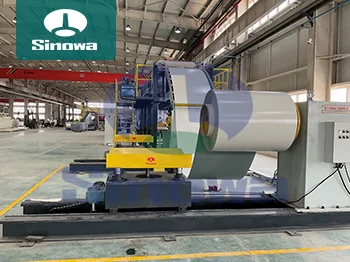
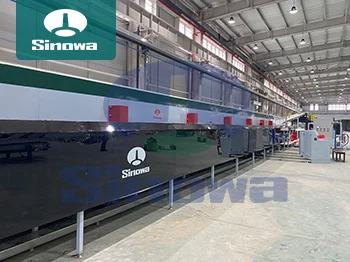
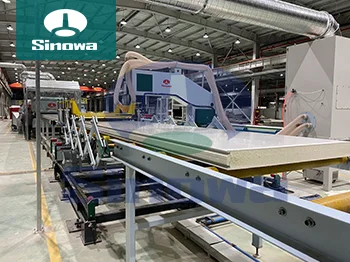
Sinowa is committed to the development and manufacturing of high-end and high-efficiency automatic sandwich panel production line. Our automatic sandwich panel production line are leading the way in efficiency, automatic control, human-computer interaction, environmental protection and energy consumption. Using system integration and bus control technology, it realizes the automatic integrated linkage control of the entire automatic sandwich panel production line, and can achieve remote interactive communication, which has the world-class level and a comprehensive leading high-performance automatic sandwich panel production line in the market.
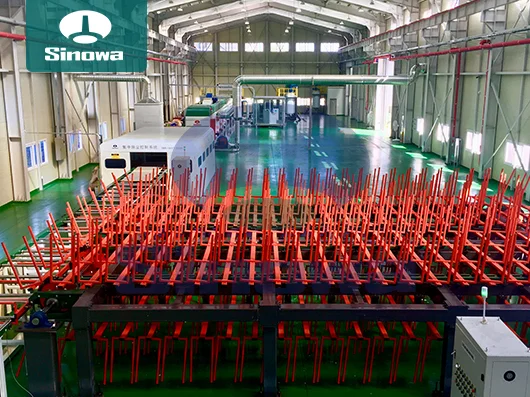
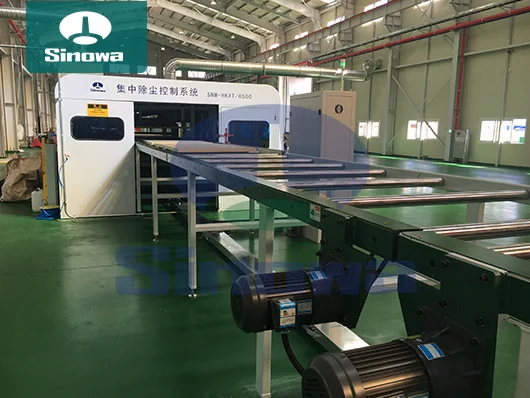
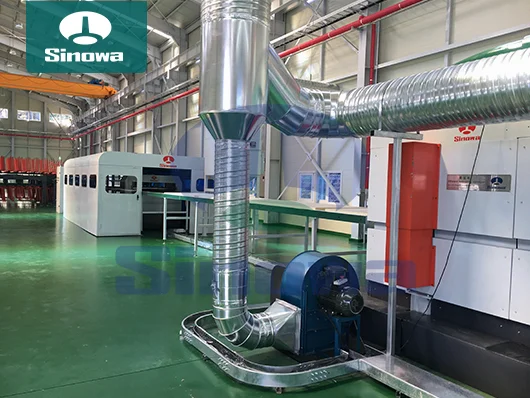
For more than ten years, relying on our innovative manufacturing concept and excellence in quality, reliable and trustworthy service to customers, we cooperate with customers all over the world, exported products to Canada, South Korea, Israel, Australia, the Middle East and other more than 20 countries and regions. contributed to building energy conservation and low-carbon production and have won widespread praise.
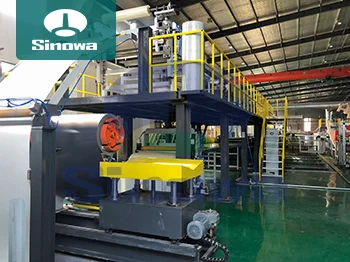
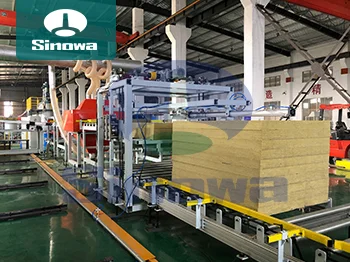
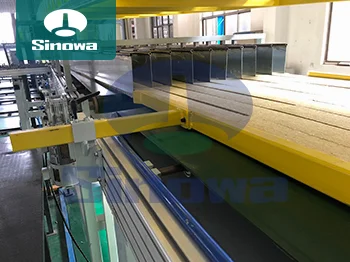
Sinowa has invested outstanding efforts in automatic sandwich panel production line, this is why our products are more efficiency, quality, automatic control technology, environmental protection, energy consumption indicators and the appearance and safety protection are comprehensively leading, some subversive design changes in many major technical points, these major innovations make our products excellent in price/performance and user experience.
Automatic sandwich panel production line design focuses on creating an integrated, streamlined manufacturing system that enables continuous, automated fabrication of composite sandwich panels for modern construction and industrial applications. This systematic design abandons traditional segmented and manual-dependent processing modes, integrating all core production procedures into a synchronized mechanical and intelligent control system. The overall layout follows a linear material flow logic, covering raw material feeding, surface layer forming, core material arrangement, adhesive coating, composite pressing, constant-temperature curing, fixed-size cutting and finished product stacking. By optimizing module coordination and mechanical transmission structures, the design effectively reduces manual intervention, eliminates intermediate material handling errors, and improves production continuity and stability. Meanwhile, the structural and functional design fully adapts to diverse panel specifications and material combinations, balancing production efficiency, product uniformity and operational safety to meet the large-scale and standardized production demands of composite building panels.
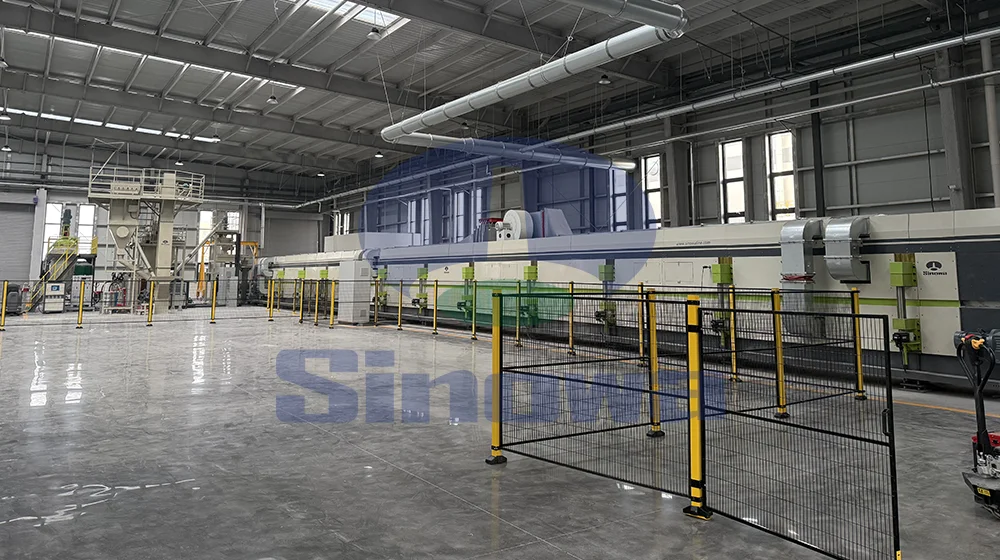
The overall structural layout design of the automatic sandwich panel production line serves as the foundational framework for efficient and stable operation, adhering to the principles of streamlined sequencing, modular integration and space optimization. The entire production system adopts a linear sequential arrangement, arranging all functional processing units in strict accordance with the forward flow of raw materials, which avoids cross operation and redundant material transfer links in the production process. Each independent functional module maintains an independent mechanical operation structure while realizing synchronous linkage through a unified transmission and control system, ensuring seamless docking between adjacent processes. The upstream area is dedicated to raw material storage and feeding, the middle area undertakes core composite molding and curing processing, and the downstream area completes cutting, trimming and finished product collection, forming a complete closed-loop production flow. In terms of space utilization, the design optimizes the installation spacing of each equipment unit, reasonably configures transmission supports and protective structures, and reserves sufficient operation and maintenance space. This layout design not only improves the overall production rhythm and operational efficiency, but also reduces equipment failure rates, facilitates daily maintenance and debugging, and provides a reliable structural guarantee for long-term continuous automated production.
Raw material feeding and pretreatment system design is the key upstream link that determines the stability of subsequent production and the consistency of finished product quality, mainly covering surface layer material unwinding, deviation correction, leveling and core material conveying and shaping functions. For coiled surface materials, the design adopts an automatic unwinding structure with continuous feeding capacity, which can realize uninterrupted material supply without stopping the line during coil replacement, effectively improving production continuity. Equipped with high-precision deviation correction devices, the system can monitor the lateral offset of sheet materials in real time and make automatic fine adjustments to ensure linear and stable feeding of surface materials. The leveling mechanism uses multi-group roller pressing structures to eliminate the bending and wrinkling deformation of coiled materials, making the surface layer flat and uniform for subsequent gluing and composite processing. In terms of core material feeding, the design adopts a quantitative conveying and anti-offset laying structure, which can stably deliver core materials of different thicknesses and densities, and limit lateral displacement during high-speed operation. The entire pretreatment system is designed with adaptive adjustment functions, which can flexibly adapt to different raw material specifications, ensure consistent feeding accuracy of each production link, and lay a solid foundation for uniform bonding and stable structure of finished sandwich panels.
Surface layer roll forming and precision processing design focuses on shaping flat sheet materials into standardized structural profiles that meet panel manufacturing requirements, with accuracy and forming stability as the core design indicators. The roll forming unit adopts a multi-pass continuous rolling structure, with each group of rollers designed with gradient forming parameters to realize gradual bending and shaping of sheet materials, avoiding local stress concentration and surface damage caused by one-time strong extrusion. All rolling rollers are processed with high-precision machining and surface treatment technology to ensure smooth surface and uniform forming size of processed sheet materials. The system is equipped with a fast parameter adjustment mechanism, which can complete the switching of different profile forming specifications through simple parameter setting, realizing flexible production of diversified panel types. In addition, the design adds a real-time detection and feedback mechanism for forming size, which can automatically identify size deviation in the forming process and adjust the roller spacing and pressure in real time. This precise forming design ensures that the geometric dimensions and structural shapes of upper and lower surface layers are highly matched, effectively improving the overall structural regularity and assembly accuracy of sandwich panels, and avoiding quality problems such as panel deformation and uneven thickness in subsequent composite processing.
Gluing composite and pressure shaping system design is the core link to realize the bonding integration of surface layer and core material, directly determining the structural strength and service performance of finished sandwich panels. The automatic gluing unit adopts a uniform spraying and quantitative gluing design, with adjustable gluing thickness and density, which can realize full coverage and uniform coating of adhesive on the inner surface of the surface layer. The gluing system is equipped with an automatic cleaning and anti-blocking structure to avoid adhesive solidification and nozzle blockage during long-term operation, ensuring the stability of gluing quality. After gluing, the surface layer and core material enter the composite pressing mechanism synchronously, which adopts multi-group constant-pressure roller pressing structure. The pressing pressure and pressing speed are intelligently adjustable according to different material characteristics and panel thicknesses, realizing uniform stress fitting of the composite structure. The internal structural design of the pressing mechanism ensures balanced pressure distribution in the transverse and longitudinal directions of the panel, eliminating gaps and bubbles between the surface layer and the core material. This scientific composite shaping design realizes stable and firm bonding between materials, improves the overall compactness and structural uniformity of sandwich panels, and effectively enhances the mechanical stability and durability of finished products.
Constant-temperature curing and cooling shaping system design undertakes the important task of stabilizing the adhesive structure and finalizing the panel shape, which is crucial to improving the bonding firmness and dimensional stability of sandwich panels. The curing system adopts a closed constant-temperature heating structure with uniform temperature distribution inside the equipment, realizing omnidirectional and consistent heating of composite panels. The intelligent temperature control module can dynamically adjust the heating temperature and curing time according to different adhesive types and panel thicknesses, ensuring that the adhesive fully reacts and forms a stable bonding structure without causing material aging or deformation due to excessive temperature. The internal circulation air duct design optimizes the heat transmission path, improves heat utilization efficiency, and shortens the curing cycle on the premise of ensuring curing quality. After high-temperature curing, the panels enter the automatic cooling system for gradual constant-speed cooling treatment. The graded cooling design avoids rapid temperature change causing internal stress and panel deformation, ensuring that the internal structure of the panel tends to be stable. The cooperation of curing and cooling systems realizes one-time finalization of panel structure, effectively improves the bonding strength and flatness of finished products, and avoids subsequent quality problems such as panel warping and glue opening during use.
Fixed-size cutting and edge trimming system design aims to realize precise sizing and neat edge processing of semi-finished panels, ensuring that the finished products meet unified specification standards. The cutting unit adopts high-precision servo driving and numerical control positioning technology, which can accurately set the cutting length according to production requirements and realize fixed-length automatic cutting of continuous panels. The high-speed cutting tool is designed with wear resistance and shock absorption structure, which can complete smooth cutting without burrs and cracks, ensuring flat and neat panel end faces. The system is equipped with an automatic edge trimming mechanism, which can trim the redundant edges on both sides of the panel synchronously according to the set width parameters, correcting the dimensional deviation generated in the previous processing links. In addition, the cutting and trimming process is equipped with a real-time dust and debris removal device, which can clean up the processing waste in time to avoid affecting the surface quality of the panel and the normal operation of subsequent equipment. The entire processing system has automatic error detection and compensation functions, which can automatically adjust positioning accuracy according to minor deviations in the production process, ensuring that the dimensional error of finished panels is controlled within a tiny range and improving the overall consistency of product specifications.
Intelligent control and finished product stacking system design is the terminal guarantee for the automated, intelligent and efficient operation of the entire production line, realizing full-process automatic control and orderly finished product collection. The core of the control system is a centralized intelligent control platform, which integrates the operation parameters of all functional modules including feeding, forming, gluing, curing and cutting. It can realize unified scheduling, synchronous operation and real-time monitoring of each link, and automatically adjust the operating parameters of each equipment according to production demands and material changes. The system has self-diagnosis and early warning functions, which can automatically identify abnormal operation states such as equipment jamming, parameter deviation and material shortage, and send early warning prompts while starting protective measures to avoid production faults and product quality problems. The terminal automatic stacking system adopts mechanical arm positioning and stacking structure, which can automatically convey, sort and stack qualified finished panels, realizing unmanned collection and arrangement of finished products. This integrated design of intelligent control and automatic stacking greatly reduces manual operation intensity, improves production automation and intelligent level, ensures the continuity and standardization of the entire production process, and effectively improves production efficiency and finished product yield while reducing production and management costs.
« Automatic Sandwich Panel Production Line Design » Update Date: 2026/9/3
- High Efficiency Glass Wool Production Line
- Low Price PU Panel Machine
- Polyurethane Sandwich Panel Manufacturing Line For Building
- High-tech Sandwich Foam Panel Making Machine
- High-end Sandwich Foam Panel Making Machine
- High Efficiency PU Insulated Panel Production Line
- High Efficiency Sandwich Panel Production Machinery
- High-tech Cold Storage Sandwich Panel Production Line
- Fully Automatic PU Sandwich Panel Machine On Sales
- PU Sandwich Panel Making Machine
- PUF Panel Making Machine Design
- Automatic Sandwich Panel Production Line For Sale
- PU Foam Production Line For Sale
- Cold Room Sandwich Panel Production Line For Sale
- PUR Sandwich Panel Production Line Price
- High-tech Soundproofing Sandwich Panel Production Line
- Sandwich Panel Foam Making Machine Price
- PU Isolation Panel Production Line Price
- High Efficiency PIR Sandwich Panel Machine
- Customized Foam Core Sandwich Panel Line
- Links:
- Sandwich Panel Continuous Production Line
- Automatic and Continuous Sandwich Panel Production Line
- Cheap and Low Price Sandwich Panel Production Line
- China Sandwich Panel Production Line Factory
- Color Steel Sandwich Panel Production Line For Cold Storage
- Continuous Composite Foam Sandwich Panel Production Line
- Continuous Production Line For Rockwool and Mineral Wool Sandwich Panels
- Continuous PU Phenolic Insulation Panel Production Line
- Continuous PU PIR Sandwich Panel Production Line
- Continuous PUF PUR Sandwich Panel Production Line
- Continuous Sandwich Panel Production Line For Roof and Wall
- Customized and Design Sandwich Panel Production Line
- Decorative Sandwich Panel Production Line For Glass Wool Boards
- High Quality Sandwich Panel Production Line For Sale
- Polyurethane(PU) Sandwich Panel Production Line
- Sandwich Panel Production Line Manufacturer and Supplier