
Continuous PUF Panel Production Line From China
Sinowa is a well-known manufacturer and technical service provider of high-end continuous puf panel production line, learn more about continuous puf panel production line from china, please contact Sinowa's technical engineer, tell us what you need, we will contact you as soon as possible!
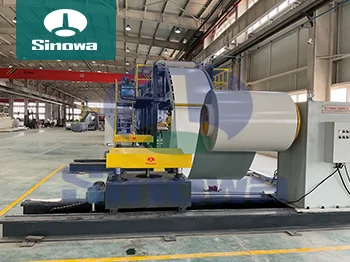
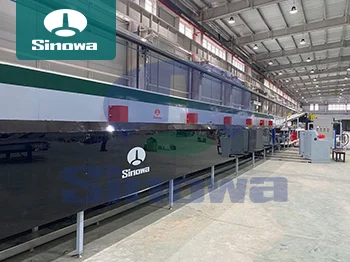
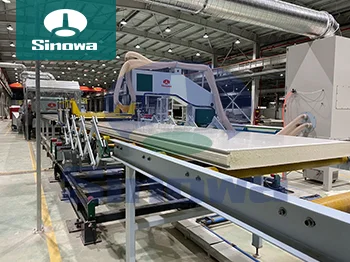
Sinowa is committed to the development and manufacturing of high-end and high-efficiency continuous puf panel production line. Our continuous puf panel production line are leading the way in efficiency, automatic control, human-computer interaction, environmental protection and energy consumption. Using system integration and bus control technology, it realizes the automatic integrated linkage control of the entire continuous puf panel production line, and can achieve remote interactive communication, which has the world-class level and a comprehensive leading high-performance continuous puf panel production line in the market.
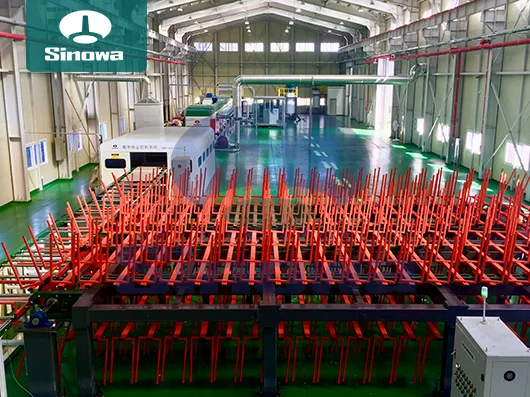
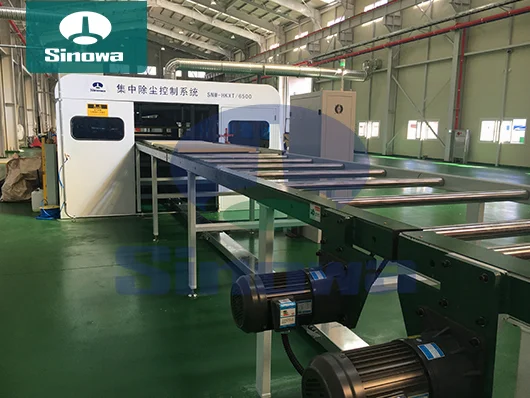
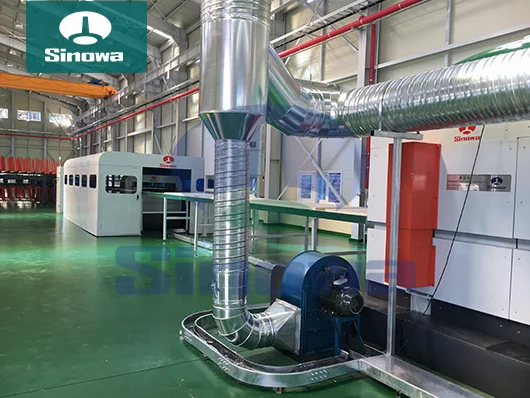
For more than ten years, relying on our innovative manufacturing concept and excellence in quality, reliable and trustworthy service to customers, we cooperate with customers all over the world, exported products to Canada, South Korea, Israel, Australia, the Middle East and other more than 20 countries and regions. contributed to building energy conservation and low-carbon production and have won widespread praise.
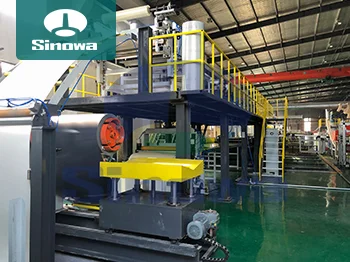
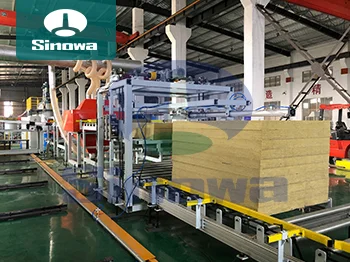
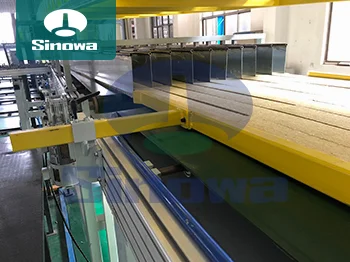
Sinowa has invested outstanding efforts in continuous puf panel production line, this is why our products are more efficiency, quality, automatic control technology, environmental protection, energy consumption indicators and the appearance and safety protection are comprehensively leading, some subversive design changes in many major technical points, these major innovations make our products excellent in price/performance and user experience.
The continuous PUF panel production line represents a sophisticated integrated manufacturing system built for uninterrupted fabrication of polyurethane foam composite sandwich panels, designed to transform separate raw materials into finished building and insulation components through a fully streamlined workflow. Unlike older batch-type equipment that depends heavily on manual handling and repeated mold cycling, this continuous setup arranges every functional unit in linear sequence, allowing substrates and chemical raw materials to move forward steadily without frequent stops between key stages. The whole system merges mechanical transmission, hydraulic actuation, pneumatic adjustment, high-pressure chemical mixing, and digital control into one coordinated framework, where every station communicates in real time to match line speed, material flow, and reaction conditions. Metal coils for panel facings enter at the starting section, unwinding smoothly before passing through roll forming modules that shape edge profiles and surface textures to suit later assembly requirements. Protective films can be applied at this stage to guard surfaces against scratches and contamination during subsequent handling. Operators oversee the process through a central control interface rather than carrying out repetitive physical tasks, which cuts human error and lessens the physical burden on on-site teams. This foundational layout establishes the core logic of continuous manufacturing: maintaining steady motion while managing the rapid, sensitive foaming reaction that defines the panel’s insulating core, and ensuring every newly formed panel carries matching structural features from the first meter of production to the last.
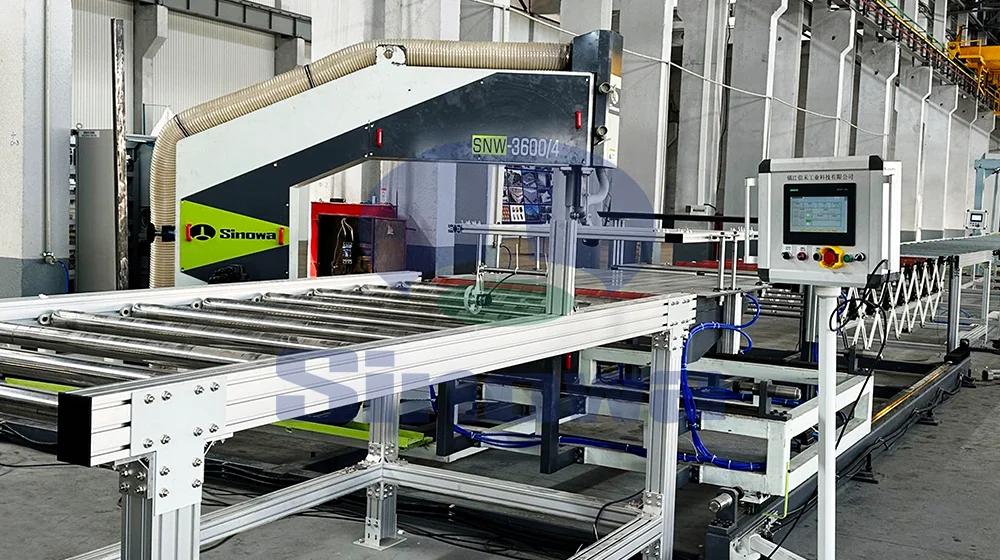
The feeding and metering segment stands as one of the most sensitive sections of the line, because precise proportioning of liquid chemical components directly shapes the internal cell structure, bonding quality, and long-term stability of the foam core. Separate storage vessels hold polyether polyol, isocyanate, and supporting additives such as catalysts, blowing agents, and foam stabilizers, with insulated piping maintaining consistent fluid temperature to avoid changes in viscosity that would disrupt mixing behavior. Servo-driven metering pumps push each stream toward the high-pressure mixing head, where intense turbulence blends all ingredients into a homogeneous liquid mixture the instant before deposition onto the moving lower facing sheet. Flow rates respond dynamically to adjustments in line speed, so the volume of dispensed liquid always matches the area of substrate passing beneath the pouring gantry. Small deviations in ratio can create visible defects, including uneven expansion, poor adhesion between foam and facings, or brittleness inside the core, so closed-loop monitoring tracks pressure and flow throughout the delivery circuit. Before the liquid mix arrives, the formed metal facings move through preheating zones to narrow temperature differences between the solid skin and reactive liquid, supporting stronger interfacial bonding and more uniform foam rise. Careful tuning of this stage removes many common flaws seen in less controlled production, laying reliable groundwork for consistent thermal performance across every finished panel.
Once the blended liquid material is deposited onto the lower facing, the assembly enters the double-belt curing press, the heart of the continuous forming process where foam expands, cross-links, and bonds firmly to both upper and lower surface layers. The upper facing is brought into alignment above the wet foam stream, and the entire composite sandwich enters the confined space between two heavy, heated circulating belts. These belts resist the upward pressure generated during foam expansion and hold the assembly at a fixed gap to lock in the target panel thickness across the full width. Controlled heat transfer through the belt surface regulates the pace of chemical curing, preventing overly fast skin formation that traps internal gas or overly slow reaction that causes sagging and deformation. The belts travel at exactly the same forward speed as the incoming substrates, eliminating relative sliding that could scratch surfaces or break the fresh bond between foam and metal. As the composite moves through the lengthy curing tunnel, the liquid mixture transforms gradually into a rigid closed-cell foam matrix, forming a monolithic core tightly fused to both facings. The length of this curing zone is engineered to match typical reaction profiles, ensuring that panels exit the press with enough structural integrity to proceed to cutting and handling without permanent distortion.
After leaving the double-belt press, the continuous panel runs through a cooling section that stabilizes internal stresses and brings the overall temperature down before cutting operations begin. Residual heat trapped inside the foam core continues to drive subtle chemical changes for a short time after the main curing phase, so gradual, uniform cooling reduces the risk of warping once panels are separated into individual lengths. Air circulation within this zone avoids concentrated cold spots that might create uneven shrinkage or weaken edge bonding. Sensors scan the panel surface along the way, checking for variations in thickness, flatness, and surface defects that may appear from temporary fluctuations in raw material feed or belt tension. Minor process adjustments can be triggered automatically if readings drift outside preset operating windows, keeping correction cycles fast and minimizing scrap generation. This intermediate stage is easy to overlook but plays a vital role in preserving dimensional accuracy, especially for longer panels that are more vulnerable to bending after cutting. When temperature and stability targets are reached, the continuous web advances toward the flying cutting unit, which synchronizes its travel speed with the moving panel to deliver clean, square cuts without halting the main production flow.
The flying cutting and downstream handling modules complete the transformation from an endless composite web into discrete finished panels ready for stacking and packaging. The cutting carriage moves in lockstep with the panel as circular cutting blades traverse the full width, producing straight edges without stopping upstream stations. After separation, panels pass through edge trimming stations where minor flash or excess foam at side margins is removed, creating neat, uniform edges that fit together cleanly during on-site installation. Automated conveyors then route individual panels to sorting stations, where products of different dimensions are directed to separate stacking zones. Stacking arms lift panels gently and arrange them in neat piles, placing protective separators between layers to stop surface abrasion and preserve the protective film. Once a stack reaches the target height, wrapping systems apply stretch film to secure the bundle and shield it from dust and moisture during transit and storage. All these actions unfold in rhythm with the main line speed, maintaining the continuous nature of the whole process and avoiding bottlenecks that would force earlier stations to pause. This end-to-end automation also cuts the chance of surface damage that frequently occurs when panels are moved manually across the workshop floor.
One of the greatest strengths of this continuous PUF panel production concept lies in its flexible adaptability to diverse panel specifications and facing materials, without requiring full reconfiguration of the whole factory layout. Operators can adjust the gap between the double belts to produce panels of different thicknesses, while the foaming gantry can shift its pouring pattern to suit narrower or wider substrate formats. The roll forming tooling can be swapped or adjusted to create different interlocking edge profiles, supporting panels designed for wall assembly, roof installation, or specialized cold room enclosures. Beyond standard metal facings, the line can accommodate alternative facing materials with modified feeding and preheating settings, opening up options for projects with different weight, texture, or surface property requirements. Formulas for the foam core can also be adjusted to alter compression behavior and cell structure, as long as the metering, mixing, and curing parameters are recalibrated to match the new reaction kinetics. This versatility makes the line suitable for manufacturers serving multiple market segments, allowing a single production asset to respond to shifting demand patterns rather than being limited to one fixed panel design. The modular arrangement of stations also means new functional units can be integrated later, extending the range of products the line can deliver over its service life.
Operational efficiency and resource optimization are built into the design of modern continuous PUF panel lines, delivering clear advantages when compared against intermittent manufacturing workflows. Because the system runs continuously through production shifts, it eliminates the idle time spent waiting for molds to open and close, for individual panels to be loaded and unloaded, and for molds to reset between cycles. Labor demand shifts from repetitive handling work toward process supervision, routine inspection, and maintenance, helping producers contain long-term operating costs while reducing exposure to workplace injuries linked to heavy lifting. Thermal insulation around curing tunnels and heating ducts cuts waste heat loss, lowering the energy required to sustain stable reaction temperatures through long production runs. The precision metering system also reduces raw material waste by minimizing over-pouring and inconsistent mixing, so a higher share of chemical inputs turns into usable finished panels rather than scrap. Scheduled maintenance windows are planned around production cycles, with quick-change designs for wear parts such as mixing head seals, belt slats, and forming rollers to shorten downtime. Over extended runs, these small gains accumulate, improving overall equipment effectiveness and supporting predictable output planning for large order commitments.
As demand grows for high-performance insulated enclosure systems across many sectors, the continuous PUF panel production line keeps evolving through incremental refinements in control, safety, and process intelligence. Recent improvements focus on richer data collection across every station, tracking pressure, temperature, speed, and material consumption to build a clearer picture of process behavior over time. Historical operating data helps maintenance teams anticipate component wear before it causes unplanned shutdowns, and helps process engineers refine recipes and settings for better consistency. Safety interlocks are integrated throughout the line to pause motion automatically if access doors are opened, if flow anomalies arise, or if temperature thresholds drift outside safe operating ranges, protecting both equipment and on-site personnel. The panels made on these lines continue to find use in industrial enclosures, cold storage infrastructure, modular building projects, and climate-controlled facilities, where stable thermal performance and fast installation add tangible value to construction schedules. By combining mature chemical foaming knowledge with advanced continuous mechanical handling, this equipment platform remains a central pillar for modern composite panel manufacturing, balancing high throughput, flexible product ranges, and careful control over the subtle chemical processes that define panel quality and reliability.
« Continuous PUF Panel Production Line From China » Update Date: 2026/10/23
Tags: Continuous PUF Panel Production Line , continuous puf panel production line, continuous puf panel production line manufacturer, continuous puf panel production line supplier, continuous puf panel production line for sale, customized continuous puf panel production line, china continuous puf panel production line
- High-tech Polyurethane Sandwich Panel Machine
- Isolation Sandwich Panel Production Line On Sales
- Custom Color Steel Sandwich Panel Production Line
- High-end Glass Wool Sandwich Panel Machine
- Glass Wool Sandwich Panel Line
- Custom PU Sandwich Panel Production Line
- High-tech Insulated Sandwhich Panel Production Line
- Glass Wool Production Line On Sales
- PU Foam Production Line For Construction
- PU Insulation Panel Production Line Supplier
- Cheap Fully Automatic PU Sandwich Panel Production Line
- Glass Wool Panel Production Line
- Isolation Sandwich Panel Production Line In China
- High Efficiency Glass Wool Sandwich Panel Machine
- PU Sandwich Panel Making Machine For Clean Room
- PUR Sandwich Panel Line Factory
- High Efficiency Fully Automatic Sandwich Panel Making Machine
- PIR Insulation Panel Production Line Supplier
- High-end Foam Core Sandwich Panel Line
- Fully Automatic PU Sandwich Panel Production Line
- Links:
- Sandwich Panel Continuous Production Line
- Automatic and Continuous Sandwich Panel Production Line
- Cheap and Low Price Sandwich Panel Production Line
- China Sandwich Panel Production Line Factory
- Color Steel Sandwich Panel Production Line For Cold Storage
- Continuous Composite Foam Sandwich Panel Production Line
- Continuous Production Line For Rockwool and Mineral Wool Sandwich Panels
- Continuous PU Phenolic Insulation Panel Production Line
- Continuous PU PIR Sandwich Panel Production Line
- Continuous PUF PUR Sandwich Panel Production Line
- Continuous Sandwich Panel Production Line For Roof and Wall
- Customized and Design Sandwich Panel Production Line
- Decorative Sandwich Panel Production Line For Glass Wool Boards
- High Quality Sandwich Panel Production Line For Sale
- Polyurethane(PU) Sandwich Panel Production Line
- Sandwich Panel Production Line Manufacturer and Supplier
- Sandwich Panel Production Machinery and Equipment