
Phenolic Insulation Board Production Line In China
Sinowa is a well-known manufacturer and technical service provider of high-end phenolic insulation board production line, learn more about phenolic insulation board production line in china, please contact Sinowa's technical engineer, tell us what you need, we will contact you as soon as possible!
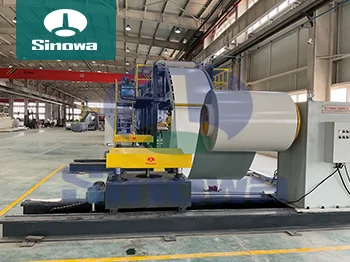
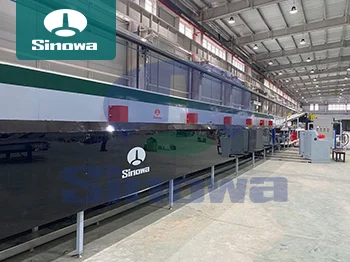
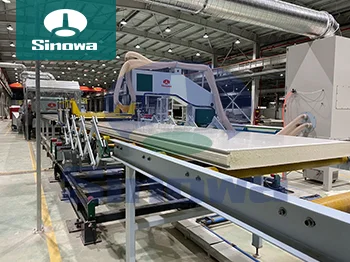
Sinowa is committed to the development and manufacturing of high-end and high-efficiency phenolic insulation board production line. Our phenolic insulation board production line are leading the way in efficiency, automatic control, human-computer interaction, environmental protection and energy consumption. Using system integration and bus control technology, it realizes the automatic integrated linkage control of the entire phenolic insulation board production line, and can achieve remote interactive communication, which has the world-class level and a comprehensive leading high-performance phenolic insulation board production line in the market.
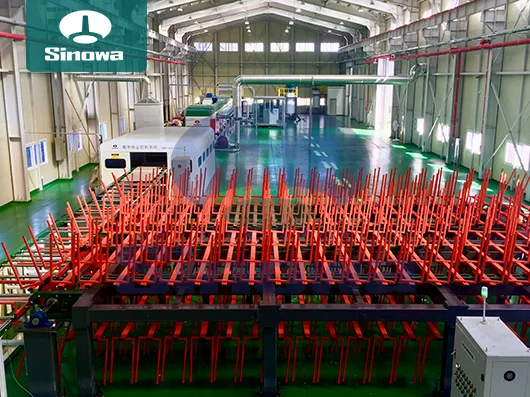
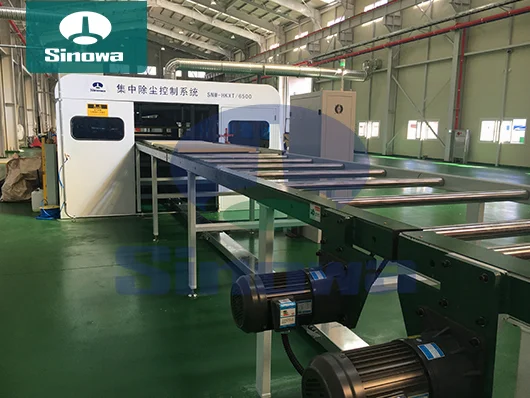
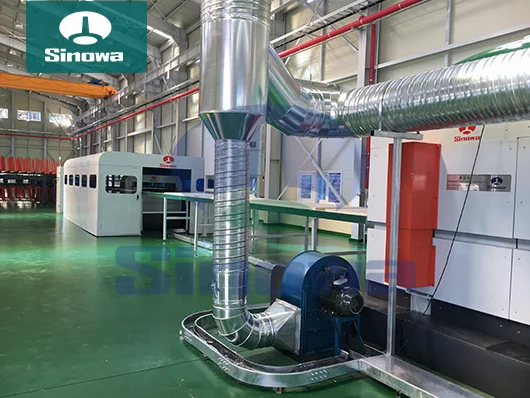
For more than ten years, relying on our innovative manufacturing concept and excellence in quality, reliable and trustworthy service to customers, we cooperate with customers all over the world, exported products to Canada, South Korea, Israel, Australia, the Middle East and other more than 20 countries and regions. contributed to building energy conservation and low-carbon production and have won widespread praise.
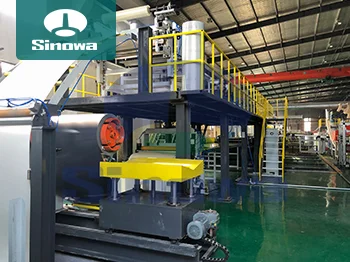
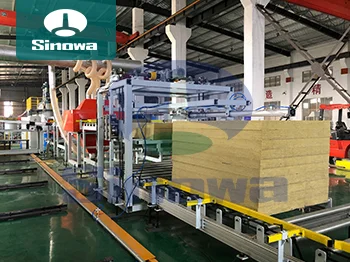
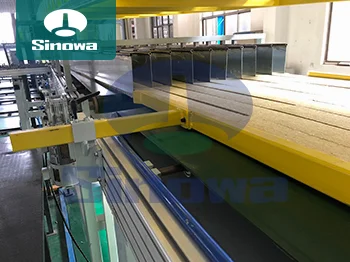
Sinowa has invested outstanding efforts in phenolic insulation board production line, this is why our products are more efficiency, quality, automatic control technology, environmental protection, energy consumption indicators and the appearance and safety protection are comprehensively leading, some subversive design changes in many major technical points, these major innovations make our products excellent in price/performance and user experience.
Chinese phenolic insulation board production line industry has undergone remarkable upgrading and expansion in recent years, emerging as a core manufacturing pillar for high-performance thermal insulation building materials across the global market. Driven by the booming demand for energy-efficient construction, industrial thermal preservation, and environmental-friendly building renovation, domestic production systems have evolved from traditional semi-automatic equipment to fully integrated, intelligent continuous production lines. These advanced production setups focus on optimizing the entire manufacturing workflow from raw material proportioning and mixing to foaming, curing, shaping, and finished product trimming, delivering phenolic boards with superior thermal insulation, flame retardancy, and chemical stability. With continuous technological iteration and localized equipment optimization, Chinese production lines have overcome the technical limitations of early foreign equipment, realizing stable mass production, low material consumption, and consistent product quality. Today, these production systems not only meet the huge domestic market demand for green building materials but also support global supply chains, showcasing strong industrial competitiveness and technological maturity in the field of phenolic foam insulation material manufacturing.
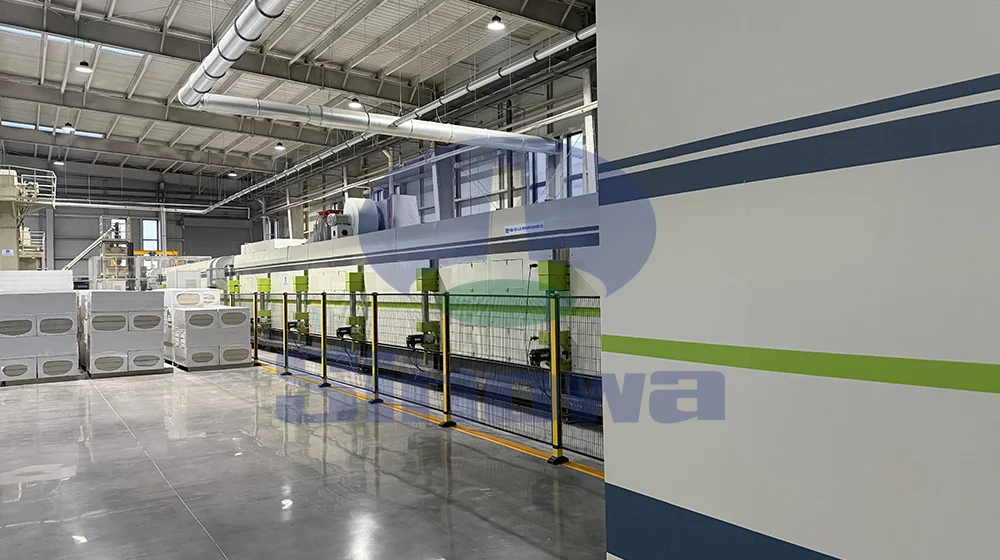
The core competitiveness of China’s phenolic insulation board production lines originates from the systematic optimization of raw material pretreatment and precise proportioning systems, which lay a solid foundation for stable product performance. Modern production lines adopt fully automated closed material supply modules that precisely manage all core raw materials including phenolic resin substrates, foaming agents, curing agents, surfactants, and functional auxiliary additives. Different from traditional manual feeding and rough proportioning modes, intelligent metering devices on domestic production equipment achieve real-time accurate quantification of each component, effectively eliminating proportion errors caused by human operation and ensuring the uniformity of raw material composition in every production batch. The raw material storage units are designed with constant temperature and humidity adjustment functions, which prevent chemical deterioration and performance attenuation of phenolic resin and auxiliary materials during storage, maintaining the activity and stability of raw materials for long-term continuous production. In addition, the pretreatment system is equipped with professional filtering and impurity removal structures to eliminate particulate impurities in raw materials, avoiding defects such as uneven foam pores and local performance differences in finished boards. This refined raw material processing link ensures the consistency of subsequent chemical reactions and fundamentally improves the overall qualification rate of phenolic insulation board products.
Material mixing and continuous foaming processes represent the core molding links of phenolic insulation board production, and Chinese production lines have achieved major breakthroughs in process precision and structural optimization. After precise proportioning, raw materials are transported to high-speed integrated mixing equipment through fully sealed pipelines, where multi-component materials undergo uniform fusion and homogeneous reaction under controllable rotating speed and stirring time. The closed mixing environment effectively prevents material volatilization loss and external dust pollution, while ensuring the fluidity and reaction uniformity of the mixed slurry. Subsequently, the mixed materials are continuously conveyed to the constant-temperature foaming cavity, the key core structure of domestic advanced production lines. Different from open foaming technology, the fully enclosed foaming system can accurately adjust internal temperature, pressure, and reaction time in real time, enabling slow and uniform foaming of phenolic materials. This controllable foaming mode forms a dense and uniform microcellular structure inside the board, which directly endows the product with excellent thermal insulation performance and structural stability. Domestic equipment manufacturers have optimized the cavity structure and material conveying speed according to the characteristics of phenolic chemical reactions, effectively avoiding common production defects such as excessive foaming, insufficient expansion, and uneven pore size, realizing stable and continuous foaming molding of insulation boards of different thickness specifications.
Gradient curing and stereotyping technology is a key differentiated advantage of China’s modern phenolic insulation board production lines, determining the final mechanical strength and dimensional stability of finished products. Unlike ordinary thermal insulation materials that complete curing in a single constant-temperature environment, phenolic foam materials require staged polymerization and curing reactions to form stable molecular structures. Domestic production lines adopt multi-stage gradient temperature curing channels, which divide the curing process into low-temperature preliminary shaping, medium-temperature polymerization reinforcement, and high-temperature structural stabilization stages. The segmented temperature control mode enables the internal molecular chain of phenolic materials to fully cross-link and polymerize step by step, avoiding internal stress concentration and structural deformation caused by rapid temperature change and one-time curing. Conveying equipment in the curing channel operates at a stable and adjustable speed, matching the curing cycle of different board thicknesses and formulas to ensure that each product obtains sufficient reaction time. Meanwhile, the closed curing environment isolates external temperature and humidity interference, maintaining a stable reaction atmosphere throughout the curing process. This refined curing process greatly improves the compression resistance, tensile stability, and anti-deformation ability of phenolic boards, enabling the products to maintain stable physical properties under long-term external pressure and complex environmental conditions.
Automatic composite laminating and surface finishing systems further enhance the application diversity and practical performance of phenolic insulation boards on domestic production lines. After completing internal curing and shaping, semi-finished phenolic foam boards enter the continuous composite laminating unit, which can realize automatic attaching of various surface protective materials according to market application needs. Common surface layers include aluminum foil, fireproof fiber cloth, and polymer protective films, all of which can be tightly compounded with the phenolic foam substrate through constant-pressure hot pressing technology. The laminating equipment adopts flexible pressure adjustment and uniform heating design, ensuring firm bonding between the surface layer and the substrate without causing foam structure damage or local depressions. The integrated surface finishing module also includes automatic leveling and defect inspection functions, which smooth the board surface and eliminate minor surface irregularities generated during production. For customized products with special surface requirements, the production line supports adjustable finishing processes to meet diverse application scenarios. The composite finishing process not only improves the surface flatness and wear resistance of phenolic boards but also enhances their anti-corrosion, moisture-proof, and smoke-suppression performances, expanding the application scope of products in high-standard building insulation and industrial anti-corrosion thermal preservation fields.
Precision cutting, trimming and intelligent quality inspection links constitute the final guarantee of product consistency for China’s phenolic insulation board production lines. After composite molding and full curing, continuous long-size board materials are transported to the automatic cutting unit, which uses high-precision numerical control cutting systems to complete fixed-length cutting and edge trimming according to preset size parameters. The intelligent cutting equipment features stable cutting speed and smooth incision, effectively avoiding edge burrs, size deviation, and board corner damage that often occur in traditional mechanical cutting. The edge trimming process uniformly polishes and repairs the four sides of the boards to ensure consistent overall dimensions of each finished product. Synchronously, the production line is equipped with online real-time quality inspection modules, which conduct non-destructive detection on key indicators including internal pore uniformity, bonding firmness, and surface flatness of each board through sensing technology. Unqualified products with subtle structural defects or performance deviations will be automatically identified and sorted out, preventing defective products from entering the finished product link. This integrated post-processing and quality inspection system realizes full-process quality control, greatly improving the dimensional accuracy and overall quality uniformity of batch products.
China’s phenolic insulation board production lines have obvious advantages in energy conservation, environmental protection and production efficiency, conforming to the global green manufacturing development trend. Modern domestic production systems adopt closed-loop material circulation design, which can recycle and reuse trace residual materials generated in the mixing, foaming and trimming links, effectively reducing raw material waste and improving material utilization rate. The optimized thermal cycle structure of curing and foaming equipment reduces redundant energy consumption, realizing lower unit energy consumption compared with traditional production equipment. In terms of environmental protection, the fully sealed production structure inhibits the volatilization of chemical additives, and the supporting waste gas purification system realizes harmless treatment of trace volatile substances generated during the production process, achieving clean and pollution-free production. In addition, the highly integrated automated production mode reduces manual intervention links, realizes continuous and uninterrupted batch production, and greatly improves production efficiency. While ensuring high product quality and stable output, the production line effectively reduces comprehensive production costs, forming a good balance among efficiency, environmental protection and economy, and providing strong support for the large-scale promotion and popularization of high-performance phenolic insulation materials.
With continuous technological innovation and industrial upgrading, China’s phenolic insulation board production line industry is showing a clear trend of intelligent upgrading and customized diversification. Traditional single-mode production lines are gradually being replaced by flexible intelligent production systems, which can quickly adjust production parameters such as raw material ratio, foaming temperature, curing cycle and product specifications through intelligent control terminals, realizing rapid switching of different types of phenolic insulation boards. The independent research and development capabilities of domestic production equipment continue to improve, with continuous breakthroughs in core technologies such as ultra-thin board stable molding, high-strength modified board production, and low-smoke environmental protection formula matching. These technological upgrades enable domestic production lines to produce high-performance products adapted to complex working conditions, meeting the increasingly stringent market demand for building energy conservation and industrial thermal insulation. In the global market competition, China’s phenolic insulation board production equipment and manufacturing technology are gaining increasing recognition, driving the continuous export of high-quality phenolic insulation materials and promoting the healthy and sustainable development of the global green thermal insulation material industry.
« Phenolic Insulation Board Production Line In China » Update Date: 2026/8/14
- Phenolic Insulated Panel Production Line
- Phenolic Insulation Board Production Line For Clean Room
- Exterior Wall Insulation Panel Production Line Price
- Highly Intelligent Phenolic Foam Production Line
- Phenolic Foam Manufacturing Machinery Factory
- Phenolic Insulation Panel Production Line
- Insulation Board Production Line
- Phenolic Insulation Board Production Line Price
- Cheap Phenolic Resin Panel Production Line
- Phenolic Insulation Board Production Line Manufacturer
- Phenolic Foam Manufacturing Machinery Price
- Phenolic Insulation Board Production Line For Cold Storage
- Custom Exterior Wall Insulation Panel Production Line
- Insulation Board Production Line On Sales
- Phenolic Foam Manufacturing Machinery For House
- High Efficiency Phenolic Air Duct Panel Line
- Cheap Insulated Panel Machine
- Cheap Phenolic Foam Manufacturing Machinery
- High Efficiency Phenolic Duct Panel Production Line
- Phenolic Foam Production Line On Sales
- Links:
- Sandwich Panel Continuous Production Line
- Automatic and Continuous Sandwich Panel Production Line
- Cheap and Low Price Sandwich Panel Production Line
- China Sandwich Panel Production Line Factory
- Color Steel Sandwich Panel Production Line For Cold Storage
- Continuous Composite Foam Sandwich Panel Production Line
- Continuous Production Line For Rockwool and Mineral Wool Sandwich Panels
- Continuous PU Phenolic Insulation Panel Production Line
- Continuous PU PIR Sandwich Panel Production Line
- Continuous PUF PUR Sandwich Panel Production Line
- Continuous Sandwich Panel Production Line For Roof and Wall
- Customized and Design Sandwich Panel Production Line
- Decorative Sandwich Panel Production Line For Glass Wool Boards
- High Quality Sandwich Panel Production Line For Sale
- Polyurethane(PU) Sandwich Panel Production Line
- Sandwich Panel Production Line Manufacturer and Supplier
- Sandwich Panel Production Machinery and Equipment