
PIR Sandwich Panel Production Line For Construction
Sinowa is a well-known manufacturer and technical service provider of high-end pir sandwich panel production line, learn more about pir sandwich panel production line for construction, please contact Sinowa's technical engineer, tell us what you need, we will contact you as soon as possible!
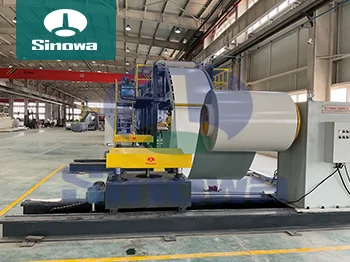
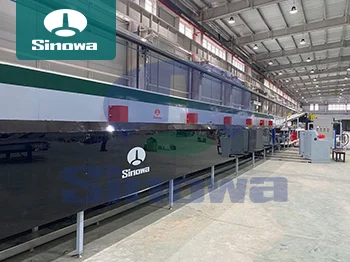
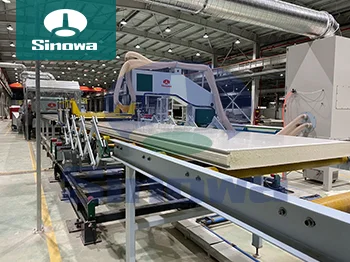
Sinowa is committed to the development and manufacturing of high-end and high-efficiency pir sandwich panel production line. Our pir sandwich panel production line are leading the way in efficiency, automatic control, human-computer interaction, environmental protection and energy consumption. Using system integration and bus control technology, it realizes the automatic integrated linkage control of the entire pir sandwich panel production line, and can achieve remote interactive communication, which has the world-class level and a comprehensive leading high-performance pir sandwich panel production line in the market.
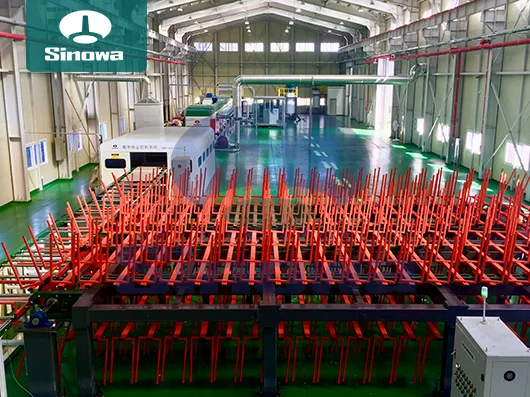
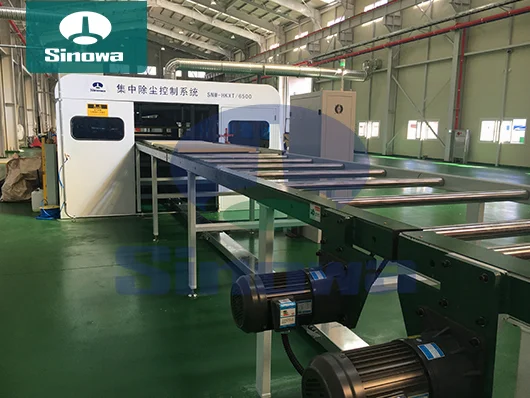
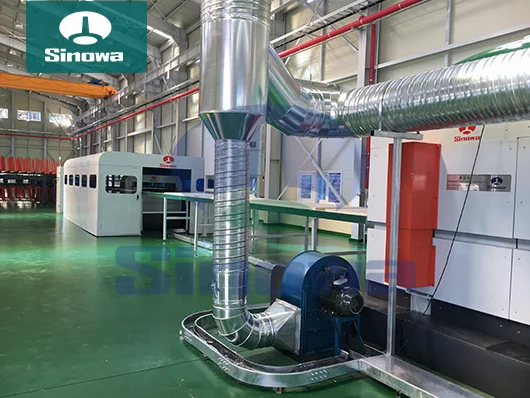
For more than ten years, relying on our innovative manufacturing concept and excellence in quality, reliable and trustworthy service to customers, we cooperate with customers all over the world, exported products to Canada, South Korea, Israel, Australia, the Middle East and other more than 20 countries and regions. contributed to building energy conservation and low-carbon production and have won widespread praise.
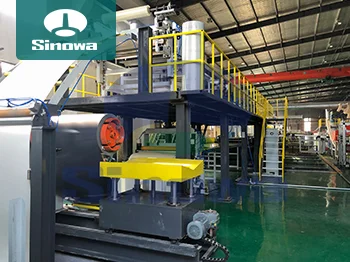
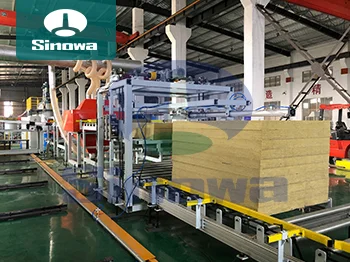
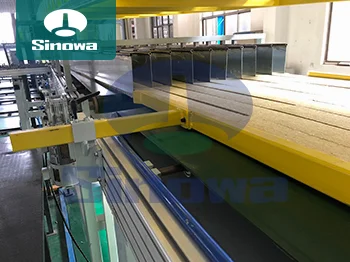
Sinowa has invested outstanding efforts in pir sandwich panel production line, this is why our products are more efficiency, quality, automatic control technology, environmental protection, energy consumption indicators and the appearance and safety protection are comprehensively leading, some subversive design changes in many major technical points, these major innovations make our products excellent in price/performance and user experience.
The construction industry continues to seek building materials that balance speed of installation, thermal performance and long-term reliability, and PIR sandwich panels have steadily become a preferred option for a wide range of modern building projects. At the heart of consistent panel supply lies a specialised PIR sandwich panel production line, which integrates multiple processing stages into one continuous workflow to turn raw materials into finished panels ready for on-site assembly. Unlike batch production methods that rely heavily on manual handling, this production setup is engineered to maintain uniform material distribution across every panel core, which directly shapes the insulation and structural properties of the final product. Each section of the line works in sequence, starting from the unwinding of metal facing sheets, through surface preparation, the controlled dispensing of the PIR foam mixture, lamination, curing and final cutting to specified lengths. Operators monitor the flow of materials and adjust process parameters to avoid common defects such as uneven foam density, poor bonding between the foam core and metal skins, or surface distortions that would compromise performance once installed. As building projects demand faster turnaround times without sacrificing quality, this automated production approach removes much of the inconsistency that comes with manual fabrication, allowing manufacturers to deliver large volumes of panels while keeping product characteristics stable across every production run. The design of the line also leaves room to adapt to different panel thicknesses and facing finishes, so it can support varied application scenarios within the construction sector, from enclosed working spaces to large-span roof structures.
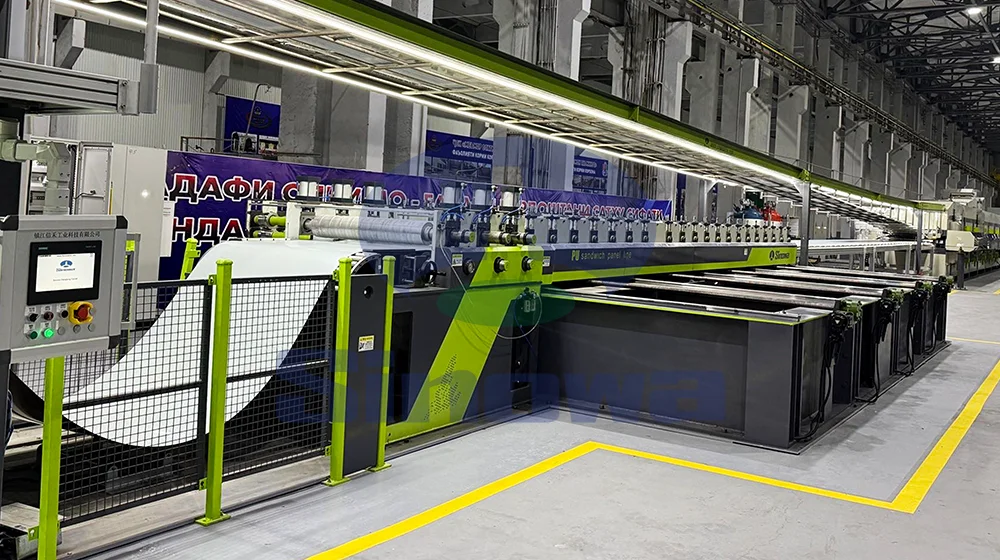
Raw material management forms a foundational part of reliable operation for a PIR sandwich panel production line, as the quality and proportion of input components determine the core insulating and physical traits of the finished sandwich panel. The two main categories of raw materials are the continuous facing sheets and the chemical components that react to form the rigid PIR foam core. The facing materials are fed from large rolls and pass through cleaning and pre-treatment stations before they meet the foam mixture, ensuring that surface contaminants do not interfere with adhesive bonding. For the PIR foam, precise metering systems control the mixing ratio of the chemical components, because even small deviations in proportion can alter foam cell structure, brittleness and adhesion strength. Once mixed, the liquid blend is poured evenly between the two moving facing sheets, and the material quickly begins to expand and fill the cavity to form a tight, uniform core. This expansion stage must take place under stable temperature and pressure conditions inside the double-belt conveyor section of the line, where the upper and lower belts hold the assembly at a fixed thickness while the foam cures. Careful control over this expansion and curing phase prevents voids, bubbles or soft spots inside the foam core, any of which would weaken thermal resistance and structural integrity. Well-calibrated raw material feeding also reduces unnecessary waste, which supports smoother production cycles and more predictable output for construction market demands.
The continuous double-belt conveyor section is widely recognised as the most critical functional zone within a PIR sandwich panel production line, as it creates the stable environment needed for foam expansion and permanent bonding between the core and face sheets. After the mixed PIR liquid is deposited onto the lower facing sheet, the upper sheet is guided into position above it, and the whole assembly enters the gap between two heavy-duty, synchronised moving belts. These belts maintain a constant gap height to define the finished panel thickness, while applying consistent pressure across the entire width and length of the product as the foam expands and hardens. Temperature control systems run alongside the conveyor to keep the curing environment steady, supporting the chemical reaction that forms the closed-cell structure characteristic of PIR foam. Synchronisation between belt speed, foam output rate and curing time is essential; if the belt moves too quickly, the foam may not fully set before exiting the zone, and excessive speed can cause separation between foam and skins. If the belt moves too slowly, over-curing may introduce internal stress that leads to warping after the panel is cut. Operators make fine adjustments to speed and heating settings based on real-time observations of panel formation, ensuring that every section of the panel develops a compact, closed-cell foam matrix with strong adhesion to both outer layers. This continuous pressing and curing process is what separates high-performance PIR panels from simpler composite boards, giving them the dimensional stability required for long-term use in building envelopes.
Once the continuous composite slab exits the curing section of the PIR sandwich panel production line, it moves into the cutting and finishing area, where the endless web of material is divided into individual panels matching the dimensions required for construction projects. Flying saw cutting systems are commonly used here, as they can cut the moving panel without stopping the main production flow, preserving the high throughput capacity of the whole line. Before cutting takes place, sensors track the travel distance of the panel material and send signals to trigger the cutting action at the exact target length, reducing dimensional errors that would create fitting problems during installation. After cutting, edge trimming units tidy up the sides of each panel to remove ragged foam overflow and uneven metal edges, creating clean, straight profiles that align properly when panels are joined on site. Some finishing stations also include groove forming equipment to create interlocking edge profiles, which simplify connection between adjacent panels and help reduce gaps that could reduce insulation performance once the building envelope is closed. Following trimming and profiling, panels pass through inspection points where visual checks identify surface scratches, delamination marks or edge damage. Panels that meet requirements are then transferred to stacking systems, which arrange them neatly for packaging and transport, while non-conforming pieces are separated for rework or disposal. This post-curing processing sequence ensures that panels arrive at construction sites ready for direct installation, with minimal extra machining needed by building crews.
Automation and control systems are integrated throughout the PIR sandwich panel production line to coordinate every linked process and reduce reliance on constant manual intervention, while giving production teams clear oversight of operating conditions. A central control interface displays key running parameters including belt speed, material feed rates, mixing ratios, curing zone temperature and cutting lengths, allowing adjustments to be made quickly from a single workstation. Sensors placed at multiple positions along the line detect interruptions such as material jams, low raw material supply or irregular foam flow, and the system can trigger alarms or slow the line automatically to prevent large amounts of defective product from being generated. Data from each production batch can also be logged, which helps operators trace issues when unexpected quality issues appear and refine settings for future runs. Automation does not remove the need for skilled operators, however; staff must understand the interaction between different process stages and recognise subtle changes in foam behaviour or surface condition that automated sensors may not capture. The control setup is designed to be flexible, so that the line can switch between producing panels of different thicknesses or different edge profiles without extensive mechanical reconfiguration. This level of controllability makes the production line adaptable to shifting orders from the construction sector, where projects often call for custom panel specifications to suit unique envelope designs.
When PIR sandwich panels produced on this type of line are applied in construction, their performance characteristics directly address several common challenges in modern building design, starting with thermal efficiency. The closed-cell structure of the cured PIR foam core delivers reliable thermal resistance, helping controlled indoor temperatures remain stable and lowering the load on climate control systems inside the finished building. The bonded metal skins add rigidity and impact resistance, allowing the panels to serve as both insulation and structural cladding or roofing components in one unit, rather than requiring separate layers of insulation and support materials. This combined function cuts down the number of different materials that construction teams need to manage on site and shortens the overall installation schedule. The panels also maintain stable performance across a wide range of ambient temperature changes, resisting the gradual loss of insulating capacity that can affect some other foam-based insulation products over time. Properly formed panels also resist moisture absorption when the outer facing remains intact, which protects the foam core from degradation that would weaken insulation and bonding. These practical benefits explain why panels from PIR sandwich panel production lines are selected for many building types, including facilities that demand strict indoor temperature management and large, lightweight roof structures that benefit from reduced dead load on the building frame.
Maintenance and routine care are essential to sustain stable, long-term operation of a PIR sandwich panel production line and avoid unplanned downtime that disrupts supply schedules for construction projects. Regular maintenance tasks cover mechanical parts, chemical delivery circuits, heating systems and cutting components. Moving belts, rollers and drive mechanisms need periodic inspection for wear, as uneven belt tension or surface damage can create pressure variations that distort panels during curing. The chemical metering and mixing sections require careful cleaning between production cycles to prevent residual foam material from hardening inside pipes and pumps, which would block flow and upset mixing ratios. Heating elements and temperature sensors in the curing zone are calibrated at set intervals to guarantee accurate thermal conditions for foam reaction. Cutting blades and profiling tools are checked for sharpness, because dull tools leave rough edges and increase stress on the panel edges during cutting. Maintenance work is usually scheduled during planned shutdown windows to avoid interrupting active production runs. Teams also keep records of component replacement and service history, helping them identify parts that tend to wear quickly and adjust spare stock accordingly. A consistent maintenance programme not only extends the service life of the production equipment but also keeps product quality steady, avoiding sudden spikes in defect rates that would delay deliveries to construction sites.
Looking ahead, the role of PIR sandwich panel production lines within the construction supply chain will continue to evolve as building methods place greater emphasis on efficient material use and predictable on-site execution. Construction continues to move toward more prefabricated approaches, where large portions of the building envelope are prepared in factory settings rather than assembled piece by piece outdoors, and PIR sandwich panels fit naturally into this model. Advances in line design focus on finer control over foam cell formation, improved material recovery for process waste, and more seamless transitions between different panel specifications, all of which help manufacturers respond to evolving project requirements. Even as new composite materials emerge, the balanced combination of thermal performance, structural convenience and installation speed offered by properly manufactured PIR sandwich panels keeps them relevant for many envelope applications. Production line operators will keep refining process knowledge to reduce waste and maintain consistent product quality, supporting construction teams who depend on dependable, factory-made components to complete projects on schedule. The continuous nature of this production technology aligns well with the broader direction of the construction industry, where reliable, high-volume production of prefabricated building elements will remain a key factor in delivering efficient, durable built environments for years to come.
« PIR Sandwich Panel Production Line For Construction » Update Date: 2026/10/27
Tags: PIR Sandwich Panel Production Line , pir sandwich panel production line, pir sandwich panel production line manufacturer, pir sandwich panel production line supplier, pir sandwich panel production line for sale, customized pir sandwich panel production line, china pir sandwich panel production line
- Low Price Metal Sandwich Panel Production Line
- Cold Storage Sandwich Panel Production Line Factory
- Fully Automatic PU Sandwich Panel Production Line In China
- Polyurethane Foam Production Line For House
- Sandwich Panel Making Machine On Sales
- Cold Storage Sandwich Panel Production Line Manufacturer
- Custom Fully Automatic Sandwich Panel Making Machine
- PU Sandwich Panel Making Machine Design
- Custom Sandwich Panel Manufacturing Line
- Low Price PU Board Production Line
- Sandwich Panel Making Equipment On Sales
- PU Insulation Board Production Line Factory
- Sandwich Roof Wall Panel Making Machine Design
- PUF Panel Machine Manufacturer
- Sandwich Panel Integrated Production Line For Sale
- Custom PUF Panel Manufacturing Machine
- Glass Wool Panel Production Line Factory
- High Efficiency PUR Sandwich Panel Machine
- Sandwich Roof Wall Panel Making Machine Manufacturer
- PIR Insulation Panel Production Line Factory
- Links:
- Sandwich Panel Continuous Production Line
- Automatic and Continuous Sandwich Panel Production Line
- Cheap and Low Price Sandwich Panel Production Line
- China Sandwich Panel Production Line Factory
- Color Steel Sandwich Panel Production Line For Cold Storage
- Continuous Composite Foam Sandwich Panel Production Line
- Continuous Production Line For Rockwool and Mineral Wool Sandwich Panels
- Continuous PU Phenolic Insulation Panel Production Line
- Continuous PU PIR Sandwich Panel Production Line
- Continuous PUF PUR Sandwich Panel Production Line
- Continuous Sandwich Panel Production Line For Roof and Wall
- Customized and Design Sandwich Panel Production Line
- Decorative Sandwich Panel Production Line For Glass Wool Boards
- High Quality Sandwich Panel Production Line For Sale
- Polyurethane(PU) Sandwich Panel Production Line
- Sandwich Panel Production Line Manufacturer and Supplier
- Sandwich Panel Production Machinery and Equipment