
Polyurethane Sandwich Panel Manufacturing Line For Sale
Sinowa is a well-known manufacturer and technical service provider of high-end polyurethane sandwich panel manufacturing line, learn more about polyurethane sandwich panel manufacturing line for sale, please contact Sinowa's technical engineer, tell us what you need, we will contact you as soon as possible!
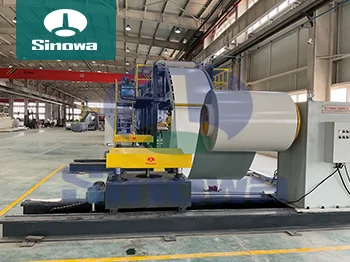
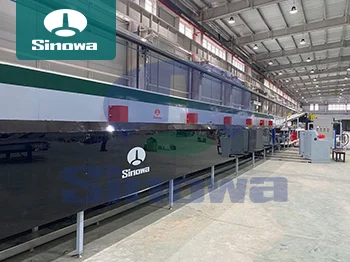
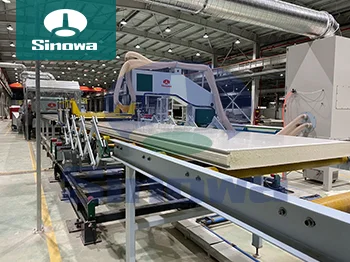
Sinowa is committed to the development and manufacturing of high-end and high-efficiency polyurethane sandwich panel manufacturing line. Our polyurethane sandwich panel manufacturing line are leading the way in efficiency, automatic control, human-computer interaction, environmental protection and energy consumption. Using system integration and bus control technology, it realizes the automatic integrated linkage control of the entire polyurethane sandwich panel manufacturing line, and can achieve remote interactive communication, which has the world-class level and a comprehensive leading high-performance polyurethane sandwich panel manufacturing line in the market.
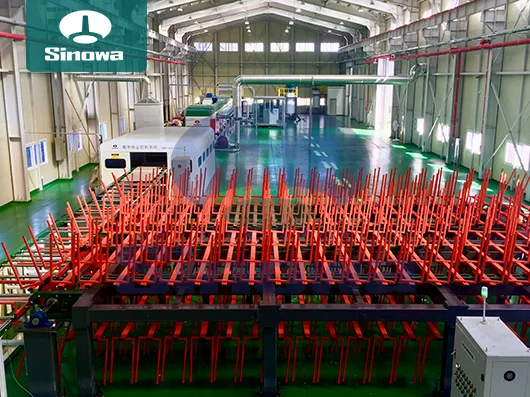
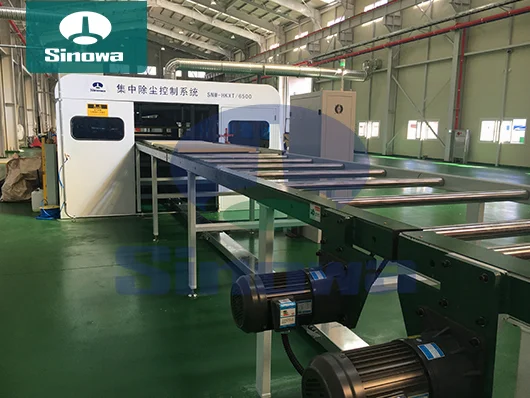
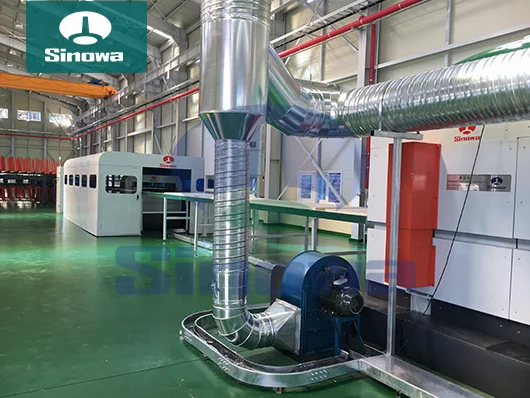
For more than ten years, relying on our innovative manufacturing concept and excellence in quality, reliable and trustworthy service to customers, we cooperate with customers all over the world, exported products to Canada, South Korea, Israel, Australia, the Middle East and other more than 20 countries and regions. contributed to building energy conservation and low-carbon production and have won widespread praise.
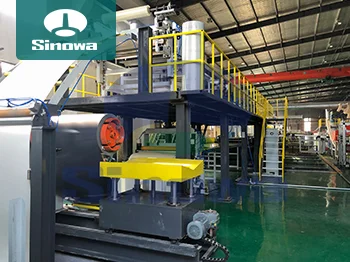
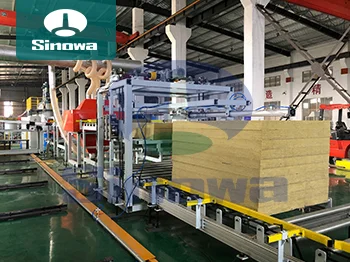
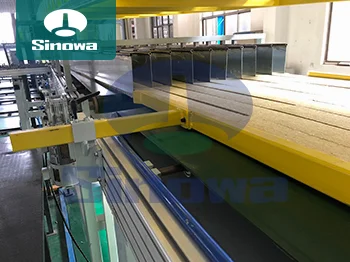
Sinowa has invested outstanding efforts in polyurethane sandwich panel manufacturing line, this is why our products are more efficiency, quality, automatic control technology, environmental protection, energy consumption indicators and the appearance and safety protection are comprehensively leading, some subversive design changes in many major technical points, these major innovations make our products excellent in price/performance and user experience.
The polyurethane sandwich panel manufacturing line represents a sophisticated integrated production system built to turn raw base materials into finished insulated panels suitable for a wide range of construction and enclosure applications. Every station within the line works in continuous coordination, starting from the feeding section where metal coils and core material stock are steadily guided into the forming process. Metal sheets pass through leveling and profiling units that shape the outer faces into consistent profiles without creating uneven surfaces or unintended deformations, maintaining uniform thickness and flatness across the full length of each panel. As the shaped metal skins advance forward, the polyurethane foaming system accurately mixes the chemical components under controlled conditions, ensuring the foam expands evenly and bonds firmly to both the upper and lower metal layers. The continuous curing section provides stable thermal conditions that allow the foam to complete its chemical reaction and develop the rigid cellular structure that delivers reliable thermal insulation and structural support. After curing, the material moves to cutting units that trim the continuous web into custom lengths according to preset parameters, while edge trimming mechanisms remove excess foam and metal burrs to produce clean, neat panel edges. Auxiliary parts of the line handle panel stacking, conveying and protective film application, reducing manual handling and lowering the risk of surface scratches or damage. Operators can adjust running speed, foam injection volume and cutting dimensions through the central control interface, adapting output to different panel thicknesses, widths and surface designs. This type of production setup is engineered for sustained continuous operation, balancing output capacity with stable product quality and reducing material waste during normal running cycles.
Consistent material preparation is foundational to stable operation of a polyurethane sandwich panel manufacturing line, and careful management of input materials directly affects the final performance and appearance of finished panels. Metal coil stock must be properly positioned on the unwinding racks to avoid tension fluctuations that can lead to wrinkling, offset alignment or inconsistent profiling as sheets travel through the line. Before entering the foaming zone, the metal surfaces go through cleaning and pre-treatment steps that remove dust, oil residue and loose particles, creating a clean substrate that supports strong adhesion between the metal skin and polyurethane foam. The polyurethane raw materials are stored in insulated tanks with circulation systems that keep the components at a steady temperature, because even small shifts in temperature can alter viscosity, mixing quality and foaming behavior. The metering pumps deliver precise volumes of each component to the mixing head, where high-speed blending creates a homogeneous mixture that is spread evenly across the moving lower metal sheet. The upper metal skin closes over the liquid foam mixture immediately after distribution, and the double-belt conveyor applies uniform pressure while the foam expands and fills the cavity between the two skins. If the material feed loses synchronization, gaps, voids or uneven foam density can form inside the panel, weakening insulation performance and bond strength. Skilled operators routinely monitor feed status, check raw material condition and make minor adjustments to keep all feeding and metering processes synchronized throughout the production run. Attention to these preparatory steps minimizes unexpected downtime and helps maintain uniform characteristics from the first panel produced in a batch to the last.
The foaming and laminating stage stands as the core functional segment of the polyurethane sandwich panel manufacturing line, where separate raw components combine to form the composite insulated structure. Once the mixed polyurethane liquid is dispensed onto the lower metal sheet, expansion begins rapidly, and the closed space formed between the two metal skins defines the panel thickness and foam density. The continuous double conveyor system holds the assembly under constant pressure and controlled temperature during the foaming and initial curing phase, preventing bulging, warping or uneven expansion that would compromise panel straightness. The speed of the conveyor is matched to the reaction rate of the polyurethane mixture, giving the foam enough time to expand fully before the structure moves out of the laminating zone. Proper control at this stage ensures that foam cells develop uniformly, avoiding large voids or dense compacted regions inside the core. Strong interfacial bonding forms between foam and metal skins as the chemical reaction proceeds, so the finished panel acts as a single load-bearing composite rather than separate layers that can delaminate under stress. Variations in mixing ratio, distribution pattern or conveyor pressure can create visible defects such as wavy surfaces, soft foam spots or separation along panel edges. Operators observe real-time visual feedback from the production stream and adjust process parameters gradually rather than making sudden large changes that could disrupt the ongoing foaming cycle. When this section runs smoothly, the resulting composite has stable thermal resistance, good rigidity and reliable bonding across the entire panel area.
Thermal curing after lamination gives the polyurethane foam time to complete its chemical reaction and lock in the physical properties of the sandwich panel before cutting and finishing. The curing tunnel maintains a consistent ambient environment along its length, supporting gradual polymerization without exposing the fresh composite to sharp temperature spikes or uneven heating. Panels move steadily through this enclosed space, and the length of the curing zone is designed to match the line running speed so that material exiting the tunnel has reached sufficient hardness and dimensional stability. If panels leave the curing area too early, the foam may continue expanding after cutting, causing distortion, edge deformation and separation between foam and metal skins. Extended curing beyond the required time does not improve performance significantly and only limits overall line throughput, so balancing residence time with reaction requirements is essential. Air circulation inside the curing chamber keeps heat distributed evenly, eliminating localized hot zones that could discolor metal coatings or degrade foam structure. This phase also helps release minor residual reaction gases in a controlled way, reducing the chance of trapped air pockets that might weaken the core. Operators track the condition of panels emerging from curing through regular visual checks and simple tactile assessments of foam firmness. A well-calibrated curing segment supports predictable downstream processing and keeps reject rates low during long production campaigns.
Cutting, trimming and shaping operations transform the continuous endless panel web produced by the foaming and curing sections into discrete finished panels ready for handling and shipment. Flying cut-off saws travel synchronously with the moving material stream, making clean transverse cuts without requiring the line to stop or slow down for each cut. This synchronous cutting design preserves continuous production flow and avoids productivity loss associated with static cutting systems. Side trimming units follow behind the main cutting station, removing narrow strips of excess foam and metal along both longitudinal edges to achieve consistent panel width and remove rough overflow material. Some configurations include milling or grooving attachments that form interlocking joint profiles along panel edges, allowing finished panels to fit tightly together during on-site installation and reduce gaps between adjacent units. Dust and foam debris generated during cutting are collected by built-in extraction systems to keep the work area clean and prevent cut fragments from sticking to panel surfaces or interfering with sensors. Cutting parameters including length, cutting frequency and trimming width are adjusted via the central control system to accommodate different order specifications. Sharp, well-maintained cutting blades reduce chipping of foam edges and scratching of coated metal surfaces. Careful setup in this stage ensures every finished panel matches the required dimensional tolerances and has clean, functional edges for assembly.
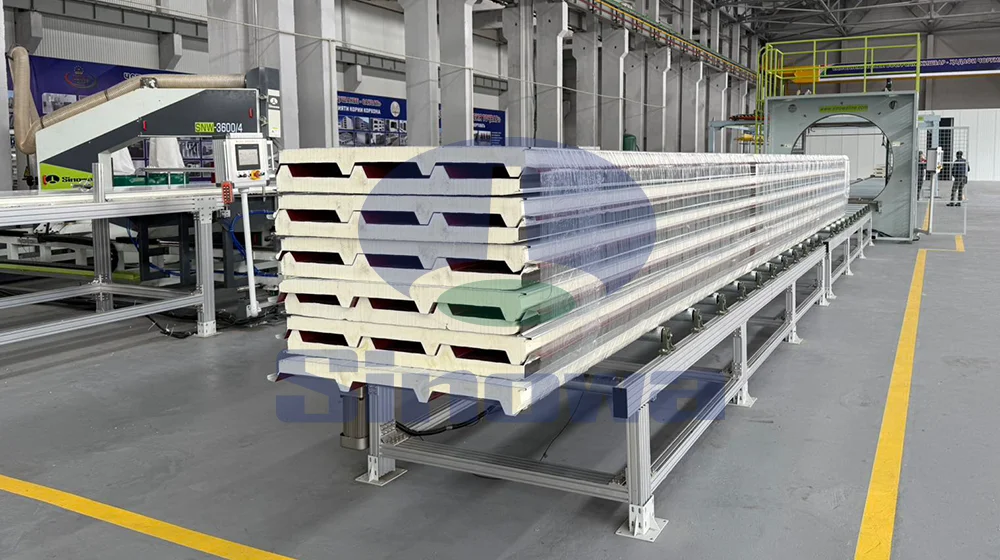
Surface protection, conveying and stacking modules handle finished panels after cutting, protecting appearance quality and streamlining material handling before packaging. After trimming, panels can pass through a film lamination station that applies a thin protective plastic layer over the coated metal surface, shielding the finish from scratches, abrasion and dirt during transport, storage and construction handling. The protective film remains in place until the panels are installed and can be peeled away without leaving sticky residue on the painted surface. Motorized roller and belt conveyors transfer individual panels toward the stacking area at a controlled speed, with alignment guides that keep panels square and prevent them from sliding sideways as they move. Automated stacking arms pick finished panels and place them neatly in layered piles, separating each panel with soft protective pads when needed to prevent contact damage between stacked surfaces. Stack count and stacking pattern are configurable to suit standard packing formats and loading requirements for transport. Sensors detect panel presence and position, stopping movement automatically when irregularities such as skewed panels or overlapping pieces appear. Reducing manual lifting and carrying at this stage lowers the risk of panel bending, denting and surface damage while also easing workload for on-site staff. Efficient stacking also makes inventory counting and loading onto transport vehicles faster and more orderly.
The central control and monitoring system acts as the operational brain of the polyurethane sandwich panel manufacturing line, connecting all individual stations and enabling unified adjustment and oversight. Touchscreen interfaces display real-time data including line speed, raw material flow rates, curing zone temperature, cutting counts and fault alerts in a straightforward layout. Production recipes can be saved for frequently produced panel types, storing preferred settings for foam ratio, conveyor speed, cutting length and edge profile so operators can recall them quickly when switching between product variants. Safety interlocks are integrated across the whole line, triggering slowdowns or automatic stops when access guards are opened, material jams occur or critical sensor readings move outside safe operating ranges. Historical production logs record runtime, output volume and alarm events, supporting later review to identify recurring issues and optimize operating routines. While the system automates most routine adjustments, it still relies on operator judgment to interpret subtle quality signals that automated sensors may not capture, such as minor changes in foam texture or surface uniformity. Training for operators focuses on understanding cause-and-effect relationships between parameter changes and panel quality, rather than only learning button operations. A responsive, well-maintained control system reduces unplanned stops and makes product changeovers faster and more reliable.
Ongoing maintenance and careful operational management determine the long-term reliability, service life and consistent output quality of a polyurethane sandwich panel manufacturing line. Regular inspection schedules cover moving mechanical parts such as conveyor belts, chains, bearings and cutting blades, checking for wear, tension loss and misalignment before small faults develop into major breakdowns. Seals and pipelines in the polyurethane feeding and mixing circuit receive special attention, as leaks of raw chemical materials can create safety risks, waste expensive feedstock and contaminate panels. Mixing heads are cleaned according to fixed intervals to prevent cured foam buildup that would disrupt mixing uniformity and block material flow. Electrical cabinets, sensors and drive units are kept free from dust and foam debris, because accumulated particulate matter can interfere with signal transmission and cause intermittent error readings. Lubrication points are serviced at specified intervals to reduce friction and noise, extending the working life of rotating components. Even with robust maintenance practices, operators observe the line continuously during runs and report unusual sounds, smells or visual defects immediately. When maintenance is performed during scheduled downtime rather than reacting to sudden failures, overall equipment availability remains higher. A properly maintained line retains stable production performance over years of use, delivering consistent insulated sandwich panels and supporting predictable production planning for those who operate it.
« Polyurethane Sandwich Panel Manufacturing Line For Sale » Update Date: 2026/10/27
Tags: Polyurethane Sandwich Panel Manufacturing Line , polyurethane sandwich panel manufacturing line, polyurethane sandwich panel manufacturing line manufacturer, polyurethane sandwich panel manufacturing line supplier, polyurethane sandwich panel manufacturing line for sale, customized polyurethane sandwich panel manufacturing line, china polyurethane sandwich panel manufacturing line
- High-tech Sandwich Panel Making Equipment
- PUF Panel Manufacturing Machine On Sales
- Continuous Sandwich Panel Manufacturing Line For Building
- High-tech Glass Wool Sandwich Panel Machine
- High-quality Automatic Sandwich Panel Production Line
- Glass Wool Sandwich Panel Machine On Sales
- High-tech PU Insulation Board Production Line
- Sandwich Panel Integrated Production Line Factory
- High-quality PIR Insulated Panel Production Line
- Continuous Sandwich Panel Line For Cold Room
- PUF Panel Manufacturing Machine Price
- Sandwich Roof Wall Panel Making Machine Supplier
- Custom PIR Sandwich Panel Production Line
- High-quality Fully Automatic PU Sandwich Panel Line
- PIR Insulated Panel Production Line Manufacturer
- High-quality Polyurethane Insulation Panel Production Line
- High-tech Continuous Sandwich Panel Line
- High Efficiency Sandwich Panel Making Machine
- High Efficiency PIR Sandwich Panel Production Line
- Metal Sandwich Panel Production Line Factory
- Links:
- Sandwich Panel Continuous Production Line
- Automatic and Continuous Sandwich Panel Production Line
- Cheap and Low Price Sandwich Panel Production Line
- China Sandwich Panel Production Line Factory
- Color Steel Sandwich Panel Production Line For Cold Storage
- Continuous Composite Foam Sandwich Panel Production Line
- Continuous Production Line For Rockwool and Mineral Wool Sandwich Panels
- Continuous PU Phenolic Insulation Panel Production Line
- Continuous PU PIR Sandwich Panel Production Line
- Continuous PUF PUR Sandwich Panel Production Line
- Continuous Sandwich Panel Production Line For Roof and Wall
- Customized and Design Sandwich Panel Production Line
- Decorative Sandwich Panel Production Line For Glass Wool Boards
- High Quality Sandwich Panel Production Line For Sale
- Polyurethane(PU) Sandwich Panel Production Line
- Sandwich Panel Production Line Manufacturer and Supplier
- Sandwich Panel Production Machinery and Equipment