
Polyurethane Sandwich Panel Production Line For Building
Sinowa is a well-known manufacturer and technical service provider of high-end polyurethane sandwich panel production line, learn more about polyurethane sandwich panel production line for building, please contact Sinowa's technical engineer, tell us what you need, we will contact you as soon as possible!
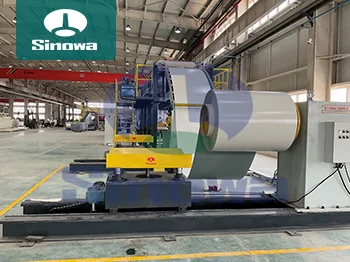
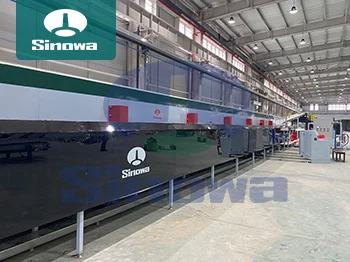
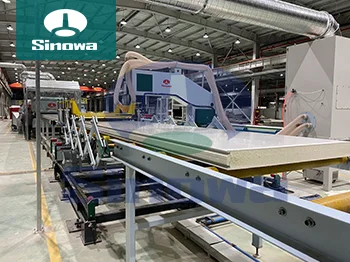
Sinowa is committed to the development and manufacturing of high-end and high-efficiency polyurethane sandwich panel production line. Our polyurethane sandwich panel production line are leading the way in efficiency, automatic control, human-computer interaction, environmental protection and energy consumption. Using system integration and bus control technology, it realizes the automatic integrated linkage control of the entire polyurethane sandwich panel production line, and can achieve remote interactive communication, which has the world-class level and a comprehensive leading high-performance polyurethane sandwich panel production line in the market.
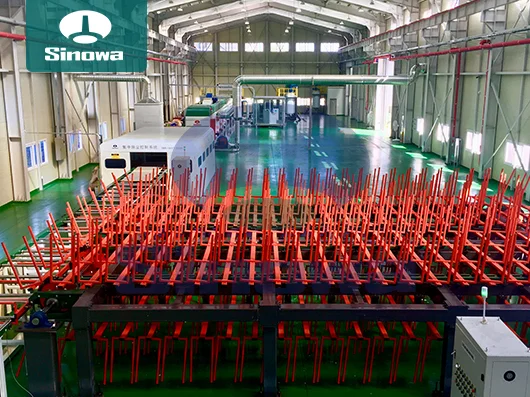
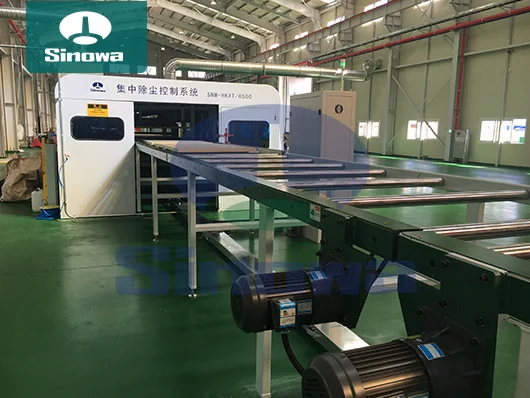
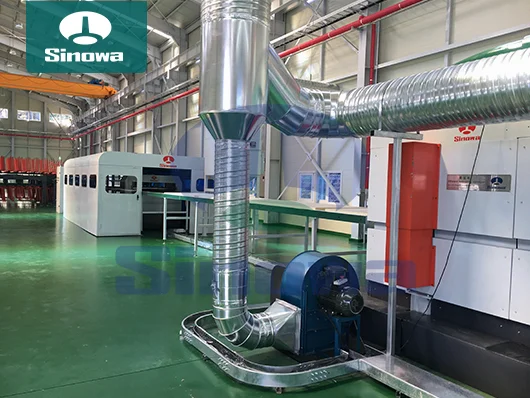
For more than ten years, relying on our innovative manufacturing concept and excellence in quality, reliable and trustworthy service to customers, we cooperate with customers all over the world, exported products to Canada, South Korea, Israel, Australia, the Middle East and other more than 20 countries and regions. contributed to building energy conservation and low-carbon production and have won widespread praise.
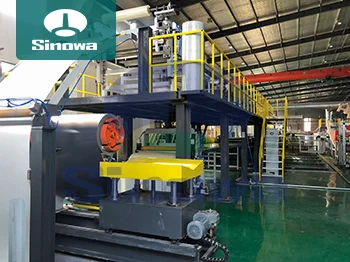
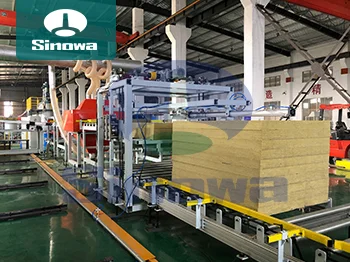
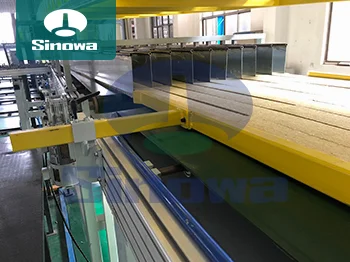
Sinowa has invested outstanding efforts in polyurethane sandwich panel production line, this is why our products are more efficiency, quality, automatic control technology, environmental protection, energy consumption indicators and the appearance and safety protection are comprehensively leading, some subversive design changes in many major technical points, these major innovations make our products excellent in price/performance and user experience.
In the modern construction industry, the pursuit of energy efficiency, structural stability, and construction efficiency has driven the continuous innovation of building materials and production technologies. Among various advanced building materials, polyurethane sandwich panels have emerged as a pivotal choice for a wide range of construction projects, thanks to their exceptional combination of thermal insulation, lightweight properties, structural strength, and weather resistance. These panels, composed of two outer facing materials and a polyurethane foam core, have become indispensable in industrial plants, logistics warehouses, integrated houses, commercial buildings, and even public facilities, providing comprehensive solutions for building enclosure systems, external wall insulation, and roof protection. At the core of the mass production of these high-performance panels lies the polyurethane sandwich panel production line, a sophisticated integrated system that combines mechanical engineering, materials science, and automation control technology to ensure efficient, consistent, and high-quality production.
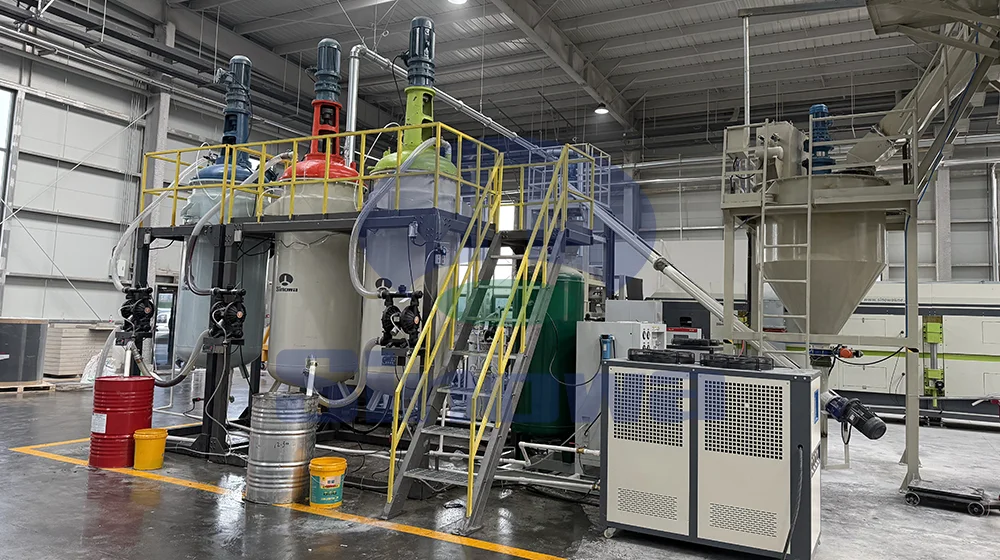
A polyurethane sandwich panel production line is not a single piece of equipment but a modular system consisting of multiple functional units that work seamlessly together to complete the entire production process from raw material preparation to finished product packaging. Each module is designed to perform specific functions, and their coordinated operation ensures the stability, efficiency, and consistency of the final product. The core components of a typical production line include the unwinding system, surface material pretreatment system, forming system, foaming and mixing system, laminating and curing system, cutting system, and automatic stacking and packaging system. In addition, auxiliary systems such as raw material storage, dust removal, and environmental protection equipment are often integrated to meet the requirements of continuous production and environmental sustainability. These components are highly integrated, with advanced automation control systems connecting each link, minimizing manual intervention, reducing human error, and improving production efficiency while ensuring uniform product quality.
The unwinding system is the starting point of the production line, responsible for feeding the outer facing materials into the subsequent processes. The facing materials of polyurethane sandwich panels can be metal sheets (such as galvanized steel, galvalume, or aluminum sheets) or non-metal materials, depending on the specific application requirements of the building project. The unwinding system is equipped with a coil holder, tension control device, and guiding mechanism to ensure that the coil is unfolded smoothly and stably, maintaining constant tension to avoid wrinkles or deformation of the surface material. High-end production lines are often equipped with double unwinding machines, allowing for simultaneous feeding of upper and lower facing materials, which significantly improves production efficiency. In addition, some advanced unwinding systems are equipped with hydraulic shearing devices, which can cut the surface material into the required width according to production needs, enhancing the flexibility of the production line.
After unwinding, the surface materials enter the pretreatment system, a critical step to ensure strong adhesion between the facing material and the polyurethane foam core. The pretreatment process typically includes degreasing, derusting, and surface activation. For metal facing materials, degreasing removes oil stains and impurities on the surface, while derusting eliminates any rust spots that may affect adhesion. Surface activation, often achieved through corona treatment or chemical treatment, increases the surface energy of the material, making it easier to bond with the polyurethane foam. This step is particularly important because the adhesion between the facing material and the core directly affects the structural integrity and service life of the sandwich panel. Poor adhesion may lead to delamination between the facing and the core, reducing the panel’s load-bearing capacity and thermal insulation performance. Therefore, the pretreatment system is equipped with precise control devices to ensure that the surface treatment effect meets the required standards, laying a solid foundation for the subsequent foaming and bonding processes.
The forming system is responsible for shaping the surface materials into the required profiles, which can be flat, corrugated, ribbed, or other customized shapes according to the design requirements of the building. This system usually consists of roll forming machines, which use a series of rollers with specific shapes to gradually bend the surface material into the desired profile. The roll forming process is continuous and efficient, ensuring that the formed surface material has uniform dimensions and a smooth surface. The forming system can be adjusted according to the thickness of the surface material and the desired profile, making it suitable for producing a variety of sandwich panel specifications. For example, corrugated surface materials are often used for roof panels to enhance water resistance and structural stability, while flat surface materials are more suitable for wall panels in industrial plants and commercial buildings. Some advanced forming systems are equipped with quick-change mechanisms, allowing for rapid switching between different profiles, improving the flexibility and adaptability of the production line.
The foaming and mixing system is the core of the polyurethane sandwich panel production line, as it determines the quality of the polyurethane foam core, which is the key to the panel’s thermal insulation and structural performance. Polyurethane foam is formed by the chemical reaction of polyol, isocyanate, and other additives (such as foaming agents, catalysts, and flame retardants). The foaming and mixing system includes a high-pressure or low-pressure foaming machine, metering pumps, and a mixing head. The metering pumps accurately control the ratio of polyol and isocyanate, ensuring that the raw materials are mixed in the optimal proportion to produce foam with uniform density and excellent performance. The mixing head thoroughly mixes the two components, and the mixed raw materials are evenly poured onto the lower facing material, which is being conveyed forward. The foaming agent in the raw materials causes the mixture to expand, filling the gap between the upper and lower facing materials, forming a dense, closed-cell foam core. The density of the foam core can be adjusted according to the thermal insulation and load-bearing requirements of the panel, typically ranging from 30 to 50 kg/m³. In addition, flame retardants are added to the raw materials to improve the fire resistance of the foam core, making the sandwich panel suitable for applications with high fire safety requirements.
After the foaming material is poured, the upper and lower facing materials with the foam core in between enter the laminating and curing system. This system is mainly composed of a double-track laminating machine, which provides uniform pressure and temperature to ensure that the foam core is fully cured and firmly bonded to the facing materials. The double-track laminating machine consists of two parallel conveyor chains, with heating devices and pressure rollers. The heating system maintains a constant temperature between 60 and 70 ℃, which accelerates the curing reaction of the polyurethane foam, reducing the curing time and improving production efficiency. The pressure rollers apply uniform pressure to the sandwich panel, ensuring that the foam core is dense and the facing materials are closely bonded to the core, eliminating gaps and bubbles. The length of the laminating and curing system is usually between 18 and 24 meters, which is sufficient to ensure that the foam core is fully cured before entering the next process. Some advanced production lines are equipped with a cooling system after the laminating machine, which cools the cured sandwich panel to room temperature, preventing deformation and ensuring dimensional stability.
Once the sandwich panel is fully cured, it enters the cutting system, which cuts the continuous panel into finished products of the required length. The cutting system is equipped with an automatic tracking cutting machine, which uses servo drive and photoelectric sensing technology to ensure precise cutting. The cutting length can be adjusted according to customer requirements, with an error of less than 1mm, ensuring that the finished panels meet the installation requirements of building projects. The cutting machine is also equipped with a dust removal system to collect the dust generated during the cutting process, reducing environmental pollution and ensuring the health of operators. After cutting, the finished panels are trimmed on both sides to remove any irregular edges, improving the appearance and quality of the product.
The final step in the production process is the automatic stacking and packaging system. This system consists of conveyor rollers, automatic flipping devices, stacking machines, and packaging machines. The finished panels are conveyed to the stacking machine, which stacks them neatly according to the specified quantity and specifications. The stacking machine can adjust the stacking height and width to facilitate storage and transportation. After stacking, the panels are wrapped with packaging film to protect them from moisture, dust, and damage during transportation. Some advanced production lines are equipped with automatic palletizing machines, which place the stacked panels on pallets, further improving the efficiency of storage and loading. The entire stacking and packaging process is automated, reducing manual labor and ensuring that the finished products are neatly packaged and ready for delivery.
Polyurethane sandwich panel production lines for building are characterized by high automation, high efficiency, stable product quality, and strong adaptability. The high degree of automation reduces the need for manual intervention, lowering labor costs and human error. Continuous production ensures high production efficiency, with a production speed of 3 to 8 meters per minute, which is equivalent to a daily output of thousands of square meters, meeting the needs of large-scale building projects. The precise control system ensures that the finished panels have uniform dimensions, density, and performance, with stable quality and reliable performance. In addition, the modular design of the production line allows for flexible configuration according to customer needs, enabling the production of different types, specifications, and performance of polyurethane sandwich panels, such as wall panels, roof panels, cold storage panels, and soft-faced coil composite panels. This adaptability makes the production line suitable for a wide range of building applications, from industrial plants and logistics warehouses to commercial buildings and integrated houses.
The polyurethane sandwich panels produced by these production lines offer numerous advantages that make them ideal for modern building projects. First and foremost, they have excellent thermal insulation performance. The closed-cell structure of the polyurethane foam core has a very low thermal conductivity, as low as 0.022 W/(m·K), which is much lower than traditional insulation materials such as rock wool and glass wool. This excellent thermal insulation performance can effectively reduce heat transfer between the interior and exterior of the building, reducing energy consumption for heating and air conditioning, and achieving the goal of building energy conservation. Secondly, polyurethane sandwich panels are lightweight yet high in strength. The density of the panels is usually between 8 and 12 kg per square meter, which is much lighter than traditional building materials such as brick and concrete, reducing the overall structural load of the building and allowing for more flexible architectural designs. At the same time, the panels have high bending strength and compressive strength, capable of bearing a certain load, making them suitable for use as wall and roof panels in large-span buildings. Thirdly, the panels have excellent weather resistance and durability. The outer facing materials, after special treatment, are resistant to corrosion, UV radiation, and extreme temperatures, while the polyurethane foam core is chemically stable and resistant to aging. This ensures that the panels have a service life of more than 20 years, reducing the need for frequent maintenance and replacement, and lowering the long-term cost of the building.
In addition to these advantages, polyurethane sandwich panels also have good waterproof, moisture-proof, and sound insulation performance. The closed-cell structure of the foam core is impermeable to water, preventing moisture from entering the panel and avoiding mold growth and structural damage. The panels can effectively block the transmission of sound, reducing noise pollution and improving the comfort of the building interior. Moreover, the panels are easy to install, with a modular design that allows for quick on-site assembly. Unlike traditional building materials that require complex on-site construction, polyurethane sandwich panels can be directly spliced using hidden buckles or tongue-and-groove structures, reducing installation time and labor costs. For example, for a 1000-square-meter industrial plant, the installation of polyurethane sandwich panels can be completed in 3 to 4 days, while traditional materials would take 5 to 7 days, significantly improving construction efficiency.
The application scenarios of polyurethane sandwich panels produced by these production lines are extremely wide, covering almost all fields of the construction industry. In industrial construction, they are widely used as wall and roof panels for industrial plants, workshops, and warehouses, providing thermal insulation, fire protection, and structural support. In logistics and cold chain facilities, they are used as cold storage panels, thanks to their excellent thermal insulation performance, which can maintain a stable low temperature environment, ensuring the quality and safety of stored goods. In commercial buildings, such as shopping malls, office buildings, and hotels, they are used as exterior wall panels and roof panels, not only providing thermal insulation and energy conservation but also enhancing the aesthetic appearance of the building with their customizable colors and profiles. In public facilities, such as airports, railway stations, and stadiums, they are used for enclosure systems, thanks to their lightweight, high-strength, and quick-installation characteristics, which can shorten the construction period and meet the requirements of large-span designs. In addition, they are also used in residential buildings, such as prefabricated houses and old community renovations, providing efficient thermal insulation and improving the living environment of residents.
With the continuous development of the construction industry and the increasing emphasis on energy conservation and environmental protection, the market demand for polyurethane sandwich panels is constantly growing, which in turn drives the continuous upgrading and innovation of polyurethane sandwich panel production lines. In the future, these production lines will develop in the direction of higher automation, intelligence, energy conservation, and environmental protection. The integration of intelligent technologies, such as the Internet of Things, big data, and artificial intelligence, will enable real-time monitoring and adjustment of the production process, further improving production efficiency and product quality. For example, intelligent sensors can monitor the temperature, pressure, and raw material ratio during the production process, and the control system can automatically adjust the parameters to ensure optimal production conditions. At the same time, energy-saving technologies will be widely adopted in production lines, such as waste heat recovery systems, which can recover the heat generated during the curing process and reuse it for heating, reducing energy consumption and environmental impact. Environmental protection will also become a key focus, with the development of more environmentally friendly raw materials and the improvement of dust removal and waste treatment systems, reducing pollution and meeting the requirements of green production.
Another important development trend is the customization and diversification of production lines. As building projects become more diverse and personalized, the demand for polyurethane sandwich panels of different specifications, performance, and shapes is increasing. Future production lines will be more flexible, capable of quickly adjusting production parameters and changing product types to meet the specific needs of different customers. For example, some production lines will be able to produce curved polyurethane sandwich panels, which are suitable for curved roof structures in modern architecture, adding aesthetic value and design flexibility to buildings. In addition, the development of composite production lines that can produce sandwich panels with different core materials (such as polyurethane and rock wool) will further expand the application scope of the production lines, meeting the diverse needs of different building scenarios.
In conclusion, the polyurethane sandwich panel production line for building is a key equipment in the modern construction industry, playing a crucial role in the mass production of high-performance polyurethane sandwich panels. With its sophisticated structure, advanced technology, and high efficiency, it ensures the stable quality and wide application of polyurethane sandwich panels, providing strong support for the development of energy-saving, environmentally friendly, and efficient construction. As the construction industry continues to upgrade and the demand for high-quality building materials increases, the polyurethane sandwich panel production line will continue to innovate and develop, becoming more intelligent, energy-saving, and flexible, and making greater contributions to the sustainable development of the construction industry. Whether in industrial construction, commercial buildings, or public facilities, polyurethane sandwich panels produced by these production lines will continue to play an irreplaceable role, shaping the future of modern architecture with their excellent performance and wide adaptability.
« Polyurethane Sandwich Panel Production Line For Building » Update Date: 2026/4/16
- High Efficiency Foam Sandwich Panel Machine
- High-end Fully Automatic PU Sandwich Panel Machine
- Sandwich Panel Making Equipment From China
- Cold Room Sandwich Panel Production Line Supplier
- High-end Automatic Sandwich Panel Production Line
- PU Panel Machine Supplier
- Cheap Sandwich Panel Integrated Production Line
- High-tech PU Isolation Panel Production Line
- High Efficiency Sandwich Panel Foam Making Machine
- High-end PU Insulated Panel Production Line
- Low Price Sandwich Roof Panel Production Line
- PU Insulation Panel Production Line In China
- High-tech Sandwich Panel Foam Production Line
- Low Price PUF Panel Making Machine
- Glass Wool Sandwich Panel Line For Sale
- High-end PUR Sandwich Panel Line
- High-end Sandwich Roof Panel Production Line
- High-tech PUR Sandwich Panel Production Line
- Foam Sandwich Panel Production Line Supplier
- High-tech PIR Insulation Panel Production Line
- Links:
- Sandwich Panel Continuous Production Line
- Automatic and Continuous Sandwich Panel Production Line
- Cheap and Low Price Sandwich Panel Production Line
- China Sandwich Panel Production Line Factory
- Color Steel Sandwich Panel Production Line For Cold Storage
- Continuous Composite Foam Sandwich Panel Production Line
- Continuous Production Line For Rockwool and Mineral Wool Sandwich Panels
- Continuous PU Phenolic Insulation Panel Production Line
- Continuous PU PIR Sandwich Panel Production Line
- Continuous PUF PUR Sandwich Panel Production Line
- Continuous Sandwich Panel Production Line For Roof and Wall
- Customized and Design Sandwich Panel Production Line
- Decorative Sandwich Panel Production Line For Glass Wool Boards
- High Quality Sandwich Panel Production Line For Sale
- Polyurethane(PU) Sandwich Panel Production Line
- Sandwich Panel Production Line Manufacturer and Supplier