
Rockwool Sandwich Panel Production Line For Clean Room
Sinowa is a well-known manufacturer and technical service provider of high-end rockwool sandwich panel production line, learn more about rockwool sandwich panel production line for clean room, please contact Sinowa's technical engineer, tell us what you need, we will contact you as soon as possible!
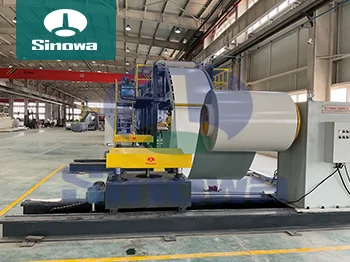
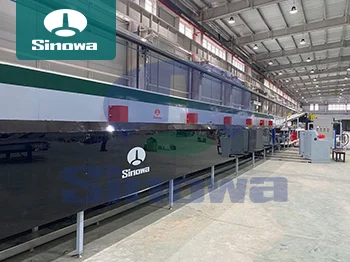
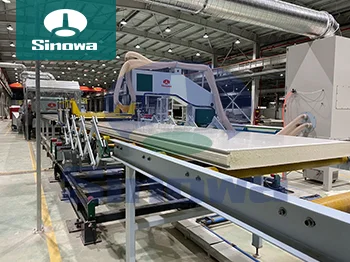
Sinowa is committed to the development and manufacturing of high-end and high-efficiency rockwool sandwich panel production line. Our rockwool sandwich panel production line are leading the way in efficiency, automatic control, human-computer interaction, environmental protection and energy consumption. Using system integration and bus control technology, it realizes the automatic integrated linkage control of the entire rockwool sandwich panel production line, and can achieve remote interactive communication, which has the world-class level and a comprehensive leading high-performance rockwool sandwich panel production line in the market.
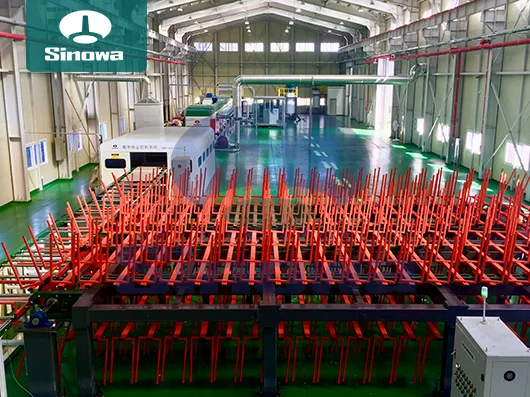
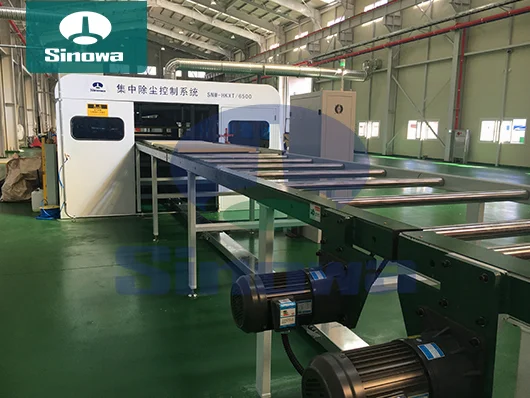
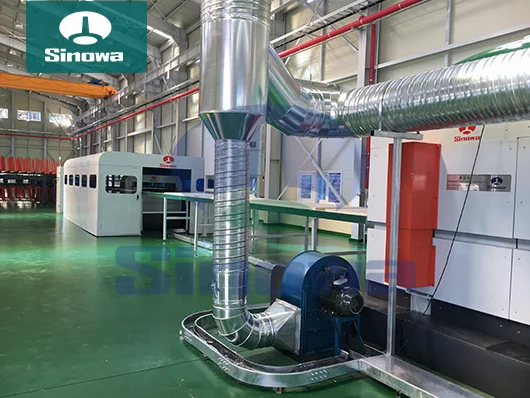
For more than ten years, relying on our innovative manufacturing concept and excellence in quality, reliable and trustworthy service to customers, we cooperate with customers all over the world, exported products to Canada, South Korea, Israel, Australia, the Middle East and other more than 20 countries and regions. contributed to building energy conservation and low-carbon production and have won widespread praise.
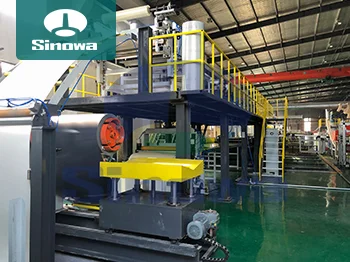
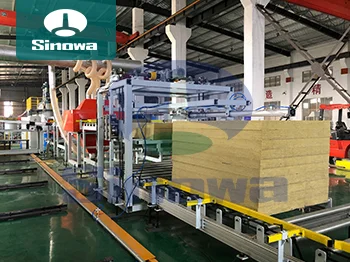
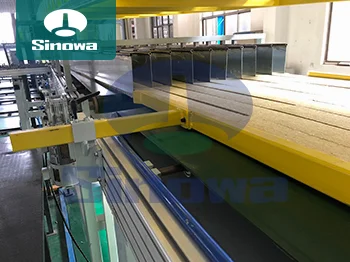
Sinowa has invested outstanding efforts in rockwool sandwich panel production line, this is why our products are more efficiency, quality, automatic control technology, environmental protection, energy consumption indicators and the appearance and safety protection are comprehensively leading, some subversive design changes in many major technical points, these major innovations make our products excellent in price/performance and user experience.
Clean room environments demand consistent structural stability and controlled internal conditions, where every component of the building envelope directly shapes operational reliability. Rockwool sandwich panels have emerged as a preferred cladding solution for these specialized spaces, and dedicated production lines are engineered to turn raw rockwool core materials into finished panels that meet the functional expectations of clean room construction. The production workflow starts with the careful preparation of the rockwool substrate, which undergoes initial sorting and conditioning to ensure uniform density and fibre structure across every batch. Loose rockwool fibres are consolidated into continuous core boards, with care taken to avoid gaps, uneven compression or internal voids that could compromise thermal and acoustic performance later on. Metal facings, typically supplied in long coiled rolls, are unwound and guided through a series of pre-treatment stations where surface impurities are removed, and coating layers are checked for integrity. This preparatory phase sets the foundation for consistent bonding, as any contamination or surface defect on the metal sheets can weaken the connection between the core and facings once the lamination process begins. Operators monitor material feed rates continuously to maintain synchronization between the rockwool core supply and the movement of the outer skins, preventing mismatched alignment that would create waste or flawed finished panels. Attention to material consistency at this early stage reduces downstream adjustments and supports steady, uninterrupted running of the full production sequence for extended periods.
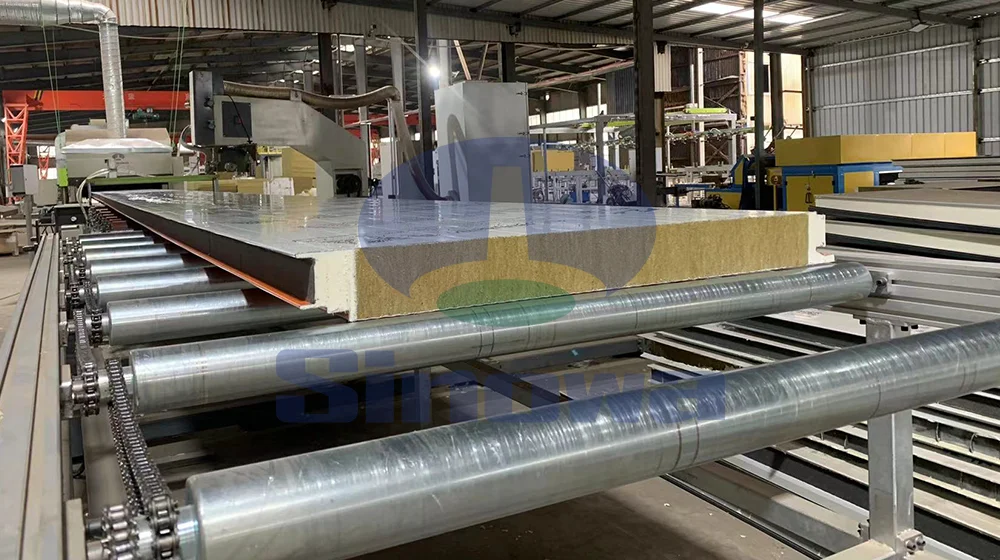
As materials move forward along the line, the adhesive application stage takes place under tightly controlled conditions to achieve reliable adhesion between rockwool and the metal facings. Adhesives are distributed evenly across the contact surfaces of both the core material and the inner side of the metal sheets, with automated spreading mechanisms calibrated to avoid excessive gluing that might seep out along panel edges or insufficient coverage that leads to delamination over time. Rockwool has an open fibrous structure that can absorb adhesive if the application volume is not managed properly, so the equipment is designed to deposit the bonding agent only at the interface rather than deep within the fibre matrix. Once the adhesive is applied, the rockwool core is positioned precisely between the upper and lower metal facings, forming a layered assembly that enters the pressing section of the line. Pressure and dwell time inside the press unit are regulated to allow the adhesive to develop its bonding strength while preserving the inherent insulating properties of the rockwool core. Too much pressure can crush the internal fibre structure and reduce thermal resistance, while insufficient pressure leaves weak bonding points vulnerable to separation during handling and installation. The continuous pressing process maintains uniform pressure across the full width and length of the emerging panel, creating a stable composite structure that resists warping after it leaves the forming zone.
After the bonded composite exits the pressing zone, it proceeds through a curing phase that allows the adhesive system to fully set before the panel is cut and shaped. Curing conditions are maintained within the production line to control the rate of chemical reaction in the adhesive, avoiding rapid curing that causes internal stress or slow curing that holds up the rest of the production cycle. Panels travel at a steady speed through this section, so that every segment receives the same curing duration regardless of position along the continuous sheet. During curing, subtle checks are carried out to spot any visible separation between the rockwool core and metal skins, as defects identified at this point can be isolated before further processing. Once curing is complete, the continuous composite moves to the cutting station, where precision cutting tools trim the material to the required panel dimensions for clean room projects. Cutting blades are kept sharp and aligned to deliver clean, straight edges without tearing the metal surface or crumbling the exposed rockwool core. Clean, uniform edges are particularly valuable for clean room applications, because uneven or frayed edges can release fine particles once the panels are installed, undermining the low-particle environment these spaces are built to sustain. The cutting operation also creates interlocking profile shapes along panel edges, which simplify tight sealing when panels are joined together on site.
Edge profiling forms a critical part of the production sequence for rockwool sandwich panels intended for clean room use, as the joint design directly impacts the airtight performance of the finished enclosure. The profiling unit shapes the longitudinal edges of each panel to create matching male and female profiles that fit closely together during installation. These profiles are machined into both the metal facings and the rockwool core, maintaining the composite structure while creating a pathway for supplementary sealing materials to be applied later. The equipment is adjusted to ensure profile depth and contour remain consistent across all panels from the same run, eliminating mismatched joints that leave gaps for air movement and particle transfer. When profiles fit loosely, unregulated airflow can cross the wall or ceiling assembly, making it harder for clean room systems to maintain stable pressure gradients and air cleanliness. The profiling process also removes loose rockwool dust generated by cutting, with integrated extraction systems capturing fine particles before they settle onto the panel surface. Keeping panel surfaces free from residual dust at the factory reduces the cleaning burden after delivery and helps installation teams prepare the enclosure more efficiently. Each finished profile is checked visually and through dimensional sampling to confirm it conforms to the preset geometry for the project.
Once cutting and profiling are finished, panels move to the inspection area, where each unit is assessed for surface quality, dimensional accuracy and bonding integrity before packaging. Visual inspection focuses on the metal surface, looking for scratches, coating damage, dents or uneven colour that would affect appearance and corrosion resistance in service. Operators also check for any signs of core shifting, bubbling between layers or edge damage that occurred during forming and cutting. Dimensional checks verify length, width, thickness and profile alignment against target values, as even small variations can accumulate when many panels are assembled into a continuous wall or ceiling. Random sampling is used to assess the solidity of the bond between rockwool and metal, confirming that layers remain securely joined under normal handling loads. This stage separates acceptable panels from those requiring rework, preventing non-conforming units from reaching packaging and shipment. Inspection routines are built into the rhythm of the production line rather than treated as a separate, slow process, so that overall throughput is preserved while quality standards are upheld. Panels that pass inspection are marked with basic production batch information for traceability, without adding markings that would interfere with clean room performance.
Packaging follows inspection, designed to protect the finished rockwool sandwich panels during transit, storage and on-site handling up until installation. Panels are arranged in stacks with protective separators between individual units to stop metal surfaces from rubbing against one another and creating scratches. The outer packaging materials shield panels from rain, dust and physical impact while in transit, because exposure to moisture can alter the performance characteristics of rockwool and weaken long-term stability. Packaging is constructed to be easy to remove at the construction site, so that debris from wrapping does not contaminate the clean room assembly zone. Stacking configurations are planned to distribute weight evenly and avoid bending the panels, as permanent deformation would prevent proper fitting of the interlocking profiles. Handling fixtures used to move packed stacks are engineered to grip the frames without concentrating pressure on the panel faces or edges. Clear handling guidance accompanies each consignment, advising teams to avoid dragging panels across rough surfaces and to store packaged units on flat, dry ground. Careful packaging preserves the factory condition of panels, ensuring the quality achieved on the production line remains intact when the materials arrive at the clean room construction site.
The overall layout and automation level of a rockwool sandwich panel production line can be adjusted to match different output volumes and panel specification ranges, supporting the varied demands of clean room construction projects. Lines can be configured to run steadily for long production runs of panels with identical dimensions, or reconfigured periodically to switch between different thicknesses and profile styles for multiple concurrent projects. Automated material feeding, adhesive control and cutting systems reduce reliance on repetitive manual handling, lowering the chance of human error and creating a more predictable production rhythm. Even with high levels of automation, skilled operators remain essential to oversee line conditions, respond to minor material variations and adjust settings when product specifications change. Maintenance routines are scheduled around production cycles to keep rollers, cutting tools, adhesive delivery systems and extraction equipment working reliably. Regular upkeep prevents unexpected downtime and maintains the precision of each processing station over thousands of production cycles. A well-maintained line delivers consistent panel quality batch after batch, which is essential for clean room builds where every wall and ceiling component contributes to the stability of the controlled internal environment.
When installed correctly, rockwool sandwich panels manufactured on this specialized production line deliver multiple functional benefits that suit the unique needs of clean room operations. The composite structure combines the particle-resistant smooth surface of the metal facings with the inherent fire performance and thermal insulation of the rockwool core. Sealed panel joints limit air leakage, helping the facility maintain stable temperature, humidity and pressure conditions that are central to clean room function. The rigid panel construction provides structural support for wall and ceiling assemblies, while the smooth surface is simple to wipe clean and resists accumulation of particulate matter. Panels produced on a continuous line maintain consistent thickness and flatness across large surface areas, supporting neat, seamless enclosure construction. Over their service life, these panels reduce the ongoing effort required to maintain controlled indoor conditions and support the stable operation of sensitive activities inside the clean space. The production process itself is built around delivering composite panels that balance structural strength, sealing capability and surface cleanliness, making the finished product a dependable choice for building the controlled environments that many modern industrial and research operations rely on.
« Rockwool Sandwich Panel Production Line For Clean Room » Update Date: 2026/10/27
Tags: Rockwool Sandwich Panel Production Line , rockwool sandwich panel production line, rockwool sandwich panel production line manufacturer, rockwool sandwich panel production line supplier, rockwool sandwich panel production line for sale, customized rockwool sandwich panel production line, china rockwool sandwich panel production line
- Rock Wool Sandwich Panel Line Factory
- Rock Wool Sandwich Panel Production Line Factory
- Rockwool Machine
- High-end Rock Wool Machine
- Highly Intelligent Mineral Wool Sandwich Panel Line
- Rock Wool Production Line
- Rock Wool Production Line For House
- Rockwool Panel Production Line Price
- Mineral Wool Line
- High-tech Rock Wool Insulation Panel Production Line
- Mineral Wool Production Line
- Fully Automatic Rock Wool Sandwich Panel Machine Supplier
- Fully Automatic Rock Wool Sandwich Panel Production Line Manufacturer
- Rock Wool Line
- Mineral Wool Sandwich Panel Line For Construction
- Highly Intelligent Rock Wool Sandwich Panel Production Line
- Rockwool Sandwich Panel Machine
- Mineral Wool Production Line From China
- Mineral Wool Sandwich Panel Machine For House
- Cheap Rock Wool Board Production Line
- Links:
- Sandwich Panel Continuous Production Line
- Automatic and Continuous Sandwich Panel Production Line
- Cheap and Low Price Sandwich Panel Production Line
- China Sandwich Panel Production Line Factory
- Color Steel Sandwich Panel Production Line For Cold Storage
- Continuous Composite Foam Sandwich Panel Production Line
- Continuous Production Line For Rockwool and Mineral Wool Sandwich Panels
- Continuous PU Phenolic Insulation Panel Production Line
- Continuous PU PIR Sandwich Panel Production Line
- Continuous PUF PUR Sandwich Panel Production Line
- Continuous Sandwich Panel Production Line For Roof and Wall
- Customized and Design Sandwich Panel Production Line
- Decorative Sandwich Panel Production Line For Glass Wool Boards
- High Quality Sandwich Panel Production Line For Sale
- Polyurethane(PU) Sandwich Panel Production Line
- Sandwich Panel Production Line Manufacturer and Supplier
- Sandwich Panel Production Machinery and Equipment