
Rockwool Sandwich Panel Production Line For Roof
Sinowa is a well-known manufacturer and technical service provider of high-end rockwool sandwich panel production line, learn more about rockwool sandwich panel production line for roof, please contact Sinowa's technical engineer, tell us what you need, we will contact you as soon as possible!
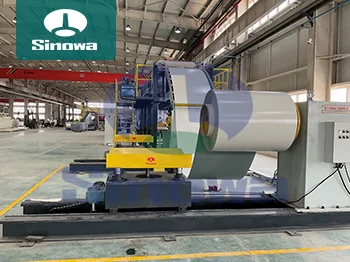
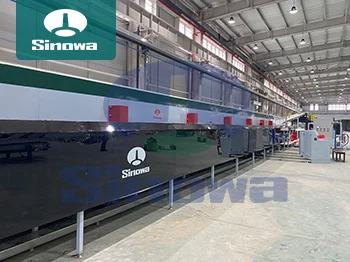
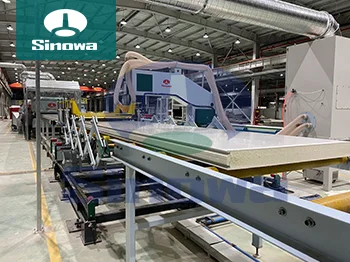
Sinowa is committed to the development and manufacturing of high-end and high-efficiency rockwool sandwich panel production line. Our rockwool sandwich panel production line are leading the way in efficiency, automatic control, human-computer interaction, environmental protection and energy consumption. Using system integration and bus control technology, it realizes the automatic integrated linkage control of the entire rockwool sandwich panel production line, and can achieve remote interactive communication, which has the world-class level and a comprehensive leading high-performance rockwool sandwich panel production line in the market.
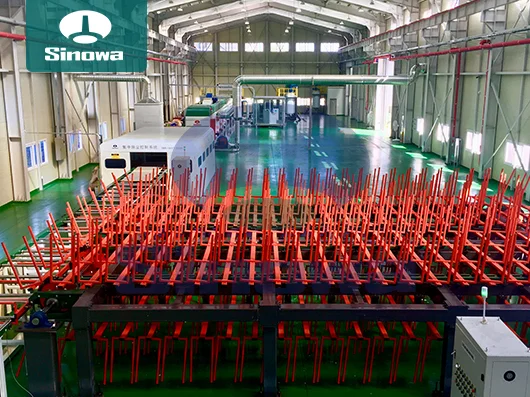
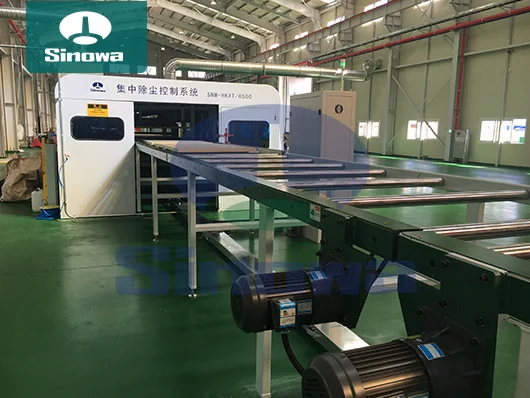
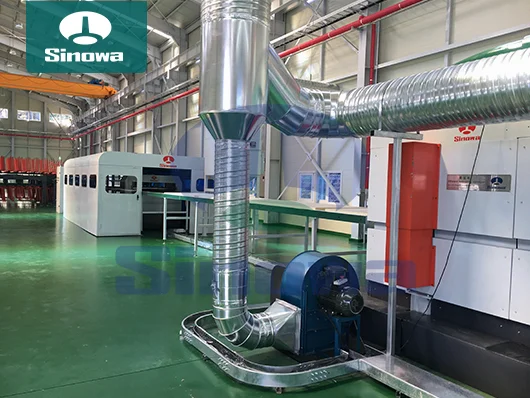
For more than ten years, relying on our innovative manufacturing concept and excellence in quality, reliable and trustworthy service to customers, we cooperate with customers all over the world, exported products to Canada, South Korea, Israel, Australia, the Middle East and other more than 20 countries and regions. contributed to building energy conservation and low-carbon production and have won widespread praise.
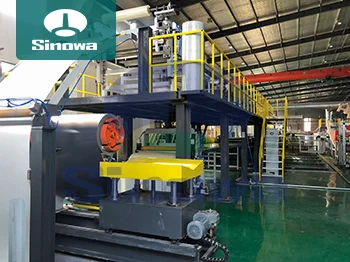
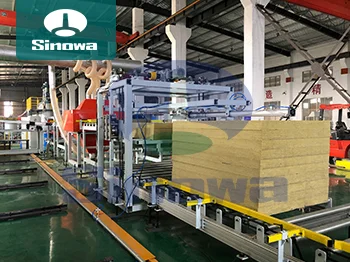
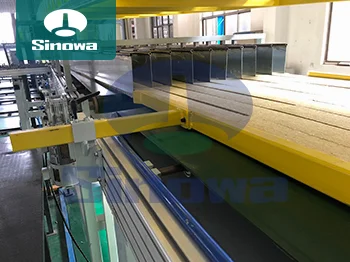
Sinowa has invested outstanding efforts in rockwool sandwich panel production line, this is why our products are more efficiency, quality, automatic control technology, environmental protection, energy consumption indicators and the appearance and safety protection are comprehensively leading, some subversive design changes in many major technical points, these major innovations make our products excellent in price/performance and user experience.
The rockwool sandwich panel production line for roof is a specialized, integrated manufacturing system designed to produce high-performance composite panels tailored exclusively for building roof structures. This automated production setup seamlessly combines metal surface finishing, rockwool core material processing, precision composite pressing, and final shaping procedures, delivering continuous, efficient, and standardized panel production for roofing applications. Unlike general wall panel production lines, it is optimized to enhance the structural stability, weather resistance, and load-bearing performance of finished panels to adapt to complex outdoor roof environments. The entire production workflow operates through interconnected mechanical and intelligent control units, minimizing manual intervention while ensuring consistent product uniformity. Panels manufactured by this line inherit the exceptional thermal insulation, sound absorption, and flame retardant properties of rockwool materials, paired with the durable and anti-corrosive features of metal surface layers, making them ideal for various industrial plants, public buildings, and commercial roofing projects that demand long-term reliability and energy efficiency.
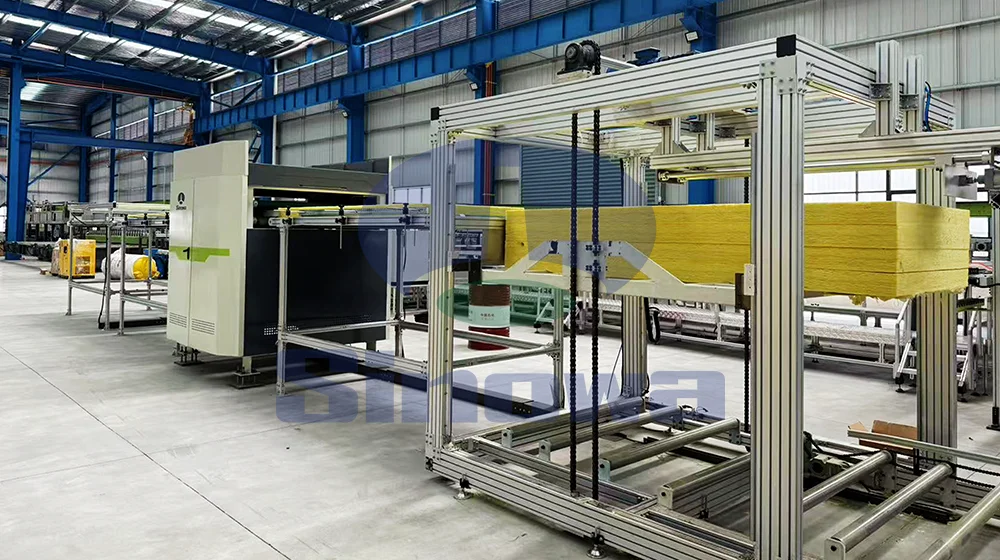
The operational foundation of the rockwool sandwich panel production line for roof lies in its systematic modular design, which integrates multiple independent functional units into a synchronized production ecosystem to support uninterrupted mass manufacturing. The front-end material pretreatment module serves as the initial core link, focusing on the processing of metal coil substrates that form the outer protective layer of roof panels. This module is equipped with intelligent unwinding, flattening, and deviation correction devices, which stably release metal coils and eliminate surface wrinkles, uneven tension, and lateral offset during feeding. Real-time tension adjustment mechanisms adapt to different substrate thicknesses and textures, ensuring the flatness and dimensional accuracy of metal plates before subsequent composite processing. Meanwhile, the auxiliary film-coating unit in this stage applies a uniform protective film on the metal surface, effectively preventing scratches, oxidation, and paint peeling during follow-up processing, transportation, and installation. This rigorous pretreatment process lays a solid foundation for the surface quality and long-term weather resistance of finished roof panels, avoiding appearance defects and performance attenuation caused by raw material processing errors.
Rockwool core material processing is the most critical procedure that determines the functional performance of roof sandwich panels, and the professional production line adopts refined fiber forming and layer forming technologies exclusive to roofing products. The production process starts with the high-temperature melting of raw mineral materials in a sealed furnace body, where stable internal temperature control ensures thorough melting and eliminates unmelted particle impurities that may affect panel uniformity. The high-temperature molten material is then transmitted to high-speed centrifugal fiber forming equipment, which stretches and disperses the melt into ultra-fine, uniform inorganic rockwool fibers through powerful centrifugal force. During the fiber forming process, trace functional auxiliary adhesives are evenly sprayed on the newly formed fibers to enhance fiber cohesion and overall structural compactness. Subsequently, the dispersed fibers undergo continuous lapping and compaction treatment to form a thick, uniform, and elastic rockwool core layer with a staggered fiber structure. This unique processing method endows the core material with superior thermal insulation, sound insulation, and flame retardant capabilities, while improving the compression resistance and structural stability required for roof load-bearing, distinguishing roof panel cores from ordinary wall panel cores in density and toughness.
The composite pressing stage acts as the core connection link of the entire production line, realizing the tight integration of metal surface layers and rockwool core materials to form an integrated sandwich panel structure. After completing the pretreatment of metal plates and the forming of rockwool core layers, the two materials are synchronously transported to the constant-temperature composite pressing unit through automated conveying systems. The production line adopts segmented pressure regulation and constant-temperature curing technology, with precisely controlled pressing strength, running speed, and curing temperature to adapt to the structural characteristics of roof panels. Different from conventional composite processes, the roof panel pressing procedure applies uniform and balanced pressure across the entire panel surface to avoid local hollowing, delamination, or uneven thickness, which are common quality issues in ordinary panel production. The functional adhesives used in composite molding undergo gradual curing under constant temperature conditions, forming a strong bonding interface between metal and rockwool layers. This seamless composite structure effectively enhances the overall rigidity and anti-stripping performance of the panel, enabling the finished roof panel to withstand external wind pressure, rain erosion, and long-term structural tension in outdoor environments.
Intelligent linkage control technology runs through the entire operation process of the roof rockwool sandwich panel production line, ensuring the coordination and stability of all production links. The entire system adopts centralized programmable control, realizing synchronous speed matching and parameter synchronization among unwinding, core material processing, composite pressing, curing, and cutting units. The intelligent control system can automatically adjust operating parameters according to production specifications such as panel thickness, width, and density, avoiding production errors caused by manual parameter adjustment. Real-time monitoring modules are installed in each key processing section to track equipment operating status, material transmission speed, and product processing accuracy throughout the whole process. Once minor deviations in dimensional accuracy or processing parameters are detected, the system will automatically fine-tune equipment operation to maintain consistent production quality. In addition, the system is equipped with overload protection and emergency stop mechanisms, which can effectively avoid equipment failure and product waste caused by abnormal operation. This intelligent control mode not only greatly improves production efficiency and product yield but also reduces equipment maintenance costs and manual operation errors in long-term production.
The cooling and curing process is an indispensable post-composite procedure that stabilizes the comprehensive performance of roof rockwool sandwich panels. After completing high-temperature composite pressing, the newly formed panels have not yet achieved complete adhesive curing, and their structural strength and bonding stability need further stabilization through professional cooling treatment. The production line is equipped with a segmented air cooling and natural curing integrated system, which gradually reduces the panel temperature at a controllable speed instead of rapid cooling, effectively preventing structural deformation, surface cracking, and internal stress concentration caused by temperature sudden changes. In the slow cooling process, the internal adhesive continues to complete secondary curing, further strengthening the bonding tightness between the metal layer and rockwool core, and improving the overall structural toughness and anti-fatigue performance of the panel. The staged curing design is specially optimized for roof panels, enabling the finished products to maintain stable physical performance under long-term alternating hot and cold outdoor environments. Sufficient curing treatment ensures that the panels will not suffer from delamination, deformation, or performance degradation after long-term roof laying, greatly extending the service life of roofing systems.
Precision trimming and finished product inspection constitute the final quality guarantee link of the production line, ensuring that all finished roof panels meet practical application requirements. After cooling and curing, the continuous panel blanks are transmitted to the precision trimming unit, which uses high-speed numerical control cutting equipment to perform fixed-length cutting, edge trimming, and corner finishing according to customized dimensional requirements. The cutting device features high-precision positioning and stable cutting performance, ensuring neat panel edges, consistent dimensional tolerance, and no burrs or edge defects, which facilitates seamless splicing and installation of roof panels on construction sites. Following trimming, the automated inspection system conducts comprehensive detection of finished products, covering surface flatness, overall thickness uniformity, bonding firmness, and structural integrity. Unqualified products with minor defects are screened out for reprocessing, while qualified products are automatically stacked and sorted through the conveying and stacking system. This standardized post-processing procedure eliminates dimensional errors and appearance defects, ensuring that each batch of roof panels has consistent quality and excellent assembly performance, meeting the high-precision construction needs of various building roof projects.
The mature and optimized design of the rockwool sandwich panel production line for roof endows its finished products with unique application advantages and broad market adaptability in the construction industry. Panels produced by this line combine the weather resistance of metal materials and the multi-functional performance of rockwool core materials, featuring excellent thermal insulation, sound absorption, flame retardancy, and waterproof and windproof capabilities. The integrated composite structure with high structural rigidity can adapt to harsh outdoor climatic conditions, resisting ultraviolet aging, rain erosion, and seasonal temperature changes without obvious performance attenuation. In practical construction applications, these roof panels are lightweight and easy to transport and install, effectively shortening the construction cycle of building roofing projects and reducing overall construction costs. Moreover, the flexible parameter adjustment capability of the production line supports the customized production of panels with different thicknesses, specifications, and functional configurations, which can meet the differentiated roofing needs of industrial workshops, logistics warehouses, stadiums, and other public buildings. With the continuous upgrading of building energy-saving and safety requirements, this professional production line has become core equipment for the efficient and high-quality production of modern energy-saving roof building materials.
« Rockwool Sandwich Panel Production Line For Roof » Update Date: 2026/8/26
- Rockwool Sandwich Panel Line For Sale
- Rock Wool Board Production Line For Roof
- Rock Wool Sandwich Panel Production Line Price
- High-quality Rock Wool Board Production Line
- Fully Automatic Rock Wool Sandwich Panel Production Line
- Rock Wool Sandwich Panel Machine Supplier
- Rock Wool Production Line Factory
- High-end Mineral Wool Sandwich Panel Production Line
- Rockwool Sandwich Panel Line On Sales
- Automatic Rock Wool Production Line Design
- Cheap Mineral Wool Production Line
- Sandwich Panel Rock Wool Production Line Supplier
- High Efficiency Rock Wool Board Production Line
- High Efficiency Rock Wool Sandwich Panel Machine
- Rock Wool Panel Production Line For Roof
- High-tech Rock Wool Production Line
- Low Price Mineral Wool Sandwich Panel Production Line
- Rockwool Sandwich Panel Line From China
- High-tech Mineral Wool Sandwich Panel Line
- Rockwool Sandwich Panel Production Line For Wall
- Links:
- Sandwich Panel Continuous Production Line
- Automatic and Continuous Sandwich Panel Production Line
- Cheap and Low Price Sandwich Panel Production Line
- China Sandwich Panel Production Line Factory
- Color Steel Sandwich Panel Production Line For Cold Storage
- Continuous Composite Foam Sandwich Panel Production Line
- Continuous Production Line For Rockwool and Mineral Wool Sandwich Panels
- Continuous PU Phenolic Insulation Panel Production Line
- Continuous PU PIR Sandwich Panel Production Line
- Continuous PUF PUR Sandwich Panel Production Line
- Continuous Sandwich Panel Production Line For Roof and Wall
- Customized and Design Sandwich Panel Production Line
- Decorative Sandwich Panel Production Line For Glass Wool Boards
- High Quality Sandwich Panel Production Line For Sale
- Polyurethane(PU) Sandwich Panel Production Line
- Sandwich Panel Production Line Manufacturer and Supplier