
Cheap Automatic Sandwich Panel Production Line
Sinowa is a well-known manufacturer and technical service provider of high-end automatic sandwich panel production line, learn more about cheap automatic sandwich panel production line, please contact Sinowa's technical engineer, tell us what you need, we will contact you as soon as possible!
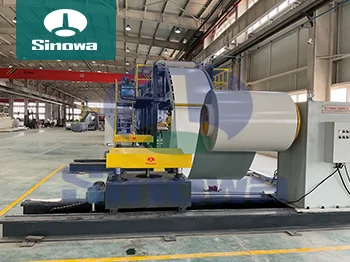
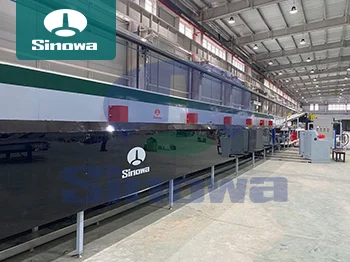
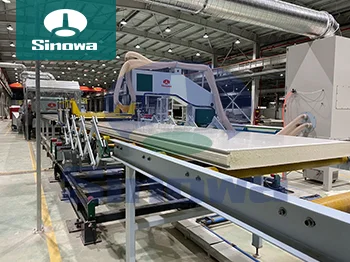
Sinowa is committed to the development and manufacturing of high-end and high-efficiency automatic sandwich panel production line. Our automatic sandwich panel production line are leading the way in efficiency, automatic control, human-computer interaction, environmental protection and energy consumption. Using system integration and bus control technology, it realizes the automatic integrated linkage control of the entire automatic sandwich panel production line, and can achieve remote interactive communication, which has the world-class level and a comprehensive leading high-performance automatic sandwich panel production line in the market.
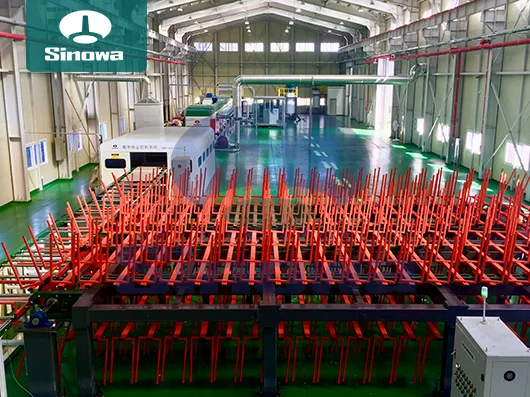
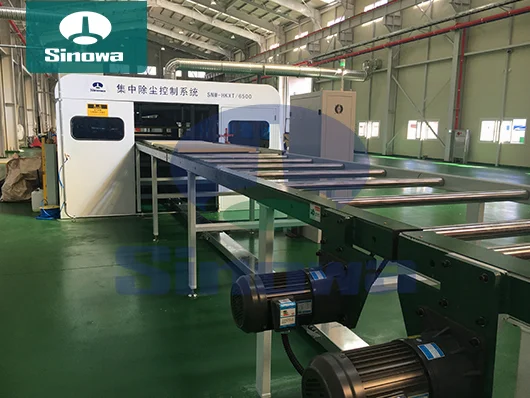
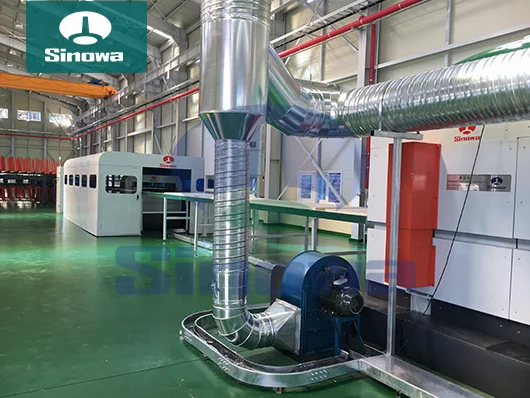
For more than ten years, relying on our innovative manufacturing concept and excellence in quality, reliable and trustworthy service to customers, we cooperate with customers all over the world, exported products to Canada, South Korea, Israel, Australia, the Middle East and other more than 20 countries and regions. contributed to building energy conservation and low-carbon production and have won widespread praise.
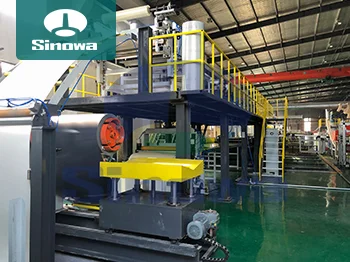
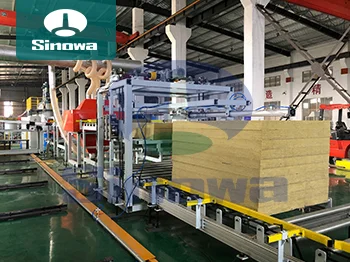
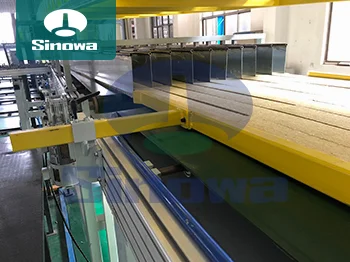
Sinowa has invested outstanding efforts in automatic sandwich panel production line, this is why our products are more efficiency, quality, automatic control technology, environmental protection, energy consumption indicators and the appearance and safety protection are comprehensively leading, some subversive design changes in many major technical points, these major innovations make our products excellent in price/performance and user experience.
When exploring options for building lightweight enclosure structures, many project operators turn to a cheap automatic sandwich panel production line as a practical solution to balance production capacity and capital input. This type of equipment is engineered to complete the core forming processes of sandwich panels in a continuous workflow, combining the feeding of surface sheets, the laying of core materials, compound pressing, cutting and outputting finished panels within one connected system. Unlike large high-spec production systems that require massive upfront investment, the affordable automatic line retains the essential automated functions to reduce manual involvement in repetitive handling tasks. Workers only need to monitor material supply, adjust basic operating parameters and inspect finished products on the exit side of the machine. The continuous running design helps cut down idle time between batches, so even with a limited workshop space, operators can maintain steady daily output to meet medium and small-scale market demands. The mechanical structure of this low-cost line focuses on functional reliability rather than excessive decorative or redundant auxiliary modules. Every key component is configured to fulfill panel forming requirements, which effectively controls overall procurement costs without stripping away the core automation features that separate it from fully manual manufacturing setups. For new market entrants who are testing product demand before scaling up their business, this equipment offers a low-threshold way to start sandwich panel manufacturing and avoid the financial pressure brought by overinvestment in overly sophisticated machinery.
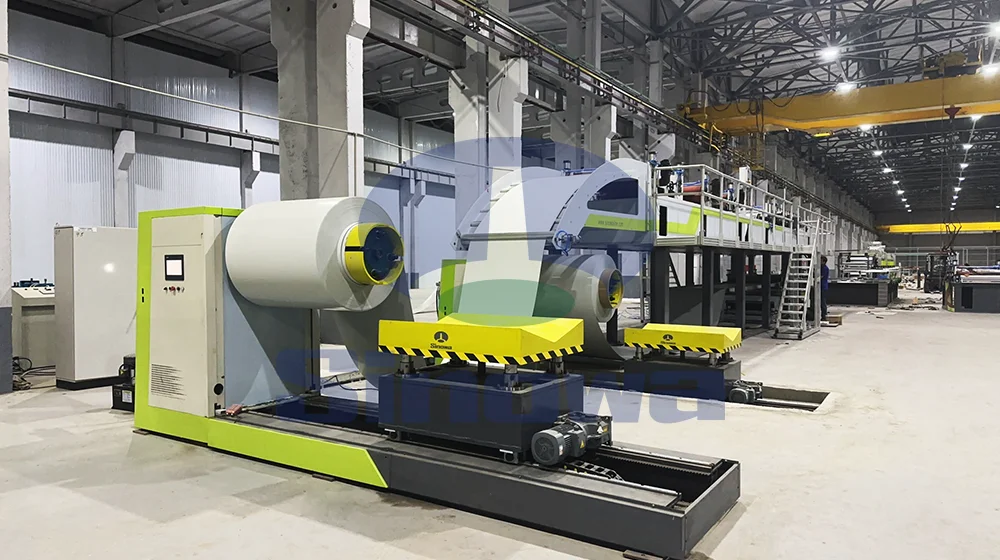
The material compatibility of a cheap automatic sandwich panel production line covers several widely used core and surface materials, making it flexible for different end-use applications. Surface layers can use metal sheets with different thickness specifications, while core insulating materials can be fed continuously through dedicated material racks on the machine. The automatic feeding mechanism ensures raw materials move forward at a synchronized speed, preventing uneven material alignment that may cause defects on finished panel surfaces. During the compounding stage, the machine applies uniform pressure to bond the surface skins and inner core tightly together, maintaining consistent thickness across the full length of each panel. Operators can adjust running speed and pressure settings according to the material characteristics they choose, so the same production line can switch between different panel types after simple parameter modification. Material waste is kept under reasonable control thanks to the automatic tracking and cutting unit. The cutting system follows preset length values to slice continuous compounded panels into finished pieces, reducing material loss caused by manual measurement and cutting errors. This adaptability means manufacturers can respond to varied customer orders without needing to invest in separate specialized lines for every single material combination, further improving the overall return on investment for the production system.
Daily operation of a cheap automatic sandwich panel production line does not require highly skilled technical personnel, which is another important advantage for small and medium manufacturing workshops. Before starting production, staff complete routine checks on material feeding rollers, pressing modules and the cutting device to confirm all moving parts are in normal condition. Once the system parameters are set and raw materials are loaded, the line can run automatically for long stretches with only occasional supervision. The control interface displays basic running data in a straightforward layout, allowing operators to spot abnormal speed or pressure changes quickly and pause the equipment for troubleshooting when needed. Maintenance work mainly involves regular cleaning of residual materials stuck on rollers and joints, as well as periodic lubrication of rotating components to reduce mechanical wear. Most common minor faults can be handled on-site following basic operation guidelines, without waiting for specialized technical support teams for every small issue. Training for new workers can be finished within a short period, so workshops can adjust staffing flexibly according to order volume changes. The simplified operation logic lowers long-term labor expenditure, and it also reduces production interruptions caused by lack of experienced operators, keeping the production schedule stable for ongoing customer orders.
The output quality from a cheap automatic sandwich panel production line meets the general requirements of many common construction and enclosure projects, as long as operators maintain proper raw material quality and stable machine parameters. Continuous compounding helps avoid the uneven bonding issues that frequently appear in manually produced panels. The finished products feature flat surface skins, uniform core material distribution and stable overall thickness, which makes them suitable for prefabricated wall sections, roof panels and temporary building components. While this affordable line does not include premium precision modules found on top-tier industrial systems, it can consistently deliver qualified panels for conventional usage scenarios. Operators can carry out simple sampling inspection after cutting, checking for bonding gaps, surface scratches and dimensional deviations to sort out non-conforming products in time. Stable product quality helps manufacturers build basic trust with downstream buyers, especially for customers who prioritize cost-effective panel supplies for non-specialized building projects. By controlling raw material quality and keeping the production line well maintained, manufacturers can reduce reject rates and ensure most finished panels can be delivered to clients on schedule, supporting steady business growth in the mid-range market segment.
Workshop layout planning is relatively simple when installing a cheap automatic sandwich panel production line, which saves extra spending on factory reconstruction and space expansion. The whole system is arranged in a linear sequence, following the natural flow of raw material input to finished panel output. Raw material storage zones can be set up near the feeding end, and finished product stacking areas are placed close to the cutting outlet to minimize internal handling distance. The total floor footprint is much smaller than large-scale automated lines, so the equipment can fit into standard factory buildings without complicated civil engineering modification. Power configuration requirements are moderate, and there is no need for special heavy-duty power transformation projects in most cases. Installation and assembly work can be completed efficiently, shortening the waiting time between equipment arrival and formal mass production. Manufacturers do not need to reserve huge extra space for redundant auxiliary equipment, which cuts fixed costs related to factory rental or renovation. This convenience makes the equipment attractive for newly established factories or production workshops that want to add sandwich panel production capacity within existing site conditions.
Cost control throughout the whole lifecycle is a prominent feature of a cheap automatic sandwich panel production line, extending far beyond the initial purchase expense. Since the machine adopts mature and standard mechanical components, replacement parts are easy to source at reasonable prices when wear parts need to be changed. Energy consumption during operation stays at a moderate level, helping to keep daily utility costs within a predictable range. The automated workflow reduces labor input per unit of finished panel, lowering recurring labor costs month after month. Planned routine maintenance can slow down component aging and extend the usable service life of the whole line, delaying the need for major overhauls or full equipment replacement. Production flexibility also helps avoid capital waste: operators can adjust production volume to match actual order quantity instead of running fixed high output regardless of market demand. When market demand fluctuates, the workshop can reduce operating hours temporarily without facing heavy idle asset losses. Combined, these factors reduce the comprehensive operating cost of sandwich panel manufacturing and create more room for manufacturers to compete on product price in the mainstream market.
There are practical limitations that buyers should understand before investing in a cheap automatic sandwich panel production line, to form realistic expectations about its performance. This type of equipment cannot achieve the ultra-high precision, ultra-fast continuous running speed and fully intelligent monitoring functions of high-end industrial production lines. It is more suitable for stable medium-volume production rather than non-stop heavy-load operation all year round. The variety of ultra-specialized panel specifications it can produce is limited, and some customized panel designs with special structural requirements may not be achievable on this basic automatic line. In cases where extremely strict surface appearance standards are required for finished panels, extra manual finishing steps may become necessary after panels exit the machine. Buyers also need to recognize that equipment performance relies heavily on consistent raw material quality. Poor raw materials will directly lead to more defective products even if the production line itself works properly. Careful evaluation of order types and product requirements is essential before purchase, to confirm that the equipment capability matches the actual business positioning and customer order characteristics. With clear awareness of these boundaries, operators can make full use of the equipment’s strengths while arranging supplementary processes where necessary.
For manufacturers aiming to enter or expand in the sandwich panel market, a cheap automatic sandwich panel production line represents a balanced investment choice that links automation capability with budget constraints. It enables small and medium producers to shift from manual or semi-manual panel fabrication to continuous automated production, improving output efficiency and product consistency without unbearable upfront financial burden. This equipment fits well with market segments where customers seek affordable sandwich panels for general building and enclosure applications. As the business grows and order requirements become more complex, operators can assess the possibility of upgrading certain modules of the line or adding auxiliary equipment step by step, instead of replacing the entire production system at once. The practical value of this low-cost automatic line lies in its ability to help businesses establish stable manufacturing capacity, accumulate operational experience and build customer bases in the early development stage. When matched with proper workshop management, raw material control and regular equipment maintenance, the production line can operate reliably for a long time, supporting sustainable business development and helping suppliers seize market opportunities in the cost-sensitive sandwich panel industry.
« Cheap Automatic Sandwich Panel Production Line » Update Date: 2026/10/20
Tags: Automatic Sandwich Panel Production Line , automatic sandwich panel production line, automatic sandwich panel production line manufacturer, automatic sandwich panel production line supplier, automatic sandwich panel production line for sale, customized automatic sandwich panel production line, china automatic sandwich panel production line
- Insulated Sandwhich Panel Production Line
- Insulated Sandwich Panel Line Price
- Sandwich Panel Manufacturing Line From China
- PU Insulation Board Production Line
- Composite Sandwich Panel Production Line On Sales
- Cheap Sandwich Wall Panel Production Line
- Customized Sandwich Panel Production Line
- Foam Sandwich Panel Production Line Factory
- Foam Sandwich Panel Machine From China
- Customize Sandwich Panel Foam Production Line
- Customized PU Sandwich Panel Machine
- High-tech Wall Sandwich Panel Production Line
- Composite Panel Production Line For Sale
- Soundproofing Sandwich Panel Production Line
- Cheap Sandwich Panel Machine
- Continuous PU Sandwich Panel Line Price
- High-quality Glass Wool Line
- Decorative PU Sandwich Panel Production Line Supplier
- Cheap Glass Wool Panel Production Line
- PIR Sandwich Panel Machine For Cold Storage
- Links:
- Sandwich Panel Continuous Production Line
- Automatic and Continuous Sandwich Panel Production Line
- Cheap and Low Price Sandwich Panel Production Line
- China Sandwich Panel Production Line Factory
- Color Steel Sandwich Panel Production Line For Cold Storage
- Continuous Composite Foam Sandwich Panel Production Line
- Continuous Production Line For Rockwool and Mineral Wool Sandwich Panels
- Continuous PU Phenolic Insulation Panel Production Line
- Continuous PU PIR Sandwich Panel Production Line
- Continuous PUF PUR Sandwich Panel Production Line
- Continuous Sandwich Panel Production Line For Roof and Wall
- Customized and Design Sandwich Panel Production Line
- Decorative Sandwich Panel Production Line For Glass Wool Boards
- High Quality Sandwich Panel Production Line For Sale
- Polyurethane(PU) Sandwich Panel Production Line
- Sandwich Panel Production Line Manufacturer and Supplier
- Sandwich Panel Production Machinery and Equipment