
Cheap Mineral Wool Sandwich Panel Production Line
Sinowa is a well-known manufacturer and technical service provider of high-end mineral wool sandwich panel production line, learn more about cheap mineral wool sandwich panel production line, please contact Sinowa's technical engineer, tell us what you need, we will contact you as soon as possible!
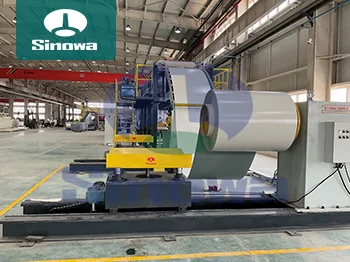
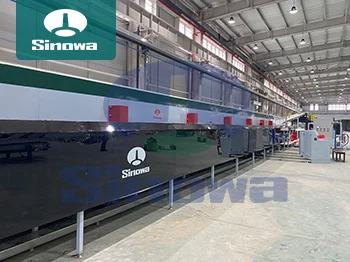
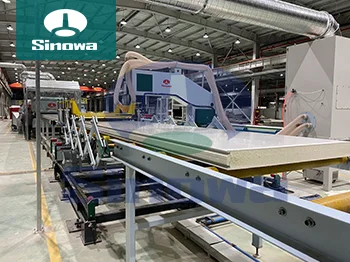
Sinowa is committed to the development and manufacturing of high-end and high-efficiency mineral wool sandwich panel production line. Our mineral wool sandwich panel production line are leading the way in efficiency, automatic control, human-computer interaction, environmental protection and energy consumption. Using system integration and bus control technology, it realizes the automatic integrated linkage control of the entire mineral wool sandwich panel production line, and can achieve remote interactive communication, which has the world-class level and a comprehensive leading high-performance mineral wool sandwich panel production line in the market.
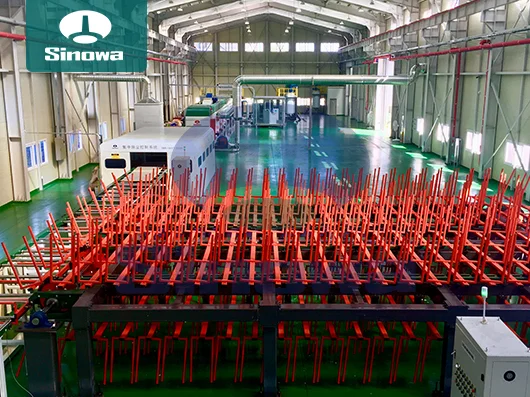
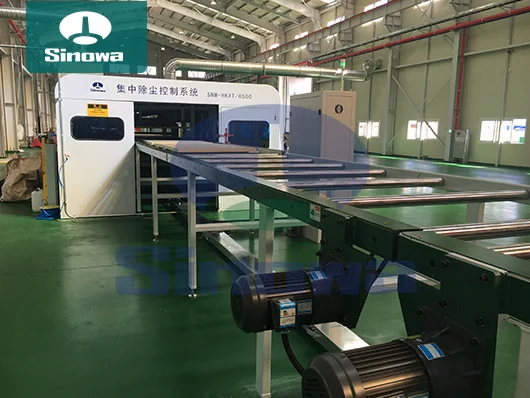
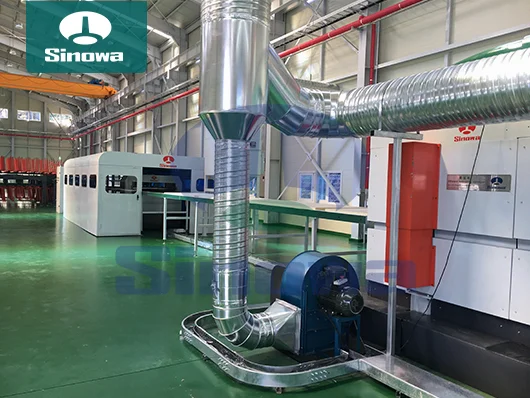
For more than ten years, relying on our innovative manufacturing concept and excellence in quality, reliable and trustworthy service to customers, we cooperate with customers all over the world, exported products to Canada, South Korea, Israel, Australia, the Middle East and other more than 20 countries and regions. contributed to building energy conservation and low-carbon production and have won widespread praise.
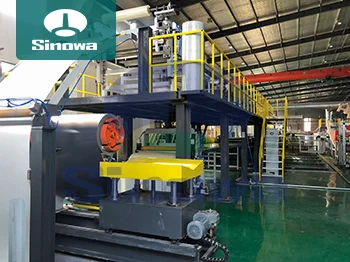
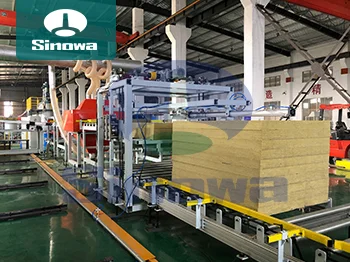
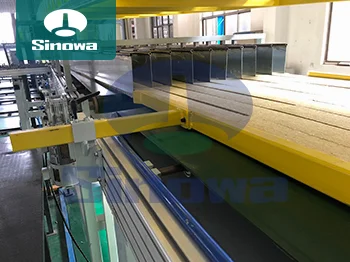
Sinowa has invested outstanding efforts in mineral wool sandwich panel production line, this is why our products are more efficiency, quality, automatic control technology, environmental protection, energy consumption indicators and the appearance and safety protection are comprehensively leading, some subversive design changes in many major technical points, these major innovations make our products excellent in price/performance and user experience.
The cheap mineral wool sandwich panel production line is a cost-effective, streamlined manufacturing system designed to produce high-performance composite panels with mineral wool as the core insulation material and metal sheets as the outer protective layers. Tailored for small and medium-scale manufacturing demands, this production line balances operational affordability, stable output quality, and functional versatility, eliminating redundant high-end configurations while retaining core production capabilities required for standard panel fabrication. It integrates raw material feeding, surface pretreatment, adhesive coating, core material arrangement, composite pressing, fixed-length cutting, and finished product sorting into a continuous automated workflow, greatly reducing manual intervention and overall production costs. The equipment features flexible parameter adjustment, allowing it to adapt to different panel thicknesses and width specifications, and the produced panels excel in thermal insulation, sound absorption, and fire resistance, making them widely applicable in temporary buildings, warehouse enclosures, factory partitioning, and low-rise construction insulation projects. With simplified structural design and easy maintenance, the production line lowers entry barriers for panel manufacturing enterprises and ensures stable and efficient mass production of cost-effective mineral wool sandwich panels.
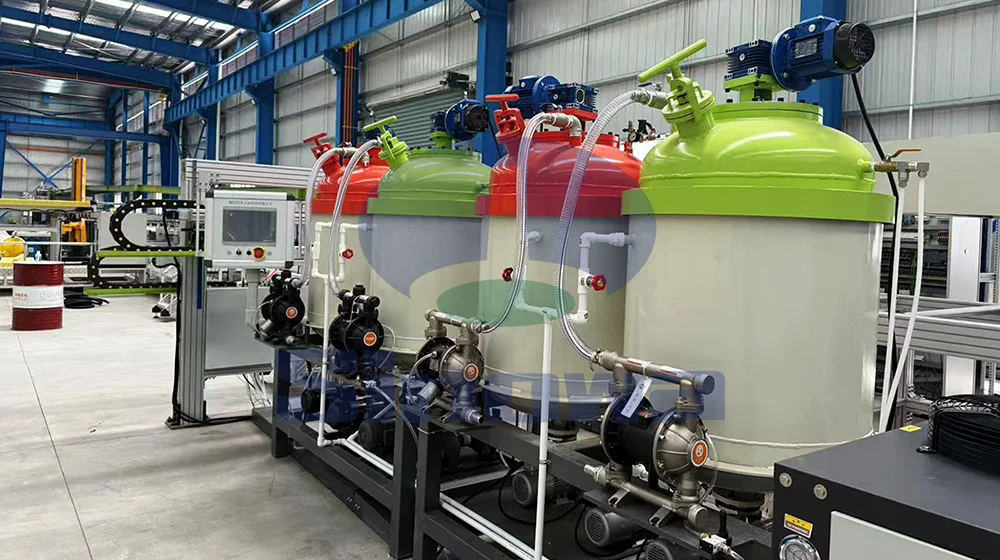
The overall structural design of the cost-effective mineral wool sandwich panel production line focuses on practicality and operational efficiency, adopting a modular integrated layout that connects all processing units in a compact and logical sequence. Unlike premium customized production lines with overly complex auxiliary systems, this equipment streamlines non-essential functional components while optimizing the matching degree of each core module, effectively controlling equipment investment and subsequent operating costs. The entire production system mainly includes metal sheet unwinding and leveling units, mineral wool automatic feeding and sorting devices, intelligent adhesive coating mechanisms, constant-temperature composite laminating units, precise cutting systems, and automated conveying and stacking modules. Each unit adopts mature and reliable mechanical structures, avoiding sophisticated and high-cost precision accessories that are unnecessary for conventional production needs. The modular design not only saves factory layout space but also facilitates daily inspection, component replacement, and equipment maintenance. Operators can quickly master the operating logic of each module through simple training, reducing labor costs caused by complex operation and professional technical threshold. Meanwhile, the streamlined production flow avoids material backlog and process repetition, improving overall production efficiency while maintaining low energy consumption per unit product.
Raw material pretreatment and feeding are the foundational links that determine the surface flatness and internal structural uniformity of finished panels, and the cost-effective production line is equipped with optimized feeding systems for both metal surface materials and mineral wool core materials. For metal coil feeding, the line adopts a servo-driven automatic unwinding and leveling device, which can stably release coiled metal materials and eliminate internal stress and surface wrinkles generated during coiling and storage. The precision-calibrated leveling rollers ensure that the metal surface sheets maintain a flat and smooth state before entering the composite process, avoiding uneven bonding and surface deformation of finished panels. In terms of mineral wool core material feeding, the equipment is fitted with a special material spreading and sorting structure, which can arrange strip-shaped mineral wool materials in a staggered and dense layout. This structure effectively prevents local hollowing and uneven density of the panel core layer, ensuring the overall structural consistency of the composite panel. Additionally, a simple and efficient dust collection device is installed near the mineral wool feeding area to collect scattered fine fibers, keeping the production environment clean and preventing fiber accumulation from affecting the normal operation of transmission components. The entire feeding process realizes automatic continuous feeding, avoiding material interruption caused by manual feeding and ensuring the continuity of production.
Adhesive coating and pre-composite treatment are critical processes that affect the bonding firmness and service life of mineral wool sandwich panels, and the economical production line is equipped with an efficient and energy-saving gluing system tailored for mass production. The equipment uses high-performance environment-friendly polymer adhesives with fast curing speed and strong adhesion, which can form a stable bonding layer between metal sheets and mineral wool core materials without additional high-cost auxiliary curing agents. The gluing unit adopts a multi-point uniform spraying structure, and the glue output and spraying range can be automatically adjusted according to production speed and panel specification changes. This quantitative and fixed-point gluing mode avoids excessive adhesive waste caused by traditional manual or rough mechanical gluing, effectively reducing raw material consumption costs while ensuring no missing coating or uneven gluing on the bonding surface. Before formal composite pressing, the production line is equipped with a low-temperature preheating station, which can slightly heat the coated metal sheets to accelerate the initial curing reaction of the adhesive. This pre-treatment step enhances the initial bonding force between the surface layer and the core material, prevents material displacement during subsequent pressing, and lays a solid foundation for the stable forming of subsequent processes.
The composite laminating and constant-temperature curing process is the core molding link of mineral wool sandwich panels, and the cost-effective production line adopts a crawler-type continuous pressing structure to realize one-time composite forming of panels. The laminating unit is composed of upper and lower high-strength crawler pressing plates, which can provide uniform and stable pressing force throughout the panel width direction. The mechanical pressure is precisely controlled by a pneumatic adjusting system, which can be flexibly adjusted according to different panel thicknesses and core material densities, ensuring that the metal surface layer and mineral wool core material are closely bonded without extrusion deformation of the mineral wool structure. The closed constant-temperature curing zone is arranged inside the laminating equipment, maintaining a stable temperature environment suitable for adhesive curing. This uniform temperature distribution enables the adhesive to cure synchronously inside and outside, avoiding incomplete internal curing or excessive surface curing that affects bonding strength. Compared with intermittent pressing equipment, the continuous crawler pressing structure realizes uninterrupted production, greatly improving single-line output. Moreover, the simplified pressure regulation and temperature control system reduces equipment failure rates, lowering maintenance and repair costs in long-term production operations.
Fixed-length cutting and edge trimming processes ensure the dimensional accuracy and appearance quality of finished mineral wool sandwich panels, and the economical production line is equipped with high-precision automatic cutting systems suitable for mass production. After the composite panels are cured and molded, they are stably transported to the cutting station through a synchronous conveying mechanism. The cutting unit adopts servo positioning and tracking technology, which can automatically identify the set panel length and complete fixed-length cutting in real time with the production line operation. The cutting tool is made of wear-resistant high-strength materials, which can keep the cutting edge flat and smooth for a long time, avoiding burrs, cracks, and edge collapses on the panel section. Meanwhile, the equipment is equipped with a simple edge trimming device, which can trim the irregular edges of the panels generated in the feeding and composite processes to ensure consistent overall dimensions of each finished panel. The entire cutting and trimming process is fully automated, with no need for manual measurement and secondary trimming. It not only improves production efficiency but also effectively controls product dimensional errors, ensuring the uniformity of batch-produced panels and reducing the defective rate caused by dimensional deviation.
Finished product conveying, sorting and stacking are the final processing links of the production line, realizing orderly collection and temporary storage of qualified mineral wool sandwich panels. The cut panels are transported to the sorting platform through a low-speed stable conveying belt, and the automatic alignment device on the platform can intelligently correct the position of the panels to avoid lateral displacement and tilting. The stacking mechanism adopts servo transmission and coding control technology, which can accurately control the falling position and stacking sequence of the panels. According to the preset stacking quantity and layer spacing, the equipment realizes layered and neat stacking of finished panels, ensuring that the stacked panel piles are flat, stable and not easy to loosen. The automated stacking function replaces manual carrying and stacking, greatly reducing labor intensity and improving finished product sorting efficiency. In addition, the terminal of the production line is equipped with a simple finished product detection mechanism, which can preliminarily screen out panels with unqualified bonding and dimensional errors during the conveying process, avoiding unqualified products from entering the finished product storage link and ensuring the overall qualification rate of batch products.
The cost-effective mineral wool sandwich panel production line has outstanding practical value and market adaptability in the field of medium and low-end sandwich panel manufacturing. Its greatest advantage lies in realizing high-quality automated production with low equipment investment and low operating costs, perfectly matching the production needs of small and medium-sized manufacturers for cost control and stable output. The simplified and mature mechanical structure greatly reduces the failure probability of the equipment, lowers the threshold and cost of daily maintenance and after-sales repair, and enables the production line to maintain long-term stable operation in high-intensity mass production scenarios. The flexible parameter adjustment function supports the production of panels with multiple specifications, meeting the diverse application requirements of construction insulation, facility enclosure, and temporary engineering construction. While ensuring the basic thermal insulation, sound insulation and fireproof performance of mineral wool sandwich panels, the production line optimizes the entire production process to reduce material waste and energy consumption, helping manufacturers reduce production costs and improve market competitiveness. With its high cost performance, stable performance and convenient operation, this production line has become a mainstream choice for medium and small-scale mineral wool sandwich panel manufacturing projects.
« Cheap Mineral Wool Sandwich Panel Production Line » Update Date: 2026/8/27
- Mineral Wool Line For Sale
- Rock Wool Sandwich Panel Machine Design
- Rock Wool Production Line For Wall
- Rock Wool Line On Sales
- High-tech Rockwool Machine
- Customized Rockwool Sandwich Panel Machine
- Cheap Sandwich Panel Rock Wool Production Line
- Mineral Wool Production Line Factory
- Fully Automatic Rock Wool Sandwich Panel Machine In China
- Custom Rock Wool Board Production Line
- High-end Rock Wool Production Line
- Rock Wool Sandwich Panel Line For Clean Room
- High-quality Rockwool Sandwich Panel Line
- Sandwich Panel Rock Wool Production Line Design
- Rock Wool Sandwich Panel Line For Roof
- Mineral Wool Line Manufacturer
- Rock Wool Sandwich Panel Production Line Design
- Rock Wool Board Production Line Manufacturer
- Highly Intelligent Mineral Wool Sandwich Panel Production Line
- Automatic Rock Wool Production Line Price
- Links:
- Sandwich Panel Continuous Production Line
- Automatic and Continuous Sandwich Panel Production Line
- Cheap and Low Price Sandwich Panel Production Line
- China Sandwich Panel Production Line Factory
- Color Steel Sandwich Panel Production Line For Cold Storage
- Continuous Composite Foam Sandwich Panel Production Line
- Continuous Production Line For Rockwool and Mineral Wool Sandwich Panels
- Continuous PU Phenolic Insulation Panel Production Line
- Continuous PU PIR Sandwich Panel Production Line
- Continuous PUF PUR Sandwich Panel Production Line
- Continuous Sandwich Panel Production Line For Roof and Wall
- Customized and Design Sandwich Panel Production Line
- Decorative Sandwich Panel Production Line For Glass Wool Boards
- High Quality Sandwich Panel Production Line For Sale
- Polyurethane(PU) Sandwich Panel Production Line
- Sandwich Panel Production Line Manufacturer and Supplier