
Continuous Sandwich Panel Manufacturing Line In China
Sinowa is a well-known manufacturer and technical service provider of high-end continuous sandwich panel manufacturing line, learn more about continuous sandwich panel manufacturing line in china, please contact Sinowa's technical engineer, tell us what you need, we will contact you as soon as possible!
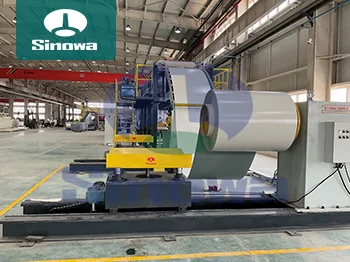
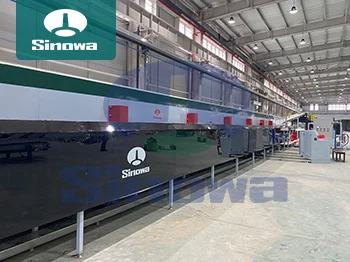
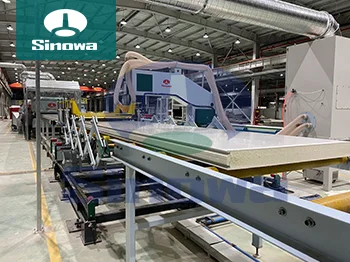
Sinowa is committed to the development and manufacturing of high-end and high-efficiency continuous sandwich panel manufacturing line. Our continuous sandwich panel manufacturing line are leading the way in efficiency, automatic control, human-computer interaction, environmental protection and energy consumption. Using system integration and bus control technology, it realizes the automatic integrated linkage control of the entire continuous sandwich panel manufacturing line, and can achieve remote interactive communication, which has the world-class level and a comprehensive leading high-performance continuous sandwich panel manufacturing line in the market.
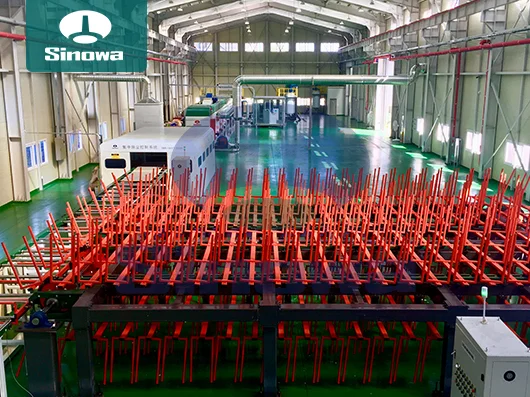
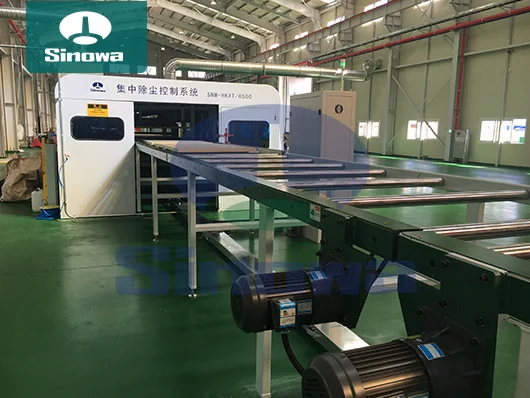
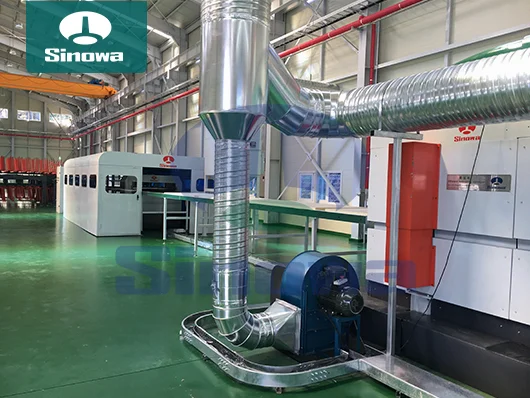
For more than ten years, relying on our innovative manufacturing concept and excellence in quality, reliable and trustworthy service to customers, we cooperate with customers all over the world, exported products to Canada, South Korea, Israel, Australia, the Middle East and other more than 20 countries and regions. contributed to building energy conservation and low-carbon production and have won widespread praise.
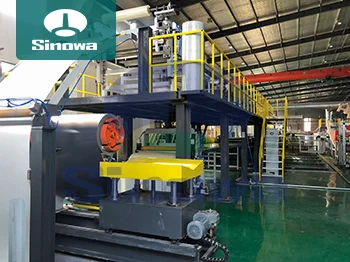
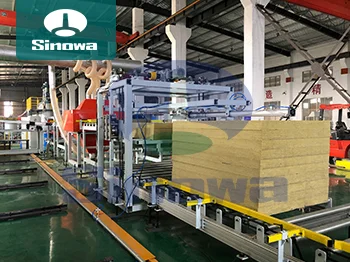
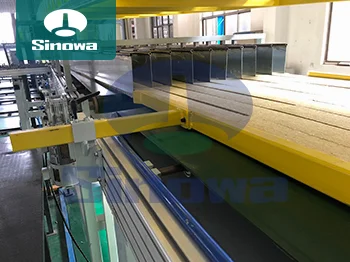
Sinowa has invested outstanding efforts in continuous sandwich panel manufacturing line, this is why our products are more efficiency, quality, automatic control technology, environmental protection, energy consumption indicators and the appearance and safety protection are comprehensively leading, some subversive design changes in many major technical points, these major innovations make our products excellent in price/performance and user experience.
The continuous sandwich panel manufacturing line has emerged as a core automated production system for the building material industry, delivering efficient, stable, and large-scale production of composite insulation panels widely applied in modern construction, cold chain logistics, and industrial facility development. This integrated production system realizes fully streamlined uninterrupted manufacturing, covering raw material pretreatment, core material mixing, composite lamination, constant-temperature curing, precision cutting, and post-processing finishing in one complete workflow. Unlike traditional batch production modes, the continuous production model eliminates intermittent shutdowns and manual intervention gaps, greatly improving production efficiency and product consistency. In practical industrial applications, this production line adapts to diverse core materials and surface substrates, enabling flexible production of sandwich panels with different insulation and structural performance. Its intelligent mechanical coordination and precise parameter control system effectively reduces manual errors, stabilizes product quality, and meets the growing market demand for high-performance, standardized composite building panels in various engineering scenarios.
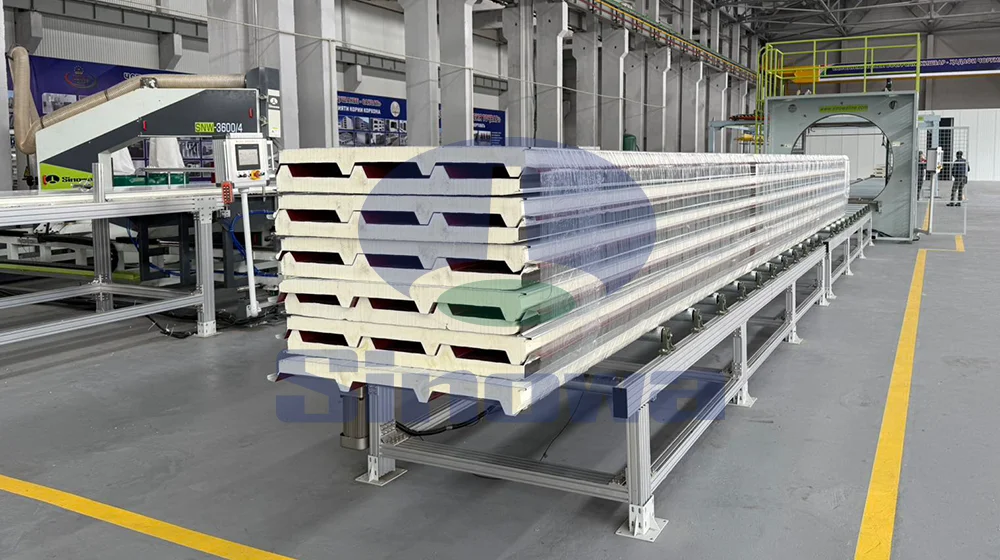
The overall structural design and operational layout of modern continuous sandwich panel manufacturing lines follow a linear modular integration concept, ensuring seamless connection and synchronous operation of each functional unit throughout the production process. The entire production flow is arranged in an orderly sequence from front-end raw material feeding to back-end finished product collection, with each functional module professionally optimized for its specific processing procedure. The front-end section mainly undertakes the unreeling and pretreatment of surface substrate materials, where specialized mechanical devices steadily release coiled sheet materials and conduct surface cleaning and smoothing treatment to remove impurities and ensure flat bonding surfaces. Meanwhile, the core material feeding unit precisely conveys various raw materials required for insulation core production into the mixing system through automatic quantitative feeding structures. All feeding processes adopt intelligent metering control to maintain stable and consistent material supply volume, avoiding quality fluctuations caused by uneven raw material ratios. The close coordination of front-end modules lays a solid foundation for subsequent composite molding, ensuring the continuity and stability of the entire production process and effectively supporting long-term uninterrupted industrial production operations.
Raw material metering and mixing technology stands as one of the most critical core links in the continuous sandwich panel manufacturing process, directly determining the uniformity, thermal insulation performance, and structural stability of the panel core layer. The production line is equipped with high-precision automatic mixing systems featuring optimized stirring structures and pneumatic injection components, which can fully blend different reactive raw materials in a sealed mixing chamber. The system maintains stable mixing pressure and temperature during operation, realizing microscopic fusion of raw materials and forming uniform foaming components with fine and consistent pore structures. The intelligent control system can dynamically adjust mixing parameters according to production demands, ensuring that the mixed materials maintain optimal activity and fluidity before entering the composite molding stage. This precise mixing process avoids common defects such as uneven core density, local hollowing, and inconsistent foaming degrees that often occur in traditional production methods. By achieving standardized and refined raw material processing, the system effectively enhances the overall structural uniformity and functional stability of finished sandwich panels, improving the comprehensive service performance of products in practical application environments.
Composite lamination and pressure forming procedures are key stages that shape the basic structure of sandwich panels, realizing the tight bonding between surface substrates and insulation core materials. After uniform mixing, the foaming core materials are continuously and evenly distributed on the steadily moving lower surface substrate conveyed by a precision belt system. Synchronously, the upper surface substrate is accurately fed into the designated position by the automatic feeding device, forming a three-layer composite structure with the intermediate foaming material. The composite structure then enters the double-track lamination conveyor system, which is composed of two parallel temperature-controlled conveyor belts capable of applying uniform and balanced pressure across the entire panel width. The system strictly controls lamination pressure and operating speed to ensure that the foaming material expands evenly and fully fills the gap between the upper and lower substrates without extrusion deformation or pore collapse. The synchronous operation of the dual-belt structure effectively avoids offset and wrinkling of surface materials, realizing one-time composite molding of sandwich panels. This continuous lamination and forming process ensures consistent structural thickness and bonding tightness of each panel, laying a reliable structural foundation for subsequent curing and finished product processing.
Constant-temperature curing and structural stabilization processing is essential to endow sandwich panels with stable mechanical properties and durable bonding performance. After preliminary composite molding, the semi-finished panels are continuously sent to an insulated closed curing channel with adjustable internal temperature environments. The curing area adopts a segmented temperature control design, which can match the polymerization and foaming curing characteristics of different core materials, realizing gradual and uniform curing of the composite structure. In this process, the intermediate core material completes full chemical reaction and polymerization molding, forming a dense and stable insulation structure, while achieving high-strength interface bonding with the inner surfaces of upper and lower substrates. The precise constant-temperature control system avoids quality problems such as incomplete curing caused by insufficient temperature or material aging and performance degradation caused by excessive temperature. Meanwhile, the stable pressure maintaining structure in the curing section prevents panel deformation and warpage during the curing process. Through systematic and standardized curing treatment, the internal stress of the panel is fully released, the overall structural stability is significantly improved, and the finished product can maintain stable mechanical and thermal insulation performance in long-term use.
Precision cutting and edge finishing processes ensure the dimensional accuracy and appearance quality of finished sandwich panels, meeting the standardized requirements of various engineering applications. After completing curing and shaping, the continuous panel strips are transmitted to the fixed-length cutting unit, which adopts intelligent servo control systems to realize accurate length positioning and automatic cutting. The system supports flexible adjustment of cutting specifications to adapt to different project size requirements, with high cutting precision effectively avoiding dimensional errors and section unevenness. Following the cutting process, the edge trimming and finishing device conducts fine processing on the panel edges to remove burrs, smooth cutting sections, and correct slight edge deformation generated during production. Some advanced production lines are also equipped with surface inspection modules to conduct real-time detection of panel flatness, surface defects, and bonding integrity during the finishing process. Unqualified products can be timely screened out through intelligent monitoring, ensuring that all delivered finished products have uniform specifications and excellent appearance quality. This refined post-processing procedure greatly improves the assembly convenience and overall aesthetic effect of sandwich panels in actual construction projects.
Intelligent control and automated operation systems constitute the core support for the high-efficiency and stable operation of modern continuous sandwich panel manufacturing lines. The entire production process is centrally controlled by an integrated intelligent system, which realizes automatic linkage and synchronous operation of all functional modules including feeding, mixing, lamination, curing, and cutting. Operators can monitor real-time production status, adjust operating parameters, and view production data through a centralized human-machine interface, realizing simplified and efficient production management. The system is equipped with automatic fault detection and early warning functions, which can identify abnormal operating conditions of equipment in a timely manner and trigger protection mechanisms to avoid equipment failure and batch product quality problems. In addition, the automated production mode greatly reduces manual operation links, lowers labor intensity and human error rates, and significantly improves production efficiency and operation safety. The intelligent parameter memory function can store mature production parameters of different product specifications, realizing rapid switching of production formulas and effectively improving the flexible production capacity of the assembly line.
With the continuous upgrading of building material industry requirements for energy conservation, environmental protection and high efficiency, continuous sandwich panel manufacturing lines are constantly evolving towards higher intelligence, energy saving and customization. Modern production lines adopt optimized mechanical structures and energy-saving control technologies, which effectively reduce energy consumption during operation and minimize raw material waste in the production process, conforming to the sustainable development trend of the green building industry. In terms of production adaptability, the upgraded production lines can match multiple types of core insulation materials and surface materials, realizing the production of multi-functional sandwich panels with heat preservation, fire resistance, and weather resistance properties. The mature and advanced continuous production technology not only improves the industrialization level of sandwich panel production, but also provides high-quality and reliable composite building materials for various fields such as industrial construction, public buildings, and cold storage engineering. With its outstanding production stability, flexible adaptability and efficient output capacity, this type of production line will continue to play an important role in promoting the high-quality development of the modern building material manufacturing industry.
« Continuous Sandwich Panel Manufacturing Line In China » Update Date: 2026/8/12
- Sandwich Panel Foam Making Machine Supplier
- PUF Panel Making Machine Factory
- Cheap PU Insulation Panel Production Line
- High-quality Glass Wool Sandwich Panel Production Line
- Glass Wool Sandwich Panel Production Line Manufacturer
- PIR Sandwich Panel Line For House
- High-quality PU Insulated Panel Production Line
- Sandwich Panel Foam Production Line On Sales
- PUR Sandwich Panel Production Line From China
- High-quality PU Isolation Panel Production Line
- Fully Automatic PU Sandwich Panel Production Line Factory
- Glass Wool Sandwich Panel Line For Construction
- PUF Panel Making Machine Supplier
- Sandwich Roof Panel Production Line Manufacturer
- PIR Sandwich Panel Machine On Sales
- Fully Automatic Sandwich Panel Making Machine On Sales
- Polyurethane Insulation Panel Production Line For Building
- High-quality PUR Sandwich Panel Production Line
- Polyurethane Sandwich Panel Machinery Design
- Continuous Sandwich Panel Production Line Factory
- Links:
- Sandwich Panel Continuous Production Line
- Automatic and Continuous Sandwich Panel Production Line
- Cheap and Low Price Sandwich Panel Production Line
- China Sandwich Panel Production Line Factory
- Color Steel Sandwich Panel Production Line For Cold Storage
- Continuous Composite Foam Sandwich Panel Production Line
- Continuous Production Line For Rockwool and Mineral Wool Sandwich Panels
- Continuous PU Phenolic Insulation Panel Production Line
- Continuous PU PIR Sandwich Panel Production Line
- Continuous PUF PUR Sandwich Panel Production Line
- Continuous Sandwich Panel Production Line For Roof and Wall
- Customized and Design Sandwich Panel Production Line
- Decorative Sandwich Panel Production Line For Glass Wool Boards
- High Quality Sandwich Panel Production Line For Sale
- Polyurethane(PU) Sandwich Panel Production Line
- Sandwich Panel Production Line Manufacturer and Supplier