
Custom Polyurethane Sandwich Panel Production Line
Sinowa is a well-known manufacturer and technical service provider of high-end polyurethane sandwich panel production line, learn more about custom polyurethane sandwich panel production line, please contact Sinowa's technical engineer, tell us what you need, we will contact you as soon as possible!
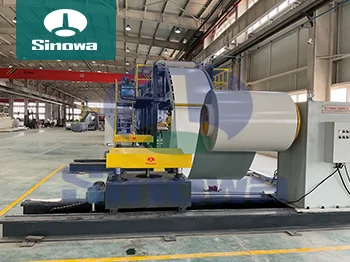
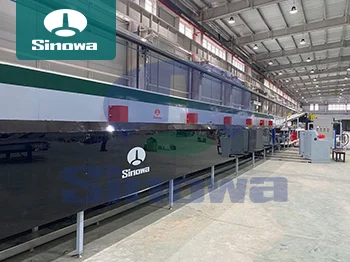
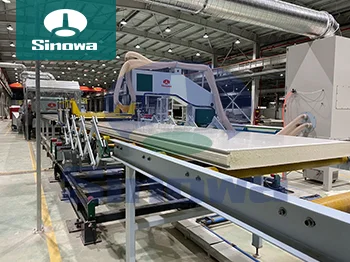
Sinowa is committed to the development and manufacturing of high-end and high-efficiency polyurethane sandwich panel production line. Our polyurethane sandwich panel production line are leading the way in efficiency, automatic control, human-computer interaction, environmental protection and energy consumption. Using system integration and bus control technology, it realizes the automatic integrated linkage control of the entire polyurethane sandwich panel production line, and can achieve remote interactive communication, which has the world-class level and a comprehensive leading high-performance polyurethane sandwich panel production line in the market.
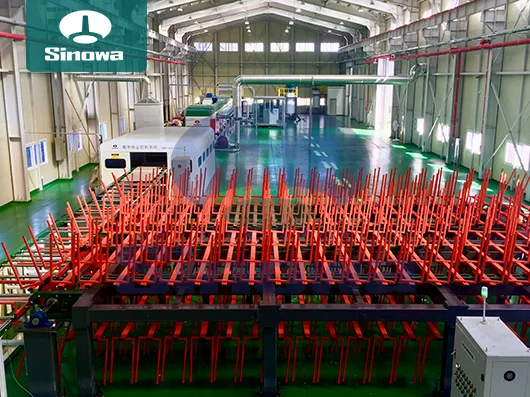
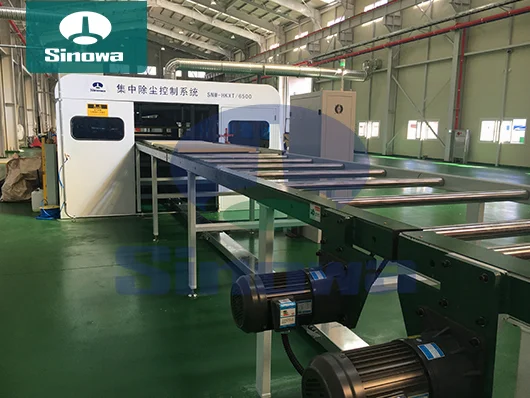
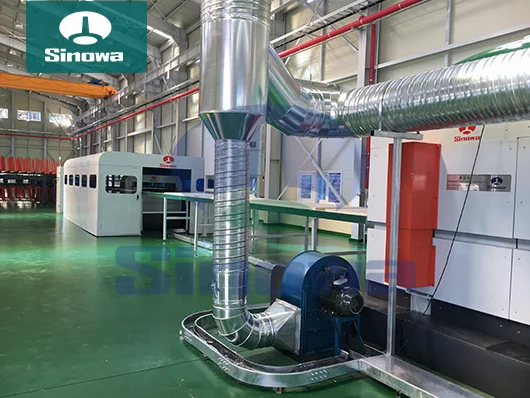
For more than ten years, relying on our innovative manufacturing concept and excellence in quality, reliable and trustworthy service to customers, we cooperate with customers all over the world, exported products to Canada, South Korea, Israel, Australia, the Middle East and other more than 20 countries and regions. contributed to building energy conservation and low-carbon production and have won widespread praise.
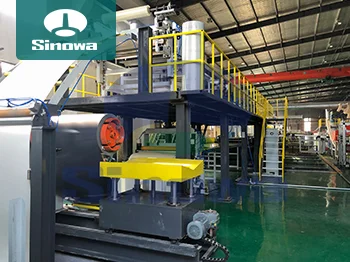
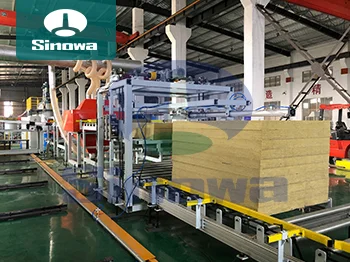
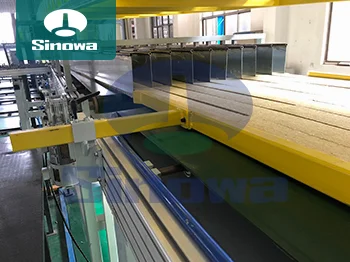
Sinowa has invested outstanding efforts in polyurethane sandwich panel production line, this is why our products are more efficiency, quality, automatic control technology, environmental protection, energy consumption indicators and the appearance and safety protection are comprehensively leading, some subversive design changes in many major technical points, these major innovations make our products excellent in price/performance and user experience.
The custom polyurethane sandwich panel production line represents a highly adaptable manufacturing system built to respond to diverse structural and thermal performance requirements across many application scenarios. Unlike fixed setups that only produce panels with uniform dimensions and core specifications, this kind of line is engineered with adjustable modules that can be reconfigured without extensive downtime or major hardware replacement. At the heart of the system lies the continuous foaming station, where raw polyol and isocyanate components are precisely metered, mixed, and dispensed between two facing sheet materials. Operators can tweak flow rates, mixing pressure, and foaming speed to alter the density and cellular structure of the polyurethane core, directly influencing insulation capacity, weight, and compressive strength. Supporting frames, guiding rollers, and tension control units work together to keep metal or non-metal facings flat and aligned as they move forward through the process, preventing wrinkling, offset bonding, or uneven core thickness. Every adjustable parameter is linked to a central control interface, allowing production teams to store different product recipes and recall them quickly when switching between custom orders. This flexibility removes the limitations of mass production, making it feasible to fulfill small-batch, tailor-made orders alongside larger runs while maintaining consistent bonding quality across each finished panel. Careful calibration during each changeover helps avoid material waste and ensures that the finished composite meets the specific geometric and functional targets laid out in each customer’s technical requirements.
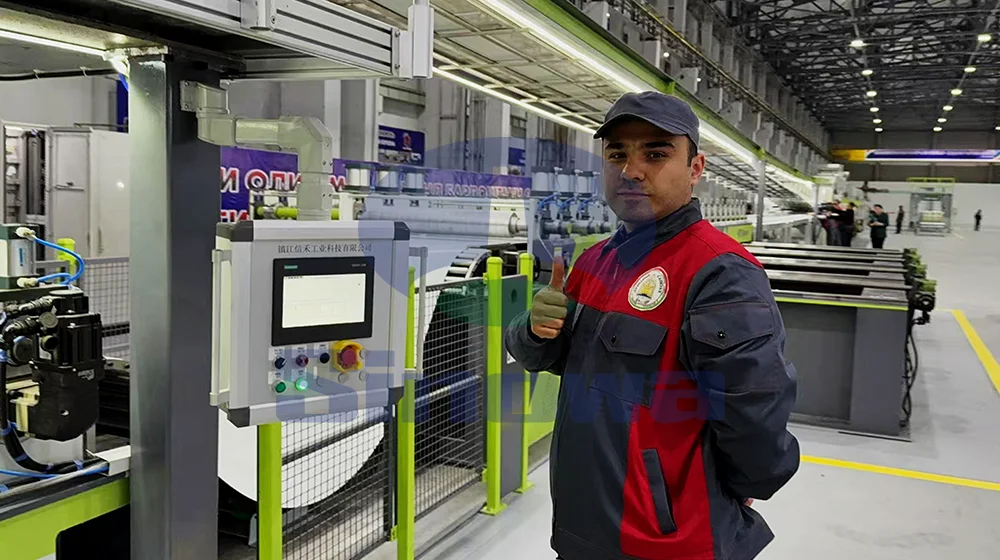
Material preparation forms the first critical operational phase within the custom polyurethane sandwich panel production line, setting the foundation for stable foaming and durable composite bonding. All facing materials, whether metallic or composite sheets, are unwound from large rolls and fed through pre-treatment sections designed to clear surface contaminants and improve adhesive compatibility. Surface conditioning processes are adjustable to match the coating type and texture of different facings, as some substrates need deeper cleaning or light abrasion to hold the polyurethane core securely. Separate storage and feeding systems handle auxiliary materials such as edge seal strips, reinforcement inserts, and release films, which can be activated or omitted depending on the custom panel design. The polyurethane raw materials are held in temperature-regulated tanks to keep viscosity steady, since even minor temperature shifts can disrupt foaming behavior and create inconsistencies in core formation. Transfer pumps carry the liquid components to the mixing head with closed-loop flow monitoring, so any drift in dosage is corrected instantly. Operators can also adjust the feeding speed of facings independently of the foaming output, which is essential when producing panels with non-standard widths or variable core thickness. This stage demands steady attention to material condition, because poorly prepared facings or unstable raw material properties will lead to delamination, surface defects, or inconsistent thermal performance long after panels leave the production line.
Continuous foaming and lamination is the core process where the separate layers merge into an integrated polyurethane sandwich panel, and custom line design gives manufacturers precise authority over how this fusion takes place. After the two facings are positioned in parallel, the mixed polyurethane liquid is evenly distributed across the lower facing before the upper sheet is guided into place. As the liquid reacts, it expands and fills the cavity between the facings, forming a closed-cell rigid foam core that bonds tightly to both surfaces. The double-belt curing press applies controlled pressure and steady heat while the foam completes its curing reaction, locking in the target thickness and preventing excessive expansion or collapse of the cellular structure. The pressure and temperature settings of the press can be modified for each custom formula, as softer low-density foams and high-density structural foams require different curing profiles. Belt speed is synchronized with foaming output so that dwell time inside the press matches the curing cycle required for the selected polyurethane formulation. Side limiting guides can be moved inward or outward to define panel width, and removable inserts allow for the creation of cutouts, notches, or reinforced zones within individual panels. This level of on-demand adjustment means the same line can produce lightweight insulation-focused panels and heavier load-bearing panels without major mechanical overhauls, bridging the gap between specialized performance needs and manufacturing efficiency.
Once panels exit the continuous curing press, the cutting and shaping module transforms the endless continuous composite strip into discrete finished pieces tailored to specified lengths and edge profiles. Flying saw cutting systems operate while the panel moves forward, eliminating the need to stop the entire line for each cut and preserving overall production throughput. Cut length values are entered into the control system for every custom batch, and the saw unit automatically synchronizes its travel speed with the panel movement to deliver clean, square cuts with minimal foam crumbling along the edge. Additional edge trimming stations can be activated when customers require precise edge geometries, including rabbets, tongue-and-groove joints, flat butt edges, or sloped profiles that simplify on-site assembly. Dust collection attachments capture fine foam particles generated during cutting and trimming, keeping the work area clear and reducing contamination that could affect subsequent bonding operations. After cutting, panels pass through inspection gates where sensors scan for deviations in total thickness, surface flatness, and edge straightness. Any units that fall outside preset tolerance ranges are flagged and diverted for re-evaluation, rather than moving onward to packaging. This modular cutting arrangement supports variable batch sizes, from a handful of uniquely sized panels for a special project to longer runs of similarly specified units, all managed through simple parameter updates on the control terminal.
In-line quality monitoring runs throughout every stage of the custom polyurethane sandwich panel production line, acting as an ongoing safeguard for consistency amid frequent product changeovers. Multiple sensor arrays track key physical attributes without interrupting material flow, recording data related to foam thickness, facing alignment, surface flatness, and the integrity of the bond between foam and facings. Real-time readouts appear on the central control screen, giving line supervisors immediate visibility when a parameter begins to drift away from the target set for the current custom job. Thickness gauges positioned after the foaming zone detect uneven expansion early, before the foam fully cures, allowing operators to adjust pump flow or belt pressure to correct the issue. Visual inspection cameras identify surface blemishes, scratches, gaps, or incomplete bonding that might not be obvious to manual inspectors working at production speed. All recorded data can be associated with individual production batches, creating a traceable record for each custom order. This continuous oversight is especially valuable for custom work, because each new panel design carries its own set of tolerance requirements. Instead of relying only on spot checks after production finishes, the monitoring system catches deviations while they are still small, cutting down on scrap material and lowering the risk of delivering panels that fail to match the agreed design specifications.
The control and automation architecture of the custom polyurethane sandwich panel production line is built around flexible programming, which makes repeated reconfiguration practical and user-friendly. A centralized human-machine interface serves as the main access point for all adjustable functions, from raw material pump speeds and belt tension to cutting lengths and curing temperature profiles. Each unique panel design can be saved as a dedicated recipe file, which stores the full collection of parameter settings needed to replicate that exact product. When shifting from one custom order to another, operators simply select the matching recipe, and the line automatically adjusts motors, valves, heaters, and positioning guides to the correct values. Manual override controls remain available for fine tuning during the initial setup of a brand-new panel design, when small iterative adjustments are needed to perfect foaming and bonding behavior. Safety interlocks are embedded across every moving section, halting operation if access panels are opened, feed materials jam, or temperature levels move outside safe operating boundaries. Communication links connect separate line segments so that unwinding, foaming, pressing, and cutting speeds stay synchronized, preventing mismatched movement that could tear facings or distort the foam core. This automation framework reduces reliance on highly specialized manual skill for routine production runs, while still leaving room for experienced technicians to refine settings for the most unusual and technically demanding custom panel configurations.
Maintenance and adaptability design are woven into the structure of the custom polyurethane sandwich panel production line, extending service life and supporting long-term shifts in product demand. Key wear components such as mixing head seals, guide rollers, belt surfaces, and saw blades are engineered for quick replacement, so routine servicing can be completed within a narrow maintenance window. Access panels are placed at regular intervals along the line to reach foaming manifolds, sensor mounts, and drive assemblies without dismantling large surrounding structures. Lubrication points are centralized or fitted with automatic lubrication systems to reduce friction-related wear on moving parts that cycle continuously during production. The modular layout means that individual stations can be upgraded or added later, for example integrating new edge treatment equipment or alternative facing feeding units when customers request materials or finishes that were not part of the original line scope. Regular cleaning protocols target residual polyurethane buildup inside mixing chambers and along guide surfaces, as hardened foam residue can disrupt flow and mar panel surfaces over time. Planned maintenance schedules can be aligned around order timelines to minimize disruption to custom batch delivery. This thoughtful construction means the line does not become obsolete when market preferences or customer design requirements evolve; it can evolve alongside them, continuing to deliver customized sandwich panels for years after initial installation.
The operational value of a custom polyurethane sandwich panel production line lies in its ability to balance tailored output with controlled manufacturing efficiency for composite panel applications. Many project designs cannot be satisfied by standard panel dimensions and fixed core characteristics, requiring variations in width, length, core density, edge joint style, and facing material combination. This production system removes the compromise between bespoke design and factory production, letting manufacturers translate unique engineering concepts into finished composite panels at a scale that suits each order. While custom work inherently involves more frequent setup changes and parameter validation compared to standardized panel production, the integrated automation, in-line monitoring, and modular station layout reduce the added burden of each changeover. The polyurethane core’s natural insulating and structural properties are preserved across all adjusted configurations, as long as foaming and curing parameters are properly matched to each new design. End users gain the benefit of panels shaped and specified to fit their exact layout and performance goals, reducing secondary cutting, modification, and material waste at the installation site. For manufacturers, this capability opens opportunities to serve specialized projects that would otherwise be impractical to fulfill, creating a distinct operational advantage by delivering sandwich panel solutions built around each customer’s individual design vision rather than forcing designs to fit pre-set product limits.
« Custom Polyurethane Sandwich Panel Production Line » Update Date: 2026/10/21
Tags: Polyurethane Sandwich Panel Production Line , polyurethane sandwich panel production line, polyurethane sandwich panel production line manufacturer, polyurethane sandwich panel production line supplier, polyurethane sandwich panel production line for sale, customized polyurethane sandwich panel production line, china polyurethane sandwich panel production line
- Insulated Sandwich Panel Line Supplier
- Glass Wool Line On Sales
- Sandwich Wall Panel Production Line On Sales
- Cheap Fully Automatic PU Sandwich Panel Line
- Composite Sandwich Panel Production Line Supplier
- Custom Glass Wool Sandwich Panel Production Line
- Wall Sandwich Panel Production Line Design
- High-quality Foam Sandwich Panel Production Line
- Highly Intelligent PIR Sandwich Panel Production Line
- Sandwich Foam Panel Making Machine Factory
- Wall Sandwich Panel Production Line In China
- Sandwich Panel Production Machinery Price
- High Efficiency PU Panel Machine
- Custom PU Isolation Panel Production Line
- Polyurethane Sandwich Panel Machine For Cold Storage
- High Efficiency Sandwich Panel Production Line
- PU Insulated Panel Production Line Factory
- High-quality Sandwich Panel Making Machine
- PU Insulation Panel Production Line On Sales
- Glass Wool Sandwich Panel Machine Manufacturer
- Links:
- Sandwich Panel Continuous Production Line
- Automatic and Continuous Sandwich Panel Production Line
- Cheap and Low Price Sandwich Panel Production Line
- China Sandwich Panel Production Line Factory
- Color Steel Sandwich Panel Production Line For Cold Storage
- Continuous Composite Foam Sandwich Panel Production Line
- Continuous Production Line For Rockwool and Mineral Wool Sandwich Panels
- Continuous PU Phenolic Insulation Panel Production Line
- Continuous PU PIR Sandwich Panel Production Line
- Continuous PUF PUR Sandwich Panel Production Line
- Continuous Sandwich Panel Production Line For Roof and Wall
- Customized and Design Sandwich Panel Production Line
- Decorative Sandwich Panel Production Line For Glass Wool Boards
- High Quality Sandwich Panel Production Line For Sale
- Polyurethane(PU) Sandwich Panel Production Line
- Sandwich Panel Production Line Manufacturer and Supplier
- Sandwich Panel Production Machinery and Equipment