
Sandwich Panel Production Machinery Price
Sinowa is a well-known manufacturer and technical service provider of high-end sandwich panel production machinery, learn more about sandwich panel production machinery price, please contact Sinowa's technical engineer, tell us what you need, we will contact you as soon as possible!
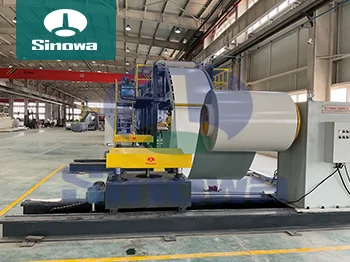
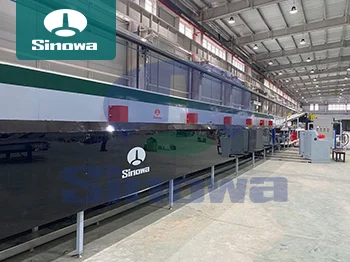
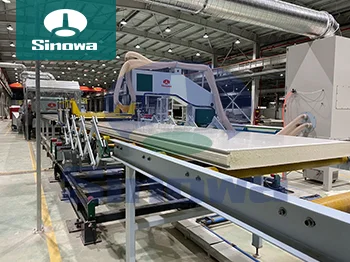
Sinowa is committed to the development and manufacturing of high-end and high-efficiency sandwich panel production machinery. Our sandwich panel production machinery are leading the way in efficiency, automatic control, human-computer interaction, environmental protection and energy consumption. Using system integration and bus control technology, it realizes the automatic integrated linkage control of the entire sandwich panel production machinery, and can achieve remote interactive communication, which has the world-class level and a comprehensive leading high-performance sandwich panel production machinery in the market.
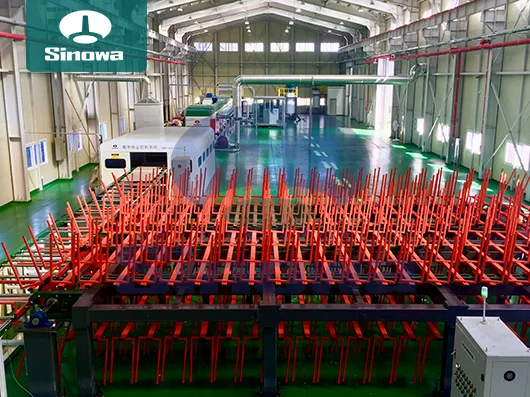
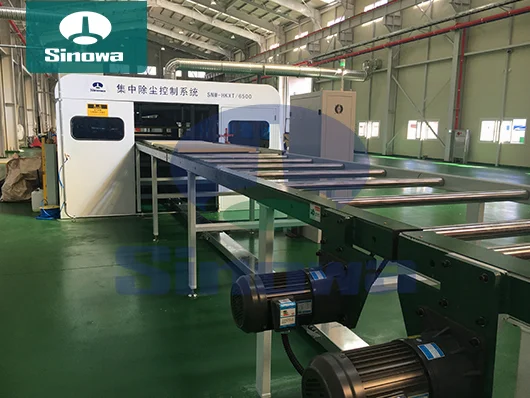
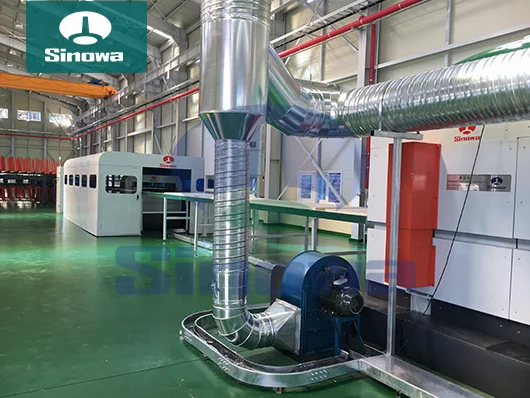
For more than ten years, relying on our innovative manufacturing concept and excellence in quality, reliable and trustworthy service to customers, we cooperate with customers all over the world, exported products to Canada, South Korea, Israel, Australia, the Middle East and other more than 20 countries and regions. contributed to building energy conservation and low-carbon production and have won widespread praise.
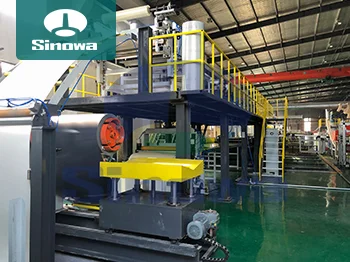
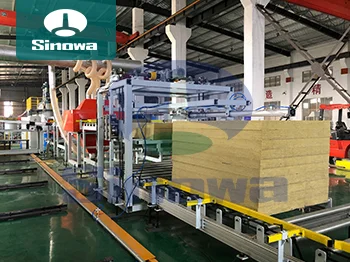
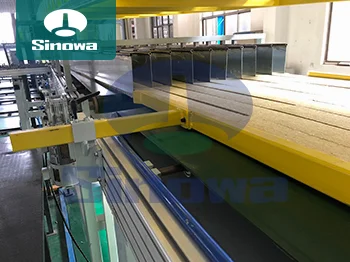
Sinowa has invested outstanding efforts in sandwich panel production machinery, this is why our products are more efficiency, quality, automatic control technology, environmental protection, energy consumption indicators and the appearance and safety protection are comprehensively leading, some subversive design changes in many major technical points, these major innovations make our products excellent in price/performance and user experience.
Sandwich panel production machinery serves as the core integrated manufacturing system for producing multi-layer composite building panels, and its market value and pricing logic are closely tied to equipment configuration, automation level, functional diversity, and production performance. This type of machinery integrates raw material feeding, surface treatment, core material laying, composite bonding, constant-pressure molding, precision cutting, and finished product stacking into a continuous production workflow, supporting the manufacturing of insulated, lightweight, and high-strength sandwich panels widely used in modern construction, cold chain storage, and modular building projects. Unlike single-function processing equipment, complete sandwich panel production lines feature systematic integration and customized scalability, which creates a flexible pricing range in the market. Multiple latent factors influence the overall market positioning of the machinery, including technical sophistication, operational stability, production capacity, intelligent control functions, and after-sales service support. Understanding these key influencing factors is essential for industry buyers to evaluate equipment value reasonably and select cost-effective production machinery that matches their production scale and product positioning.
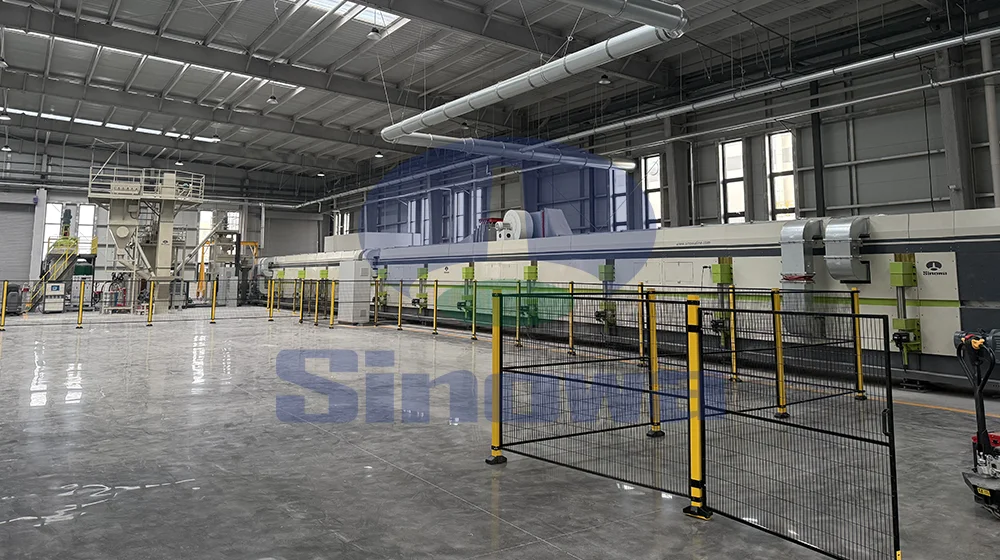
The automation degree of sandwich panel production machinery acts as the primary factor shaping its market value and pricing gradient, forming distinct equipment tiers in the industry. Entry-level semi-automatic machinery retains partial manual operation links in material feeding, parameter adjustment, and finished product collection, with relatively simple mechanical structures and basic control systems. This type of equipment is designed for small-scale production demands and flexible small-batch manufacturing scenarios, featuring low operational difficulty and maintenance costs, which corresponds to a relatively economical market positioning. Mid-range fully automatic production lines realize full-process mechanical linkage from raw material unwinding to finished product output, equipped with unified centralized control systems to standardize production parameters and reduce manual intervention errors. These machines deliver stable production efficiency and consistent product quality, meeting the mass production needs of most medium-sized building material manufacturers. High-end intelligent machinery further upgrades automated functions with real-time data monitoring, automatic parameter correction, intelligent fault diagnosis, and remote operation management capabilities. The advanced intelligent configuration optimizes production accuracy and operational efficiency significantly, while the embedded precision control components and intelligent systems raise equipment manufacturing costs, resulting in a higher market value positioning compared with conventional automated models.
Functional compatibility and production adaptability of sandwich panel production machinery play a decisive role in differentiating its market value and price level. Standard single-function production lines are specialized for manufacturing a single type of sandwich panel with fixed core materials and surface plate specifications. These devices adopt targeted mechanical structures and processing procedures, with simplified functional modules and lower manufacturing complexity, thus carrying a relatively moderate market value and suiting manufacturers with single-product production layouts. In contrast, multi-functional integrated production lines support the switching and production of multiple types of sandwich panels, compatible with diverse core materials and different thickness and size specifications of surface panels. The equipment is equipped with adjustable forming structures, flexible material laying systems, and switchable gluing and molding modules, enabling rapid production mode conversion to meet diversified market order demands. The diversified functional design requires more complex mechanical design, multi-mode control programs, and adaptive structural components, which increases research and development and manufacturing investment. Additionally, customized machinery tailored for special production needs, such as ultra-thick panel processing, high-precision surface forming, and special structural composite panels, involves personalized structural transformation and technical optimization, further improving equipment uniqueness and market value, forming a high-value segment in the machinery market.
Production capacity and operational efficiency of sandwich panel production machinery are core performance indicators that directly affect its market value and pricing standards. Low-capacity production equipment is designed for small-batch and customized production, with a relatively slow continuous operation speed and limited daily output. This type of machinery features compact structural design and low energy consumption, with low configuration costs, so it occupies the economical market segment and is favored by small factories and emerging production enterprises with limited order volume. Medium-capacity production lines balance operation speed, energy consumption, and product stability, achieving stable continuous production while maintaining qualified product yield. With balanced comprehensive performance and wide applicability, this equipment has high market circulation and cost performance, becoming the mainstream choice in the industry with a moderate and stable market positioning. High-capacity industrial-grade production machinery is optimized for large-scale batch production, adopting high-speed transmission structures, efficient composite molding systems, and continuous circulating operation modes to greatly improve unit-time output. The high-efficiency operation design requires high-strength mechanical components, high-power supporting systems, and optimized structural layout to ensure long-term stable high-load operation. The superior production efficiency and large-scale production capacity bring higher practical value for large manufacturers, so such high-performance machinery has a correspondingly higher market value and belongs to the high-end mainstream equipment in the market.
Mechanical material selection and manufacturing craftsmanship of sandwich panel production machinery are fundamental factors determining equipment durability and market value, creating obvious price differences in the industry. Low-cost entry-level equipment mostly adopts conventional common materials and simplified welding and assembly craftsmanship, with ordinary surface treatment and basic component matching. Although this reduces manufacturing costs, the equipment has relatively poor wear resistance, pressure resistance, and corrosion resistance, leading to limited service life and frequent daily maintenance needs. Such equipment is positioned at the low end of the market and is suitable for short-term small-scale production. Mid-grade production machinery uses high-quality structural steel and standardized industrial components, with fine welding processing, precise assembly calibration, and professional anti-rust and wear-resistant surface treatment. The rigorous manufacturing craftsmanship ensures equipment structural stability, reduces operational failure rates, and extends overall service life, bringing stable long-term operational value for users, so its market value is moderately improved. High-end premium machinery adopts high-strength alloy materials, precision custom components, and integrated integral molding craftsmanship, with strict quality inspection procedures in every production link. The excellent material quality and sophisticated manufacturing technology endow the equipment with ultra-high stability, wear resistance, and fatigue resistance, supporting long-term uninterrupted high-load operation. The superior durability and reliability greatly reduce later maintenance and replacement costs, making such machinery have high comprehensive value and corresponding high market positioning.
Intelligent control system configuration and technical iteration level of sandwich panel production machinery are key soft power factors affecting equipment market value and price differentiation. Traditional mechanical equipment adopts simple manual button control or semi-automatic circuit control systems, with fixed production parameters and single operation modes. It relies heavily on manual experience for parameter adjustment and fault judgment, featuring low production precision and poor flexibility, and the backward control system leads to low equipment market value. Modern mainstream production lines are equipped with mature digital control systems, supporting centralized parameter setting, automatic operation control, and real-time production data statistics. The standardized digital control improves production accuracy and operation convenience, realizing standardized and consistent product production, and the optimized control system upgrades the overall equipment value significantly. The latest iterative intelligent machinery is embedded with industrial-grade intelligent control modules, supporting automatic parameter optimization according to material characteristics, real-time operation data monitoring, abnormal state early warning, and intelligent fault self-inspection. Some advanced systems also support data interconnection and production process visualization management, helping enterprises realize refined production management. The continuous technical iteration and intelligent function upgrading increase equipment technical added value, making the latest generation of intelligent machinery maintain a high market value level and become the preferred choice for enterprises pursuing intelligent and efficient production.
After-sales service system and equipment accessory supporting capacity indirectly shape the comprehensive market value of sandwich panel production machinery and affect its actual transaction value. Basic equipment configurations only provide simple delivery and installation guidance services, without long-term technical support, maintenance guarantee, or accessory supply services. Users need to solve equipment failures, purchase replacement accessories, and complete technical debugging independently in the later stage, with high post-operation costs and operational risks. Such machinery has low comprehensive service value, so its single transaction value is relatively low. Standard complete machine configurations include systematic after-sales support, covering professional on-site installation and commissioning, operator technical training, regular equipment maintenance guidance, and long-term preferential supply of conventional accessories. The complete service system reduces user operation thresholds and later maintenance costs, improves equipment operational stability in the long run, and enhances the comprehensive cost performance of the equipment, supporting a stable medium market value. High-end premium equipment is matched with all-round customized after-sales services, including remote real-time technical support, regular equipment performance inspection and debugging, personalized technical scheme optimization, and rapid emergency fault maintenance services. The high-value-added after-sales support solves various operational difficulties for users throughout the equipment service cycle, greatly improving equipment utilization efficiency and long-term use value, thus enabling such machinery to maintain a high comprehensive market value in transactions.
Market supply and demand relationship and industry development trends drive the dynamic fluctuation of sandwich panel production machinery’s market value and form real-time transaction price changes. In periods of booming downstream building material industry development and strong market demand for sandwich panels, manufacturers expand production capacity in large numbers, and the market demand for supporting production machinery rises sharply. The tight supply-demand relationship will drive up the overall market value of conventional and high-performance equipment, with increased transaction premium space. Meanwhile, the popularization of new building energy-saving and lightweight composite panel technologies will increase market demand for upgraded machinery with adaptive production functions, further boosting the market value of new iterative equipment. In periods of sluggish downstream industry development and saturated market production capacity, the overall market demand for machinery declines, and market competition intensifies. Equipment suppliers will adjust market strategies to release preferential policies, leading to a drop in the overall transaction value of conventional equipment. In addition, the continuous progress of industrial manufacturing technology promotes the iterative upgrading of machinery products, and old-generation equipment with backward functions and low automation will gradually depreciate in market value, while new-generation equipment with efficient, intelligent, and multi-functional advantages will occupy the mainstream high-value market. This dynamic market rule enables buyers to capture high-cost-performance equipment purchase opportunities by grasping industry trends and supply-demand cycles.
« Sandwich Panel Production Machinery Price » Update Date: 2026/9/21
Tags: Sandwich Panel Production Machinery , sandwich panel production machinery, sandwich panel production machinery manufacturer, sandwich panel production machinery supplier, sandwich panel production machinery for sale, customized sandwich panel production machinery, china sandwich panel production machinery
- Polyurethane Insulation Panel Production Line For Construction
- Cheap Sandwich Panel Foam Making Machine
- Low Price Fully Automatic PU Sandwich Panel Production Line
- PIR Sandwich Panel Line Supplier
- High-tech Foam Core Sandwich Panel Line
- Custom Continuous PUF Panel Production Line
- Polyurethane Sandwich Panel Manufacturing Line For Construction
- High-end Continuous PU Sandwich Panel Line
- High-quality Sandwich Panel Foam Production Line
- High-end PU Sandwich Panel Making Machine
- Fully Automatic Sandwich Panel Making Machine Supplier
- High-end Polyurethane Sandwich Panel Manufacturing Line
- Color Steel Sandwich Panel Production Line In China
- PU Sandwich Panel Machine On Sales
- Sandwich Panel Making Equipment Price
- Continuous PUF Panel Production Line Design
- Insulated Sandwhich Panel Production Line Manufacturer
- Continuous Sandwich Panel Line For Clean Room
- Soundproofing Sandwich Panel Production Line On Sales
- High Efficiency Sandwich Panel Integrated Production Line
- Links:
- Sandwich Panel Continuous Production Line
- Automatic and Continuous Sandwich Panel Production Line
- Cheap and Low Price Sandwich Panel Production Line
- China Sandwich Panel Production Line Factory
- Color Steel Sandwich Panel Production Line For Cold Storage
- Continuous Composite Foam Sandwich Panel Production Line
- Continuous Production Line For Rockwool and Mineral Wool Sandwich Panels
- Continuous PU Phenolic Insulation Panel Production Line
- Continuous PU PIR Sandwich Panel Production Line
- Continuous PUF PUR Sandwich Panel Production Line
- Continuous Sandwich Panel Production Line For Roof and Wall
- Customized and Design Sandwich Panel Production Line
- Decorative Sandwich Panel Production Line For Glass Wool Boards
- High Quality Sandwich Panel Production Line For Sale
- Polyurethane(PU) Sandwich Panel Production Line
- Sandwich Panel Production Line Manufacturer and Supplier
- Sandwich Panel Production Machinery and Equipment