
PU Sandwich Panel Line From China
Sinowa is a well-known manufacturer and technical service provider of high-end pu sandwich panel line, learn more about pu sandwich panel line from china, please contact Sinowa's technical engineer, tell us what you need, we will contact you as soon as possible!
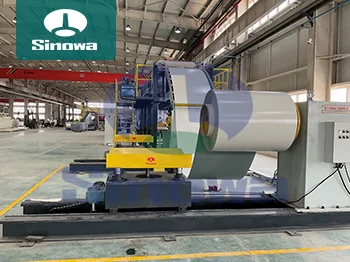
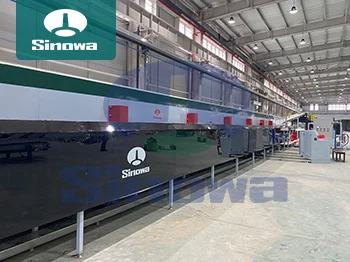
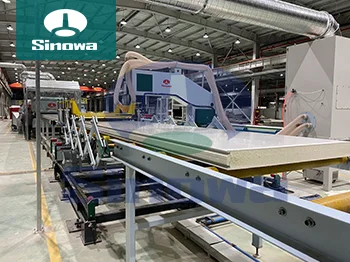
Sinowa is committed to the development and manufacturing of high-end and high-efficiency pu sandwich panel line. Our pu sandwich panel line are leading the way in efficiency, automatic control, human-computer interaction, environmental protection and energy consumption. Using system integration and bus control technology, it realizes the automatic integrated linkage control of the entire pu sandwich panel line, and can achieve remote interactive communication, which has the world-class level and a comprehensive leading high-performance pu sandwich panel line in the market.
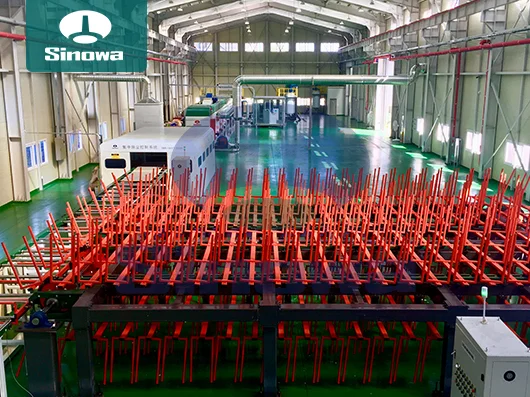
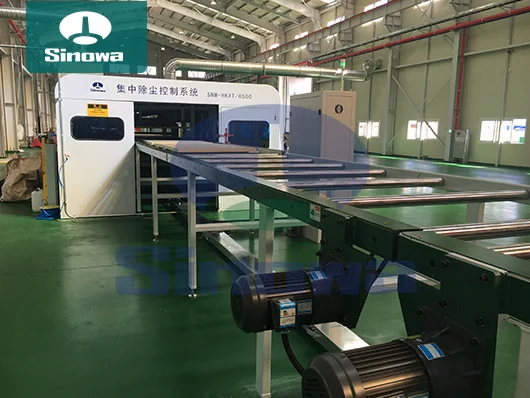
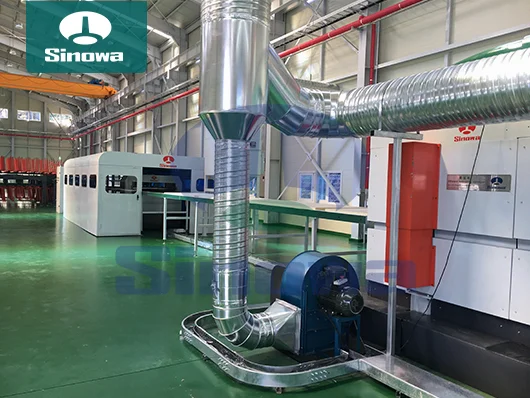
For more than ten years, relying on our innovative manufacturing concept and excellence in quality, reliable and trustworthy service to customers, we cooperate with customers all over the world, exported products to Canada, South Korea, Israel, Australia, the Middle East and other more than 20 countries and regions. contributed to building energy conservation and low-carbon production and have won widespread praise.
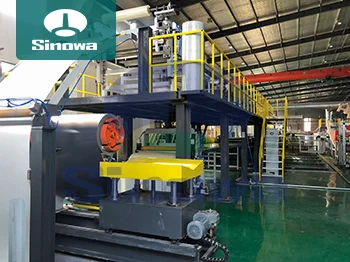
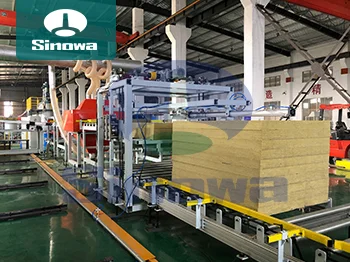
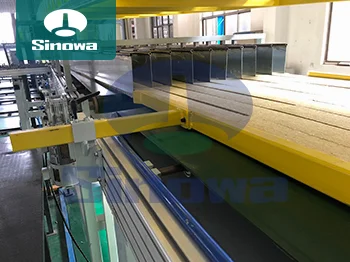
Sinowa has invested outstanding efforts in pu sandwich panel line, this is why our products are more efficiency, quality, automatic control technology, environmental protection, energy consumption indicators and the appearance and safety protection are comprehensively leading, some subversive design changes in many major technical points, these major innovations make our products excellent in price/performance and user experience.
In the global construction and manufacturing landscape, the demand for efficient, energy-saving and versatile building materials has been on a steady rise. Polyurethane (PU) sandwich panels, known for their exceptional thermal insulation, light weight, and high structural strength, have emerged as a preferred choice in various applications ranging from industrial warehouses and cold storage facilities to commercial buildings and modular housing. At the core of the mass production of these high-performance panels lies the PU sandwich panel production line, and China has established itself as a key player in the development and supply of such advanced production equipment.
Overview of PU Sandwich Panel Lines: Core Functions and Technological Evolution
A PU sandwich panel production line is a sophisticated integrated system designed to manufacture composite panels with PU foam as the core material and metal sheets (such as color-coated steel, stainless steel, or aluminum foil) as the facing layers. The production process typically involves a series of coordinated steps, including uncoiling of facing materials, preheating, foam mixing and pouring, composite forming, continuous curing, precision cutting, and automatic stacking. Each stage requires precise control to ensure the quality, consistency, and performance of the final product.
The development of PU sandwich panel lines in China has undergone a remarkable evolution over the past few decades. Initially, the industry relied heavily on imported technology, but through continuous research, development, and localization, Chinese manufacturers have gradually mastered core technologies and achieved significant breakthroughs in automation, energy efficiency, and product adaptability. Today, Chinese production lines are no longer mere imitations of foreign models but have evolved into highly customized, intelligent systems that meet the diverse needs of global customers. This technological evolution has been driven by the growing domestic demand for high-quality building materials, government support for the construction industry's upgrading, and the relentless pursuit of innovation by domestic equipment manufacturers.
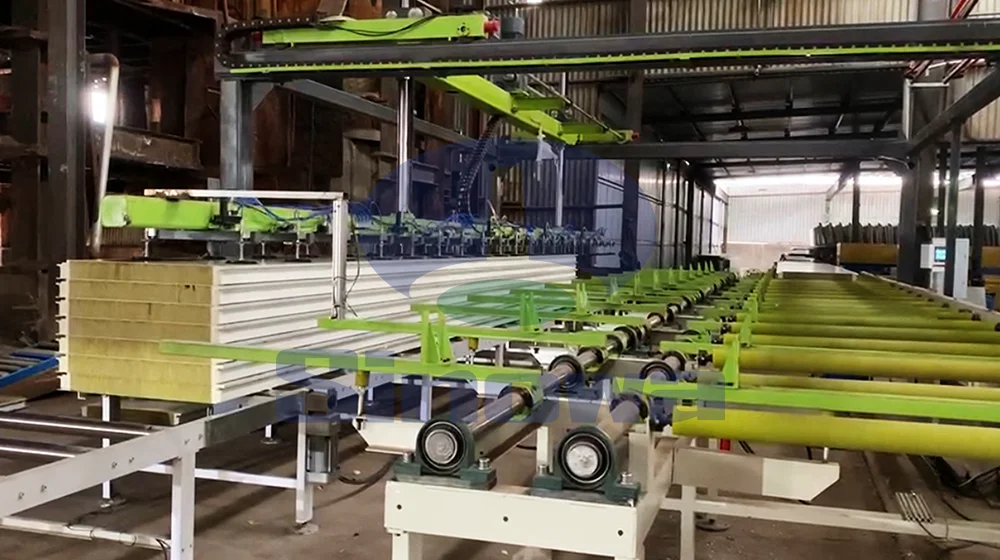
Technological Characteristics of Chinese PU Sandwich Panel Lines
Chinese PU sandwich panel lines stand out in the global market due to their advanced technological features, which combine high automation, precise control, and modular design. These characteristics not only enhance production efficiency but also ensure the stability and reliability of the products.
High Level of Automation and Intelligent Control
One of the most prominent features of modern PU sandwich panel lines from China is their high degree of automation. Advanced lines integrate a centralized control system that unifies all production processes, from material feeding to final stacking, into a single control center. This centralized control enables parameter linkage between different production stages, ensuring that each step is coordinated seamlessly. For example, the foam mixing and pouring system can automatically adjust the ratio of raw materials based on the desired density and thermal performance of the PU core, while the curing system can regulate temperature and pressure in real time to ensure optimal foam expansion and bonding with the facing layers.
Intelligent functions such as fault self-diagnosis and remote monitoring further enhance the usability and reliability of these production lines. The fault self-diagnosis system can quickly detect abnormalities in equipment operation, such as blockages in the foam pipeline or deviations in the facing material tension, and send alerts to operators, minimizing downtime. Remote monitoring allows operators to oversee production processes and adjust parameters from a distance, facilitating efficient management of multiple production lines or overseas facilities. This high level of automation not only reduces the need for manual intervention, lowering labor costs and human errors, but also significantly improves production efficiency and product consistency.
Modular Design for Enhanced Versatility
Modular design is another key technological characteristic of Chinese PU sandwich panel lines. Unlike traditional integrated production lines that are fixed for specific product types, modular lines consist of independent functional units that can be freely combined and reconfigured according to customer needs. This modular approach enables the production of a wide range of PU sandwich panels, including roof panels, wall panels, cold storage panels, and modular housing panels, by simply switching or adjusting certain modules.
Moreover, the modular design allows for easy adaptation to different core materials beyond PU, such as rock wool, glass wool, or PIR (polyisocyanurate), expanding the range of products that can be manufactured. For example, a single production line can be configured to produce PU sandwich panels for general industrial use and then quickly adjusted to produce rock wool-reinforced panels for fire-resistant applications. This versatility is particularly valuable for customers who need to meet diverse market demands or expand their product portfolios without investing in multiple independent production lines. Additionally, modular components are designed for high interchangeability, which simplifies maintenance and reduces the cost and time required for repairs and replacements.
Precision Control and High Product Quality
Precision control is a critical aspect of PU sandwich panel production, as even minor deviations in material ratio, temperature, or forming pressure can significantly affect the performance of the final product. Chinese production lines incorporate advanced technologies to ensure precise control over every stage of the production process. For instance, the foam mixing system uses high-pressure injection technology to ensure uniform mixing of isocyanate and polyol, resulting in a PU core with consistent density and closed-cell rate (typically above 90%), which is essential for excellent thermal insulation performance.
The forming and curing stages are equipped with precision guiding and pressure control systems to ensure that the facing layers and PU core are bonded firmly and evenly. The thickness of the panels can be adjusted freely within a wide range (from a few centimeters to over 20 centimeters) using servo-driven lifting mechanisms, which offer higher precision than traditional hydraulic systems and eliminate issues such as oil leakage and difficult maintenance. The cutting system uses high-precision saws (both circular and band saws) to ensure clean, straight cuts with minimal material waste, even for large panel sizes. These precision control measures result in PU sandwich panels with consistent dimensions, excellent bonding strength, and stable thermal insulation performance, meeting the strict requirements of various international construction standards.
Energy Efficiency and Environmental Friendliness
With the global focus on sustainability and energy conservation, Chinese PU sandwich panel lines have been designed with energy efficiency and environmental friendliness in mind. Advanced lines adopt a fully enclosed internal insulation design to minimize heat loss during the curing process, reducing energy consumption. The heating system is optimized to reach the required process temperature in less than an hour when the ambient temperature is above 5℃, significantly reducing energy waste compared to traditional systems.
Furthermore, many Chinese production lines use low-energy-consumption motors and drives, which reduce overall power consumption by up to 60% compared to similar products. In terms of environmental protection, the foam mixing system can be configured to use pentane as a blowing agent, which is environmentally friendly and has a low global warming potential, replacing traditional blowing agents that are harmful to the ozone layer. Additionally, the production lines are equipped with dust removal and waste gas treatment systems to ensure compliance with international environmental standards, minimizing the impact on the environment.
Core Advantages of Chinese PU Sandwich Panel Lines
Beyond their advanced technological characteristics, Chinese PU sandwich panel lines offer several core advantages that make them highly competitive in the global market, including cost-effectiveness, quick delivery, and excellent after-sales support.
Cost-Effectiveness
China's mature manufacturing ecosystem, including a complete supply chain of components and materials, enables the production of high-quality PU sandwich panel lines at a competitive cost. Compared to similar production lines from Europe or North America, Chinese lines offer a higher cost-performance ratio, making them accessible to a wider range of customers, including small and medium-sized enterprises (SMEs) in emerging markets. The cost advantage is not achieved at the expense of quality; instead, it is the result of efficient production processes, economies of scale, and the localization of core components.
Additionally, the energy efficiency and low maintenance costs of Chinese production lines further reduce the total cost of ownership for customers. Lower energy consumption translates to reduced operational costs over the lifespan of the equipment, while the modular design and high interchangeability of components minimize maintenance costs and downtime.
Quick Delivery and Customization Capabilities
The modular design of Chinese PU sandwich panel lines not only enhances versatility but also enables quick production and delivery. Since the components are standardized and prefabricated, the assembly and commissioning of the production line can be completed in a short time, allowing customers to start production quickly. This is particularly important for customers who need to meet tight project deadlines or respond to sudden increases in market demand.
Furthermore, Chinese manufacturers have strong customization capabilities to meet the specific needs of individual customers. Whether it is adapting to different panel sizes, core materials, or production capacities, manufacturers can tailor the production line to the customer's requirements. For example, a customer in a remote area with limited electricity supply can request a production line with lower power consumption, while a customer producing panels for high-end cold storage facilities can request additional precision control features for the foam core. This ability to provide customized solutions gives Chinese production lines a significant edge in the global market.
Comprehensive After-Sales Support
Chinese manufacturers of PU sandwich panel lines understand the importance of after-sales support for customers, especially those in overseas markets. They provide comprehensive after-sales services, including on-site installation and commissioning, operator training, maintenance guidance, and the supply of spare parts. Many manufacturers have established global after-sales service networks or partnered with local service providers to ensure that customers can receive timely support whenever needed.
Operator training is a key part of the after-sales service, as it ensures that customers can fully utilize the capabilities of the production line and maintain it properly. Training programs cover all aspects of the production process, from equipment operation and parameter adjustment to fault diagnosis and basic maintenance. This comprehensive support helps customers maximize the efficiency and lifespan of their production lines, enhancing customer satisfaction and loyalty.
Applications of PU Sandwich Panels and the Role of Chinese Production Lines
PU sandwich panels produced by Chinese lines find applications in a wide range of industries, driven by their exceptional performance characteristics. The versatility of the production lines enables the manufacturing of panels tailored to the specific needs of each application, further expanding their market reach.
Industrial and Commercial Buildings
Industrial warehouses and factories are one of the largest applications for PU sandwich panels. The panels' light weight reduces the load on the building structure, while their excellent thermal insulation performance helps maintain a stable indoor temperature, reducing energy consumption for heating and cooling. PU sandwich panels are also resistant to corrosion and easy to install, making them ideal for large-span industrial buildings. Chinese production lines can manufacture large-sized roof and wall panels efficiently, meeting the needs of large-scale industrial projects.
In commercial buildings such as shopping malls, exhibition centers, and stadiums, PU sandwich panels are used for their aesthetic appeal, light weight, and sound insulation performance. The production lines can be configured to produce panels with different surface finishes and colors, matching the design requirements of various commercial projects.
Cold Storage and Cold Chain Logistics
Cold storage facilities and cold chain logistics require materials with excellent thermal insulation performance to maintain low temperatures efficiently. PU sandwich panels have a low thermal conductivity (typically between 0.022 and 0.024 W/(m·K)) and high closed-cell rate, making them the ideal choice for cold storage walls, roofs, and doors. Chinese production lines can produce cold storage panels with thickened PU cores (up to 20 centimeters or more) and enhanced sealing performance to meet the strict temperature requirements of cold storage facilities (from -35℃ to +80℃).
With the growth of the global cold chain logistics industry, especially in emerging markets such as Southeast Asia and Africa, the demand for cold storage panels has surged. Chinese PU sandwich panel lines have been instrumental in meeting this demand, providing cost-effective and high-quality production solutions to cold storage manufacturers worldwide.
Modular and Prefabricated Housing
Modular and prefabricated housing has gained popularity in recent years due to its quick construction, low environmental impact, and flexibility. PU sandwich panels are a key material in modular housing, as they are light weight, easy to assemble, and offer excellent thermal insulation and soundproofing. Chinese production lines can produce customized panels for modular housing, including wall panels, floor panels, and roof panels, which can be assembled on-site quickly to form complete housing units.
These modular housing units are widely used as temporary offices, construction site dormitories, disaster relief housing, and even permanent residential buildings. The versatility of Chinese production lines allows manufacturers to adapt to different housing designs and specifications, meeting the diverse needs of the global modular housing market.
Special Applications: Clean Rooms and Corrosive Environments
In industries such as electronics, pharmaceuticals, and food processing, clean rooms require materials that are easy to clean, sterile, and resistant to bacteria. PU sandwich panels with stainless steel or aluminum foil facing layers and antibacterial coatings are ideal for such applications. Chinese production lines can produce panels with smooth, non-porous surfaces that meet the high cleanliness requirements of these industries.
For corrosive environments such as coastal areas or chemical plants, PU sandwich panels with anti-corrosive coatings (such as fluorocarbon coatings) can be produced to ensure long-term durability. The production lines can adjust the type and thickness of the facing layers and coatings to meet the specific corrosion resistance requirements of different environments.
Global Market Impact and Future Trends
Chinese PU sandwich panel lines have made a significant impact on the global market, driving the growth of the PU sandwich panel industry and reshaping the competitive landscape. According to market research, China is one of the largest producers and exporters of PU sandwich panel production lines, with its products exported to more than 100 countries and regions, including Southeast Asia, Africa, the Middle East, Europe, and North America.
In emerging markets, Chinese production lines have played a crucial role in enabling local manufacturers to produce high-quality PU sandwich panels at an affordable cost, supporting the development of the construction and cold chain industries. In developed markets, Chinese lines have gained recognition for their advanced technology, versatility, and cost-effectiveness, competing with established European and North American manufacturers. The global market share of Chinese PU sandwich panel lines is expected to continue growing in the coming years, driven by increasing demand for energy-saving building materials and the expansion of the modular housing and cold chain industries.
Looking ahead, several trends are expected to shape the development of Chinese PU sandwich panel lines. First, intelligence and digitalization will continue to advance, with the integration of artificial intelligence (AI), Internet of Things (IoT), and big data analytics into production lines. This will enable real-time data collection and analysis, predictive maintenance, and further optimization of production processes. Second, there will be a greater focus on sustainability, with the development of production lines that use renewable energy sources and produce zero or low emissions. Third, the trend towards customization will continue, with manufacturers offering more tailored solutions to meet the specific needs of niche markets and applications.
Another important trend is the integration of the entire supply chain. Chinese manufacturers are increasingly moving towards providing turnkey solutions, including not only the production line but also raw material supply, technical support, and after-sales service. This one-stop service model simplifies the procurement process for customers and enhances the competitiveness of Chinese production lines in the global market.
Conclusion
PU sandwich panel lines from China have evolved from technology followers to global innovators, offering advanced, versatile, and cost-effective solutions for the mass production of high-performance PU sandwich panels. Their technological characteristics, including high automation, modular design, precision control, and energy efficiency, make them highly competitive in the global market. The core advantages of cost-effectiveness, quick delivery, and comprehensive after-sales support have further strengthened their position as a preferred choice for customers worldwide.
These production lines have played a crucial role in supporting the growth of various industries, including construction, cold chain logistics, modular housing, and high-tech manufacturing, by providing high-quality PU sandwich panels that meet diverse application requirements. As the global focus on sustainability and energy conservation intensifies, Chinese PU sandwich panel lines are well-positioned to meet the evolving needs of the market, driven by continuous innovation and a commitment to excellence.
In the future, Chinese PU sandwich panel lines will continue to reshape the global industry, contributing to the development of more efficient, sustainable, and affordable building materials solutions. With their advanced technology, versatility, and global reach, they are set to play an even more important role in the global construction and manufacturing landscape.
« PU Sandwich Panel Line From China » Update Date: 2026/1/9
Tags: Isolation PU Sandwich Panel Line , Fully Automatic PU Sandwich Panel Line , PU Sandwich Panel Line , Continuous PU Sandwich Panel Line ,
- Sandwich Panel Machine
- Continuous PU Sandwich Panel Line From China
- PIR Insulation Panel Production Line For Sale
- Custom Sandwich Roof Wall Panel Making Machine
- Corrugated Sandwich Panel Production Line Supplier
- PUF Sandwich Panel Production Line
- PIR Wall Panel Production Line Supplier
- High Efficiency Isolation PU Sandwich Panel Line
- Insulation Sandwich Panel Machines
- Polyurethane Foam Production Line Manufacturer
- Metal Sandwich Panel Production Line Price
- Glass Wool Line From China
- Polyurethane Sandwich Panel Line For Cold Room
- Decorative Sandwich Panel Line Design
- High-tech Continuous PU Sandwich Panel Line
- Corrugated Sandwich Panel Production Line Design
- Glass Wool Sandwich Panel Production Line Design
- Custom Cold Storage Sandwich Panel Production Line
- Continuous Sandwich Panel Manufacturing Line For Building
- High-quality PU Sandwich Panel Production Line
- Links:
- Sandwich Panel Continuous Production Line
- Automatic and Continuous Sandwich Panel Production Line
- Cheap and Low Price Sandwich Panel Production Line
- China Sandwich Panel Production Line Factory
- Color Steel Sandwich Panel Production Line For Cold Storage
- Continuous Composite Foam Sandwich Panel Production Line
- Continuous Production Line For Rockwool and Mineral Wool Sandwich Panels
- Continuous PU Phenolic Insulation Panel Production Line
- Continuous PU PIR Sandwich Panel Production Line
- Continuous PUF PUR Sandwich Panel Production Line
- Continuous Sandwich Panel Production Line For Roof and Wall
- Customized and Design Sandwich Panel Production Line
- Decorative Sandwich Panel Production Line For Glass Wool Boards
- High Quality Sandwich Panel Production Line For Sale
- Polyurethane(PU) Sandwich Panel Production Line
- Sandwich Panel Production Line Manufacturer and Supplier