
Rockwool Sandwich Panel Production Line For Wall
Sinowa is a well-known manufacturer and technical service provider of high-end rockwool sandwich panel production line, learn more about rockwool sandwich panel production line for wall, please contact Sinowa's technical engineer, tell us what you need, we will contact you as soon as possible!
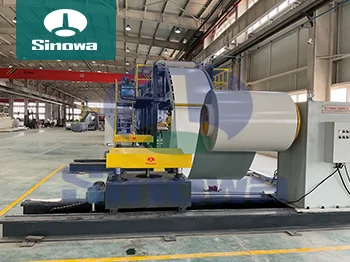
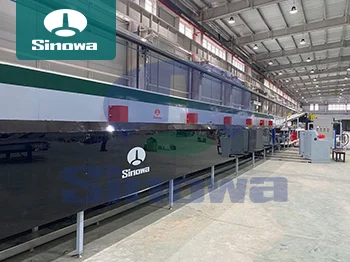
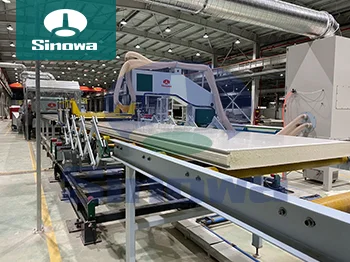
Sinowa is committed to the development and manufacturing of high-end and high-efficiency rockwool sandwich panel production line. Our rockwool sandwich panel production line are leading the way in efficiency, automatic control, human-computer interaction, environmental protection and energy consumption. Using system integration and bus control technology, it realizes the automatic integrated linkage control of the entire rockwool sandwich panel production line, and can achieve remote interactive communication, which has the world-class level and a comprehensive leading high-performance rockwool sandwich panel production line in the market.
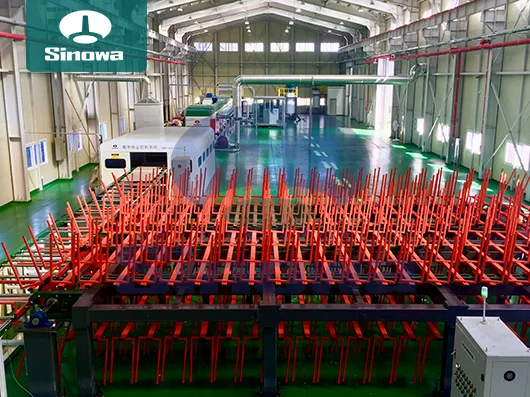
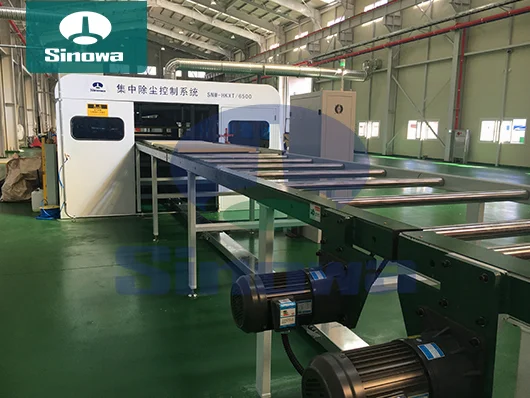
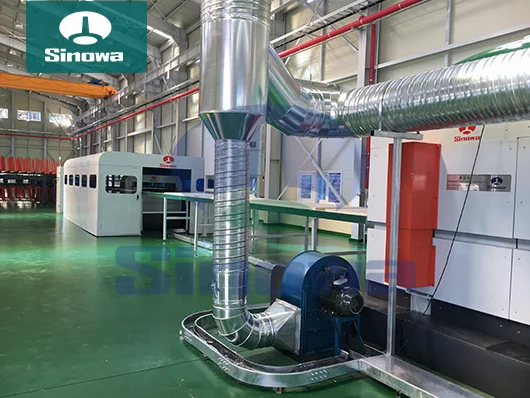
For more than ten years, relying on our innovative manufacturing concept and excellence in quality, reliable and trustworthy service to customers, we cooperate with customers all over the world, exported products to Canada, South Korea, Israel, Australia, the Middle East and other more than 20 countries and regions. contributed to building energy conservation and low-carbon production and have won widespread praise.
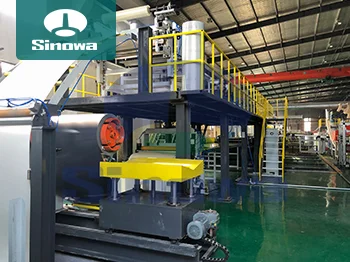
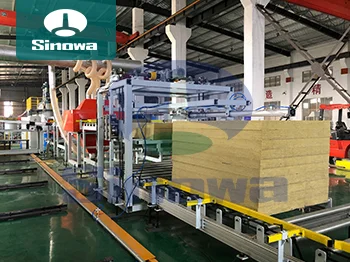
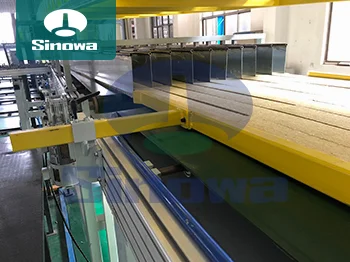
Sinowa has invested outstanding efforts in rockwool sandwich panel production line, this is why our products are more efficiency, quality, automatic control technology, environmental protection, energy consumption indicators and the appearance and safety protection are comprehensively leading, some subversive design changes in many major technical points, these major innovations make our products excellent in price/performance and user experience.
Rockwool sandwich panel production line for wall construction represents a fully integrated automated manufacturing system built to turn raw mineral and metal feedstock into finished composite wall panels in a continuous workflow. Unlike production equipment designed for foam core panels, this line is specially configured to handle the unique properties of rockwool, an inorganic fibrous core material that delivers robust thermal retention and acoustic control for building envelope walls. The whole system links multiple functional modules, each synchronized by centralized control to maintain consistent speed and material alignment throughout the run. At the very beginning of the process, metal coils for the front and rear facings are mounted on unwinding stations, which release sheet metal at steady tension to prevent creasing, stretching or surface damage. The metal sheets move forward for surface cleaning and protective film lamination, shielding the finished panel surface from scratches during fabrication, transport and installation. Meanwhile, rockwool slabs are fed into a separate handling section, where cutting and rotating mechanisms reorient the rockwool fibers to stand perpendicular to the metal facings. This fiber alignment step is critical for wall panels, as it improves compressive strength and structural stability when the panels are mounted vertically on building walls. Every motion is coordinated so that the prepared rockwool core arrives precisely between the two metal sheets at the right moment, ready for adhesive application and composite pressing. Operators can adjust the line parameters to change rockwool thickness and sheet profile, allowing the same production setup to create wall panels for different building layouts and design preferences.
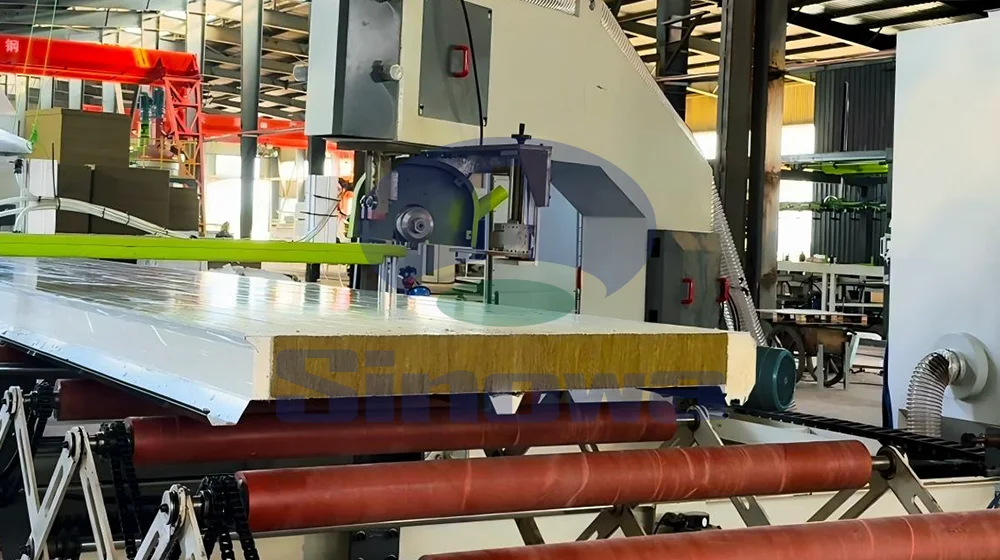
After unwinding and surface preparation, the metal facings pass through roll forming units that shape flat metal strips into the interlocking profiles required for wall panel assembly. Wall sandwich panels rely on precise edge joints to create tight connections between adjacent panels once installed, and the roll forming rollers gradually bend the metal to form matching tongue and groove profiles without cracking the coated surface. The shaping process happens in progressive stages, with each roller set making a small adjustment to the metal geometry, reducing stress on the material and ensuring uniform dimensions across every panel produced. While the metal sheets take shape, the rockwool core undergoes trimming and sorting. Large rockwool blocks are cut into continuous strips matching the panel width, and loose fiber fragments are removed to avoid gaps inside the composite structure. The rockwool feeding conveyor maintains even distribution, preventing uneven core thickness that would compromise thermal performance or bonding quality. The adhesive dispensing system then applies bonding compound evenly onto the inner surfaces of both metal facings and the rockwool surfaces. Careful control over adhesive volume and spread pattern avoids excessive glue waste and eliminates dry spots that could lead to delamination after installation. Preheating stations gently warm the metal sheets before compounding, improving the wetting action of the adhesive and strengthening the bond between inorganic fiber and metal. All these parallel processes run in lockstep, so metal profiling, rockwool cutting and glue application finish simultaneously as materials move toward the double belt pressing zone.
The double belt pressing and curing section stands as the heart of the rockwool sandwich panel production line for walls, where separate raw materials merge into a solid composite panel. Once the rockwool core is positioned between the glued top and bottom metal facings, the layered assembly enters the heavy-duty double belt press. The press applies steady, uniform pressure across the entire panel width and length, squeezing out trapped air and forcing full contact between the rockwool and metal skins. Pressure levels are calibrated carefully; too much compression will crush the rockwool fibers and reduce insulation performance, while insufficient pressure leaves voids that weaken adhesion. Controlled heat is maintained inside the press chamber to support adhesive curing, enabling the bonding agent to develop full mechanical strength while the composite moves continuously through the machine. Unlike batch press systems that require stopping production for each panel, this continuous setup keeps material flowing without frequent interruptions, lifting overall output efficiency. During the curing phase, the rockwool fibers remain locked in their vertical orientation, preserving the mechanical properties needed for vertical wall applications. Sensors monitor material thickness and pressure distribution in real time, automatically fine-tuning belt speed and pressure settings to correct minor deviations. Once the composite exits the pressing zone, the layers are permanently bonded together, forming a single rigid panel blank that still requires cutting and finishing to become usable wall components.
Following the continuous curing stage, the unbroken panel blank travels to the online cutting station, where the continuous strip is separated into individual wall panels of custom lengths. This cutting unit operates on a tracking system that moves together with the running panel, so cutting can take place without halting the main production flow. The cutting tool trims both the metal facings and rockwool core in one pass, delivering clean, straight edges that simplify later wall assembly. Edge trimming also removes uneven margins from both sides of the panel, ensuring consistent width for seamless fitting when panels connect on building walls. After cutting, each panel passes through inspection points integrated into the production line. Visual and dimensional checks verify surface condition, edge profile accuracy and overall flatness, flagging any units with bonding defects or dimensional errors before they proceed to stacking. Panels that pass inspection move along roller conveyors toward the cooling zone. Cooling is essential at this stage because residual heat from curing can affect panel stability during stacking. The cooling section gradually lowers panel temperature to ambient levels, preventing thermal deformation and protecting the protective film on metal surfaces. This stepwise handling ensures each finished wall panel maintains stable shape and performance characteristics after it leaves the production line.
Material handling and automatic stacking systems form the next functional segment of the rockwool sandwich panel line for wall products, streamlining post-cutting operations and minimizing manual contact with finished panels. Once cooled and inspected, individual wall panels are transferred by motorized roller tables to the stacking robot area. The stacking mechanism picks panels up gently, separating each layer with protective spacers to avoid surface abrasion and edge damage. Stack height can be adjusted according to handling limits for warehouse storage and transport, and the system arranges panels neatly so that bundles maintain stable alignment during lifting. Automation at this stage reduces labor involvement, lowering the risk of human error and physical injury from moving heavy wall panels. Stacked panel bundles are then routed to the packaging station, where stretch film or protective wrapping secures the entire stack. Packaging shields panels from dust, moisture and minor impacts during transit to construction sites. Proper wrapping is especially important for wall panels, as scratches or dents on exterior faces can spoil the visual finish of building envelopes. All stacking and packaging actions run in sync with upstream cutting speed, so backlogs do not build up between production stages. Operators can adjust stacking sequence and packaging settings easily when switching to different wall panel dimensions or surface finishes.
Control and monitoring systems are embedded throughout the rockwool sandwich panel production line for walls, delivering centralized oversight of every manufacturing phase and supporting stable long-term operation. The main control interface allows production staff to input target parameters such as panel length, rockwool thickness, line speed and adhesive dosage before starting a production run. Once the line is active, dozens of sensors track tension on metal coils, material temperature inside the press, pressure applied to composite layers, panel dimensions and feed rate of rockwool strips. Any deviation from preset thresholds triggers alerts, and the system can adjust operating parameters automatically to bring production back within acceptable ranges. Data from each production batch is recorded, supporting traceability and helping technicians identify trends that affect panel quality over time. Safety interlock features stop machine movement when access doors are opened or material jams are detected, protecting both equipment and workers. The control architecture supports flexible operation; the same line can quickly switch between different wall panel profiles without extensive mechanical reconfiguration. Operators do not need advanced technical knowledge to carry out routine adjustments, though trained technicians manage troubleshooting and regular equipment maintenance. This intelligent control framework reduces waste from defective panels and helps maintain consistent product quality across large production batches of wall sandwich panels.
The design of the rockwool sandwich panel production line for wall applications also addresses operational efficiency and equipment durability for long-cycle manufacturing environments. The machine frame and moving components are built to withstand continuous heavy-duty operation, with wear-resistant parts installed at high-friction points such as roller guides, cutting blades and conveyor belts. Lubrication systems reduce mechanical wear and extend service life, while modular construction makes component replacement straightforward when maintenance becomes necessary. Layout planning for the production line considers material flow from raw material entry to finished panel exit, minimizing internal transport distances and reducing the factory floor space required for the full setup. Dust collection units handle fine rockwool particles generated during core cutting, maintaining a cleaner working environment and reducing particle buildup on mechanical parts. Energy management features optimize power consumption for heating, driving and pumping systems, cutting operational costs during continuous production runs. The modular nature of the equipment also allows future expansion; extra modules can be added later to increase output capacity or introduce additional finishing functions. All mechanical components are engineered to work in harmony, so one faulty unit does not force the entire line into shutdown immediately. This robust design makes the line suitable for sustained manufacturing of wall panels to serve ongoing building construction projects.
Rockwool wall sandwich panels produced by this specialized production line bring distinct advantages to modern building wall systems, and the capabilities of the manufacturing equipment directly shape these end-product benefits. The composite structure combines rigid metal facings with rockwool core, creating wall panels that are relatively lightweight compared with traditional masonry materials while retaining solid rigidity. Installing these panels speeds up wall construction work, as large prefabricated sections can be lifted and fitted together rapidly on site, cutting the overall construction timeline. The rockwool core delivers reliable thermal insulation to reduce energy transfer through exterior walls, helping buildings maintain stable indoor temperatures and lower energy demand for heating and cooling. The fibrous rockwool structure also absorbs sound waves, improving acoustic performance for buildings where noise control matters. The continuous production process ensures consistent panel geometry and bonding quality, so finished wall panels fit together smoothly on site and form a continuous building envelope. As building design continues to favor prefabricated wall assemblies, this rockwool sandwich panel production line remains a vital manufacturing solution. By refining material feeding, composite pressing, cutting and handling in one automated system, the line turns raw mineral and metal materials into reliable wall panels that match the practical needs of contemporary building construction projects.
« Rockwool Sandwich Panel Production Line For Wall » Update Date: 2026/10/16
Tags: Rockwool Sandwich Panel Production Line , rockwool sandwich panel production line, rockwool sandwich panel production line manufacturer, rockwool sandwich panel production line supplier, rockwool sandwich panel production line for sale, customized rockwool sandwich panel production line, china rockwool sandwich panel production line
- Rock Wool Production Line For Sale
- Rock Wool Machine Factory
- High-end Rockwool Sandwich Panel Line
- Rockwool Panel Production Line Factory
- Rock Wool Insulation Panel Production Line Manufacturer
- Mineral Wool Sandwich Panel Line For House
- High-quality Mineral Wool Sandwich Panel Production Line
- High-end Rock Wool Sandwich Panel Line
- Rock Wool Sandwich Panel Production Line For House
- Customized Mineral Wool Line
- Rockwool Sandwich Panel Production Line Price
- Rock Wool Panel Production Line From China
- Customized Mineral Wool Sandwich Panel Line
- High-quality Mineral Wool Sandwich Panel Machine
- Rockwool Production Line For Sale
- Rock Wool Sandwich Panel Production Line In China
- Rock Wool Sandwich Panel Line Manufacturer
- High Efficiency Rockwool Sandwich Panel Production Line
- Mineral Wool Production Line For Construction
- Low Price Rock Wool Panel Production Line
- Links:
- Sandwich Panel Continuous Production Line
- Automatic and Continuous Sandwich Panel Production Line
- Cheap and Low Price Sandwich Panel Production Line
- China Sandwich Panel Production Line Factory
- Color Steel Sandwich Panel Production Line For Cold Storage
- Continuous Composite Foam Sandwich Panel Production Line
- Continuous Production Line For Rockwool and Mineral Wool Sandwich Panels
- Continuous PU Phenolic Insulation Panel Production Line
- Continuous PU PIR Sandwich Panel Production Line
- Continuous PUF PUR Sandwich Panel Production Line
- Continuous Sandwich Panel Production Line For Roof and Wall
- Customized and Design Sandwich Panel Production Line
- Decorative Sandwich Panel Production Line For Glass Wool Boards
- High Quality Sandwich Panel Production Line For Sale
- Polyurethane(PU) Sandwich Panel Production Line
- Sandwich Panel Production Line Manufacturer and Supplier
- Sandwich Panel Production Machinery and Equipment