
Sandwich Panel Manufacturing Line Price
Sinowa is a well-known manufacturer and technical service provider of high-end sandwich panel manufacturing line, learn more about sandwich panel manufacturing line price, please contact Sinowa's technical engineer, tell us what you need, we will contact you as soon as possible!
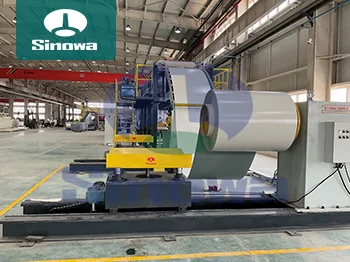
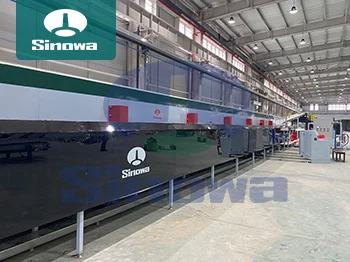
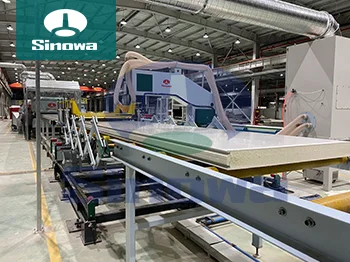
Sinowa is committed to the development and manufacturing of high-end and high-efficiency sandwich panel manufacturing line. Our sandwich panel manufacturing line are leading the way in efficiency, automatic control, human-computer interaction, environmental protection and energy consumption. Using system integration and bus control technology, it realizes the automatic integrated linkage control of the entire sandwich panel manufacturing line, and can achieve remote interactive communication, which has the world-class level and a comprehensive leading high-performance sandwich panel manufacturing line in the market.
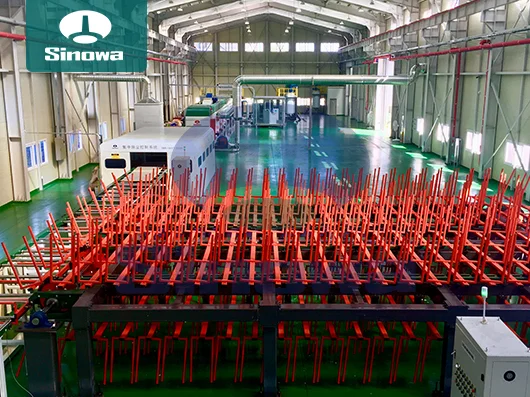
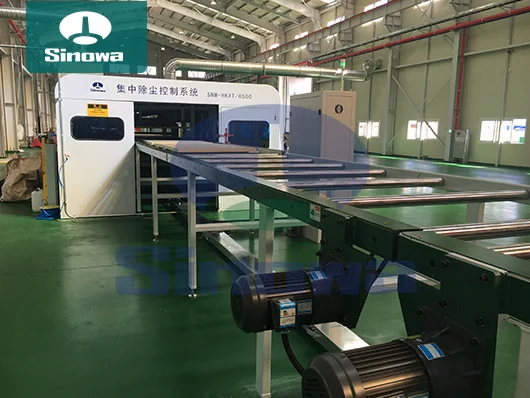
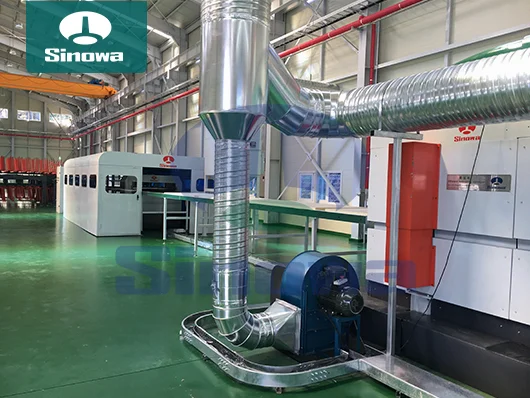
For more than ten years, relying on our innovative manufacturing concept and excellence in quality, reliable and trustworthy service to customers, we cooperate with customers all over the world, exported products to Canada, South Korea, Israel, Australia, the Middle East and other more than 20 countries and regions. contributed to building energy conservation and low-carbon production and have won widespread praise.
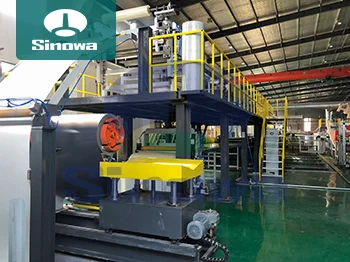
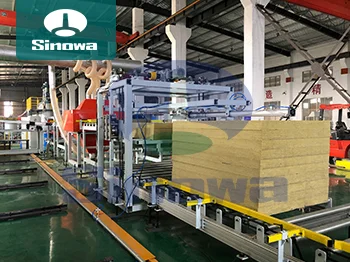
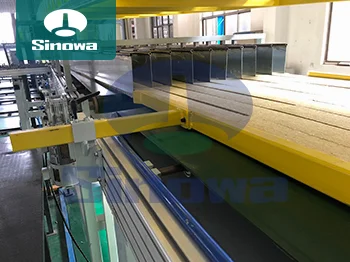
Sinowa has invested outstanding efforts in sandwich panel manufacturing line, this is why our products are more efficiency, quality, automatic control technology, environmental protection, energy consumption indicators and the appearance and safety protection are comprehensively leading, some subversive design changes in many major technical points, these major innovations make our products excellent in price/performance and user experience.
Sandwich panel manufacturing lines represent core industrial equipment for producing composite insulated panels widely applied in construction, cold chain logistics, and industrial enclosure projects. The overall investment of such production systems varies significantly based on automation level, functional configuration, production capacity, and structural compatibility with diverse raw materials. Unlike single-function industrial machines, a complete sandwich panel production line integrates multiple interconnected processing units to realize continuous or semi-continuous automated production from raw material feeding to finished product stacking. Its comprehensive value is determined by equipment structural design, intelligent control performance, processing precision, operational stability, and post-supply service support. Understanding the key factors influencing the overall deployment cost of the production line helps industrial investors conduct reasonable budget planning, match equipment configuration with actual production demands, and avoid redundant investment or insufficient functional allocation. This article elaborates on the core composition, functional advantages, configuration differences, operational cost, and value-added factors of sandwich panel manufacturing lines, providing in-depth references for equipment selection and investment assessment.
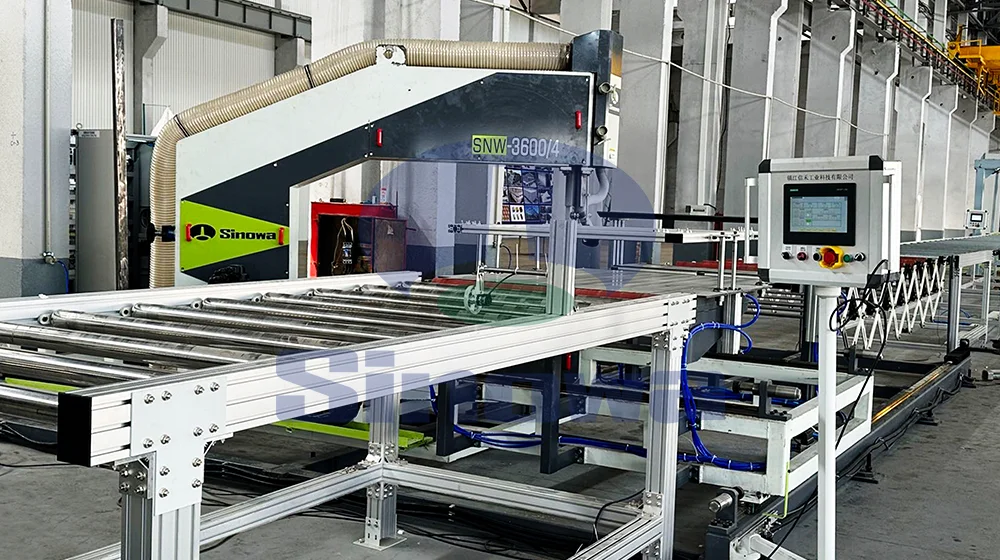
The core structural configuration of a sandwich panel manufacturing line serves as the fundamental factor that shapes its overall investment scale and operational value. A standard complete production system consists of a full set of functional modules including raw material unwinding and pretreatment units, core material feeding and metering systems, adhesive coating mechanisms, continuous composite pressing units, constant-temperature curing systems, precise cutting devices, edge trimming mechanisms, and automatic stacking equipment. Each module operates in synchronous linkage to form a seamless production workflow, eliminating intermittent shutdowns and material waste caused by disjointed processing procedures. The structural differentiation of the production line mainly lies in functional expandability and component matching accuracy. Basic conventional configurations focus on meeting the mass production of standard wall and roof sandwich panels with single core material adaptability and fixed processing specifications. In contrast, upgraded integrated configurations support switching between multiple core materials such as polyurethane, mineral wool, and polystyrene, with adjustable processing thickness, width, and molding parameters. The diversified structural design expands the application scope of finished panels and improves equipment utilization, which correspondingly affects the overall investment threshold of the production line. Meanwhile, the rigidity of the equipment frame, the durability of transmission components, and the stability of the pressing structure all determine long-term operational reliability, indirectly influencing the comprehensive cost performance of the production line throughout its service life.
Automation and intelligent control levels are pivotal variables that affect the overall deployment cost of sandwich panel manufacturing lines and determine long-term production efficiency. Traditional semi-automatic production lines adopt manual auxiliary operation in core material feeding, parameter adjustment, finished product collection, and defect inspection links, with relatively simple control systems and low equipment integration. Such configurations require more on-site operators and rely heavily on manual experience for parameter debugging and production supervision, resulting in relatively stable initial investment but higher long-term labor and error loss costs. Modern intelligent production lines are equipped with centralized programmable control systems, realizing fully automated whole-process operation from raw material feeding, parameter automatic calibration, real-time production monitoring, to finished product counting and automatic stacking. The intelligent system supports one-key parameter switching for different panel specifications, real-time data feedback of production status, and automatic early warning of equipment abnormal operation, effectively reducing manual intervention and production defect rates. The high-precision sensing elements, intelligent transmission modules, and integrated control programs adopted by advanced automated lines increase the initial equipment investment, but they greatly improve production consistency and operational efficiency, reduce labor costs and material waste in long-term mass production, and bring more stable comprehensive economic benefits for production enterprises.
Production capacity and operational efficiency of sandwich panel manufacturing lines are key indicators that balance initial investment and long-term return benefits. Different production line configurations correspond to distinct hourly output, daily operating stability, and continuous production adaptability. Low-output conventional production lines are suitable for small-scale processing demands with flexible production switching and low site and energy consumption requirements, featuring low overall investment and low operational threshold, which are more friendly for newly established processing projects. Medium and high-capacity production lines adopt optimized transmission structures and efficient curing systems, realizing high-speed continuous molding and uninterrupted batch production. These lines can stably output standardized finished panels in large quantities, effectively meeting the mass supply demands of large-scale construction and industrial engineering projects. The improvement of production capacity is accompanied by upgraded equipment power configuration, optimized structural matching, and enhanced continuous operation stability, which raises the overall investment cost of the production line. However, high-efficiency production lines can significantly shorten the production cycle of orders, improve market response speed, and reduce unit production costs through large-scale production, thus forming a positive cycle of cost reduction and efficiency improvement in long-term operation. Enterprises need to match production capacity configuration according to their own order volume and market development plans to avoid resource waste caused by excessive configuration or profit loss caused by insufficient capacity.
Raw material adaptability and product compatibility of sandwich panel manufacturing lines directly influence equipment application value and comprehensive investment cost. Finished sandwich panels rely on different core insulation materials and surface protective materials, and different material characteristics put forward distinct requirements on production line processing technology, molding pressure, curing temperature, and feeding modes. Ordinary single-adaptability production lines can only process panels with a single type of core material and fixed surface material specifications, with simple internal technology and low manufacturing cost, suitable for enterprises with single product positioning and fixed market demand. Multi-functional compatible production lines are optimized and upgraded in core material metering, foaming control, pressing molding, and temperature curing links, which can adapt to the production of various core materials and match different thickness and hardness requirements of finished panels. This multi-compatibility enables a single production line to launch diversified panel products, covering multiple application scenarios such as ordinary building enclosure, high-insulation cold storage engineering, and dust-free workshop decoration. The diversified adaptive design of the equipment increases research and development and manufacturing costs, leading to a higher overall investment. Nevertheless, it effectively avoids the repeated investment of purchasing multiple sets of single-function equipment, improves the flexibility of enterprise product layout, and enhances market competitiveness in the face of diversified market demands.
Long-term operational cost and maintenance requirements are essential factors that cannot be ignored in the overall value assessment of sandwich panel manufacturing lines. The comprehensive cost of production line application includes not only initial equipment procurement investment but also daily energy consumption, regular maintenance, vulnerable part replacement, and equipment depreciation costs. Optimized high-quality production lines adopt energy-saving transmission structures and efficient thermal circulation systems, which can effectively reduce power and heat energy consumption during continuous operation, lowering daily operational energy costs. At the same time, standardized equipment structural design and modular component layout make daily cleaning, lubrication, and regular maintenance more convenient, reducing maintenance time and labor costs. The core components of high-grade production lines are made of wear-resistant and high-strength materials, with stable operating performance and low failure rate, which greatly reduce the frequency of vulnerable part replacement and emergency maintenance costs. In contrast, low-cost basic production lines usually adopt simple structural design and ordinary materials, with higher energy consumption during operation and frequent component wear and failure problems. Although the initial investment is low, the long-term maintenance and operational comprehensive costs are higher, and equipment shutdown caused by failures will also bring indirect economic losses such as delayed order delivery. Therefore, when evaluating the overall cost performance of production lines, it is necessary to comprehensively calculate the full-cycle operational cost rather than only focusing on the initial procurement investment.
Equipment processing precision and finished product quality stability are core value factors that affect the tiered investment of sandwich panel manufacturing lines. The molding precision of the production line directly determines the dimensional accuracy, surface flatness, bonding firmness, and overall uniformity of finished sandwich panels. High-precision production lines adopt calibrated pressing systems, precise metering feeding devices, and synchronous transmission control technology, which can ensure consistent core material density, uniform adhesive coating, and stable pressing pressure in each production link. The finished panels produced have accurate dimensional specifications, firm composite bonding, and stable insulation and mechanical properties, with extremely low product defect rates. Such high-precision equipment adopts sophisticated processing technology and high-precision detection components in the manufacturing process, resulting in higher production costs and corresponding higher overall investment. Conventional ordinary production lines have relatively low control precision in feeding, pressing, and curing links, leading to slight deviations in product dimensional specifications, uneven core material distribution, and unstable bonding effects. Although the equipment investment is low, the defective rate of finished products is high, resulting in serious material waste and rework costs, and the unqualified products cannot meet high-standard engineering application demands, limiting the high-end market development of enterprises. Stable product quality brought by high-precision equipment can help enterprises accumulate good market reputation and obtain high-quality order resources, bringing long-term value returns.
After-sales service support and equipment upgrade potential are important implicit factors affecting the comprehensive investment value of sandwich panel manufacturing lines. Complete industrial equipment supply systems include standardized installation and commissioning, professional operator training, long-term technical support, and spare parts supply services. High-quality production line supporting services can help enterprises complete equipment deployment and production commissioning in a short time, quickly realize formal mass production, and solve operational technical problems in a timely manner, reducing production risks and trial operation costs. In addition, advanced sandwich panel manufacturing lines reserve technical upgrade interfaces in structural design and program control, which can adapt to subsequent production process optimization, product specification upgrading, and automated function expansion. This upgradable design avoids equipment elimination caused by market demand upgrading and technical iteration, prolongs the effective service life of the equipment, and maximizes the return on investment. In contrast, low-cost ordinary production lines often lack perfect after-sales support and technical upgrade space. The single functional design and closed program system make it impossible to adapt to subsequent product iteration and process optimization, resulting in shortened equipment service life and increased secondary investment risks. For long-term industrial layout, production lines with perfect service system and upgrade potential have higher comprehensive cost performance, which is an important reference for enterprises to make scientific investment decisions.
« Sandwich Panel Manufacturing Line Price » Update Date: 2026/8/28
Tags: Continuous Sandwich Panel Manufacturing Line , Sandwich Panel Manufacturing Line , Polyurethane Sandwich Panel Manufacturing Line ,
- Fully Automatic PU Sandwich Panel Production Line Factory
- PUF Panel Making Machine Supplier
- Sandwich Roof Panel Production Line Manufacturer
- PIR Sandwich Panel Machine On Sales
- Fully Automatic Sandwich Panel Making Machine On Sales
- High-quality PUR Sandwich Panel Production Line
- Polyurethane Sandwich Panel Machinery Design
- PIR Sandwich Panel Production Line For Building
- Continuous Sandwich Panel Production Line Factory
- Custom Sandwich Panel Making Equipment
- High-tech PIR Sandwich Panel Machine
- High Efficiency Foam Sandwich Panel Production Line
- Continuous Sandwich Panel Manufacturing Line Factory
- Highly Intelligent PU Foam Production Line
- High Efficiency Polyurethane Sandwich Panel Machine
- High-tech Sandwich Panel Integrated Production Line
- Fully Automatic Rock Wool Sandwich Panel Production Line Factory
- Polyurethane Insulation Panel Production Line For Sale
- Composite Sandwich Panel Production Line For Sale
- PU Sandwich Panel Production Line In China
- Links:
- Sandwich Panel Continuous Production Line
- Automatic and Continuous Sandwich Panel Production Line
- Cheap and Low Price Sandwich Panel Production Line
- China Sandwich Panel Production Line Factory
- Color Steel Sandwich Panel Production Line For Cold Storage
- Continuous Composite Foam Sandwich Panel Production Line
- Continuous Production Line For Rockwool and Mineral Wool Sandwich Panels
- Continuous PU Phenolic Insulation Panel Production Line
- Continuous PU PIR Sandwich Panel Production Line
- Continuous PUF PUR Sandwich Panel Production Line
- Continuous Sandwich Panel Production Line For Roof and Wall
- Customized and Design Sandwich Panel Production Line
- Decorative Sandwich Panel Production Line For Glass Wool Boards
- High Quality Sandwich Panel Production Line For Sale
- Polyurethane(PU) Sandwich Panel Production Line
- Sandwich Panel Production Line Manufacturer and Supplier