
Custom Rock Wool Sandwich Panel Production Line
Sinowa is a well-known manufacturer and technical service provider of high-end rock wool sandwich panel production line, learn more about custom rock wool sandwich panel production line, please contact Sinowa's technical engineer, tell us what you need, we will contact you as soon as possible!
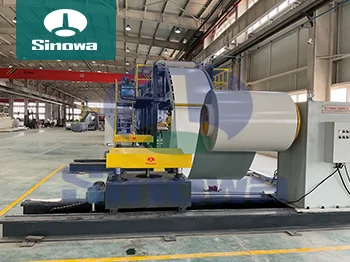
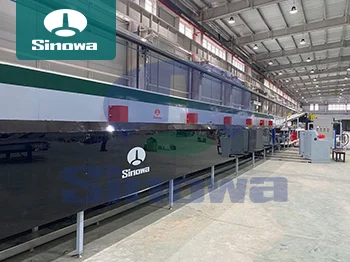
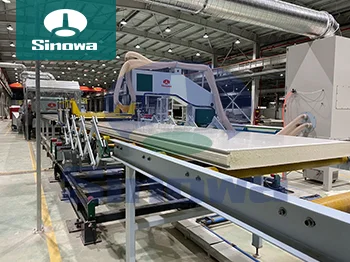
Sinowa is committed to the development and manufacturing of high-end and high-efficiency rock wool sandwich panel production line. Our rock wool sandwich panel production line are leading the way in efficiency, automatic control, human-computer interaction, environmental protection and energy consumption. Using system integration and bus control technology, it realizes the automatic integrated linkage control of the entire rock wool sandwich panel production line, and can achieve remote interactive communication, which has the world-class level and a comprehensive leading high-performance rock wool sandwich panel production line in the market.
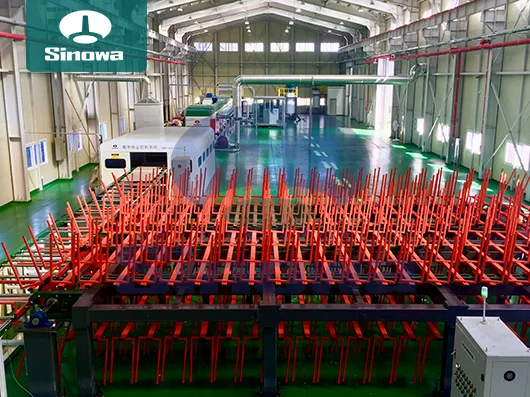
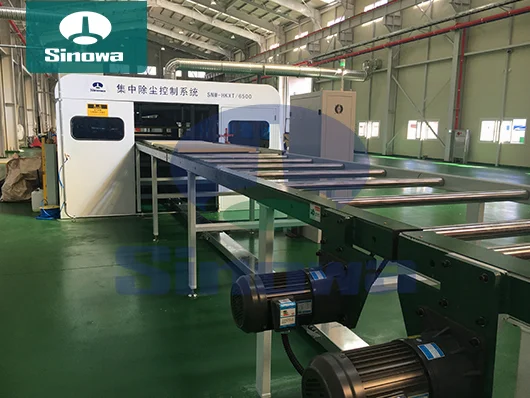
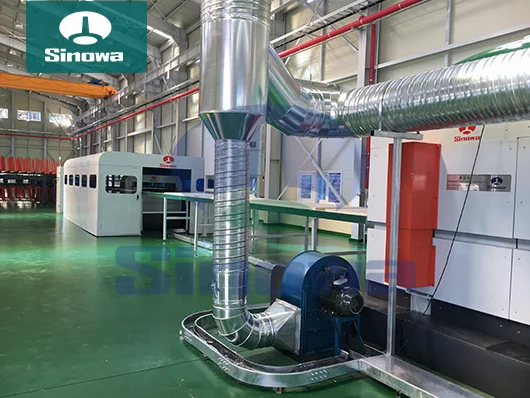
For more than ten years, relying on our innovative manufacturing concept and excellence in quality, reliable and trustworthy service to customers, we cooperate with customers all over the world, exported products to Canada, South Korea, Israel, Australia, the Middle East and other more than 20 countries and regions. contributed to building energy conservation and low-carbon production and have won widespread praise.
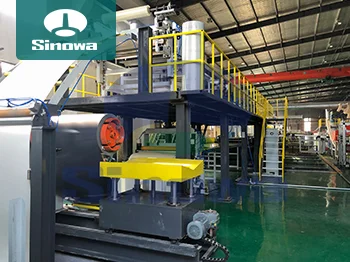
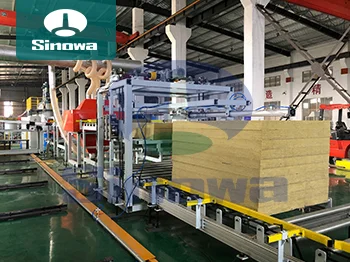
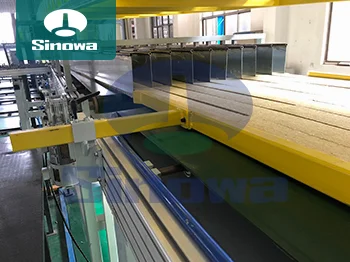
Sinowa has invested outstanding efforts in rock wool sandwich panel production line, this is why our products are more efficiency, quality, automatic control technology, environmental protection, energy consumption indicators and the appearance and safety protection are comprehensively leading, some subversive design changes in many major technical points, these major innovations make our products excellent in price/performance and user experience.
Custom rock wool sandwich panel production lines represent a flexible and integrated manufacturing system built to respond to diverse demands within modern building enclosure manufacturing. Unlike standard fixed-configuration equipment, these custom lines are engineered around the unique operational conditions of each manufacturing site, including available workshop space, expected output volumes, and the range of panel profiles the facility intends to produce. Every functional unit can be adjusted or reconfigured, from coil unwinding and roll forming stations to rock wool core handling, glue application, continuous pressing, curing and final cutting modules. The design process starts with a careful assessment of workflow layout, ensuring material movement flows smoothly and bottlenecks are minimized across the whole production sequence. Operators gain the ability to switch between different panel dimensions, surface profiles and core material densities without extensive mechanical rework, which is critical for manufacturers that serve multiple project types rather than producing only one uniform product. This level of customization transforms the production line from a rigid mass-production tool into an adaptable platform that balances batch flexibility with consistent output stability, helping producers respond quickly to shifting market requirements for insulated composite building panels. The careful matching of mechanical power, transmission systems and control architecture also reduces unnecessary energy waste, as oversized components that consume excess power are removed from the design when they are not required for the target production scope.
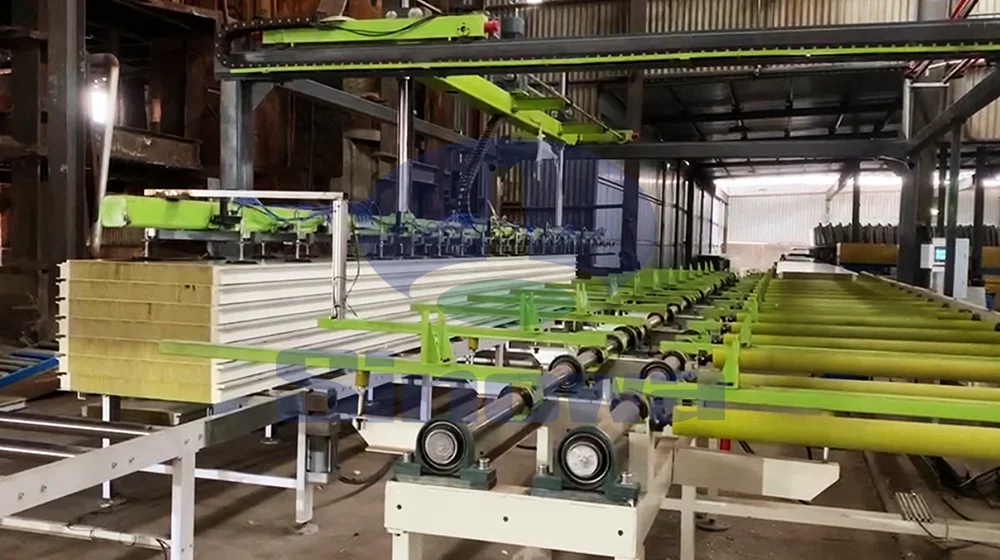
The initial stage of operation on a custom rock wool sandwich panel production line focuses on metal facing preparation, where coiled sheet materials are unwound and fed into roll forming equipment. Custom forming rollers are selected and assembled to create different surface profiles for wall and roof panels, and the line can be set up to handle varied sheet thicknesses and surface coatings. The unwinding mechanism maintains steady tension control to prevent wrinkling, stretching or uneven alignment as the metal sheet moves forward, because any distortion at this early stage will carry through to the finished panel and compromise bonding quality. Sensors monitor sheet position and feed speed continuously, sending real-time feedback to the central control system so that minor deviations can be corrected automatically. Before the metal facings enter the composite zone, surfaces are cleaned to remove dust and residual contaminants, preparing them to form a reliable bond with adhesive. This pre-treatment step is often refined during customization according to the type of coating on the metal, as different surface finishes require adjusted preparation to secure strong adhesion. Well-designed custom lines also include quick-change roller assemblies, which cut downtime when switching between panel profiles and support mixed production runs without long interruptions to daily manufacturing schedules.
Rock wool core material handling stands as one of the most distinctive and heavily customized sections of this sandwich panel line, as rock wool behaves differently from foam core materials used in other composite panel systems. Large rock wool blocks are delivered to the feeding station, where automated sawing and positioning devices cut them into precise strips, arrange them neatly and align fiber orientation to optimize the finished panel’s mechanical and insulating performance. Customized guiding mechanisms ensure the rock wool strips are placed tightly between upper and lower metal facings with no gaps or overlaps, eliminating hollow areas that would weaken the panel structure and reduce insulation performance. The feeding speed of rock wool is synchronized precisely with the travel speed of the metal sheets, a critical synchronization task that must be tuned during line commissioning. Some custom layouts include automatic rotation and rearrangement units to align rock wool fibers vertically relative to the panel surface, improving compressive strength and dimensional stability of the final product. Operators can adjust core thickness and density settings from the control interface, allowing one line to produce panels for light-duty wall enclosures and heavier structural roof assemblies as project needs change.
Adhesive application and continuous pressing form the composite heart of the custom rock wool sandwich panel production line, where metal facings and rock wool cores are permanently bonded together. Custom glue dispensing systems regulate the flow rate and spray pattern of adhesive across both metal surfaces, ensuring uniform coverage without excessive waste or uncovered spots. The application method can be modified during line design to match the working speed and material combination selected for the factory, balancing bonding strength and material consumption. After adhesive is applied, the assembled layers move into a continuous double-belt press, which maintains stable pressure and controlled temperature to promote consistent curing of the adhesive. Pressure distribution across the panel width is carefully calibrated in custom designs, avoiding localized compression that would crush rock wool fibers or create uneven thickness. The length of the pressing and curing tunnel is tailored to the line’s operating speed, giving the adhesive enough time to develop full bonding strength before the panel exits the composite zone. This tailored thermal and pressure management prevents delamination, one of the most common quality defects in rock wool sandwich panel manufacturing, and delivers uniform bonding performance across the full length of each panel.
Following the composite pressing process, the continuous panel travels to the cutting and finishing section, another area where custom engineering brings tangible operational benefits. Flying saw cutting systems move synchronously with the continuously moving panel, cutting finished panels to preset lengths without stopping the main production flow. The cutting unit can be programmed to produce panels of variable lengths, and the cutting blade power and travel speed are selected according to the maximum panel thickness and hardness specified in the project requirements. After cutting, edge trimming stations remove excess material and smooth panel edges, improving fit during later installation at construction sites. Custom lines may integrate automatic stacking and conveying equipment to move finished panels away from the production path, reducing manual handling and the risk of surface scratches or edge damage. Waste fragments generated during rock wool cutting and panel trimming are collected through dedicated extraction systems, which can be sized and positioned to match the layout of each workshop. This reduces cleanup work and keeps the production area tidy, while also lowering the volume of material waste that needs to be managed after each production run.
The intelligent control architecture built into a custom rock wool sandwich panel production line coordinates all individual machine units and maintains stable operation across changing production parameters. Programmable control hardware links unwinding, forming, rock wool feeding, glue dosing, pressing and cutting functions into one coordinated sequence, with visual interfaces that display real-time operating data to line operators. Custom programming allows technicians to save multiple product recipes, storing all parameter sets for different panel types so operators can recall them quickly when switching production. The system tracks running speed, material consumption, operating temperature and fault alerts, supporting routine monitoring and troubleshooting. Safety interlocks are embedded into the custom control logic, stopping equipment automatically when abnormal conditions appear and protecting both operators and machine components. The control cabinet layout, screen placement and access points are customized to match the workshop environment, making routine operation and inspection intuitive. This integrated digital control reduces reliance on manual adjustment, lowers human error and helps maintain consistent panel quality over long continuous production cycles.
Maintenance and operational sustainability are central considerations when designing a custom rock wool sandwich panel production line, as equipment accessibility directly affects long-term uptime. Custom layouts reserve service space around key wear parts such as forming rollers, glue nozzles, conveyor belts and cutting blades, so maintenance teams can inspect, clean or replace components without large-scale disassembly of the line. Lubrication points, filter assemblies and sensor probes are positioned for easy access, and wear components can be selected based on the intensity of planned daily operation. The mechanical structure is designed to reduce vibration and fatigue stress during continuous running, extending the working life of drive systems and supporting frames. Custom designs also address dust generation from rock wool processing, adding enclosed guards and extraction ports sized to fit local ventilation arrangements. Training frameworks for operators and maintenance staff are developed alongside the equipment configuration, covering routine checks, recipe management and basic fault diagnosis. By building maintainability into the initial customization phase, manufacturers can reduce planned downtime and avoid unexpected stops that disrupt delivery schedules for finished sandwich panels.
The value of a custom rock wool sandwich panel production line lies in its ability to align manufacturing capacity with real-world market requirements, supporting a broad spectrum of building applications while preserving stable panel performance. Facilities equipped with these tailored systems can produce composite panels that deliver reliable thermal insulation, sound attenuation and structural rigidity, making them suitable for many types of building enclosure work. The customization process does not simply add optional modules to a standard machine; it reshapes the entire workflow, mechanical sizing and control logic to match the space, labour structure and product portfolio of each producer. As demand for versatile insulated building panels continues to evolve, custom production lines allow manufacturers to adapt their output without replacing the whole asset, extending the useful life of the manufacturing investment. The ability to adjust panel specifications quickly enables producers to take on varied orders and serve diverse construction projects efficiently. Ultimately, this kind of customized manufacturing equipment bridges the gap between raw material properties and finished building component requirements, supporting efficient, repeatable production of high-performance rock wool sandwich panels for modern construction projects.
« Custom Rock Wool Sandwich Panel Production Line » Update Date: 2026/10/16
Tags: Fully Automatic Rock Wool Sandwich Panel Production Line , Rock Wool Sandwich Panel Production Line , rock wool sandwich panel production line, rock wool sandwich panel production line manufacturer, rock wool sandwich panel production line supplier, rock wool sandwich panel production line for sale, customized rock wool sandwich panel production line, china rock wool sandwich panel production line
- Cheap Mineral Wool Sandwich Panel Machine
- Custom Sandwich Panel Rock Wool Production Line
- High Precision Rockwool Sandwich Panel Machine For Sale
- High-end Mineral Wool Sandwich Panel Machine
- Cheap Rock Wool Machine
- Customized Rock Wool Board Production Line
- Rock Wool Insulation Panel Production Line Design
- High-tech Rockwool Panel Production Line
- High-end Rockwool Panel Production Line
- High Efficiency Rock Wool Insulation Panel Production Line
- Rock Wool Foam Sandwich Wall Panel Production Line Machine
- Rock Wool Machine Price
- Rock Wool Insulation Panel Production Line
- High-tech Mineral Wool Sandwich Panel Production Line
- Mineral Wool Sandwich Panel Production Line For Clean Room
- Rock Wool Board Production Line
- Rock Wool Sandwich Panel Machine From China
- Rock Wool Board Production Line For Sale
- Low Price Automatic Rock Wool Production Line
- Mineral Wool Board Production Line
- Links:
- Sandwich Panel Continuous Production Line
- Automatic and Continuous Sandwich Panel Production Line
- Cheap and Low Price Sandwich Panel Production Line
- China Sandwich Panel Production Line Factory
- Color Steel Sandwich Panel Production Line For Cold Storage
- Continuous Composite Foam Sandwich Panel Production Line
- Continuous Production Line For Rockwool and Mineral Wool Sandwich Panels
- Continuous PU Phenolic Insulation Panel Production Line
- Continuous PU PIR Sandwich Panel Production Line
- Continuous PUF PUR Sandwich Panel Production Line
- Continuous Sandwich Panel Production Line For Roof and Wall
- Customized and Design Sandwich Panel Production Line
- Decorative Sandwich Panel Production Line For Glass Wool Boards
- High Quality Sandwich Panel Production Line For Sale
- Polyurethane(PU) Sandwich Panel Production Line
- Sandwich Panel Production Line Manufacturer and Supplier
- Sandwich Panel Production Machinery and Equipment