
Polyurethane Sandwich Panel Production Line For Roof
Sinowa is a well-known manufacturer and technical service provider of high-end polyurethane sandwich panel production line, learn more about polyurethane sandwich panel production line for roof, please contact Sinowa's technical engineer, tell us what you need, we will contact you as soon as possible!
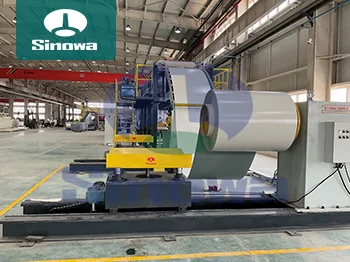
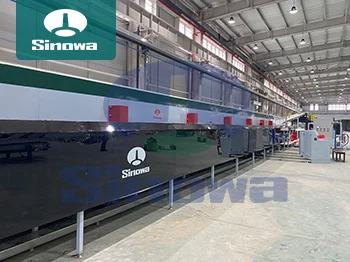
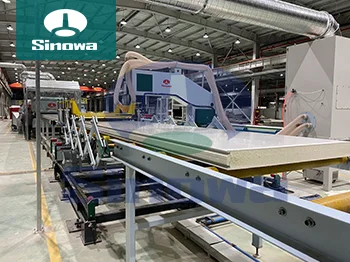
Sinowa is committed to the development and manufacturing of high-end and high-efficiency polyurethane sandwich panel production line. Our polyurethane sandwich panel production line are leading the way in efficiency, automatic control, human-computer interaction, environmental protection and energy consumption. Using system integration and bus control technology, it realizes the automatic integrated linkage control of the entire polyurethane sandwich panel production line, and can achieve remote interactive communication, which has the world-class level and a comprehensive leading high-performance polyurethane sandwich panel production line in the market.
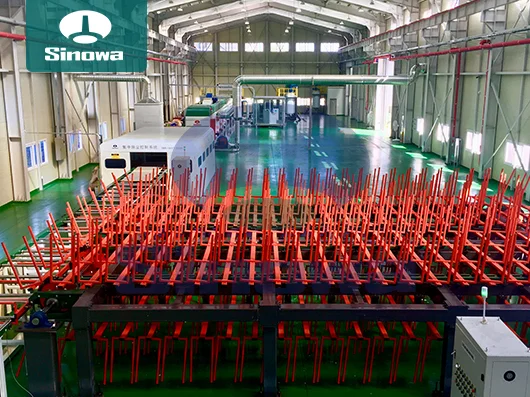
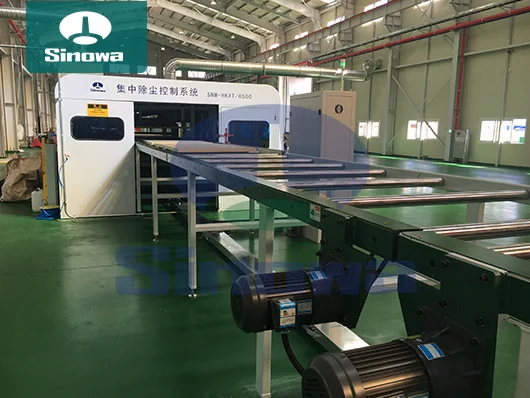
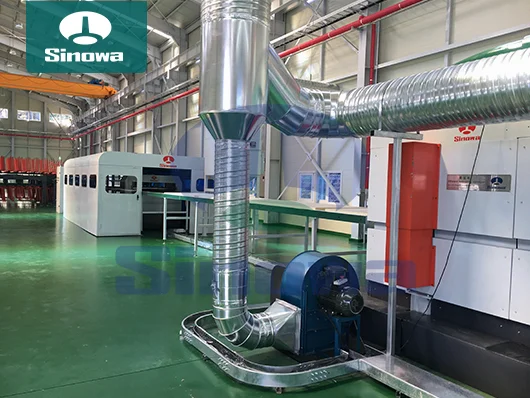
For more than ten years, relying on our innovative manufacturing concept and excellence in quality, reliable and trustworthy service to customers, we cooperate with customers all over the world, exported products to Canada, South Korea, Israel, Australia, the Middle East and other more than 20 countries and regions. contributed to building energy conservation and low-carbon production and have won widespread praise.
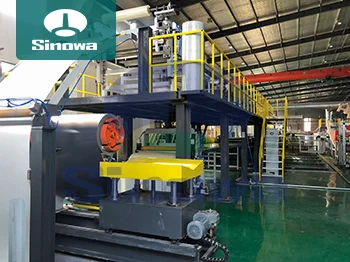
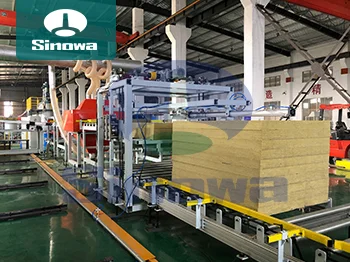
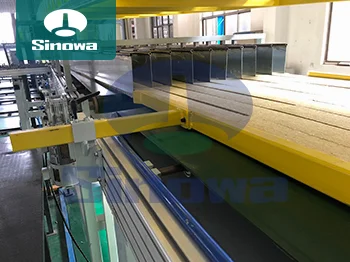
Sinowa has invested outstanding efforts in polyurethane sandwich panel production line, this is why our products are more efficiency, quality, automatic control technology, environmental protection, energy consumption indicators and the appearance and safety protection are comprehensively leading, some subversive design changes in many major technical points, these major innovations make our products excellent in price/performance and user experience.
In the modern construction industry, the demand for efficient, high-performance building materials has driven continuous innovation in production technology. Among various building components, roof insulation materials play a crucial role in improving energy efficiency, ensuring structural stability, and enhancing indoor comfort. The production line for polyurethane sandwich panels dedicated to roof applications has emerged as a key production system that meets these demands, enabling the mass production of high-quality polyurethane (PU) sandwich panels specifically designed for roof use. This advanced production line integrates multiple technological processes, from raw material preparation to finished product packaging, realizing automated and continuous operation that significantly improves production efficiency while ensuring consistent product quality. As the construction industry moves towards sustainability and industrialization, this production line has become an indispensable part of modern building material production, providing reliable support for the construction of industrial warehouses, logistics centers, commercial buildings, and other large-scale projects.
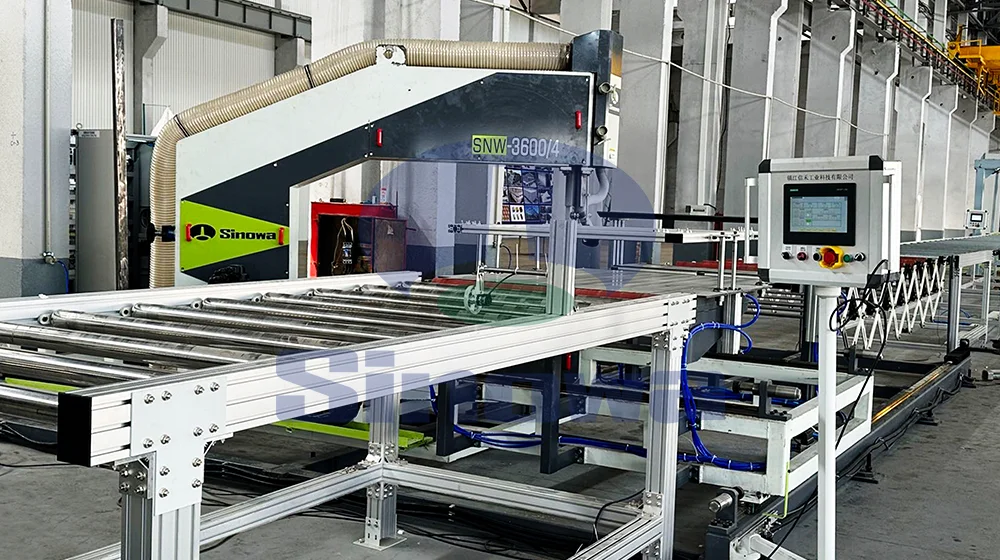
The polyurethane sandwich panel for roofs is a composite material consisting of three layers: two outer facing materials and a middle PU foam core. This three-layer structure combines the advantages of different materials, making the panel lightweight yet structurally robust, with excellent thermal insulation, weather resistance, and sound insulation performance. The production line is a highly integrated system composed of multiple functional modules working in coordination, each responsible for critical production links, and the precise cooperation between these modules ensures the smooth operation of the entire production process and the stability of product quality. Unlike traditional production methods that rely heavily on manual operations, the modern polyurethane sandwich panel production line for roofs adopts advanced automation technology, which not only reduces labor costs and human errors but also improves production efficiency and product consistency, making it suitable for large-scale, standardized production needs.
The core working principle of the polyurethane sandwich panel production line for roofs revolves around the precise coordination of multiple subsystems to form the three-layer composite structure. The production process starts with the uncoiling and pretreatment of facing materials, which are typically galvanized steel, galvalume, or aluminum sheets due to their excellent durability, corrosion resistance, and structural strength. These coiled materials are first loaded onto uncoiling machines, which use tension control devices to ensure stable and smooth uncoiling, preventing material deviation that could affect the subsequent forming process. The tension control system is designed to adjust the tension according to the thickness and material of the facing sheets, ensuring that the sheets are unfolded without wrinkles or deformation. After uncoiling, the facing materials pass through leveling rollers to eliminate any wrinkles or deformations caused during storage and transportation, ensuring a flat surface for subsequent processing. In some cases, the facing materials may also undergo preheating treatment to reach an optimal temperature for bonding with the PU foam core, which enhances the adhesion between layers and improves the overall structural integrity of the sandwich panels. The preheating temperature is strictly controlled according to the material properties and production requirements, usually ranging from 40 to 60 degrees Celsius, to avoid overheating that could damage the surface of the facing materials.
Following the pretreatment of facing materials, the core part of the production process—the foaming and lamination of the PU core—takes place. The PU foam is formed by the chemical reaction of polyol, isocyanate, foaming agent, catalyst, and other additives. These raw materials are stored in separate tanks and transported to a high-pressure metering system, which accurately controls the proportion of each component according to the required specifications of the PU core. The precise metering of raw materials is critical, as any deviation in the proportion can affect the foaming effect, thermal insulation performance, and structural strength of the final product. The high-pressure metering system is equipped with advanced flow meters and control valves, which can monitor and adjust the flow of each raw material in real time to ensure the accuracy of the mixing ratio. After metering, the raw materials are sent to a mixing head, where they are fully mixed under high pressure to initiate the chemical reaction. The mixing head is designed to ensure uniform mixing of the raw materials, which is essential for the formation of a stable and uniform PU foam core.
The mixed raw materials are then evenly distributed on the bottom facing material, which is moving forward at a constant speed on the conveyor line. The top facing material is then fed onto the foam layer, and the entire composite structure is sent to a lamination and curing system. The lamination and curing system is mainly composed of a double-track machine, which is usually 18 to 24 meters in length, equipped with precision hydraulic lifting and insulation units. The chain plate of the double-track machine is made of high-quality alloy steel, which has been quenched and ground to ensure smooth operation. The hot air circulation system in the curing zone maintains a process temperature of 60 to 70 degrees Celsius to accelerate the curing of the polyurethane foam. The curing time varies according to the thickness of the foam core and the production speed, usually ranging from a few minutes to more than ten minutes. During the curing process, the PU foam undergoes a series of chemical reactions, gradually hardening and forming a dense, closed-cell structure that provides excellent thermal insulation and structural stability. The double-track machine applies a uniform pressure to the composite structure during curing, ensuring that the three layers are closely bonded and the thickness of the panel is uniform.
After curing, the composite panel enters the post-processing stage, which includes fixed-length sawing, trimming, and quality inspection. The fixed-length sawing machine adopts servo drive and achieves precise cutting through photoelectric or marking recognition, ensuring that the length of the panels meets the design requirements. The sawing machine is equipped with a dust removal system to handle cutting dust, which not only keeps the production environment clean but also protects the health of operators. The trimming device is used to trim the edges of the panels to ensure that the edges are smooth and free of burrs, improving the appearance and installation performance of the panels. After trimming, the panels are sent to the quality inspection station, where professional inspectors check the thickness, flatness, adhesion, and other indicators of the panels. Any panels that do not meet the quality standards are rejected and processed accordingly to ensure that only qualified products enter the next link.
The raw materials used in the production line have a direct impact on the quality and performance of the roof polyurethane sandwich panels. The facing materials must have good corrosion resistance, weather resistance, and structural strength to withstand the harsh outdoor environment, such as rain, wind, ultraviolet radiation, and temperature changes. Galvanized steel sheets are widely used due to their low cost and good corrosion resistance, while aluminum sheets are preferred for projects with higher aesthetic requirements and lighter weight. The PU foam core is the key part that provides thermal insulation performance, and its quality depends on the quality of the raw materials and the accuracy of the mixing ratio. The foaming agent used in the production process should be environmentally friendly, with low thermal conductivity and good foaming performance. In recent years, with the increasing emphasis on environmental protection, more and more production lines have adopted environmentally friendly foaming agents that do not damage the ozone layer, replacing traditional foaming agents that are harmful to the environment. The catalyst and other additives are used to adjust the foaming speed and curing time, ensuring that the production process is stable and efficient.
The automation level of the polyurethane sandwich panel production line for roofs is an important factor affecting production efficiency and product quality. Modern production lines are usually equipped with a central control system, which integrates PLC, touch screen, and other control devices to realize the automatic control of the entire production process. The central control system can monitor the operation status of each equipment in real time, display key parameters such as production speed, temperature, pressure, and material flow, and alarm in case of abnormalities, ensuring the safe and stable operation of the production line. Operators only need to set the production parameters on the touch screen and monitor the operation status of the production line, which greatly reduces the labor intensity and improves the operation efficiency. Some advanced production lines also adopt intelligent technologies such as machine vision and automatic adjustment, which can automatically detect and correct deviations in the production process, further improving the accuracy and stability of product quality.
The quality control system of the production line runs through the entire production process, from raw material inspection to finished product inspection. Before entering the production line, all raw materials must undergo strict inspection to ensure that their performance indicators meet the production requirements. For example, the polyol and isocyanate must be inspected for purity, viscosity, and other indicators, and the facing materials must be inspected for thickness, flatness, and corrosion resistance. During the production process, key parameters such as the mixing ratio of raw materials, foaming temperature, curing time, and panel thickness are continuously monitored and adjusted to ensure that the production process is within the standard range. After the production of the finished panels, a series of tests are carried out, including thermal conductivity test, compressive strength test, adhesion test, and weather resistance test. These tests ensure that the panels have excellent performance and can meet the needs of roof applications in different environments.
The polyurethane sandwich panels produced by this production line have a wide range of applications in roof construction, especially in industrial and commercial buildings. Industrial warehouses and logistics centers often require large-area roof structures with good thermal insulation performance to maintain a stable indoor temperature and reduce energy consumption. The lightweight and high-strength characteristics of polyurethane sandwich panels make them easy to install, reducing the load on the building structure and shortening the construction period. Commercial buildings such as shopping malls and office buildings pay attention to both energy efficiency and aesthetic appearance, and the polyurethane sandwich panels can be customized according to different colors and surface textures to meet the aesthetic requirements of the building. In addition, these panels are also widely used in agricultural buildings, sports halls, airports, and other projects, providing reliable roof insulation and enclosure solutions.
In addition to the basic production functions, the polyurethane sandwich panel production line for roofs also pays attention to energy conservation and environmental protection. The production process adopts energy-saving technologies such as waste heat recovery and variable frequency control, which reduces energy consumption and operating costs. The waste materials generated during the production process, such as cutting scraps and leftover materials, are collected and recycled, reducing environmental pollution. The use of environmentally friendly raw materials and foaming agents also minimizes the impact on the environment, in line with the development trend of green and sustainable construction.
The operation and maintenance of the production line are crucial to ensuring its long-term stable operation and extending its service life. Regular maintenance of the equipment, including cleaning, lubrication, and parts replacement, can prevent equipment failure and reduce downtime. The operators must be trained professionally to be familiar with the working principle and operation procedures of the equipment, and strictly follow the safety operation specifications to avoid safety accidents. The central control system should be regularly checked and calibrated to ensure the accuracy of the control parameters. In addition, the production line should be inspected regularly for potential safety hazards, such as gas leaks, electrical faults, and mechanical failures, and timely measures should be taken to eliminate them.
With the continuous development of the construction industry, the demand for roof polyurethane sandwich panels is increasing, and the requirements for product quality and production efficiency are also getting higher and higher. The polyurethane sandwich panel production line for roofs is constantly innovating and upgrading, integrating more advanced technologies such as intelligent control, environmental protection materials, and energy-saving equipment to meet the changing market needs. The future production line will be more intelligent, efficient, and environmentally friendly, with higher automation levels and better product quality stability. At the same time, with the promotion of green building concepts, the production line will pay more attention to the research and development and application of environmentally friendly materials and processes, contributing to the sustainable development of the construction industry.
In conclusion, the polyurethane sandwich panel production line for roofs is a key equipment in the modern building material industry, which integrates multiple technologies and functional modules to realize the mass production of high-quality roof polyurethane sandwich panels. Its advanced automation technology, strict quality control system, and environmentally friendly production concept make it an indispensable part of the construction industry. The production line not only improves production efficiency and product quality but also reduces labor costs and environmental pollution, providing strong support for the development of green and sustainable construction. With the continuous progress of technology, the polyurethane sandwich panel production line for roofs will continue to play an important role in the construction industry, bringing more efficient, energy-saving, and environmentally friendly roof solutions to various construction projects.
« Polyurethane Sandwich Panel Production Line For Roof » Update Date: 2026/4/17
- High Efficiency Insulated Sandwhich Panel Production Line
- Cheap Polyurethane Sandwich Panel Production Line
- Low Price Foam Core Sandwich Panel Line
- PIR Sandwich Panel Line For Building
- Polyurethane Insulation Panel Production Line Price
- Color Steel Sandwich Panel Production Line On Sales
- Glass Wool Panel Production Line Manufacturer
- Roof Sandwich Panel Production Line Design
- Fully Automatic Sandwich Panel Line
- Cheap Continuous Sandwich Panel Line
- Insulated Sandwhich Panel Production Line For Sale
- High Efficiency Glass Wool Equipment
- PUF Insulation Sandwich Panel Line
- Customized Polyurethane Sandwich Panel Machine
- Polyurethane Sandwich Panel Line For Clean Room
- Isolation Sandwich Panel Production Line Factory
- Fully Automatic PU Sandwich Panel Line From China
- Highly Intelligent PU Sandwich Panel Line
- Sandwich Panel Machines Production
- Continuous Sandwich Panel Line Price
- Links:
- Sandwich Panel Continuous Production Line
- Automatic and Continuous Sandwich Panel Production Line
- Cheap and Low Price Sandwich Panel Production Line
- China Sandwich Panel Production Line Factory
- Color Steel Sandwich Panel Production Line For Cold Storage
- Continuous Composite Foam Sandwich Panel Production Line
- Continuous Production Line For Rockwool and Mineral Wool Sandwich Panels
- Continuous PU Phenolic Insulation Panel Production Line
- Continuous PU PIR Sandwich Panel Production Line
- Continuous PUF PUR Sandwich Panel Production Line
- Continuous Sandwich Panel Production Line For Roof and Wall
- Customized and Design Sandwich Panel Production Line
- Decorative Sandwich Panel Production Line For Glass Wool Boards
- High Quality Sandwich Panel Production Line For Sale
- Polyurethane(PU) Sandwich Panel Production Line
- Sandwich Panel Production Line Manufacturer and Supplier
- Sandwich Panel Production Machinery and Equipment