
Cheap Cold Storage Sandwich Panel Production Line
Sinowa is a well-known manufacturer and technical service provider of high-end cold storage sandwich panel production line, learn more about cheap cold storage sandwich panel production line, please contact Sinowa's technical engineer, tell us what you need, we will contact you as soon as possible!
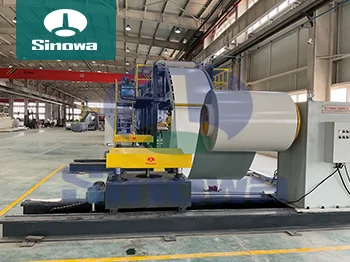
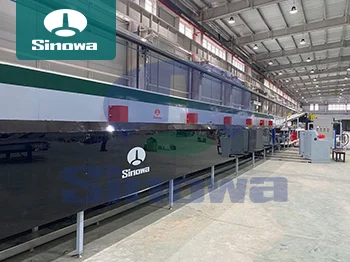
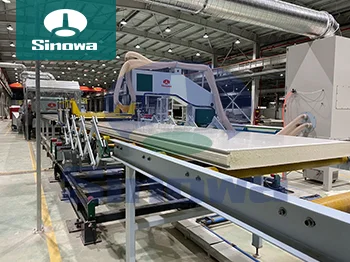
Sinowa is committed to the development and manufacturing of high-end and high-efficiency cold storage sandwich panel production line. Our cold storage sandwich panel production line are leading the way in efficiency, automatic control, human-computer interaction, environmental protection and energy consumption. Using system integration and bus control technology, it realizes the automatic integrated linkage control of the entire cold storage sandwich panel production line, and can achieve remote interactive communication, which has the world-class level and a comprehensive leading high-performance cold storage sandwich panel production line in the market.
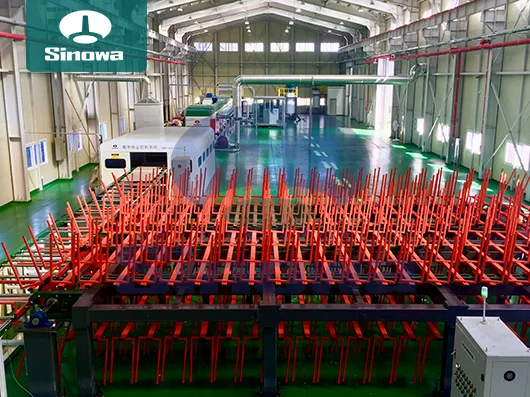
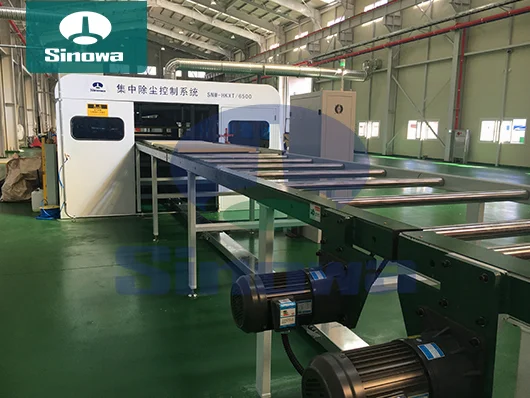
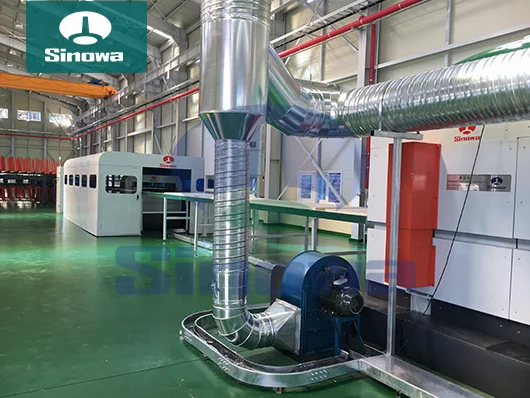
For more than ten years, relying on our innovative manufacturing concept and excellence in quality, reliable and trustworthy service to customers, we cooperate with customers all over the world, exported products to Canada, South Korea, Israel, Australia, the Middle East and other more than 20 countries and regions. contributed to building energy conservation and low-carbon production and have won widespread praise.
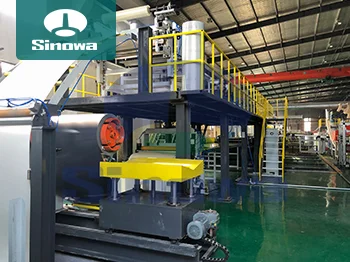
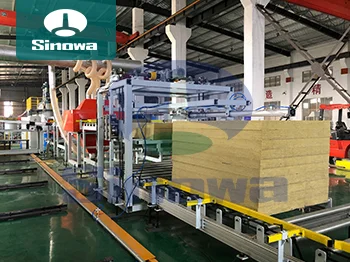
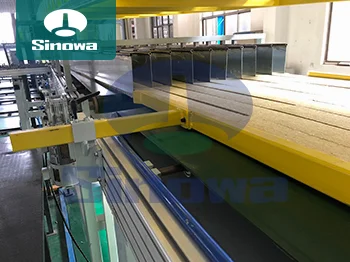
Sinowa has invested outstanding efforts in cold storage sandwich panel production line, this is why our products are more efficiency, quality, automatic control technology, environmental protection, energy consumption indicators and the appearance and safety protection are comprehensively leading, some subversive design changes in many major technical points, these major innovations make our products excellent in price/performance and user experience.
A cheap cold storage sandwich panel production line offers an accessible entry point for new manufacturers and small workshops aiming to supply insulated panels for temperature-controlled storage spaces, balancing basic functional performance with restrained overall investment. Unlike heavily automated premium versions packed with dozens of auxiliary sensors and intelligent adjustment modules, this type of equipment strips away nonessential add-ons and focuses firmly on completing the core forming sequence required for cold room panels. Its layout follows a simplified linear workflow, starting from coil unwinding, surface sheet leveling and profiling, moving through foam mixing and injection, continuous pressing and curing, fixed-length cutting, and manual or semi-assisted stacking. The design philosophy prioritizes practicality, targeting operators who handle moderate order volumes and frequently switch between simple panel specifications rather than running nonstop mass production around the clock. Many of these affordable setups adopt modular assembly, so buyers can begin with a basic configuration and add upgraded components gradually as their business expands, instead of committing to a complete high-end system at the very beginning. This flexible expansion path lowers the risk for startups, allowing them to test local market demand for cold storage panels before sinking larger resources into upgrades. Even with simplified structures, the core mechanical units are built to withstand repeated daily operation, though users should recognize that simplified control systems demand closer human supervision during production runs. Operators must watch raw material feeding status, foam reaction conditions and conveyor stability continuously, because automatic error correction functions are far fewer than those found on advanced production lines. The equipment suits businesses that serve small cold storage builders, local refrigeration contractors and regional prefabricated construction projects, where customers accept stable basic insulation performance without demanding ultra-precise surface details or extremely tight dimensional consistency.
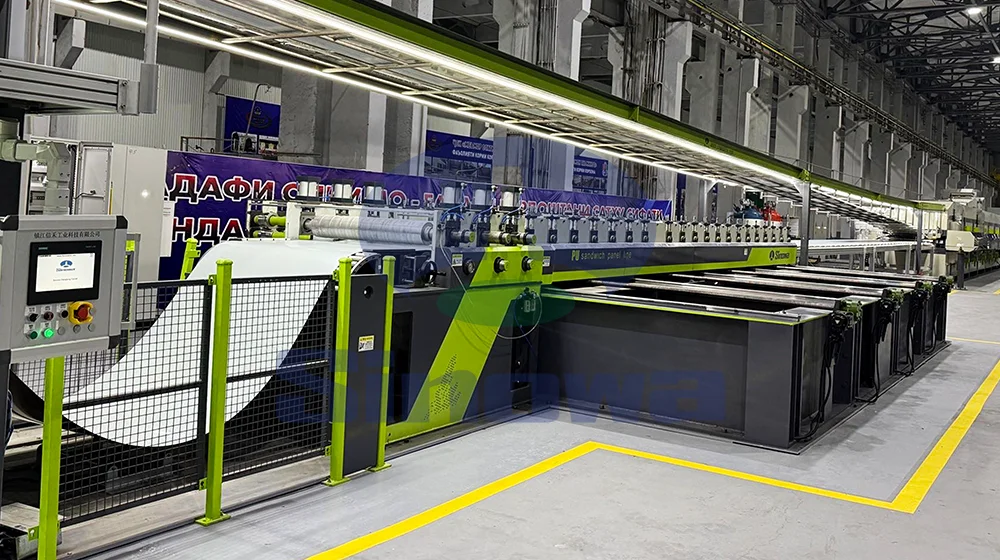
The mechanical composition of an affordable cold storage sandwich panel production line retains all essential functional stations, while simplifying transmission, control and auxiliary supporting structures to cut total expenditure. At the front end, decoilers hold metal coils and release raw sheet material, paired with roll forming groups that shape flat metal strips into the interlocking edge profiles needed for cold storage panel assembly. The roll sets are adjustable to produce several common profile shapes, though profile switching takes more time and manual adjustment compared with automatic quick-change systems. After shaping, the upper and lower metal skins travel forward into the foaming zone, where a metering unit mixes liquid foam raw materials and releases the mixture evenly between the two moving sheets. The mixing device on low-cost lines usually relies on stable basic pump sets rather than high-precision closed-loop flow monitoring, so operators need to calibrate mixing ratios before each batch and make small corrections if foam texture changes. Behind the injection area sits the double-belt laminating section, which applies steady pressure to hold the metal skins against the expanding foam core while the chemical reaction proceeds and the foam hardens into a solid insulation layer. Heating elements maintain suitable curing temperature inside the laminator, but temperature zones are fewer and adjustment resolution is coarser, which means ambient workshop temperature creates more noticeable influence on foaming results. Once the composite panel exits the curing tunnel, a cutting unit trims the continuous slab into required lengths, after which workers move finished panels away for inspection and storage. Some versions leave out automatic film covering and automatic packaging stations entirely, shifting these tasks to manual labor to keep the overall package affordable. This reduction in automation directly reduces procurement outlay, but it also raises labor demand and slows the maximum output speed of the whole line.
Raw material compatibility remains a key consideration for anyone preparing to operate a cheap cold storage sandwich panel production line, as the machine’s structure and foaming hardware determine which insulation core materials can be processed smoothly. Most models are optimized for rigid foam cores, which remain the dominant choice for cold storage panels thanks to low thermal conductivity and strong bonding ability with metal facings. Operators can adjust foam density by tuning feed rates and mixing ratios, though the range of stable adjustment is narrower than that of sophisticated continuous lines. Some modified affordable units can also handle mineral wool core panels, but these usually require separate feeding frames for pre-cut wool strips and extra guide structures, which are often sold as optional add-ons rather than standard fittings. Surface facing materials are typically limited to common metal sheets, which provide enough mechanical strength and moisture resistance for cold room walls and roofs. Thicker or special coated facing materials may cause feeding jams or uneven shaping if the roll forming groups are not reinforced accordingly. Because the metering and mixing system is simplified, raw material quality becomes even more critical. Small variations in the activity of foam components can lead to uneven expansion, hollow sections, poor adhesion between foam and metal skins, or surface bulges on finished panels. Operators need to store chemical raw materials in temperature-stable areas and perform small test injections before starting formal production each day, discarding defective test pieces until the foam reaction returns to a steady state. Careful raw material management compensates for the equipment’s limited automatic compensation capacity and helps maintain acceptable panel quality over long production shifts.
Operating an economical cold storage sandwich panel production line places heavier emphasis on standardized operator routines, as the equipment lacks many automated alarms and self-adjusting functions that protect against human error. Before startup, workers must inspect belt tension, pump lubrication, cutting blade sharpness and pipeline connections for leakage, paying special attention to the foaming circuit where chemical leaks can create safety hazards and waste expensive raw materials. Once the line runs, the main tasks include monitoring moving speed, checking foam spreading uniformity, verifying panel thickness by random sampling, and clearing minor blockages that appear at guide rollers or sheet entry points. Speed settings must match the foam curing cycle; running too fast leaves the core insufficiently hardened and prone to deformation after cutting, while running too slow wastes raw materials and drags down daily output. When switching panel thickness or profile, operators loosen fasteners, reposition roll sets and reset flow parameters manually, a process that creates more waste panels during transition periods. Training is not focused on complex digital parameter programming, but on understanding the foam reaction process and recognizing visual signs of poor quality, such as bubbling, cracking, separation between layers or inconsistent surface flatness. New operators often require several weeks of supervised practice to make reliable judgments, because the simple control panel only displays basic readings without detailed diagnostic prompts. Good operating habits reduce scrap rates significantly, and many small manufacturers find that consistent, careful operation can narrow the quality gap between low-cost lines and expensive alternatives for standard cold storage applications.
Maintenance strategies for this category of sandwich panel production line center on frequent, routine inspection and timely replacement of wearing parts, extending service life and avoiding unexpected shutdowns. The high-friction parts include conveyor belts, guide rollers, forming rolls, sealing gaskets on foaming pipelines and pump seals, all of which degrade steadily under daily use. Foaming chemicals can leave sticky residues inside mixing chambers and injection nozzles, and incomplete cleaning gradually blocks flow paths and disturbs mixing proportions. Operators should carry out partial cleaning at the end of each production day and conduct deeper disassembly cleaning at fixed intervals, following simple step-by-step procedures outlined in operation manuals. Electrical components on budget lines tend to use general-purpose standard parts instead of specialized industrial modules, which makes replacements easier to source locally, though it also means they are more vulnerable to dust, moisture and voltage fluctuation. The workshop housing the line should maintain adequate ventilation and keep dust under control, as accumulated dust accelerates wear on moving parts and risks contaminating foam mixtures. Spare part preparation is essential, and owners usually stock commonly worn items rather than stocking the full range of components. Planned maintenance downtime is shorter than repair downtime caused by sudden breakdown, so many operators set aside several hours each week for comprehensive checks. Neglecting lubrication and cleaning is the most frequent cause of premature failure, and minor faults that go unnoticed can escalate into serious damage to the laminating belt or foaming pump, creating costly interruptions to customer orders.
The finished panels produced by a cheap cold storage sandwich panel production line serve practical cold storage construction needs, yet they carry inherent performance boundaries that buyers and end users must understand clearly. Properly made panels deliver solid thermal insulation to stabilize low temperatures inside cold rooms, reduce the continuous load on refrigeration units and resist mild humidity changes within sealed storage structures. The bonded structure between metal skin and foam core provides enough rigidity for wall and roof installation, and interlocking edge profiles help builders assemble panels quickly on site. Even so, limitations emerge when projects demand extreme long-term thermal stability, very high surface flatness or consistent performance under severe cyclic temperature swings. Minor fluctuations in foaming uniformity may create small local differences in insulation capacity across a batch, which rarely affects ordinary cold storage but becomes problematic for specialized ultra-low-temperature facilities. Surface finish quality also varies; occasional tiny marks, slight color inconsistencies or subtle waviness can appear, which are acceptable for functional cold rooms but unsuitable for projects with strict aesthetic requirements. Adhesion strength between layers is adequate for normal installation stress, but improper handling during transport or heavy impact may trigger delamination more easily than panels from high-precision continuous lines. Manufacturers using low-cost lines often focus their sales on standard cold storage projects with moderate temperature requirements, communicating product characteristics openly to clients and avoiding commitments for demanding applications beyond the equipment’s stable production envelope. This honest positioning prevents disputes and builds steady business among local refrigeration and construction partners.
When comparing a cheap cold storage sandwich panel production line against higher-tier alternatives, the trade-off lies mainly between upfront capital saving, labor input, output capacity and quality consistency. Premium continuous lines run at faster speeds, adjust hundreds of parameters automatically, minimize waste during specification changes and produce panels with extremely uniform physical properties, but they demand far larger initial investment, larger workshop space and skilled technicians familiar with complex control systems. Budget models sacrifice automatic fine-tuning and high throughput in exchange for lower entry barriers, making them logical for businesses with limited capital and relatively unpredictable, small-batch order schedules. Discontinuous batch variants within the affordable range offer even greater flexibility for highly customized panel sizes, though cycle time per panel is slower and labor involvement rises further. The total cost of ownership does not end with equipment purchase; ongoing spending covers foam chemicals, metal coils, replacement wearing parts, workshop utilities and operator wages. For operators with low production volume, the low acquisition cost delivers obvious advantages, while those whose order volume grows steadily may eventually face pressure to upgrade to faster, more automated equipment to cut per-unit labor cost and reduce scrap. The choice depends entirely on order profile, available workspace, technical staffing and long-term business targets. Many successful small manufacturers start with an economical line to establish sales channels and accumulate operating experience, then reinvest profits into upgraded modules once market demand proves reliable and stable.
Looking forward, the market for cheap cold storage sandwich panel production lines continues to evolve as component suppliers refine basic mechanical designs and improve the reliability of low-cost core units. Simplified digital control modules are gradually becoming available at modest extra cost, adding basic data recording and alarm functions without pushing the equipment into premium pricing territory. Improvements in pump stability, nozzle design and temperature sensing help narrow the performance gap while keeping overall costs controlled. At the same time, users remain under pressure to optimize material usage, because foam raw materials account for a large share of per-panel manufacturing expense. Better operator training resources and clearer maintenance documentation also help new owners avoid common pitfalls that once plagued early generations of low-cost panel machinery. This category of equipment will continue to fill an important niche, supporting the expansion of cold storage capacity in decentralized markets where small construction teams and local manufacturers cannot justify large investments in fully automated production plants. It enables wider access to insulated cold room panels, supporting food preservation, fresh product distribution and other businesses that rely on stable low-temperature environments. Still, buyers should approach selection with realistic expectations, recognizing that affordability comes from deliberate simplification rather than equivalent performance at a discounted price. Matching equipment capability to actual project needs remains the most reliable way to achieve stable operation, manageable production costs and sustainable returns from cold storage sandwich panel manufacturing.
« Cheap Cold Storage Sandwich Panel Production Line » Update Date: 2026/10/23
Tags: Cold Storage Sandwich Panel Production Line , cold storage sandwich panel production line, cold storage sandwich panel production line manufacturer, cold storage sandwich panel production line supplier, cold storage sandwich panel production line for sale, customized cold storage sandwich panel production line, china cold storage sandwich panel production line
- Composite Sandwich Panel Production Line Supplier
- Custom Glass Wool Sandwich Panel Production Line
- Wall Sandwich Panel Production Line Design
- Glass Wool Sandwich Panel Line For House
- High-quality Foam Sandwich Panel Production Line
- Sandwich Foam Panel Making Machine Factory
- Wall Sandwich Panel Production Line In China
- Sandwich Panel Production Machinery Price
- High Efficiency PU Panel Machine
- Custom PU Isolation Panel Production Line
- High Efficiency Sandwich Panel Production Line
- PU Insulated Panel Production Line Factory
- High-quality Sandwich Panel Making Machine
- PU Insulation Panel Production Line On Sales
- Highly Intelligent PIR Sandwich Panel Production Line
- Glass Wool Sandwich Panel Machine Manufacturer
- Sandwich Wall Panel Production Line Factory
- PUF Panel Making Machine Price
- Sandwich Panel Manufacturing Line Supplier
- Cheap PUR Sandwich Panel Line
- Links:
- Sandwich Panel Continuous Production Line
- Automatic and Continuous Sandwich Panel Production Line
- Cheap and Low Price Sandwich Panel Production Line
- China Sandwich Panel Production Line Factory
- Color Steel Sandwich Panel Production Line For Cold Storage
- Continuous Composite Foam Sandwich Panel Production Line
- Continuous Production Line For Rockwool and Mineral Wool Sandwich Panels
- Continuous PU Phenolic Insulation Panel Production Line
- Continuous PU PIR Sandwich Panel Production Line
- Continuous PUF PUR Sandwich Panel Production Line
- Continuous Sandwich Panel Production Line For Roof and Wall
- Customized and Design Sandwich Panel Production Line
- Decorative Sandwich Panel Production Line For Glass Wool Boards
- High Quality Sandwich Panel Production Line For Sale
- Polyurethane(PU) Sandwich Panel Production Line
- Sandwich Panel Production Line Manufacturer and Supplier
- Sandwich Panel Production Machinery and Equipment