
Cheap PU Sandwich Panel Line
Sinowa is a well-known manufacturer and technical service provider of high-end pu sandwich panel line, learn more about cheap pu sandwich panel line, please contact Sinowa's technical engineer, tell us what you need, we will contact you as soon as possible!
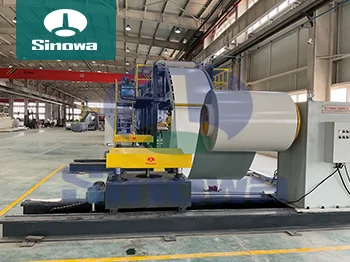
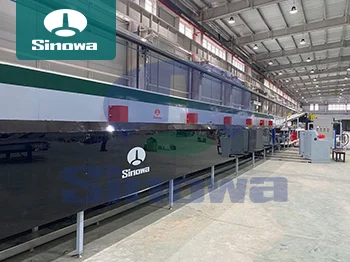
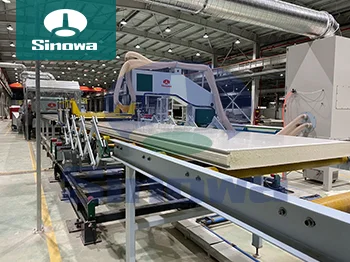
Sinowa is committed to the development and manufacturing of high-end and high-efficiency pu sandwich panel line. Our pu sandwich panel line are leading the way in efficiency, automatic control, human-computer interaction, environmental protection and energy consumption. Using system integration and bus control technology, it realizes the automatic integrated linkage control of the entire pu sandwich panel line, and can achieve remote interactive communication, which has the world-class level and a comprehensive leading high-performance pu sandwich panel line in the market.
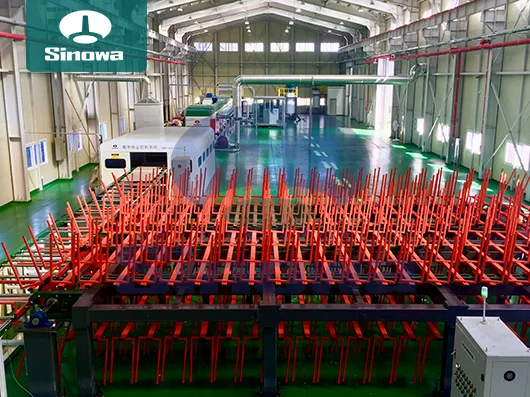
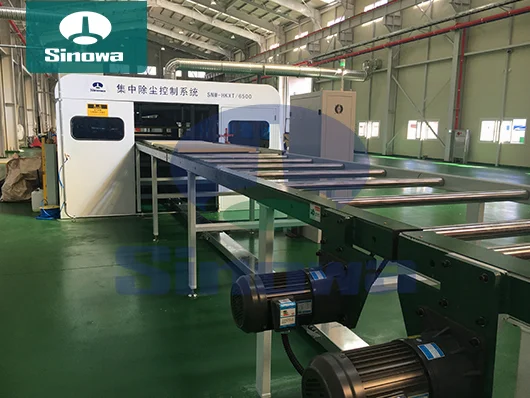
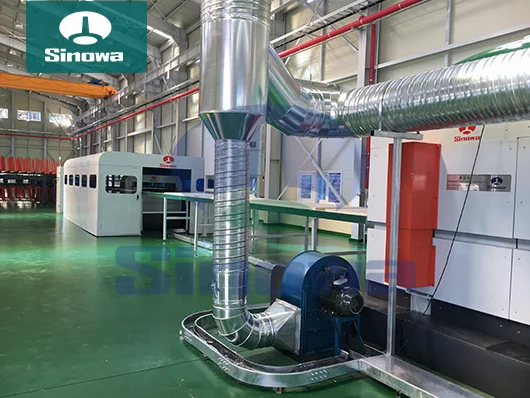
For more than ten years, relying on our innovative manufacturing concept and excellence in quality, reliable and trustworthy service to customers, we cooperate with customers all over the world, exported products to Canada, South Korea, Israel, Australia, the Middle East and other more than 20 countries and regions. contributed to building energy conservation and low-carbon production and have won widespread praise.
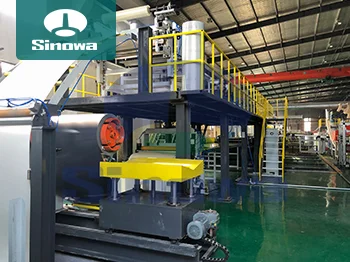
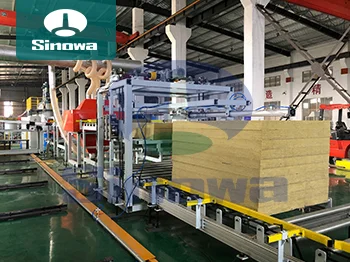
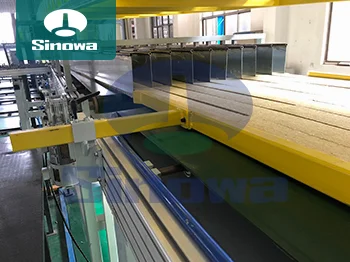
Sinowa has invested outstanding efforts in pu sandwich panel line, this is why our products are more efficiency, quality, automatic control technology, environmental protection, energy consumption indicators and the appearance and safety protection are comprehensively leading, some subversive design changes in many major technical points, these major innovations make our products excellent in price/performance and user experience.
A cheap PU sandwich panel line serves as a practical entry point for new manufacturers stepping into the insulated building material sector, balancing functional capability with restrained upfront investment. Many emerging producers hesitate to commit heavily to fully integrated, feature-heavy machinery when their order volume remains modest, and this type of line fills that gap by trimming unnecessary auxiliary modules while retaining the core workflow required to form usable composite panels. It is built around the basic sequence of sheet feeding, roll forming, PU foaming injection, continuous lamination, curing and fixed-length cutting, without overloading the frame with automated edge trimming, online testing or complex data logging systems that add substantially to hardware costs. Operators will notice that the mechanical layout is compact, designed to fit into smaller factory spaces that lack the floor area needed for large-scale continuous production plants. Although it cannot match the hourly throughput of premium lines, it still delivers consistent output suitable for small-batch orders, renovation projects and local supply networks. The simplified structure also means training demands are lower, as the control interface focuses on a narrow set of key parameters rather than dozens of adjustable subroutines. For entrepreneurs testing market response before scaling up, this equipment removes the high financial barrier that often delays entry into the sandwich panel industry, letting operators generate finished goods and build operational experience before considering upgrades to more sophisticated configurations. Every design choice prioritizes essential production logic over advanced extras, making it a realistic option for those who need functional panel manufacturing capacity within limited capital boundaries.
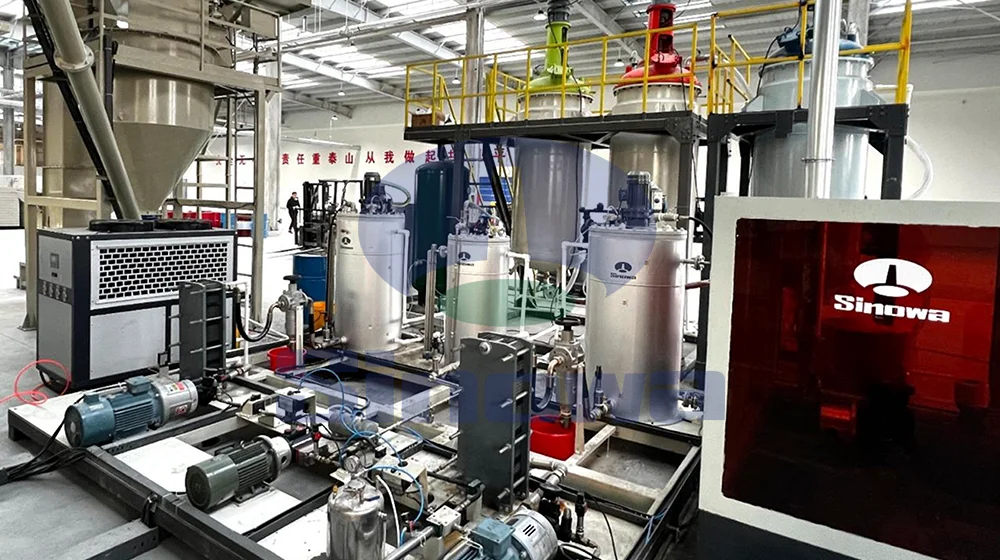
The mechanical layout of a cheap PU sandwich panel line follows a streamlined modular arrangement, with each unit performing one core task and connecting sequentially to keep material flow steady. At the starting point, uncoiler stations hold metal coils and feed sheet material toward roll forming sections, where profiling rollers shape flat strips into the corrugated or flat profiles required for panel facings. The forming section uses fewer roller sets than high-end alternatives, limiting the range of intricate profiles it can produce but reliably handling the standard wall and roof profiles that dominate most basic construction demand. After shaping, the lower sheet moves forward beneath the foaming station, where the PU mixing head dispenses blended liquid raw materials across the sheet surface. The mixing system on economical lines maintains stable ratio control for routine production, though it offers less fine-tuning for specialized foam densities and reaction speeds than premium dosing units. The upper sheet is guided down to close the sandwich structure before the assembly enters the double-belt conveyor, which maintains consistent pressure and moderate temperature to support foam expansion and curing. The belt length is shorter to cut fabrication costs, which means operators must carefully regulate line speed to ensure the PU core finishes curing before panels exit the press zone. Once cured, panels travel to a flying cutting unit that trims continuous stock into preset lengths, and finished sections slide onto a simple receiving table for manual stacking. There are no automatic stacking or wrapping attachments included in the base setup, so those handling steps remain manual, adding modest labor input but keeping the overall machine price within reach.
Understanding the foaming process is critical for anyone operating a cheap PU sandwich panel line, because the quality of the polyurethane foam core directly determines insulation performance and bonding strength between facings. The two primary liquid components travel from storage tanks through separate pipelines into the mixing chamber, where they collide and combine before being poured onto the moving lower metal sheet. The chemical reaction begins immediately after mixing, triggering rapid expansion that fills the cavity between upper and lower facings to form a closed-cell rigid foam structure. On low-cost lines, temperature control for raw material tanks and mixing heads is basic, so workshop ambient conditions exert a stronger influence on foaming behavior. Operators must watch seasonal temperature shifts closely, adjusting feed rates and line speed to avoid common defects such as hollow voids, uneven density, excessive shrinkage or poor adhesion to metal surfaces. If the line runs too fast, foam may not fully expand and cure before cutting, leading to soft cores that deform easily; if run too slowly, over-expansion can create internal stress and surface bulges. The pouring head usually moves in a simple oscillating pattern to spread liquid evenly, but it lacks adaptive scanning to compensate for minor variations in sheet flatness. With careful routine monitoring and small, frequent adjustments, users can still achieve uniform foam cores suitable for general insulation purposes. Mastery of these foaming variables turns a budget machine into a dependable production tool, even without the automated feedback systems found on far more expensive alternatives.
One major advantage of selecting a cheap PU sandwich panel line lies in its lower ongoing maintenance burden, which aligns well with teams that lack dedicated full-time mechanical technicians. Since the design removes many complex servo axes, sensor arrays and automated correction devices, the number of wearing parts and electronic components is significantly reduced. Most routine maintenance focuses on lubricating chain drives and roller bearings, cleaning residual PU buildup from the mixing head and sealing surfaces, checking hydraulic hose connections and inspecting belt tension on the double-belt conveyor. Spare parts for these standard assemblies are widely available and carry modest costs, and downtime for repairs tends to be shorter because mechanics can quickly identify faults within the simpler circuit and transmission structure. Still, operators cannot overlook regular upkeep to protect service life. Neglected mixing heads will clog with cured PU residue, disrupting material mixing and ruining panel batches. Worn conveyor belts create uneven pressure across the panel width, causing inconsistent thickness and weak bonding. Operators should establish a simple daily checklist and avoid running the machine continuously for extremely long stretches without pause, as the basic cooling and heat dissipation systems are not engineered for nonstop round-the-clock operation. With disciplined preventive care, this type of equipment can maintain stable performance over years, keeping repair expenses low and avoiding the costly breakdowns that often trouble overcomplicated machinery in understaffed workshops.
Operational flexibility remains a key selling point for budget PU sandwich panel lines, even though they cannot match the wide product range of top-tier continuous lines. The adjustable gap between the upper and lower conveyor belts allows producers to switch between different panel thicknesses by resetting mechanical stops, covering the most common sizes used for site enclosures, temporary buildings and ordinary cold storage partitions. Operators can also swap out roll forming sets to shift between flat panels and standard trapezoidal roof profiles, though custom deep profiles or special interlocking edge shapes are beyond the capability of the basic roller library. Surface materials are not limited to a single metal type; the line can process coated steel sheets and other rigid facings as long as sheet thickness stays within the working range of the feeding and forming mechanism. This flexibility lets small manufacturers serve varied local demand without investing in multiple separate machines. It is important to manage expectations, however, as changeover between different panel specifications takes more time on economical equipment. Most adjustments rely on manual measurement and mechanical calibration rather than one-click preset recall. Each product switch requires testing a short trial piece to verify thickness, foaming quality and cutting accuracy before launching full production. This slower changeover rhythm works best for factories that run long batches of one specification at a time instead of constantly switching between dozens of custom orders each day.
Panels produced on a cheap PU sandwich panel line fit well within many mainstream application scenarios, delivering the core benefits of PU composite construction at a lower manufacturing cost for end buyers. The finished panels combine lightweight rigidity with reliable thermal insulation, making them popular for temporary site offices, workshop partition walls, small cold storage rooms, farm storage sheds and simple prefabricated housing units. Their relatively low weight simplifies transport and on-site installation, reducing the need for heavy lifting equipment and shortening construction schedules. The closed-cell PU core resists moisture penetration better than many porous insulation materials, which helps limit hidden damp buildup inside wall and roof assemblies when installed correctly. While these panels are not tailored for the most extreme operating environments, they perform reliably under normal temperature and humidity conditions that define most everyday commercial and agricultural builds. Buyers who choose locally produced panels from such lines often prioritize upfront construction savings over ultra-specialized long-term performance. Manufacturers operating budget lines can therefore target price-sensitive customers who want insulated enclosure solutions without premium material specifications. This creates a stable market niche separate from high-performance panel markets focused on specialized industrial cold chain or high-rise building envelopes, giving the equipment a clear commercial role in the broader prefabricated materials ecosystem.
When evaluating the total cost of ownership for a cheap PU sandwich panel line, buyers must look far beyond the initial purchase expense to account for operating limitations and hidden resource demands. The biggest tradeoff comes in labor requirements, as stacking, sorting, quality inspection and finished product packaging are completed manually. Higher labor input raises unit production cost at low to medium output volumes, eroding some of the advantage gained from cheaper machinery. Energy consumption per panel can also be slightly higher because the basic heating and drive systems lack optimized energy recovery functions, and stopping or restarting the line frequently wastes raw PU materials that remain inside mixing pipes and the pouring head. Raw material waste becomes more noticeable when operators are still learning to tune foaming parameters, and rejected panels from early trial runs add to material expense. Floor space requirements are smaller than full-scale plants, which is a positive factor for small workshops with limited rent budgets. Training costs stay low because the control logic is intuitive and printed operating guidance covers the essential workflows. Buyers should model expected output, labor rates, material loss rates and utility bills together to judge whether the line delivers true economic value for their business plan. For operators with steady small orders and access to affordable on-site labor, the overall economics work favorably, while high-volume producers will quickly find that limited throughput and manual workflows become bottlenecks that justify moving to a more automated setup.
Looking ahead, the role of cheap PU sandwich panel lines will continue to evolve as small-scale builders and regional material suppliers seek accessible ways to supply insulated composite panels. These machines act as a practical stepping stone for businesses that intend to expand later, letting teams master PU foaming technology, panel fabrication quality control and customer demand patterns before reinvesting profits into upgraded equipment. Many operators start with a basic line to establish sales channels and build a reputation, then add upgraded foaming heads, automated cutting accessories or servo-controlled forming modules gradually instead of replacing the whole machine at once. This phased upgrade path lowers financial risk and spreads capital spending across multiple years. At the same time, market demand for affordable insulated enclosure materials remains steady as prefabricated construction methods spread across many smaller building projects. The budget segment of PU panel production will not displace high-end continuous lines designed for massive factory output, but it fills a vital space by making composite insulation technology available to smaller operators who would otherwise be excluded from the market. As long as producers accept the inherent compromises in speed, automation and product variety, a cheap PU sandwich panel line remains a viable, practical tool for sustainable entry into the insulated building materials industry, supporting localized supply chains and flexible responses to the diverse needs of small construction projects.
« Cheap PU Sandwich Panel Line » Update Date: 2026/10/23
Tags: Isolation PU Sandwich Panel Line , Fully Automatic PU Sandwich Panel Line , PU Sandwich Panel Line , Continuous PU Sandwich Panel Line , pu sandwich panel line, pu sandwich panel line manufacturer, pu sandwich panel line supplier, pu sandwich panel line for sale, customized pu sandwich panel line, china pu sandwich panel line
- Insulated Sandwich Panel Production Line
- High-end Polyurethane Sandwich Panel Machine
- Foam Sandwich Panel Production Line From China
- Composite Insulated Roof Panel Machines
- Polyurethane Sandwich Panel Manufacturing Line Supplier
- Composite Sandwich Panel Production Line In China
- Polyurethane Sandwich Panel Line For Construction
- Customized Glass Wool Sandwich Panel Line
- High-tech Cold Room Sandwich Panel Production Line
- Custom Continuous Sandwich Panel Production Line
- High Efficiency Continuous Sandwich Panel Production Line
- Customized Insulated Sandwich Panel Line
- High-tech Polyurethane Sandwich Panel Production Line
- Fully Automatic PU Sandwich Panel Machine Factory
- PU Panel Machine Manufacturer
- Polyurethane Sandwich Panel Manufacturing Line For Cold Storage
- Continuous PU Sandwich Panel Production Line From China
- Low Price Roof Sandwich Panel Production Line
- Automatic Sandwich Panel Production Line Supplier
- Custom PU Insulated Panel Production Line
- Links:
- Sandwich Panel Continuous Production Line
- Automatic and Continuous Sandwich Panel Production Line
- Cheap and Low Price Sandwich Panel Production Line
- China Sandwich Panel Production Line Factory
- Color Steel Sandwich Panel Production Line For Cold Storage
- Continuous Composite Foam Sandwich Panel Production Line
- Continuous Production Line For Rockwool and Mineral Wool Sandwich Panels
- Continuous PU Phenolic Insulation Panel Production Line
- Continuous PU PIR Sandwich Panel Production Line
- Continuous PUF PUR Sandwich Panel Production Line
- Continuous Sandwich Panel Production Line For Roof and Wall
- Customized and Design Sandwich Panel Production Line
- Decorative Sandwich Panel Production Line For Glass Wool Boards
- High Quality Sandwich Panel Production Line For Sale
- Polyurethane(PU) Sandwich Panel Production Line
- Sandwich Panel Production Line Manufacturer and Supplier
- Sandwich Panel Production Machinery and Equipment