
Decorative PU Sandwich Panel Production Line Manufacturer
Sinowa is a well-known manufacturer and technical service provider of high-end decorative pu sandwich panel production line, learn more about decorative pu sandwich panel production line manufacturer, please contact Sinowa's technical engineer, tell us what you need, we will contact you as soon as possible!
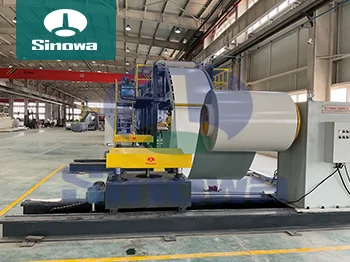
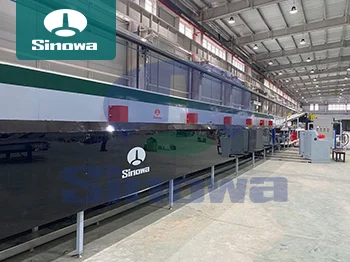
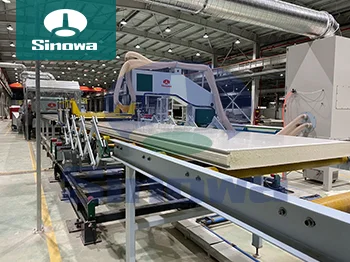
Sinowa is committed to the development and manufacturing of high-end and high-efficiency decorative pu sandwich panel production line. Our decorative pu sandwich panel production line are leading the way in efficiency, automatic control, human-computer interaction, environmental protection and energy consumption. Using system integration and bus control technology, it realizes the automatic integrated linkage control of the entire decorative pu sandwich panel production line, and can achieve remote interactive communication, which has the world-class level and a comprehensive leading high-performance decorative pu sandwich panel production line in the market.
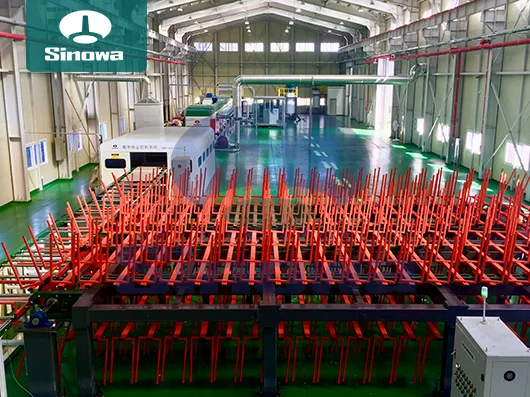
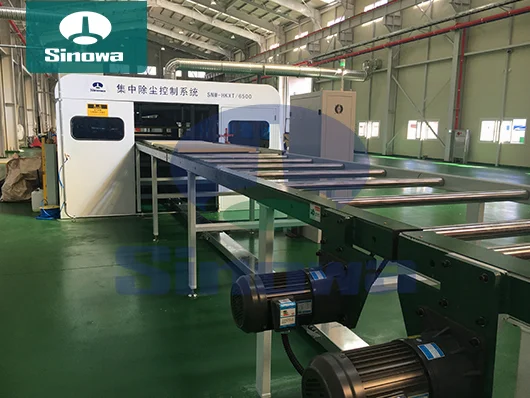
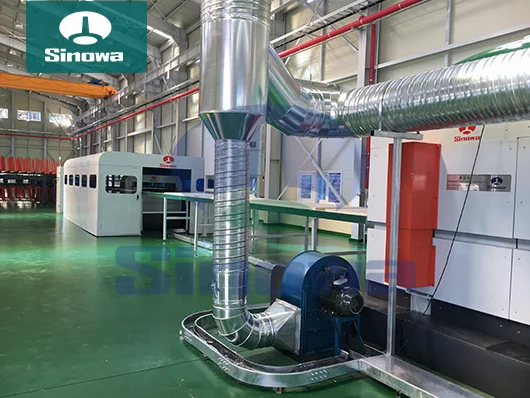
For more than ten years, relying on our innovative manufacturing concept and excellence in quality, reliable and trustworthy service to customers, we cooperate with customers all over the world, exported products to Canada, South Korea, Israel, Australia, the Middle East and other more than 20 countries and regions. contributed to building energy conservation and low-carbon production and have won widespread praise.
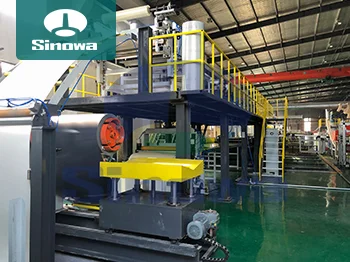
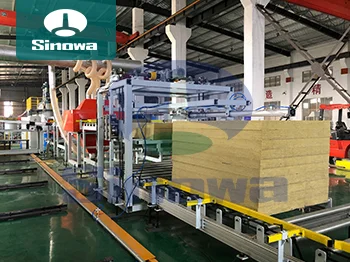
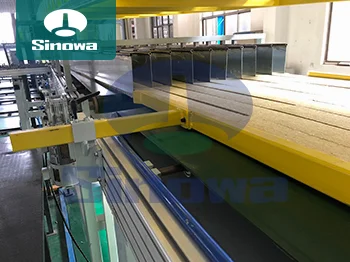
Sinowa has invested outstanding efforts in decorative pu sandwich panel production line, this is why our products are more efficiency, quality, automatic control technology, environmental protection, energy consumption indicators and the appearance and safety protection are comprehensively leading, some subversive design changes in many major technical points, these major innovations make our products excellent in price/performance and user experience.
Decorative PU sandwich panel production lines represent a sophisticated integration of mechanical, hydraulic, electrical and chemical processing technologies, built to deliver continuous manufacturing of composite panels that balance visual aesthetics with practical functional performance. Unlike conventional industrial equipment focused solely on structural insulation panels, this system is specially adapted for decorative facings, where surface texture, printed patterns, embossed details and consistent appearance carry equal importance alongside thermal and mechanical properties. Each functional unit of the line is designed to operate in synchronized motion, eliminating frequent stops and manual handling that can damage delicate decorative surfaces or create inconsistencies in foam density and bonding quality. Manufacturers of such lines spend extensive time refining every module, from raw material unwinding to final stacking, to ensure the finished panels retain crisp decorative details without scratches, color distortion or surface deformation. This equipment serves fabricators who supply wall cladding, interior partition panels and exterior facade materials, bridging the gap between architectural decoration and building envelope performance. Many customers seek flexible machinery that can switch among different decorative skins, adjusting forming profiles and production speed without extended downtime for retooling, and the core design philosophy of these production lines centers on meeting that demand for versatility while preserving stable continuous output.
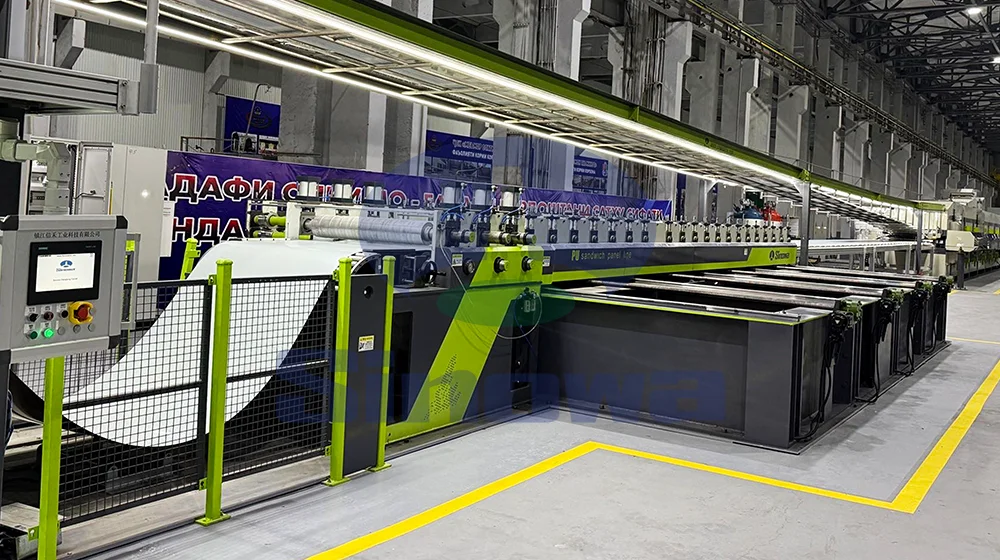
The opening segment of the production workflow starts with raw material feeding and roll forming, a foundational stage that shapes the decorative surface materials before they enter the foaming zone. Coil materials carrying pre-printed or embossed decorative textures are loaded onto hydraulic decoilers, which release the sheet stock at a controlled and constant speed to avoid stretching, wrinkling or abrasion on the patterned surface. Guiding rollers gently route the sheet through a series of forming stations, where custom roller sets bend and shape the flat coil into defined profiles such as flat panels, shallow ribs or interlocking edge profiles. Preheating modules follow the forming section, raising the surface material to a steady temperature that improves adhesion between the decorative skin and the expanding PU foam core. This temperature preparation is critical, as uneven surface temperature can lead to partial delamination or weak bonding along panel edges. Operators can adjust roll gap, line speed and heating parameters through the central control interface to accommodate different material thicknesses and decorative coating types. Careful protection measures are built into the material path, including non-marring rollers and protective film feeding attachments, to preserve the decorative finish all the way through the forming process and prevent cosmetic defects that would render panels unsuitable for architectural projects.
At the heart of the entire system sits the high-pressure PU foaming and injection unit, which mixes liquid polyol and isocyanate components and deposits the reactive blend evenly between the upper decorative facing and the backing sheet. The mixing head delivers precise metering of each raw material stream, maintaining consistent ratios across varying line speeds to guarantee uniform foam cell structure throughout the core layer. As the liquid mixture flows into the cavity between the two surface layers, it quickly expands through chemical reaction, filling the available space and forming a rigid closed-cell foam core while simultaneously forming a strong adhesive bond with both skins. The double-belt lamination press applies steady, even pressure during foaming and curing, holding the composite assembly at a fixed thickness and preventing swelling or warping as the foam rises. The length of the lamination tunnel is engineered to match line speed, giving the foam enough residence time to complete cross-linking and develop its full structural and insulating properties. Adjustments to injection position, flow rate and belt pressure allow operators to modify core density and panel thickness, producing lightweight panels that still maintain sufficient rigidity for installation on walls and partitions.
After leaving the lamination and curing tunnel, the continuous composite panel enters trimming and fixed-length cutting stations to prepare finished panel segments. Side trimming tools remove excess foam and edge material along both sides, producing straight, uniform edges and eliminating ragged foam overhangs that could compromise panel interlocking or create messy installation joints. The cutting system uses flying saw technology, which cuts the moving panel without halting the production line, preserving continuous throughput and avoiding interruptions that disrupt foam stability or decorative surface alignment. Before cutting, sensors scan the moving web to verify panel width, surface integrity and position, sending real-time feedback to the control system to adjust cutting points precisely according to preset length specifications. Once cut, panels travel along cooling conveyors to complete residual curing and gradually reduce surface temperature, reducing the risk of thermal distortion as they cool to ambient conditions. Edge sealing attachments can be activated as needed, applying protective treatments to exposed foam edges to resist moisture absorption and preserve long-term dimensional stability, a valuable feature for panels used in humid environments.
Integrated inspection and quality monitoring systems run throughout the production sequence, capturing real-time data to detect defects before panels move to packaging. Contactless sensors track panel thickness, surface flatness and foam density, while visual inspection cameras scan the decorative face to spot printing flaws, scratches, discoloration or pattern misalignment. When deviations are identified, the control system triggers alerts and can automatically mark defective sections for later separation, preventing non-conforming panels from entering finished stock. This continuous monitoring reduces reliance on manual visual checks, which can be inconsistent and prone to missing subtle cosmetic imperfections on decorative surfaces. The collected operational data is logged within the machine control platform, enabling operators to trace production parameters back to any batch of panels and fine-tune settings for subsequent runs. Manufacturers design these monitoring functions to be customizable, matching the specific quality criteria required for decorative building panels, where minor blemishes that would be acceptable for standard insulation panels become critical rejects for visible architectural applications.
Automated stacking, film wrapping and discharge modules form the final stage of the line, handling finished decorative panels with care to safeguard their surface finish. After cooling and inspection, panels are transferred to a stacking system that gently lifts and places each panel onto stacks with protective separators between layers, preventing the decorative surfaces from rubbing together and sustaining scratches. Automatic film wrapping units apply stretch film around each stack, shielding panels from dust, moisture and minor abrasion during storage and transportation. Conveyors route wrapped stacks to designated discharge zones, ready for loading and shipment. This automated end-of-line handling cuts down on manual lifting and panel manipulation, which are common sources of cosmetic damage for decorative cladding products. The stacking logic can adapt to different panel lengths and widths, reorganizing stack height and arrangement to suit packaging and transport requirements. For production sites with limited floor space, manufacturers can configure the discharge layout to fit existing factory workflows, connecting the line to warehouse conveyance systems for seamless material flow.
A central digital control platform governs all coordinated actions of the decorative PU sandwich panel production line, linking decoiling, forming, foaming, cutting and handling modules under one unified interface. Operators set recipes for different panel types, storing saved parameter profiles for rapid switching between decorative styles, panel thicknesses and production speeds. Frequency converters and servo drives synchronize the speed of every conveyor and rotating component, ensuring the decorative skin, backing sheet and foaming process advance in perfect alignment. The system monitors temperature, pressure, material flow and motor load continuously, making small automatic corrections to maintain stable conditions without constant manual intervention. Safety interlocks protect operators and equipment, halting operation or locking access doors if abnormal conditions arise in the high-pressure foaming zone or moving forming sections. The human-machine interface displays live production metrics, fault diagnostics and recipe selection, simplifying training requirements for on-site staff. Machine builders focus on intuitive controls that balance advanced automation with practical usability, so operators can manage complex decorative panel production without specialized expertise in polymer chemistry or heavy mechanical maintenance.
Manufacturers of decorative PU sandwich panel production lines also provide comprehensive technical support and customization services tailored to individual project requirements, extending value beyond equipment delivery. Customization can include modified roller profiles, extended curing tunnels, additional film handling attachments, upgraded visual inspection setups or adjusted line speed ranges to match the customer’s target output and panel portfolio. Field technicians assist with installation, commissioning and initial recipe testing, tuning foaming ratios, heating profiles and forming pressure to achieve optimal panel appearance and performance. Training programs cover routine maintenance, recipe management, fault diagnosis and surface protection best practices, helping in-house teams keep the line running reliably while preserving the quality of decorative panel finishes. Ongoing service includes spare part supply and remote diagnostic support, minimizing downtime when mechanical or control issues appear. As architectural trends evolve toward integrated decorative and insulated wall systems, these production line manufacturers continuously refine equipment capabilities, exploring ways to support new surface materials, embossing styles and panel geometries. The goal is to deliver robust, adaptable machinery that empowers panel producers to meet rising market demand for attractive, durable composite building cladding solutions across diverse construction projects.
« Decorative PU Sandwich Panel Production Line Manufacturer » Update Date: 2026/10/16
Tags: Decorative PU Sandwich Panel Production Line , decorative pu sandwich panel production line, decorative pu sandwich panel production line manufacturer, decorative pu sandwich panel production line supplier, decorative pu sandwich panel production line for sale, customized decorative pu sandwich panel production line, china decorative pu sandwich panel production line
- Sandwich Panel Production Machinery Price
- High Efficiency PU Panel Machine
- Highly Intelligent Continuous PU Sandwich Panel Line
- Custom PU Isolation Panel Production Line
- High Efficiency Sandwich Panel Production Line
- PU Insulated Panel Production Line Factory
- High-quality Sandwich Panel Making Machine
- Polyurethane Sandwich Panel Production Line For Cold Room
- PU Insulation Panel Production Line On Sales
- Glass Wool Sandwich Panel Machine Manufacturer
- Sandwich Wall Panel Production Line Factory
- PUF Panel Making Machine Price
- Sandwich Panel Manufacturing Line Supplier
- Cheap PUR Sandwich Panel Line
- Glass Wool Production Line Design
- Foam Sandwich Panel Machine On Sales
- Custom PUR Sandwich Panel Production Line
- High-tech Sandwich Wall Panel Production Line
- PU Sandwich Panel Line For Building
- Low Price PIR Sandwich Panel Machine
- Links:
- Sandwich Panel Continuous Production Line
- Automatic and Continuous Sandwich Panel Production Line
- Cheap and Low Price Sandwich Panel Production Line
- China Sandwich Panel Production Line Factory
- Color Steel Sandwich Panel Production Line For Cold Storage
- Continuous Composite Foam Sandwich Panel Production Line
- Continuous Production Line For Rockwool and Mineral Wool Sandwich Panels
- Continuous PU Phenolic Insulation Panel Production Line
- Continuous PU PIR Sandwich Panel Production Line
- Continuous PUF PUR Sandwich Panel Production Line
- Continuous Sandwich Panel Production Line For Roof and Wall
- Customized and Design Sandwich Panel Production Line
- Decorative Sandwich Panel Production Line For Glass Wool Boards
- High Quality Sandwich Panel Production Line For Sale
- Polyurethane(PU) Sandwich Panel Production Line
- Sandwich Panel Production Line Manufacturer and Supplier
- Sandwich Panel Production Machinery and Equipment