
High-quality Fully Automatic PU Sandwich Panel Production Line
Sinowa is a well-known manufacturer and technical service provider of high-end fully automatic pu sandwich panel production line, learn more about high-quality fully automatic pu sandwich panel production line, please contact Sinowa's technical engineer, tell us what you need, we will contact you as soon as possible!
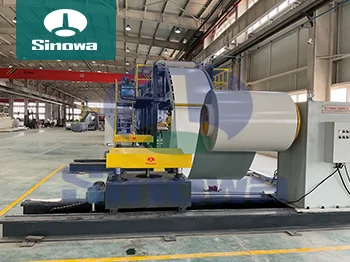
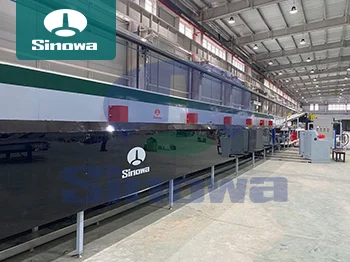
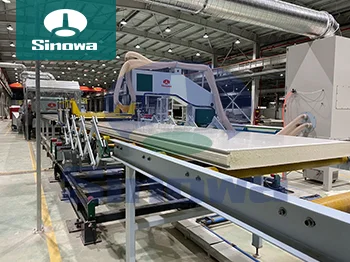
Sinowa is committed to the development and manufacturing of high-end and high-efficiency fully automatic pu sandwich panel production line. Our fully automatic pu sandwich panel production line are leading the way in efficiency, automatic control, human-computer interaction, environmental protection and energy consumption. Using system integration and bus control technology, it realizes the automatic integrated linkage control of the entire fully automatic pu sandwich panel production line, and can achieve remote interactive communication, which has the world-class level and a comprehensive leading high-performance fully automatic pu sandwich panel production line in the market.
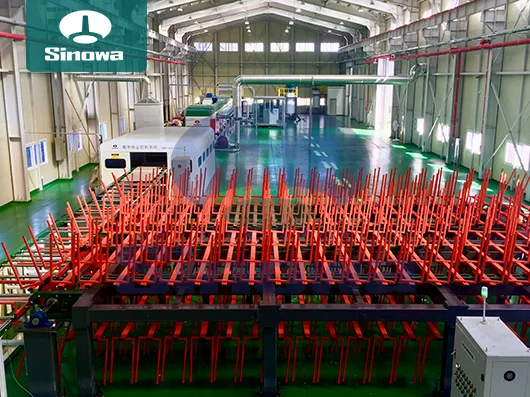
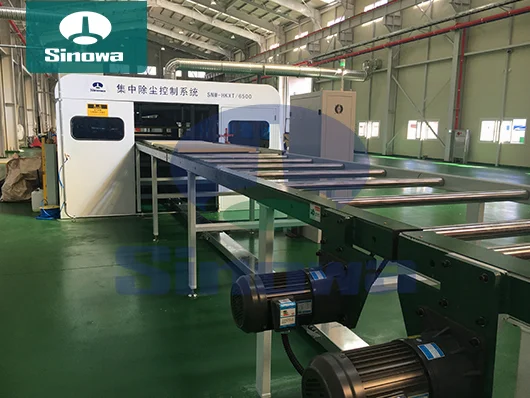
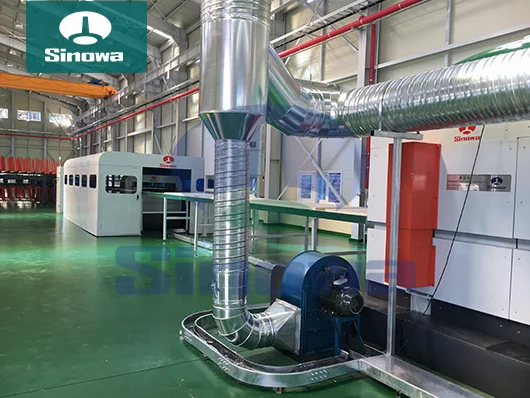
For more than ten years, relying on our innovative manufacturing concept and excellence in quality, reliable and trustworthy service to customers, we cooperate with customers all over the world, exported products to Canada, South Korea, Israel, Australia, the Middle East and other more than 20 countries and regions. contributed to building energy conservation and low-carbon production and have won widespread praise.
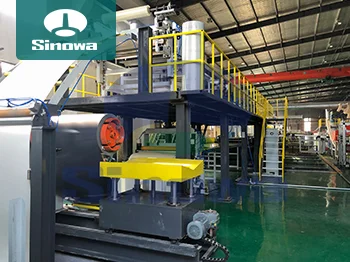
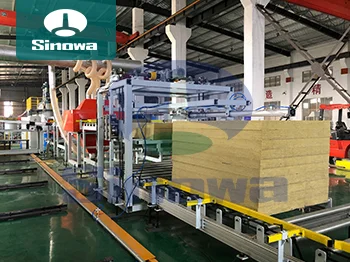
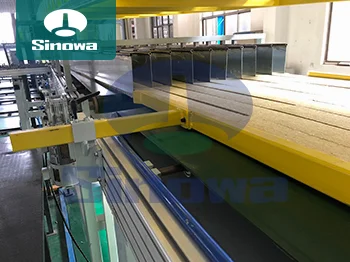
Sinowa has invested outstanding efforts in fully automatic pu sandwich panel production line, this is why our products are more efficiency, quality, automatic control technology, environmental protection, energy consumption indicators and the appearance and safety protection are comprehensively leading, some subversive design changes in many major technical points, these major innovations make our products excellent in price/performance and user experience.
High-quality fully automatic PU sandwich panel production line represents a sophisticated integrated manufacturing system built to deliver continuous, uninterrupted fabrication of composite insulation panels, merging mechanical transmission, hydraulic control, electrical regulation and intelligent automation into one unified workflow. Unlike semi-automatic or batch production setups that demand constant manual intervention for material transfer, parameter adjustment and product handling, this complete line can carry out all production steps sequentially from raw material feeding through roll forming, surface protection film application, preheating, foaming injection, composite pressing, thermal curing, trimming, fixed-length cutting and automatic stacking. Every functional station is tightly linked through synchronized control logic, so the movement speed of each module matches precisely to avoid material piling, discontinuity or uneven composite quality during continuous operation. The design prioritizes stable long-run operation, minimizing unexpected downtime caused by mismatched mechanical action or unstable chemical feeding. Operators only need to set target specifications on the central control interface at the start of production, and the system will automatically maintain consistent running status, greatly reducing human error that often appears in manual adjustment processes. This level of automation not only cuts labor requirements on the workshop floor but also stabilizes the overall rhythm of mass production, making it well suited for sustained large-batch manufacturing of panels used in various building and cold-storage scenarios.
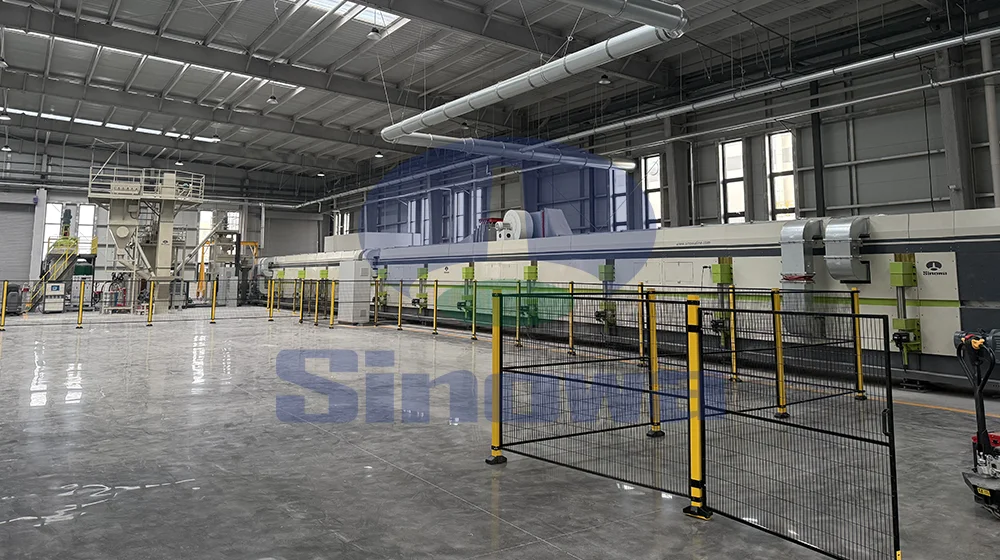
The initial segment of the production line focuses on handling and forming the surface facing materials, which forms the outer shell of finished PU sandwich panels. Coiled sheet materials are loaded onto decoiler units, which release raw sheets steadily and maintain lateral alignment to prevent deviation as the material enters the roll forming section. Guiding mechanisms correct minor offset in real time before the sheet moves through a series of forming roller sets, which gradually shape flat metal strips into customized profiles, including the interlocking edges required for wall and roof panels. A protective film coating station applies thin protective layers onto the sheet surface before shaping, safeguarding the finished panel surface from scratches and abrasion during later processing, transportation and installation. After forming, the profiled sheets go through a preheating phase, raising the surface temperature to a suitable range for the subsequent polyurethane foaming reaction. This preheating step eliminates temperature differences between the metal surface and liquid PU raw materials, supporting uniform foam expansion and improving bonding strength between the foam core and facings. All these processes run continuously without stopping, and the line automatically monitors sheet tension and position, making minor adjustments to maintain consistent forming quality across the whole production run.
At the heart of the fully automatic PU sandwich panel production line sits the high-pressure foaming and metering system, which governs the mixing and pouring of polyurethane raw materials. Multiple liquid components are delivered separately through precision metering pumps, which maintain stable flow rates and accurate mixing ratios under controlled pressure and temperature. The blended liquid material flows to a moving pouring gantry, which oscillates horizontally to spread the mixture evenly across the lower profiled sheet. This uniform distribution prevents local shortage or excess of PU material, which would otherwise create voids, dense spots or weak bonding areas inside the panel core. Right after pouring, the upper and lower facings with liquid PU between them enter the double-belt pressing unit, where two heavy-duty circulating belts apply consistent clamping force while maintaining a precisely adjustable gap to define the finished panel thickness. Within the closed double-belt chamber, the liquid polyurethane undergoes chemical expansion and curing, filling the space between the two facings completely and forming a rigid, closed-cell foam core. Temperature zones along the double belt are independently controlled to support stable polymerization, ensuring the foam develops uniform density, low thermal conductivity and strong adhesion with both surface layers.
Controlled curing inside the double-belt conveyor is critical to securing consistent physical performance of PU sandwich panels. As the composite material travels forward, the foam continues its chemical reaction under stable temperature and pressure conditions, gradually hardening into a solid core tightly bonded to the metal facings. The length of the curing tunnel is designed to match adjustable production speeds, so panels leave the pressing section only after the foam has reached sufficient structural strength to retain shape after cutting. The double belt system resists the expansion force generated by foaming materials, keeping the panel surface flat and maintaining consistent thickness across the entire width and length. Sensors installed along the tunnel continuously track temperature and pressure data, feeding real-time information back to the central control system. If fluctuations appear, the system automatically fine-tunes heating power and conveyor speed without halting production. Proper curing eliminates hidden defects such as internal delamination, partial softness or uneven dimensional change after cutting. This continuous thermal treatment delivers reliable core properties, which directly determine the insulation capacity and structural stability of finished panels in later service environments.
Once the continuous composite slab exits the curing tunnel, the production line enters the post-forming processing phase, including edge trimming, length cutting and surface inspection. Side trimming devices remove irregular edges on both sides of the continuous panel web, calibrating the panel width to exact target dimensions and ensuring clean, straight edges for easy assembly. After trimming, the continuous panel moves to the flying cross-cutting unit, which travels synchronously with the moving panel during cutting to avoid stopping the main production line. The cutting tool separates the endless composite slab into individual panels of preset lengths according to data entered in the control system. After cutting, panels pass through visual and dimensional inspection stations, where sensors check surface flatness, edge integrity and overall dimensions. Panels that fall outside preset tolerance ranges are automatically flagged and separated from qualified products. This inline inspection function catches defects immediately rather than discovering them after a full batch is completed, reducing material waste and lowering rejection rates. After inspection, finished panels move toward the automatic stacking station to be neatly arranged for packing.
Automatic stacking and offline handling modules complete the workflow of the high-quality fully automatic PU sandwich panel production line, removing the need for manual lifting and arrangement of heavy finished panels. The stacking mechanism receives individual panels from the cutting conveyor, adjusts panel orientation, and stacks products layer by layer on support pallets with controlled pressure to avoid surface indentation or edge damage. Stack height can be set according to handling and shipping requirements, and the system stops stacking automatically once a pallet reaches the target quantity. After stacking, finished pallet loads can move to optional wrapping stations, where stretch film wraps the panel stack to protect surfaces and prevent shifting during storage and transportation. The whole handling sequence runs in coordination with upstream cutting speed, so stacking capacity always matches the output rate of the main line. This automation reduces workplace safety risks associated with heavy manual lifting and speeds up material turnover within the workshop. It also keeps panel surfaces intact, preserving the appearance quality achieved in earlier forming and foaming stages.
Intelligent centralized control forms the operational brain of the fully automatic PU sandwich panel production line, enabling synchronized management of all functional stations across the whole system. The main control terminal collects real-time data from metering pumps, heating modules, conveyor drives, cutting units and inspection sensors, displaying running parameters, production output and equipment status on the operation interface. Operators can adjust panel thickness, production speed, raw material proportions and cutting length directly through this interface, with all linked stations responding automatically to parameter changes. The system also carries out continuous self-diagnosis, identifying abnormal vibration, temperature deviation or flow instability at an early stage. When potential faults are detected, the system sends alerts and can trigger protective actions to limit damage, rather than letting faults develop into large-scale defective products. Historical production records are stored for later review, supporting quality tracing for different batches of panels. This integrated control architecture simplifies daily operation, lowers the skill threshold for on-site operators and maintains consistent product quality over extended continuous production cycles.
The practical value of a high-quality fully automatic PU sandwich panel production line extends far beyond simple gains in output speed, bringing comprehensive improvements in production economy, product versatility and sustainable operation. The continuous forming process reduces raw material waste compared with intermittent manufacturing, because precise foaming metering and online trimming cut excess material consumption. The line supports flexible switching between different panel thicknesses and profile shapes, so manufacturers can respond quickly to varied project requirements without major equipment reconfiguration. Panels produced on this line feature excellent thermal insulation, stable dimensional performance and strong composite bonding, making them suitable for many enclosure applications that demand efficient temperature control and rapid installation. The automation design reduces reliance on manual labor, stabilizes production costs over long periods and shortens lead times for large orders. With stable mechanical performance and intelligent monitoring functions, the line can maintain reliable operation year after year with routine maintenance. For modern composite material manufacturers, this type of production system builds a solid foundation for standardized, high-volume panel manufacturing while preserving the flexibility needed to adapt to shifting market demands.
« High-quality Fully Automatic PU Sandwich Panel Production Line » Update Date: 2026/10/16
Tags: Fully Automatic PU Sandwich Panel Production Line , fully automatic pu sandwich panel production line, fully automatic pu sandwich panel production line manufacturer, fully automatic pu sandwich panel production line supplier, fully automatic pu sandwich panel production line for sale, customized fully automatic pu sandwich panel production line, china fully automatic pu sandwich panel production line
- PU Insulation Board Production Line Supplier
- Cheap Glass Wool Sandwich Panel Machine
- Decorative PU Sandwich Panel Production Line For Sale
- Polyurethane Sandwich Panel Machinery For House
- PUF Panel Making Machine For Sale
- High Efficiency Glass Wool Sandwich Panel Line
- Cheap PUF Panel Manufacturing Machine
- Fully Automatic PU Sandwich Panel Production Line On Sales
- Sandwich Panel Forming Line
- Customized Polyurethane Sandwich Panel Line
- High-tech Composite Panel Production Line
- Polyurethane Sandwich Panel Production Line For Roof
- PUR Sandwich Panel Production Line Manufacturer
- High-end PIR Insulated Panel Production Line
- Cheap Fully Automatic Sandwich Panel Making Machine
- Continuous PU Sandwich Panel Production Line Supplier
- Customized Foam Sandwich Panel Machine
- High-end PIR Sandwich Panel Line
- PIR Sandwich Panel Production Line Factory
- Sandwich Panel Making Equipment Design
- Links:
- Sandwich Panel Continuous Production Line
- Automatic and Continuous Sandwich Panel Production Line
- Cheap and Low Price Sandwich Panel Production Line
- China Sandwich Panel Production Line Factory
- Color Steel Sandwich Panel Production Line For Cold Storage
- Continuous Composite Foam Sandwich Panel Production Line
- Continuous Production Line For Rockwool and Mineral Wool Sandwich Panels
- Continuous PU Phenolic Insulation Panel Production Line
- Continuous PU PIR Sandwich Panel Production Line
- Continuous PUF PUR Sandwich Panel Production Line
- Continuous Sandwich Panel Production Line For Roof and Wall
- Customized and Design Sandwich Panel Production Line
- Decorative Sandwich Panel Production Line For Glass Wool Boards
- High Quality Sandwich Panel Production Line For Sale
- Polyurethane(PU) Sandwich Panel Production Line
- Sandwich Panel Production Line Manufacturer and Supplier
- Sandwich Panel Production Machinery and Equipment