
PUR Sandwich Panel Production Line From China
Sinowa is a well-known manufacturer and technical service provider of high-end pur sandwich panel production line, learn more about pur sandwich panel production line from china, please contact Sinowa's technical engineer, tell us what you need, we will contact you as soon as possible!
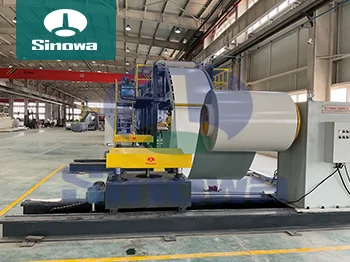
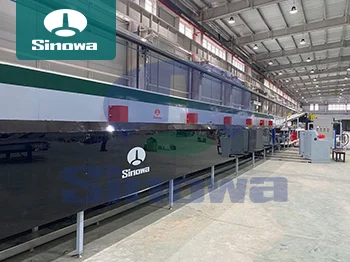
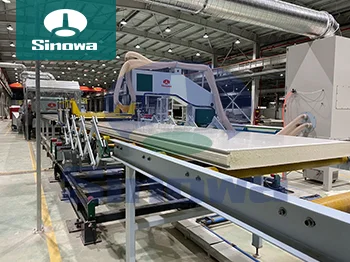
Sinowa is committed to the development and manufacturing of high-end and high-efficiency pur sandwich panel production line. Our pur sandwich panel production line are leading the way in efficiency, automatic control, human-computer interaction, environmental protection and energy consumption. Using system integration and bus control technology, it realizes the automatic integrated linkage control of the entire pur sandwich panel production line, and can achieve remote interactive communication, which has the world-class level and a comprehensive leading high-performance pur sandwich panel production line in the market.
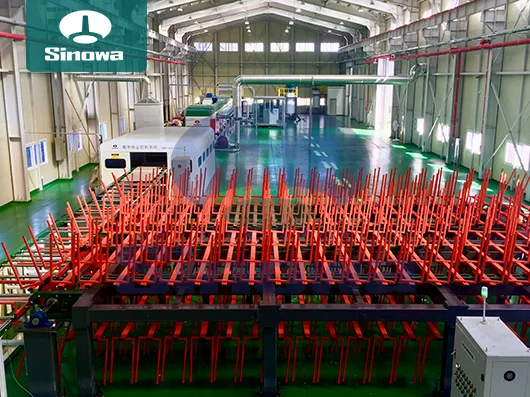
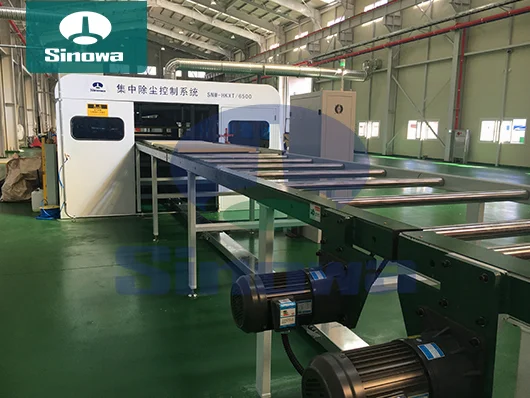
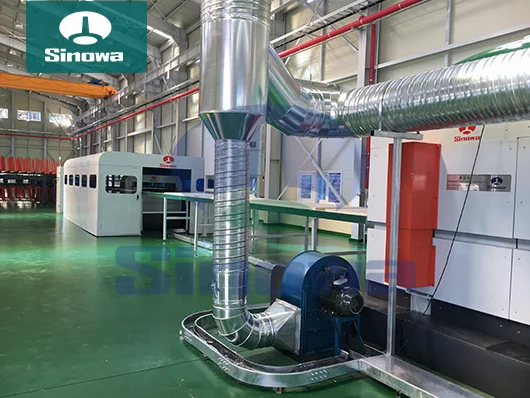
For more than ten years, relying on our innovative manufacturing concept and excellence in quality, reliable and trustworthy service to customers, we cooperate with customers all over the world, exported products to Canada, South Korea, Israel, Australia, the Middle East and other more than 20 countries and regions. contributed to building energy conservation and low-carbon production and have won widespread praise.
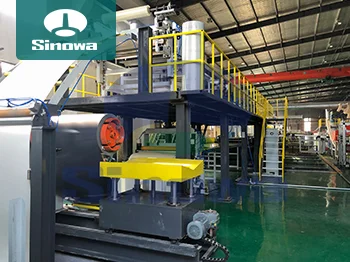
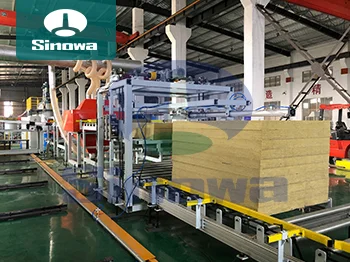
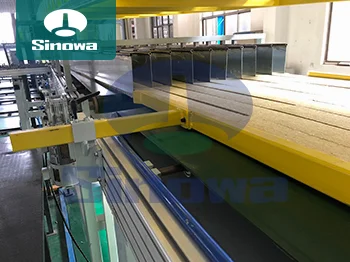
Sinowa has invested outstanding efforts in pur sandwich panel production line, this is why our products are more efficiency, quality, automatic control technology, environmental protection, energy consumption indicators and the appearance and safety protection are comprehensively leading, some subversive design changes in many major technical points, these major innovations make our products excellent in price/performance and user experience.
PUR sandwich panel production line from China has earned growing recognition across global construction and manufacturing sectors for its balanced performance and flexible operational design. Built to handle continuous forming of composite panels, this complete production system integrates raw material feeding, automatic coating, continuous lamination, curing, trimming and final cutting into one streamlined workflow. The core working principle centers on the application of PUR foam as the insulating core material, which reacts and solidifies between two metal facings under controlled temperature and pressure. Every unit of the line is engineered to maintain stable material distribution during the foaming process, preventing uneven density or gaps inside the finished panel. Operators can adjust production speed according to different panel thickness requirements, allowing the same line to produce products for varied application scenarios. The mechanical structure adopts heavy-duty frames and precision transmission components to reduce vibration during long-hour running, extending the overall service life of equipment. Compared with older types of panel production equipment, this setup minimizes material waste during switching between product specifications. It also simplifies routine maintenance work, as key wearing parts are easy to access and replace without extensive disassembly. Many overseas users choose this type of line because it can be customized to match local workshop layouts, whether the space is compact or large-scale. The automation level can be modified to fit different workforce conditions, from semi-automatic operation to highly automated running with fewer on-site staff. This adaptability makes it suitable for small startups as well as large industrial manufacturers that need consistent daily output of sandwich panels.
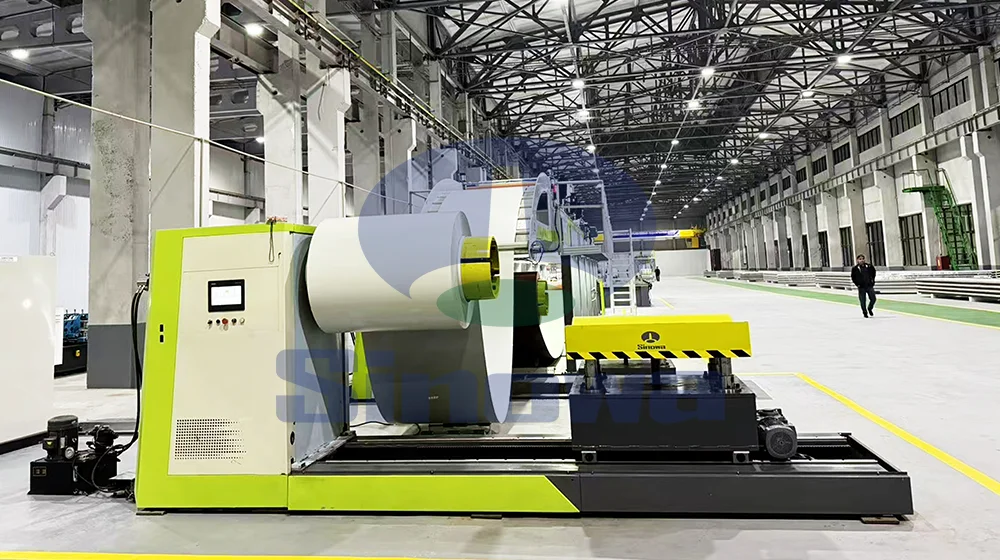
The raw material feeding section forms the starting point of the whole PUR sandwich panel production line, and it is designed to deliver facings and chemical components in a steady and controlled manner. Metal coil unwinding devices hold the surface sheets and feed them forward at synchronized speed, while guiding rollers keep the sheets flat and avoid wrinkles or offset during movement. Separate supply systems transport PUR polyol and isocyanate components, with metering pumps to regulate the mixing ratio accurately before spraying. The mixing head sprays the mixed liquid evenly onto the lower metal sheet, and the liquid starts foaming immediately after contact. Auxiliary sensors monitor the flow state of chemical materials in real time to detect blockages or flow fluctuations early, so that operators can make timely adjustments before defective products appear. Material feeding parameters can be stored in the control system, which helps users quickly recall setting values when they restart production after pauses or change panel dimensions. The feeding area also includes cleaning mechanisms to remove dust and oil residues from metal surfaces, improving the bonding strength between the foam core and metal facings. Proper handling of raw materials at this stage directly reduces the risk of delamination in finished panels. Operators do not need to manually measure and pour chemical materials repeatedly, which lowers labor intensity and reduces the chance of human error in material proportioning. Good coordination between sheet feeding and foam spraying ensures each panel maintains uniform core thickness and stable thermal performance throughout the production run.
Continuous lamination and curing represent the most critical stage inside the PUR sandwich panel production line, determining the bonding quality and physical stability of finished panels. After PUR liquid is sprayed onto the bottom sheet, the upper metal sheet is covered and pressed together with the lower layer inside a long double-belt pressing section. The pressing belts maintain constant pressure while moving forward synchronously with the panel, ensuring the foaming material expands evenly without excessive squeezing or insufficient compression. Heating channels surround the pressing area to create a stable thermal environment that supports the chemical reaction of PUR foam. Temperature parameters are carefully managed to make sure the foam fully cures before the panel exits the pressing zone. If temperature is too low, the foam cannot solidify completely; if temperature is too high, material properties may degrade and surface quality will suffer. The length of the curing tunnel can be adjusted in the equipment configuration to accommodate different production speeds and panel thickness options. During this process, the composite structure forms a strong bond between foam core and metal skins, so the finished panel can resist bending and bear certain loads. The whole lamination process runs continuously without frequent stops, which greatly improves production efficiency compared with batch-type panel manufacturing methods. Real-time monitoring of pressure and temperature inside the tunnel helps operators keep product consistency over long shifts, avoiding large batches of non-conforming panels.
Once panels leave the curing section, the trimming and cutting unit takes over to shape continuous long panels into required dimensions, and this module is tightly synchronized with the front sections of the PUR sandwich panel production line. Side trimming devices cut off excess foam and metal edges on both sides of the moving panel to guarantee consistent panel width. The trimmed scraps can be collected automatically for later disposal, keeping the workshop tidy and reducing manual cleanup work. The flying saw cutting system moves at the same speed as the running panel during cutting, which prevents surface scratches or dimensional deviation caused by relative movement. Users can input target length data into the control interface, and the cutting unit will execute cuts automatically once the panel reaches the preset length. The cutting blade uses wear-resistant materials to maintain sharpness over long working hours, lowering the frequency of blade replacement. After cutting, finished panels are transported to the stacking area through roller conveyors. Detection sensors check panel length and edge flatness after cutting, and abnormal items can be marked separately for re-inspection. This post-forming processing stage removes irregular edges and standardizes panel sizes, so finished products can fit neatly during installation on construction sites. Precise cutting also reduces on-site secondary processing work for end users, saving time and labor in building assembly.
The control system serves as the central brain of the PUR sandwich panel production line, connecting all individual functional modules and enabling coordinated operation of the whole equipment. It adopts an intuitive touchscreen interface, where operators can view real-time data including production speed, material flow, temperature and pressure readings from different zones of the line. Operation permissions can be set for different staff roles, limiting parameter modification rights to trained technicians to prevent improper adjustments. The system records production data continuously, including output quantity, running time and alarm logs, which helps factory managers track production status and analyze operational efficiency. When abnormal conditions occur, visual and audio alerts will trigger, and relevant fault information will be displayed on the screen to guide troubleshooting. Multiple sets of production recipes can be saved in the system memory, so switching between different panel specifications only requires selecting the corresponding recipe instead of resetting every parameter manually. Communication interfaces are reserved for future connection with factory management systems if users plan to upgrade their digital production management later. The control cabinet is equipped with protective components to stabilize power supply and shield against electromagnetic interference, supporting reliable operation in ordinary industrial workshop environments. Even operators without advanced automation background can master basic operation after systematic training, reducing the technical barrier for factory operation.
Maintenance and operational support are important considerations for buyers investing in a PUR sandwich panel production line, as proper daily care can preserve stable performance and extend equipment service life. The equipment is designed with accessible inspection points on key assemblies, so technicians can check transmission belts, metering pumps, mixing heads and heating components without major disassembly. Regular maintenance tasks include cleaning residual foam from the mixing and spraying system, lubricating transmission parts, checking sealing components and verifying sensor accuracy. The equipment manual provides clear guidance on maintenance cycles and inspection items, helping factories establish standardized maintenance routines. Wearing parts are designed with interchangeable specifications, making replacement convenient and reducing downtime when components need to be changed. Remote technical support channels are available to assist users in diagnosing common operational issues through sharing of running data and equipment status descriptions. Training sessions cover equipment operation, routine inspection, simple troubleshooting and safety protocols, helping local teams build the capability to run the line independently. Factories that follow recommended maintenance schedules can reduce unexpected shutdowns and keep stable daily output. Good maintenance also helps maintain consistent product quality over years of operation, protecting the return on investment of the whole production system.
The finished PUR sandwich panels produced by this line feature comprehensive performance advantages and find wide applications in multiple industries. The closed-cell structure of PUR foam provides reliable thermal insulation performance, helping buildings reduce energy consumption for cooling and heating. The composite structure combining metal facings and foam core brings good rigidity, so these panels can be used for wall and roof enclosures of industrial workshops, cold storage facilities, clean rooms and temporary construction buildings. The panel surface can keep stable appearance under varied ambient conditions, resisting deformation and moisture penetration to a certain degree. Panels can be prefabricated in the factory, and their modular design allows fast assembly at construction sites, shortening overall project construction cycles. Different surface treatments can be selected for metal facings to adapt to different environmental conditions, whether in humid areas or regions with strong sunlight exposure. Apart from building envelope applications, these panels are also used for vehicle compartments and special isolation structures. End users value the combination of insulation performance, structural strength and convenient installation. The versatility of the finished panels means that a single production line can serve multiple market segments, giving manufacturers more flexibility to respond to changing market demand and expand their product customer base.
When planning to introduce a PUR sandwich panel production line, buyers need to evaluate their own production targets, workshop space, raw material supply and long-term operational plans before finalizing configuration. It is necessary to confirm the required maximum and minimum panel thickness, expected daily output and the types of surface materials to be used, all of which influence the matching of line specifications. Workshop layout planning should reserve enough space for raw material storage, equipment installation, finished panel stacking and material circulation, and proper ventilation is also required for the working area where PUR chemical materials are handled. Buyers also need to arrange stable supply chains for metal coils and PUR chemical raw materials, because continuous production relies on steady raw material delivery. Training for local operation and maintenance teams should be arranged in advance before equipment arrives, so production can start smoothly after installation and commissioning. Budget planning should take into account not only the main equipment, but also auxiliary facilities, spare parts reserve and operation training costs. Careful pre-project assessment helps avoid mismatched equipment configuration and unnecessary adjustment after installation. As market demand for high-efficiency insulated building materials keeps growing, a properly configured PUR sandwich panel production line can become a solid foundation for manufacturers to supply high-quality composite panels and capture more opportunities in the global building material market.
« PUR Sandwich Panel Production Line From China » Update Date: 2026/10/20
Tags: Continuous PUR Sandwich Panel Production Line , PUR Sandwich Panel Production Line , pur sandwich panel production line, pur sandwich panel production line manufacturer, pur sandwich panel production line supplier, pur sandwich panel production line for sale, customized pur sandwich panel production line, china pur sandwich panel production line
- Sandwich Panel Production Line For House
- Cheap Foam Sandwich Panel Production Line
- Low Price PIR Sandwich Panel Production Line
- Cheap Cold Storage Sandwich Panel Production Line
- Low Price Sandwich Roof Wall Panel Making Machine
- Sandwich Panel Production Line Supplier
- High-quality Composite Sandwich Panel Production Line
- High-end Polyurethane Foam Production Line
- PU Sandwich Panel Production Line For Clean Room
- Custom Decorative Sandwich Panel Line
- Insulated Sandwich Panel Line From China
- Continuous PU Sandwich Panel Line Design
- Low Price Cold Storage Sandwich Panel Production Line
- Insulated Sandwich Panel Line
- Cheap Continuous Sandwich Panel Manufacturing Line
- PIR Sandwich Panel Line For Clean Room
- High-end PU Insulation Panel Production Line
- Fully Automatic Sandwich Panel Making Machine
- PU Sandwich Panel Production Line Supplier
- Low Price Glass Wool Sandwich Panel Line
- Links:
- Sandwich Panel Continuous Production Line
- Automatic and Continuous Sandwich Panel Production Line
- Cheap and Low Price Sandwich Panel Production Line
- China Sandwich Panel Production Line Factory
- Color Steel Sandwich Panel Production Line For Cold Storage
- Continuous Composite Foam Sandwich Panel Production Line
- Continuous Production Line For Rockwool and Mineral Wool Sandwich Panels
- Continuous PU Phenolic Insulation Panel Production Line
- Continuous PU PIR Sandwich Panel Production Line
- Continuous PUF PUR Sandwich Panel Production Line
- Continuous Sandwich Panel Production Line For Roof and Wall
- Customized and Design Sandwich Panel Production Line
- Decorative Sandwich Panel Production Line For Glass Wool Boards
- High Quality Sandwich Panel Production Line For Sale
- Polyurethane(PU) Sandwich Panel Production Line
- Sandwich Panel Production Line Manufacturer and Supplier
- Sandwich Panel Production Machinery and Equipment