
Rock Wool Panel Production Line For Building
Sinowa is a well-known manufacturer and technical service provider of high-end rock wool panel production line, learn more about rock wool panel production line for building, please contact Sinowa's technical engineer, tell us what you need, we will contact you as soon as possible!
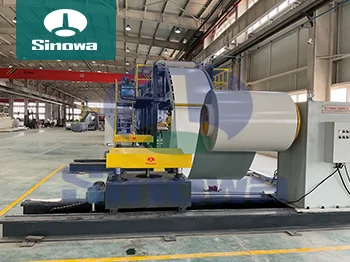
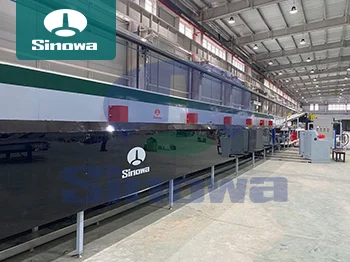
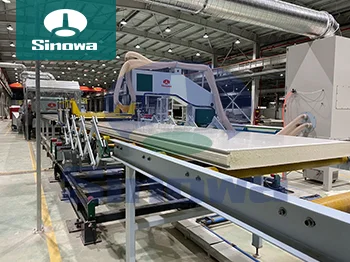
Sinowa is committed to the development and manufacturing of high-end and high-efficiency rock wool panel production line. Our rock wool panel production line are leading the way in efficiency, automatic control, human-computer interaction, environmental protection and energy consumption. Using system integration and bus control technology, it realizes the automatic integrated linkage control of the entire rock wool panel production line, and can achieve remote interactive communication, which has the world-class level and a comprehensive leading high-performance rock wool panel production line in the market.
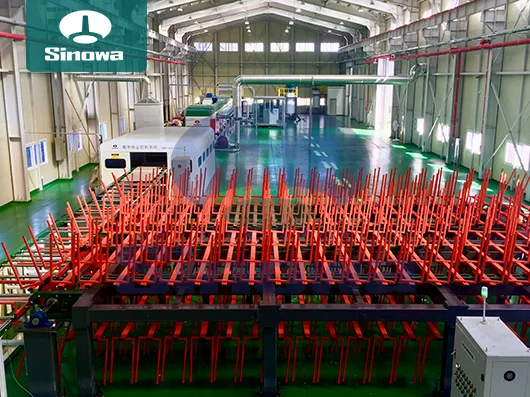
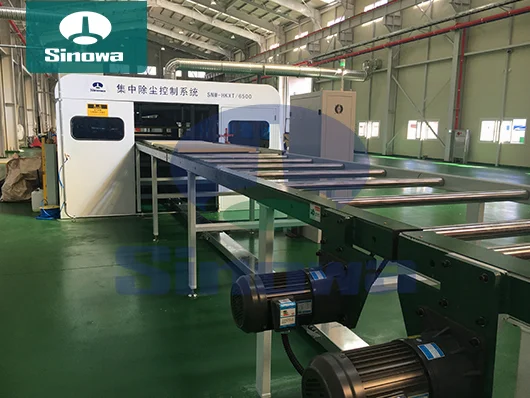
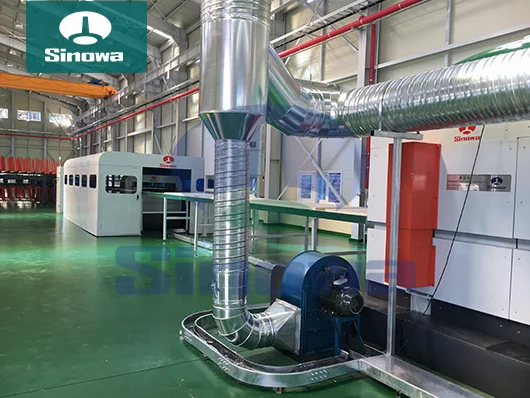
For more than ten years, relying on our innovative manufacturing concept and excellence in quality, reliable and trustworthy service to customers, we cooperate with customers all over the world, exported products to Canada, South Korea, Israel, Australia, the Middle East and other more than 20 countries and regions. contributed to building energy conservation and low-carbon production and have won widespread praise.
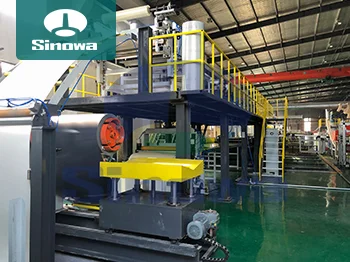
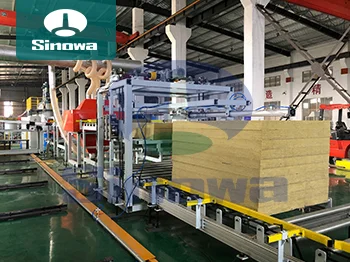
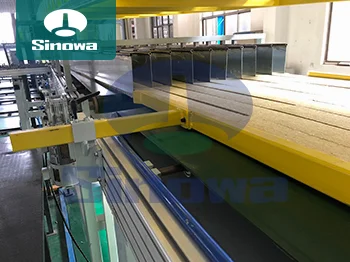
Sinowa has invested outstanding efforts in rock wool panel production line, this is why our products are more efficiency, quality, automatic control technology, environmental protection, energy consumption indicators and the appearance and safety protection are comprehensively leading, some subversive design changes in many major technical points, these major innovations make our products excellent in price/performance and user experience.
A rock wool panel production line for building applications represents a comprehensive, continuous industrial system designed to transform natural mineral raw materials into high-performance composite panels that serve multiple functional needs within modern construction projects. Unlike discrete, batch-based manufacturing equipment, this line links every operational stage into one connected workflow, starting from raw material preparation and extending all the way to finished panel trimming and stacking. At the heart of the system lies the core rock wool fiber-making unit, which processes crushed mineral feedstock selected for its stable chemical composition and suitability for high-temperature melting. Supporting modules include automatic weighing conveyors, sealed melting furnaces, centrifugal fiber spinning assemblies, binder spraying stations, fiber collection and distribution equipment, thermal curing tunnels, and final forming devices that shape raw wool into uniform boards. Many versions of this production line also integrate auxiliary units for handling surface facing materials, which bond with rock wool cores to create sandwich panels preferred for exterior walls, roof envelopes, and interior partition assemblies. The layout of the whole line is planned to balance output consistency, space utilization, and operator safety, with enclosed transfer channels to contain fine mineral dust and reduce unwanted particulate release into the surrounding factory space. Every movement of materials is coordinated through centralized control logic, allowing operators to adjust running parameters without halting the entire production sequence unnecessarily, which helps maintain steady material quality across long production runs.
The first critical operational phase of the rock wool panel production line focuses on raw material proportioning and high-temperature melting, a stage that lays the foundation for the physical characteristics of the final rock wool core. Raw mineral materials are crushed and screened into evenly sized granules before entering automated weighing silos, where precise ratios are set according to the target density and texture required for building panels. Once blended, the material mixture is conveyed into a vertical melting furnace, where sustained intense heat breaks down the solid rock structure and converts the feedstock into a flowing, homogeneous molten liquid. Temperature stability in this furnace is closely monitored, as uneven heating can create inconsistent melt viscosity, which in turn disrupts the subsequent fiber-forming process and leads to uneven panel density. Impurities that do not fully liquefy are filtered out at this stage, preventing hard inclusions that would weaken the finished panels or create gaps in the fibrous structure. The molten stream flows steadily toward the fiberizing section at a controlled rate, so that the downstream spinning equipment receives a consistent supply of melt. This stage demands stable energy input and regular internal inspection of furnace linings, as thermal wear can gradually reduce melting efficiency and introduce variation into the entire production cycle if left unaddressed over time.
After melting, the molten mineral enters the centrifugal fiberization section, widely regarded as the most technically sophisticated segment of the entire rock wool panel production line. High-speed spinning wheels catch the flowing melt and use powerful centrifugal force to stretch the thick liquid stream into countless ultra-fine mineral fibers, while compressed air jets further refine fiber dimensions and guide the newly formed fibers into a collection chamber. While fibers travel through this chamber, diluted binder agents and trace water-repellent additives are evenly sprayed onto their surfaces; these substances create bonding points between individual fibers and improve the finished panel’s resistance to moisture absorption during service in buildings. The fiber collection system accumulates the treated fibers into a loose cotton mat, and a pendulum distribution mechanism lays this mat in overlapping cross layers, a technique that boosts the structural strength and dimensional stability of the rock wool core. The orientation of fibers can be adjusted within this zone, with vertical fiber arrangement often favored for sandwich panels used on building facades, as this layout delivers better compressive strength under vertical load. Fine dust generated during fiber formation is captured by integrated filtration equipment, supporting cleaner working conditions and reducing material waste that might otherwise escape from the production line.
The newly formed fiber mat proceeds from the fiberizing chamber into the thermal curing tunnel, where heat triggers the curing reaction of the binder and locks the loose fibrous mass into a rigid, stable rock wool slab. Temperature and residence time inside the curing oven are calibrated carefully, because insufficient heat leaves the binder incompletely activated, resulting in soft panels prone to deformation, while excessive heat can degrade the binder and make the slab brittle. As the slab moves continuously through the tunnel, gentle compression rollers control its final thickness and density, smoothing surface irregularities and eliminating voids between fiber layers. Once cured, the rock wool slab maintains its shape reliably through subsequent handling, and its thermal and acoustic properties become fixed. This curing stage separates raw fibrous rock wool from usable building panels, turning a lightweight, easily disturbed fiber mat into a solid material suitable for cutting, laminating, and installation on construction sites. Cooling zones follow the curing oven, gradually lowering slab temperature before further processing to prevent thermal distortion during cutting or composite bonding operations later in the line.
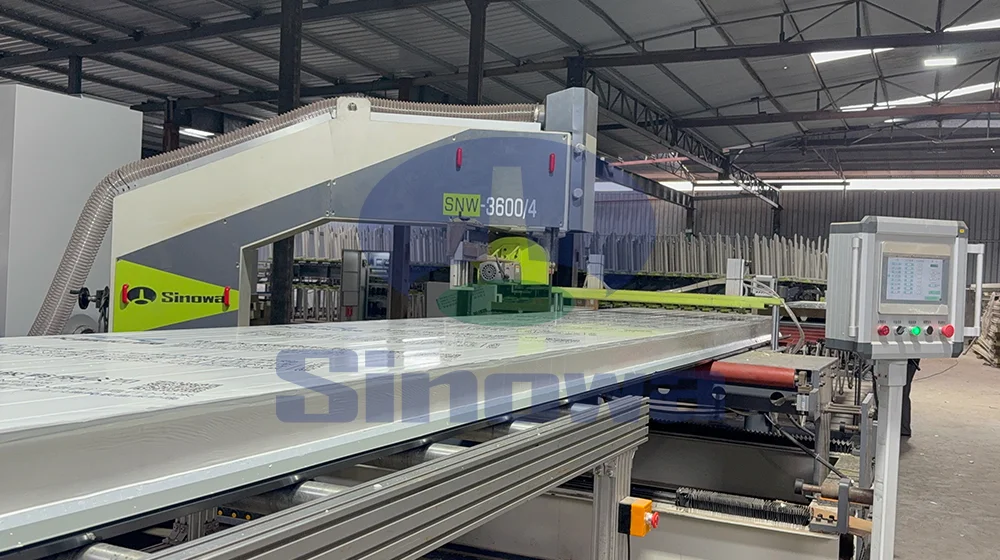
For sandwich rock wool panels, the production line incorporates an additional composite laminating workflow that combines cured rock wool cores with continuous surface facings, usually metal sheets fed from automatic decoilers at the front of this section. The facing materials pass through roll-forming tools that shape edges, create interlocking profiles, and prepare surfaces for adhesive application, ensuring tight alignment once joined with the rock wool core. Adhesive is spread uniformly across the inner surface of the top and bottom facings, and the rock wool slab is precisely positioned between the two skins before the assembly enters a continuous pressure laminator. Controlled, even pressure bonds the facings firmly to the rock wool core without crushing the internal fiber structure, preserving the insulation performance of the mineral wool. Edge trimming devices remove excess material and square the panel edges, and fixed-length cutting units slice the continuous composite strip into individual panels matching the dimensions ordered for building projects. This integrated laminating capability makes the line capable of delivering ready-to-install sandwich panels rather than only bare rock wool boards, greatly expanding its relevance for prefabricated building systems, modular construction, and rapid envelope assembly on site.
Quality monitoring runs throughout every segment of the rock wool panel production line, using real-time sensing tools to track key material traits and catch deviations before large volumes of nonconforming panels are produced. Sensors measure slab thickness, surface flatness, overall density, and binder distribution at multiple checkpoints, feeding data back to the central control interface for operators to review. Random physical sampling from the production stream supplements automated readings, allowing staff to examine how panels respond to compression, moisture exposure, and long-term thermal cycling. When parameters drift outside the target range, the control system can trigger gradual adjustments to furnace feed rates, spinning speed, binder dosage, curing temperature, or laminator pressure, rather than requiring an immediate full shutdown in many cases. This ongoing oversight helps ensure that finished panels maintain consistent insulating performance and structural reliability when installed on walls, roofs, or partition systems. The focus on uniform quality matters greatly for building applications, because inconsistent panel performance can create thermal bridging, weak fire-resistance zones, or uneven sound reduction across a finished building envelope.
Rock wool panels manufactured by such production lines bring distinct functional advantages that explain their widespread adoption in modern building design, rooted in the inherent inorganic nature of the mineral fiber core. The tangled porous fiber network slows heat transfer effectively, helping stabilize indoor temperatures and reduce the energy consumed for heating and cooling within buildings. The same fibrous structure absorbs sound waves across a broad frequency range, lowering noise transmission between adjacent spaces and from external environments, which suits auditoriums, office partitions, and urban buildings exposed to heavy ambient noise. Unlike many organic insulation alternatives, the mineral composition of rock wool resists ignition and limits flame spread, providing a passive safety function for building envelopes and compartment walls. Properly produced rock wool also retains its performance over decades; it does not easily soften, melt, or release volatile compounds under normal building temperature swings, and it maintains its insulating capacity even when exposed to intermittent humidity if treated with water-repellent additives. These combined traits make the panels suitable for diverse building environments, from humid coastal regions to facilities that require strict separation of fire zones or quiet internal working spaces.
Looking forward, ongoing evolution of rock wool panel production lines for building use centers on improving resource efficiency, reducing environmental impact during manufacturing, and expanding flexibility to match the changing demands of the construction sector. Many updated line configurations support higher shares of recycled mineral feedstock without sacrificing panel performance, diverting industrial mineral byproducts away from disposal streams while lowering reliance on newly quarried raw rock. Control systems grow more intelligent, with predictive monitoring that anticipates equipment wear and schedules maintenance before breakdowns interrupt production cycles, raising overall operational uptime. Line modularity also becomes a priority, allowing producers to reconfigure sections quickly to switch between plain rock wool boards, single-skin panels, and complex sandwich assemblies with customized edge profiles for different facade systems. As construction continues to shift toward prefabrication and low-energy building design, these production lines will remain a vital link between raw mineral resources and high-performance building components, supporting safer, quieter, and more thermally efficient built environments while refining manufacturing practices to align with broader sustainability goals.
« Rock Wool Panel Production Line For Building » Update Date: 2026/10/23
Tags: PU Edge Sealing Rock Wool Panel Production Line , Rock Wool Panel Production Line , rock wool panel production line, rock wool panel production line manufacturer, rock wool panel production line supplier, rock wool panel production line for sale, customized rock wool panel production line, china rock wool panel production line
- Low Price Rock Wool Sandwich Panel Line
- High-quality Automatic Rock Wool Production Line
- Rock Wool Board Production Line For Building
- Rockwool Sandwich Panel Production Line On Sales
- High-tech Fully Automatic Rock Wool Sandwich Panel Machine
- High-tech Rock Wool Panel Production Line
- Low Price Fully Automatic Rock Wool Sandwich Panel Production Line
- Rock Wool Sandwich Panel Machine For Construction
- Customized Rockwool Production Line
- Rock Wool Sandwich Panel Machine For House
- Rock Wool Sandwich Panel Machine For Building
- Rockwool Sandwich Panel Production Line For Cold Storage
- High-tech Mineral Wool Line
- Mineral Wool Sandwich Panel Machine For Cold Storage
- High-quality Rockwool Sandwich Panel Production Line
- Rock Wool Sandwich Panel Machine For Roof
- Rock Wool Production Line For Sale
- Rock Wool Machine Factory
- High-end Rockwool Sandwich Panel Line
- Rock Wool Sandwich Panel Production Line For Cold Room
- Links:
- Sandwich Panel Continuous Production Line
- Automatic and Continuous Sandwich Panel Production Line
- Cheap and Low Price Sandwich Panel Production Line
- China Sandwich Panel Production Line Factory
- Color Steel Sandwich Panel Production Line For Cold Storage
- Continuous Composite Foam Sandwich Panel Production Line
- Continuous Production Line For Rockwool and Mineral Wool Sandwich Panels
- Continuous PU Phenolic Insulation Panel Production Line
- Continuous PU PIR Sandwich Panel Production Line
- Continuous PUF PUR Sandwich Panel Production Line
- Continuous Sandwich Panel Production Line For Roof and Wall
- Customized and Design Sandwich Panel Production Line
- Decorative Sandwich Panel Production Line For Glass Wool Boards
- High Quality Sandwich Panel Production Line For Sale
- Polyurethane(PU) Sandwich Panel Production Line
- Sandwich Panel Production Line Manufacturer and Supplier
- Sandwich Panel Production Machinery and Equipment