
Sandwich Panel Line Design
Sinowa is a well-known manufacturer and technical service provider of high-end sandwich panel line, learn more about sandwich panel line design, please contact Sinowa's technical engineer, tell us what you need, we will contact you as soon as possible!
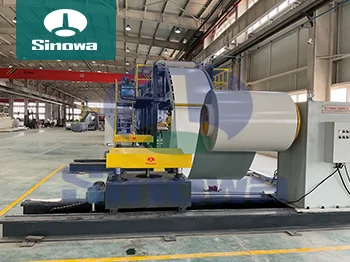
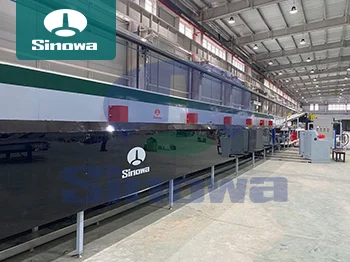
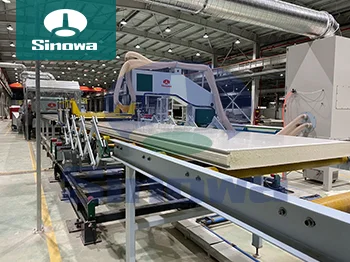
Sinowa is committed to the development and manufacturing of high-end and high-efficiency sandwich panel line. Our sandwich panel line are leading the way in efficiency, automatic control, human-computer interaction, environmental protection and energy consumption. Using system integration and bus control technology, it realizes the automatic integrated linkage control of the entire sandwich panel line, and can achieve remote interactive communication, which has the world-class level and a comprehensive leading high-performance sandwich panel line in the market.
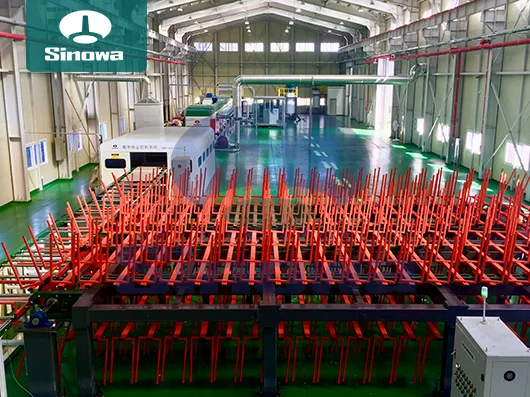
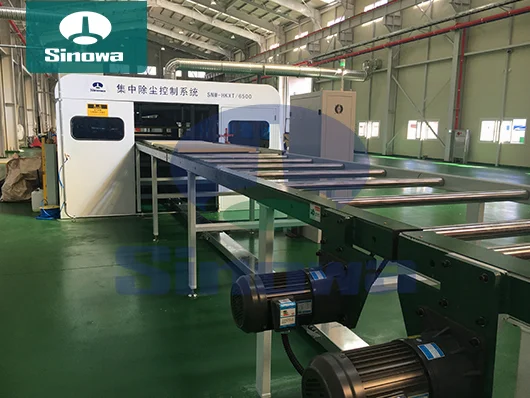
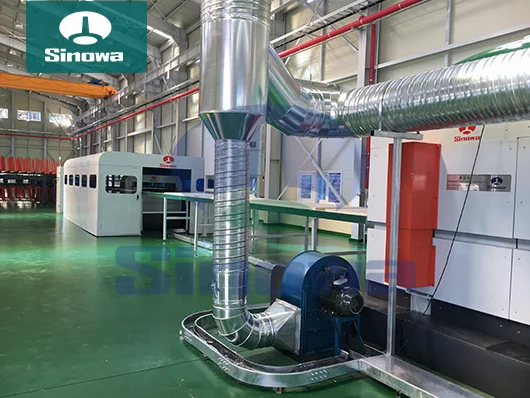
For more than ten years, relying on our innovative manufacturing concept and excellence in quality, reliable and trustworthy service to customers, we cooperate with customers all over the world, exported products to Canada, South Korea, Israel, Australia, the Middle East and other more than 20 countries and regions. contributed to building energy conservation and low-carbon production and have won widespread praise.
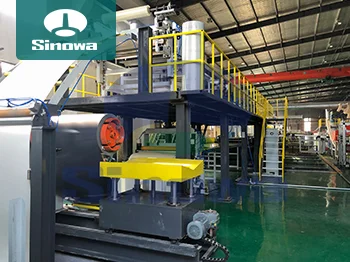
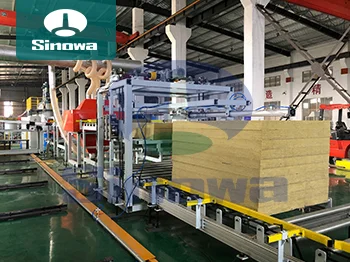
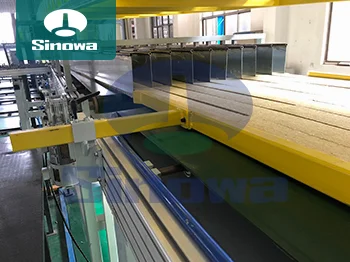
Sinowa has invested outstanding efforts in sandwich panel line, this is why our products are more efficiency, quality, automatic control technology, environmental protection, energy consumption indicators and the appearance and safety protection are comprehensively leading, some subversive design changes in many major technical points, these major innovations make our products excellent in price/performance and user experience.
The design of a sandwich panel production line begins with a careful evaluation of core functional requirements that shape every subsequent layout and equipment selection decision. At the heart of this process lies an understanding of the finished panel’s structural makeup, including the properties of the outer facings and the inner core material that together define thermal performance, rigidity, and surface finish. Designers must account for the continuous flow of raw materials as they move from initial unwinding stations through forming, bonding, and curing stages, avoiding bottlenecks that can slow throughput or create inconsistent product quality. Material handling characteristics demand close attention, especially for lightweight core substrates that can shift, compress, or absorb moisture if not supported properly during conveyance. The geometry of the line itself is planned around available floor space, with clear separation between material storage zones, active production zones, and finished product offloading areas to reduce cross-traffic and safety risks. Adjustment mechanisms are integrated into each module to accommodate variations in panel thickness and width, allowing the same line framework to support a broader product portfolio without extensive reengineering. Even minor oversights in the sequencing of feeding and alignment units can lead to misaligned facings, uneven adhesive distribution, or distorted panel edges, which means iterative simulation of material movement is essential before physical assembly commences. Every design choice balances stable, repeatable operation with operational flexibility, ensuring the system can adapt to shifts in product demand while maintaining consistent output over long production runs.
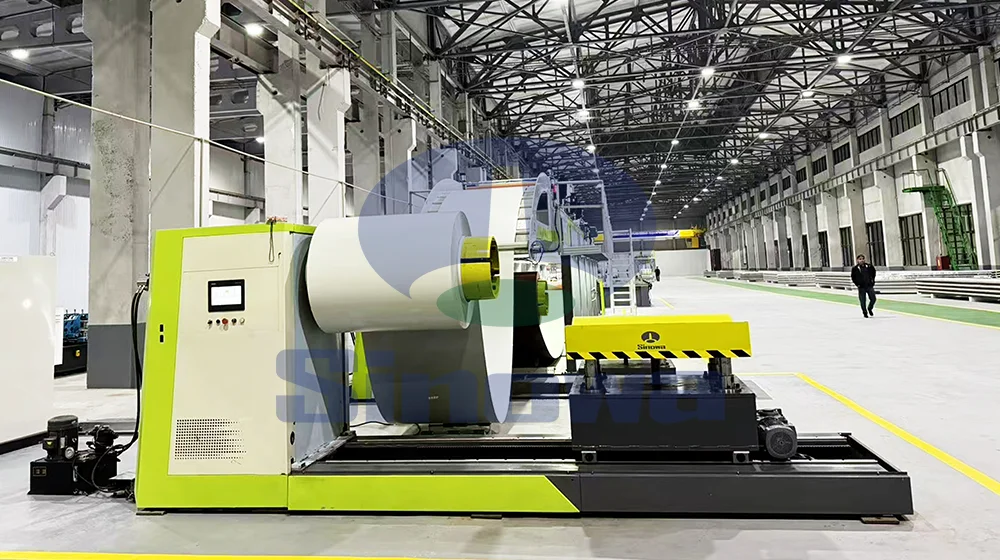
Adhesive application stands as one of the most technically sensitive segments within sandwich panel line design, as uniform bonding directly determines the long-term integrity of the finished composite structure. The system is engineered to deliver adhesive in a controlled pattern across the surfaces of both the outer facings and the core material, matching application rates to line speed and surface porosity to prevent under-gluing or excess squeeze-out that contaminates rollers and guides. Spray or roller-based application configurations are selected based on the viscosity of the bonding medium and the surface texture of the substrates, with enclosed housings to limit airborne particles and reduce waste. Temperature regulation within the adhesive circuit maintains consistent flow properties, eliminating fluctuations that would change coating weight as ambient conditions shift. Sensors positioned immediately after the application station provide real-time feedback on coverage, triggering minor adjustments to pump pressure or spreader gap without halting the entire line. Designers also plan for simple cleaning access, since cured adhesive buildup can degrade surface quality and accelerate wear on moving components. Transition guides after the adhesive zone are shaped to bring the facings and core together gradually, avoiding sudden compression that pushes adhesive away from critical bonding zones. This stage is not isolated from the rest of the line; its operating parameters are linked to the speed of upstream unwinders and downstream pressing units, creating a synchronized rhythm that protects bond quality through every cycle of production.
Continuous pressing and forming modules serve to consolidate the layered materials into a unified sandwich panel while establishing the flatness, dimensional accuracy, and surface profile required for end use. The pressing section uses a series of matched upper and lower rollers or continuous belt systems that apply evenly distributed pressure across the full width of the moving panel, eliminating voids, wrinkles, and gaps between the core and facings. Pressure profiles are calibrated carefully: too little pressure leaves weak bonding points, while excessive pressure crushes the cellular core and compromises the panel’s insulating and load-bearing traits. Thermal energy can be introduced within this zone to accelerate adhesive curing, with heat spread evenly across the contact surfaces to prevent localized overheating that damages facings or degrades core material. The frame of the press structure is built for rigidity to resist deflection under operating load, preserving parallel alignment between the top and bottom contact surfaces even during extended periods of high-speed operation. Fine tuning of pressure and temperature settings is made possible through modular control interfaces, so operators can dial in conditions suited for different material combinations. Edge guiding devices work in tandem with the press to keep the layered stack centered, preventing lateral drift that results in uneven panel margins. The exit from the press delivers a semi-finished rigid composite that retains its shape as it travels onward, marking the point where separate raw components become a single integrated panel structure.
Curing and conditioning arrangements in the sandwich panel line design create a stable environment for the bonding agent to reach full strength before the panel undergoes cutting and handling. The length and layout of the curing tunnel are calculated based on the cure kinetics of the selected adhesive and the operating line speed, ensuring sufficient dwell time without forcing an unnecessarily large equipment footprint. Air circulation patterns inside the tunnel avoid stagnant pockets and hot spots, maintaining consistent environmental conditions along the entire travel path of the panel. Ventilation is balanced to remove volatile emissions without creating drafts that cool panel surfaces too quickly and disrupt the curing reaction. Support rollers within the tunnel are spaced to prevent sagging of the newly bonded panel, which is still vulnerable to permanent deformation before the adhesive has hardened fully. Insulation on the tunnel enclosure reduces energy consumption and shields surrounding work areas from radiated heat. Monitoring devices track temperature and air flow at multiple points, feeding data back to the central control system to make automatic corrections when readings drift outside the target range. The transition out of the curing zone allows for gradual cooling, minimizing thermal stress between dissimilar facings and core materials that could lead to warping after the panel leaves the production line. This phase turns the freshly pressed composite into a dimensionally stable product ready for precision sizing.
Cutting, trimming, and edge finishing units are integrated after curing to divide the continuous panel stock into predetermined lengths and refine edges for clean, uniform appearance and fit during installation. Flying cut systems are commonly incorporated so cutting action occurs while the panel remains in motion, eliminating the productivity loss that comes from stopping the line for each cut cycle. Cutting tools are selected to suit the hardness and abrasiveness of the facing sheets and the friability of the core, with dust and debris extraction fitted directly at the cutting point to keep the work path clear and reduce particulate accumulation on equipment. Trimming heads remove uneven edge strips to achieve consistent panel width, and optional profiling attachments can form interlocking joint shapes along panel edges to simplify assembly once products reach the job site. All cutting and trimming operations are synchronized with the line encoder, which tracks travel distance and triggers cuts at precise positions based on programmed length values. Tool wear monitoring alerts operators when blade performance declines, helping avoid ragged cuts, chipped core material, or burrs on metal facings. Scrap from trimming is routed away automatically, streamlining housekeeping and reducing the chance that offcuts jam conveyance paths. The design of this section prioritizes precision and uptime, as consistent length and edge quality directly reduce waste during downstream packaging and on-site application of the sandwich panels.
Conveyance and alignment systems form the connective backbone of the entire sandwich panel line, guiding materials smoothly from one processing stage to the next while preserving positional accuracy. Unwinding stations for facing rolls include tension control to maintain steady pull force, preventing stretching or slack that creates wavy surfaces and misalignment as layers meet the core. Each transfer section uses a combination of driven rollers, idle supports, and side guide wheels that can be adjusted for different panel widths. Guide geometry is designed to make gentle corrections rather than forcing abrupt lateral shifts, which can delaminate partially cured panels or scratch delicate facing surfaces. Conveyor speed across all stations is electronically synchronized, so there is no tugging or bunching between the adhesive application zone, press, curing tunnel, and cutting area. Low-friction surface treatments on idle rollers reduce scuffing on coated or finished facings, and roller spacing is adjusted to support thin or low-stiffness panels without inducing flex. Emergency stop points are distributed along the conveyor run to meet operational safety needs, and guards cover moving chains and drive components where contact hazards exist. The conveyance framework must be robust enough to handle continuous cycling, yet modular enough so individual segments can be accessed for maintenance without dismantling large portions of the production line. Reliable material movement removes a major source of variability and keeps the whole process operating in harmony.
Automation and control architecture tie all discrete modules of the sandwich panel line into a cohesive, responsive system that simplifies operation and supports consistent quality output. The central control interface consolidates setpoints for line speed, adhesive flow, pressing pressure, curing temperature, cut lengths, and alignment offsets into one accessible location for trained operators. Recipe storage functionality allows complete parameter sets for specific panel configurations to be saved and recalled, cutting down the time required for product changeovers and reducing human error during manual adjustment. Data logging captures key operating metrics over time, making it easier to trace quality variations back to shifts in process conditions rather than material inconsistency. Interlock logic prevents unsafe or conflicting actions, such as starting adhesive pumps before the unwinders are active or initiating a cut cycle when the panel position signal is unreliable. Remote diagnostic access enables technical review of system behavior without physical disassembly, speeding troubleshooting when performance deviates from expectations. The control design balances automated regulation with manual override options, giving operators the ability to intervene cautiously when unusual material behavior appears. Signal wiring and communication pathways are routed to avoid interference from heat, dust, and vibration common in production environments. A well-designed control system does not remove human oversight, but it reduces repetitive adjustment work and gives operators clearer visibility into the state of every part of the sandwich panel forming process.
Maintenance planning and long-term operational resilience are embedded within sandwich panel line design from the earliest stages, extending the service life of equipment and limiting unplanned downtime. Critical wear components such as spreader rollers, cutting blades, conveyor belts, and seal elements are positioned for straightforward removal and replacement, with standardized mounting interfaces to reduce specialized tool requirements. Lubrication points are grouped and clearly positioned to support scheduled servicing, and sealed bearing assemblies are used in high-dust areas to slow the ingress of fine core particles and adhesive residue. Drain ports and access panels are built into adhesive manifolds and curing tunnels to facilitate deep cleaning, which prevents hardened buildup from gradually altering process performance. The layout reserves clear walkways around major assemblies so maintenance teams can inspect, test, and repair without disrupting adjacent production activities. Component redundancy is considered for select high-impact subsystems, so a single sensor or drive fault does not disable the entire line immediately. The design also accounts for future upgrade potential, leaving spare capacity in the control platform and structural frame to accommodate optional add-on modules later, such as surface marking, film lamination, or automated stacking. By prioritizing serviceability alongside production capacity, the line maintains stable performance across years of continuous operation, protecting the reliability of sandwich panel output and lowering the total operational burden associated with routine care and component renewal.
« Sandwich Panel Line Design » Update Date: 2026/10/26
Tags: Sandwich Panel Line , Fully Automatic Sandwich Panel Line , PUF Insulation Sandwich Panel Line , Decorative Sandwich Panel Line , Foam Core Sandwich Panel Line , Isolation PU Sandwich Panel Line , Glass Wool Sandwich Panel Line , Fully Automatic PU Sandwich Panel Line , Continuous Sandwich Panel Line , PUR Sandwich Panel Line , PIR Sandwich Panel Line , Rockwool Sandwich Panel Line , Rock Wool Sandwich Panel Line , Mineral Wool Sandwich Panel Line , Polyurethane Sandwich Panel Line , PU Sandwich Panel Line , Insulated Sandwich Panel Line , Continuous PU Sandwich Panel Line , sandwich panel line, sandwich panel line manufacturer, sandwich panel line supplier, sandwich panel line for sale, customized sandwich panel line, china sandwich panel line
- PU Foam Production Line Factory
- Cheap PIR Sandwich Panel Machine
- PUR Sandwich Panel Machine Factory
- Polyurethane Sandwich Panel Machinery For Roof
- High-end PUF Panel Machine
- High Efficiency Automatic Sandwich Panel Production Line
- Polyurethane Foam Production Line Price
- Low Price Polyurethane Sandwich Panel Manufacturing Line
- PU Sandwich Panel Line For Cold Storage
- PUR Sandwich Panel Machine Design
- Fully Automatic PU Sandwich Panel Machine For Sale
- Continuous PUF Panel Production Line Manufacturer
- PIR Sandwich Panel Machine From China
- Sandwich Wall Panel Production Line Design
- Fully Automatic PU Sandwich Panel Line On Sales
- Polyurethane Sandwich Panel Production Line On Sales
- High Efficiency Sandwich Panel Manufacturing Line
- Polyurethane Sandwich Panel Machinery Manufacturer
- High-tech Glass Wool Sandwich Panel Line
- Sandwich Panel Making Machine Price
- Links:
- Sandwich Panel Continuous Production Line
- Automatic and Continuous Sandwich Panel Production Line
- Cheap and Low Price Sandwich Panel Production Line
- China Sandwich Panel Production Line Factory
- Color Steel Sandwich Panel Production Line For Cold Storage
- Continuous Composite Foam Sandwich Panel Production Line
- Continuous Production Line For Rockwool and Mineral Wool Sandwich Panels
- Continuous PU Phenolic Insulation Panel Production Line
- Continuous PU PIR Sandwich Panel Production Line
- Continuous PUF PUR Sandwich Panel Production Line
- Continuous Sandwich Panel Production Line For Roof and Wall
- Customized and Design Sandwich Panel Production Line
- Decorative Sandwich Panel Production Line For Glass Wool Boards
- High Quality Sandwich Panel Production Line For Sale
- Polyurethane(PU) Sandwich Panel Production Line
- Sandwich Panel Production Line Manufacturer and Supplier
- Sandwich Panel Production Machinery and Equipment