
Sandwich Panel Production Line Design
Sinowa is a well-known manufacturer and technical service provider of high-end sandwich panel production line, learn more about sandwich panel production line design, please contact Sinowa's technical engineer, tell us what you need, we will contact you as soon as possible!
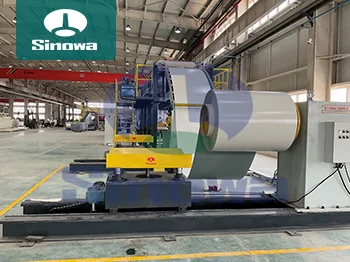
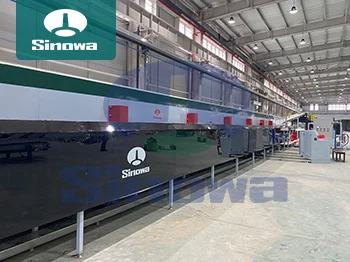
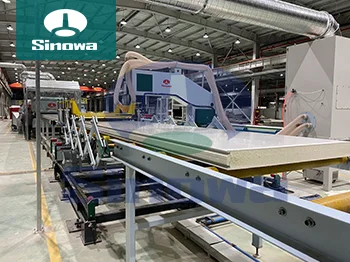
Sinowa is committed to the development and manufacturing of high-end and high-efficiency sandwich panel production line. Our sandwich panel production line are leading the way in efficiency, automatic control, human-computer interaction, environmental protection and energy consumption. Using system integration and bus control technology, it realizes the automatic integrated linkage control of the entire sandwich panel production line, and can achieve remote interactive communication, which has the world-class level and a comprehensive leading high-performance sandwich panel production line in the market.
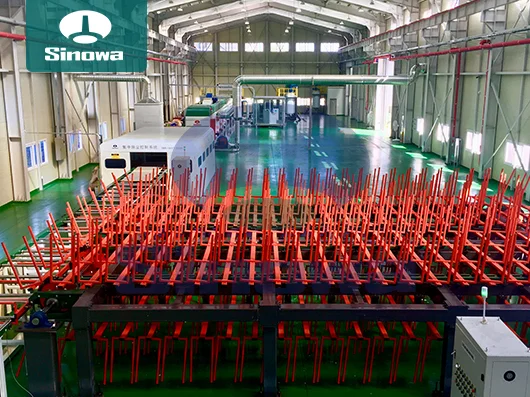
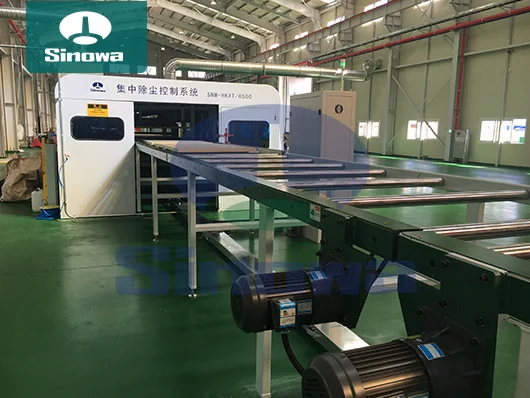
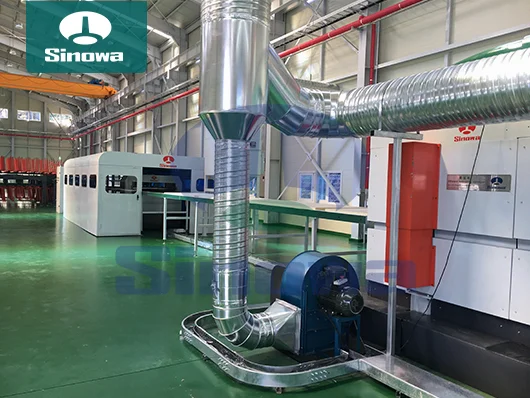
For more than ten years, relying on our innovative manufacturing concept and excellence in quality, reliable and trustworthy service to customers, we cooperate with customers all over the world, exported products to Canada, South Korea, Israel, Australia, the Middle East and other more than 20 countries and regions. contributed to building energy conservation and low-carbon production and have won widespread praise.
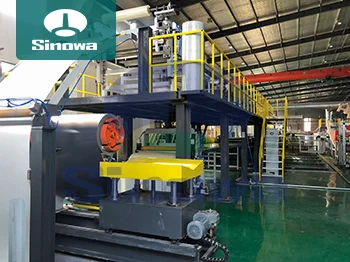
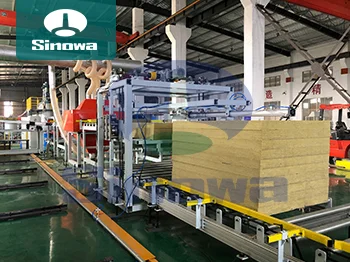
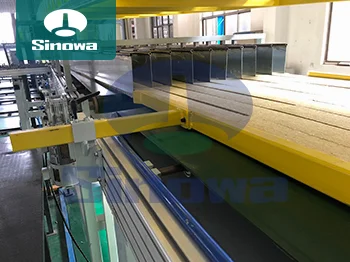
Sinowa has invested outstanding efforts in sandwich panel production line, this is why our products are more efficiency, quality, automatic control technology, environmental protection, energy consumption indicators and the appearance and safety protection are comprehensively leading, some subversive design changes in many major technical points, these major innovations make our products excellent in price/performance and user experience.
Sandwich panel production line design is a sophisticated integration of mechanical, electrical, hydraulic, pneumatic, and intelligent control technologies, aimed at realizing the continuous and automated production of high-performance composite panels. These panels, composed of two facing materials and a core material sandwiched in between, have gained widespread application in construction, refrigeration, transportation, and industrial fields due to their excellent thermal insulation, sound absorption, fire resistance, and structural strength. The rationality of the production line design directly determines the production efficiency, product quality stability, and long-term operational reliability, making it a crucial link in the entire sandwich panel manufacturing industry. A well-designed production line not only optimizes the production process and reduces material waste but also adapts to the diverse needs of different products, laying a solid foundation for enterprises to enhance market competitiveness.
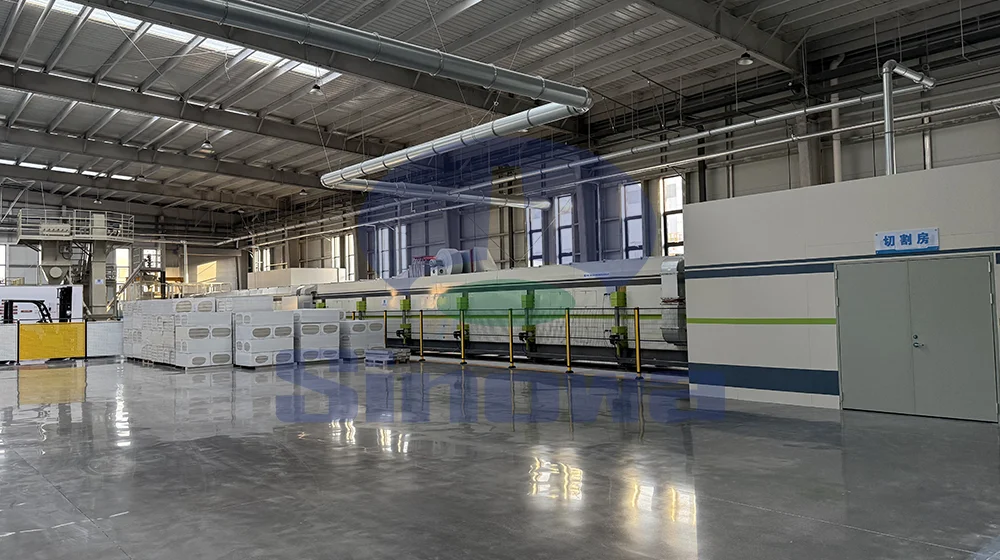
The core principle of sandwich panel production line design is to achieve the seamless connection of each production link, from raw material input to finished product output, through scientific module configuration and precise parameter control. The design process needs to fully consider the characteristics of different raw materials, the technical requirements of the production process, and the actual needs of production scale, ensuring that each component works in coordination and each process is closely linked. Unlike traditional discrete production methods, modern sandwich panel production lines adopt a continuous operation mode, which greatly improves production efficiency and reduces the impact of human factors on product quality. At the same time, the design should also take into account the flexibility and expandability of the production line, so that it can quickly adjust to changes in product specifications and market demand, and realize the production of multiple types of sandwich panels with one line.
Raw material handling is the starting link of the sandwich panel production line, and its design rationality directly affects the smooth progress of subsequent processes. The raw materials of sandwich panels mainly include facing materials and core materials. Facing materials usually include metal coils such as color-coated steel plates, aluminum plates, and stainless steel plates, while core materials can be divided into organic core materials such as polyurethane, polystyrene, and phenolic foam, and inorganic core materials such as rock wool and glass wool. The raw material handling system of the production line needs to be designed according to the type and characteristics of the raw materials. For metal coil facing materials, the design should include an uncoiling system, a leveling system, and a surface cleaning system. The uncoiling system adopts a hydraulic expansion shaft design, equipped with an automatic centering device and a tension control system, which can stably uncoil metal coils of different specifications and thicknesses, ensuring that the coils are fed smoothly without deviation. The leveling system uses a high-precision multi-roll leveling unit to eliminate the internal stress of the metal plate, making the surface of the plate flat and smooth, which provides a good foundation for subsequent molding and bonding processes. The surface cleaning system uses high-pressure air or brush cleaning to remove dust, oil stains, and other impurities on the surface of the metal plate, avoiding the impact of impurities on the bonding strength between the facing material and the core material.
For core materials, the handling system design varies according to the type of core material. For organic core materials such as polyurethane, the production line needs to be equipped with a precise metering and mixing system. This system includes a raw material storage tank, a metering pump, and a high-pressure mixing head. The raw material storage tank is designed with a temperature control device to maintain the raw materials at an optimal temperature, ensuring the stability of the foaming reaction. The metering pump adopts precision control technology, with a metering error of less than 1%, which can accurately control the proportion of each component of the core material, ensuring the uniformity and stability of the core material performance. The high-pressure mixing head can fully mix the raw materials in a short time, ensuring that the foaming reaction is sufficient and uniform. For inorganic core materials such as rock wool and glass wool, the handling system includes an automatic feeding device and a carding and laying device. The automatic feeding device can stably transport the loose core material to the carding device, and the carding and laying device combs the loose core material into a uniform felt and lays it to the required thickness, ensuring the uniformity of the core material density and thickness.
The forming system is the core part of the sandwich panel production line, which determines the shape, size, and structural strength of the sandwich panel. The design of the forming system needs to be combined with the type of sandwich panel and the production process requirements. For metal-faced sandwich panels, the forming system usually includes a roll forming unit and a composite compression molding unit. The roll forming unit adopts a multi-pass progressive rolling process, through 12-24 sets of precision rollers, the flat metal plate is gradually formed into the desired shape, such as tongue-and-groove edges and sealing lips, which not only enhances the structural strength of the panel but also facilitates the installation of the panel. The roll forming unit is equipped with servo drive technology, with a forming accuracy of ±0.1mm, ensuring the consistency of the panel shape and size. The composite compression molding unit is used to bond the facing material and the core material into an integral structure. It can adopt a double-belt continuous press or a multi-roll composite system, with an adjustable pressure range of 5-50 tons. The temperature zoning control technology is adopted to adapt to the bonding requirements of different core materials, ensuring that the adhesive is fully cured and the bonding strength between the facing material and the core material meets the requirements. The composite compression molding unit is also equipped with an automatic thickness adjustment device, with a thickness accuracy of ±0.2mm, which can accurately control the thickness of the sandwich panel.
In the design of the forming system, it is also necessary to consider the problem of foam overflow for sandwich panels with foam core materials. The side mold control system is an important part of the forming system, which is responsible for maintaining the width of the panel, preventing foam overflow, and defining the edge geometry of the panel. Modern production lines adopt PLC-controlled, motor-driven XYZ movement systems for side mold control, which can realize precise adjustment of the side mold in three axes, ensuring the dimensional accuracy of the panel edge and reducing the scrap rate caused by foam overflow. The side mold system can also realize quick adjustment according to different panel specifications, improving the flexibility of the production line.
The cutting and stacking system is the final link of the sandwich panel production line, which directly affects the appearance quality and packaging efficiency of the finished product. The design of the cutting system needs to ensure high precision and high efficiency. The cutting equipment usually adopts a CNC flying saw or a laser cutting device, which is controlled by a servo system, with a cutting accuracy of ±1mm, and can realize fixed-length cutting according to the user's requirements. The cutting device is equipped with an automatic length measurement system, which can real-time monitor the length of the panel and adjust the cutting position in time to ensure the accuracy of the panel length. For the cutting of different core materials, the cutting tool and cutting parameters need to be reasonably selected. For example, for foam core materials, a sharp blade with an optimal angle should be used to ensure clean cutting without damaging the core material; for rock wool core materials, a special cutting tool should be used to reduce dust generation.
The stacking system is designed to realize the automatic stacking and sorting of finished products, reducing manual labor intensity and improving stacking efficiency. The stacking system usually includes a robotic arm or an automatic stacking machine, which can automatically stack the cut panels according to the specified height and quantity, and realize automatic counting. The stacking system is equipped with a protective device to avoid collision and damage to the panel surface during the stacking process. At the same time, the stacking system can be adjusted according to the size and weight of the panel, adapting to the stacking needs of different specifications of panels.
Intelligent control system is an important part of modern sandwich panel production line design, which realizes the automatic control and intelligent management of the entire production line. The control system adopts a PLC + industrial computer dual control mode, which can real-time monitor the operation status of each equipment and each process parameter, such as temperature, pressure, speed, and material flow. The control system has a human-computer interaction interface, which is easy to operate and can realize parameter setting, process adjustment, and fault query. The intelligent control system also has functions such as data cloud storage and analysis, fault self-diagnosis, and remote maintenance. Through data cloud storage and analysis, it can record the production data of each batch, provide data support for production optimization and quality improvement; through fault self-diagnosis, it can timely find the fault location and fault cause, reduce the maintenance time and maintenance cost; through remote maintenance, technical personnel can remotely adjust the equipment parameters and troubleshoot, improving the operational reliability of the production line.
Energy conservation and environmental protection are important trends in the design of modern sandwich panel production lines. In the design process, various energy-saving technologies are adopted to reduce energy consumption and environmental pollution. For example, the thermal energy recovery system is used to recover the waste heat generated in the production process, with a thermal energy recovery utilization rate of more than 85%; the frequency conversion energy-saving technology is adopted for the motor of the equipment, which can comprehensively save 30% of electricity; the exhaust gas treatment system is equipped to ensure that the exhaust gas generated in the production process meets the emission standards. At the same time, the production line adopts a closed production mode to reduce dust and noise pollution, and uses environmentally friendly raw materials and adhesives to reduce the impact on the environment. For example, cyclopentane is used as a foaming agent instead of CFC, which avoids damage to the ozone layer and realizes green production.
The flexibility and expandability of the production line are also important considerations in the design. With the continuous changes in market demand, the production line needs to be able to quickly adjust to produce sandwich panels of different specifications, different core materials, and different surface treatments. The modular design is adopted in the production line design, and each functional module is independent and can be flexibly combined and replaced. For example, the roll forming module can quickly replace the mold to produce panels of different shapes and sizes; the core material handling module can be adjusted according to the type of core material to realize the production of different core material sandwich panels. The expandability of the production line means that new functional modules can be added on the basis of the existing production line according to the development needs of the enterprise, avoiding the waste caused by the replacement of the entire production line.
In the design process of the sandwich panel production line, it is also necessary to consider the safety and maintainability of the equipment. The production line is equipped with a complete safety protection system, such as emergency stop buttons, safety doors, and protective covers, to ensure the personal safety of operators. The equipment is designed with a reasonable structure, and the key components are easy to disassemble and assemble, which is convenient for daily maintenance and maintenance. The design of the production line also considers the accessibility of the equipment, so that maintenance personnel can easily inspect and maintain the equipment, reducing the maintenance difficulty and maintenance cost.
The application of advanced technologies is constantly promoting the innovation and development of sandwich panel production line design. With the development of digital and intelligent technologies, the production line is gradually moving towards intelligence and digitalization. For example, the application of Internet of Things technology realizes the real-time monitoring and remote control of equipment; the application of artificial intelligence technology realizes the intelligent optimization of production parameters and the intelligent prediction of equipment faults; the application of digital twins technology can simulate the operation process of the production line, optimize the production process, and reduce the trial and error cost in the design and debugging process. These advanced technologies not only improve the production efficiency and product quality of the production line but also reduce the labor intensity of operators and promote the transformation and upgrading of the sandwich panel manufacturing industry.
In addition, the design of the sandwich panel production line also needs to consider the actual production environment and site conditions. The layout of the production line should be reasonable, making full use of the site space, and ensuring the smooth flow of materials and the convenient operation of operators. The layout of the production line should also consider the ventilation, lighting, and fire-fighting conditions of the workshop, creating a safe and comfortable production environment for operators. At the same time, the design of the production line should comply with relevant industrial standards and specifications, ensuring the legality and safety of the production line.
The performance of the sandwich panel production line directly affects the quality of the finished sandwich panel. A well-designed production line can produce sandwich panels with uniform thickness, flat surface, firm bonding, and stable performance, which can meet the needs of different application fields. For example, in the construction field, sandwich panels produced by a high-quality production line have excellent thermal insulation and fire resistance, which can be used as wall, roof, and floor materials for prefabricated buildings; in the refrigeration field, sandwich panels have good thermal insulation performance, which can be used as insulation materials for cold storage and refrigerated trucks; in the industrial field, sandwich panels have good sound absorption and corrosion resistance, which can be used as partition materials for factories and workshops.
With the continuous growth of the global sandwich panel market, the demand for high-efficiency, high-quality, and flexible sandwich panel production lines is increasing. The design of the production line needs to keep pace with the times, continuously absorb advanced technologies and design concepts, and optimize the production process and equipment configuration. In the future, the sandwich panel production line will develop towards higher automation, intelligence, energy conservation, and environmental protection. The integration of digital and intelligent technologies will be more in-depth, and the production line will have stronger flexibility and adaptability, which can better meet the diverse needs of the market. At the same time, the design of the production line will pay more attention to the sustainability of the entire production process, realizing the coordinated development of economic benefits, social benefits, and environmental benefits.
In conclusion, the design of the sandwich panel production line is a comprehensive system engineering, which involves multiple disciplines and fields such as mechanical design, electrical control, material science, and environmental protection. A reasonable design needs to fully consider the characteristics of raw materials, production process requirements, production scale, market demand, energy conservation, and environmental protection. Only by integrating various factors and adopting advanced design concepts and technologies can we design a high-efficiency, high-quality, flexible, and environmentally friendly sandwich panel production line, which provides strong support for the development of the sandwich panel manufacturing industry. The continuous optimization and innovation of production line design will promote the continuous improvement of sandwich panel product quality and production efficiency, and promote the healthy and sustainable development of the entire industry.
« Sandwich Panel Production Line Design » Update Date: 2026/4/20
Tags: Continuous PUR Sandwich Panel Production Line , Continuous PUF Sandwich Panel Production Line , Insulated Sandwich Panel Production Line , PUF Sandwich Panel Production Line , Wall Sandwich Panel Production Line , Roof Sandwich Panel Production Line , Cold Room Sandwich Panel Production Line , Cold Storage Sandwich Panel Production Line , Metal Sandwich Panel Production Line , Metal Carved Insulated Sandwich Panel Production Line , Isolation Sandwich Panel Production Line , Corrugated Sandwich Panel Production Line , Fully Automatic Rock Wool Sandwich Panel Production Line , Fully Automatic PU Sandwich Panel Production Line , Foam Sandwich Panel Production Line , Decorative PU Sandwich Panel Production Line , Continuous PU Sandwich Panel Production Line , PUR Sandwich Panel Production Line , PIR Sandwich Panel Production Line , Sandwich Panel Production Line , Soundproofing Sandwich Panel Production Line , Rock Wool Sandwich Panel Production Line , Mineral Wool Sandwich Panel Production Line , Rockwool Sandwich Panel Production Line , Glass Wool Sandwich Panel Production Line , Continuous Sandwich Panel Production Line , Composite Sandwich Panel Production Line , Color Steel Sandwich Panel Production Line , Automatic Sandwich Panel Production Line , Polyurethane Sandwich Panel Production Line , PU Sandwich Panel Production Line ,
- Sandwich Foam Panel Making Machine On Sales
- PU Sandwich Panel Making Machine On Sales
- Customized PIR Sandwich Panel Line
- High-tech Foam Sandwich Panel Machine
- Custom PU Sandwich Panel Making Machine
- Polyurethane Sandwich Panel Production Line Supplier
- Custom Sandwich Panel Production Machinery
- PU Insulated Panel Production Line Manufacturer
- High-tech Polyurethane Foam Production Line
- Composite Panel Production Line On Sales
- Low Price PIR Insulated Panel Production Line
- Polyurethane Insulation Panel Production Line
- Sandwich Panel Production Line Factory
- High-tech PUF Panel Making Machine
- Continuous PUF Panel Production Line For Sale
- Decorative PU Sandwich Panel Production Line Price
- High-end Glass Wool Equipment
- Polyurethane Sandwich Panel Machinery
- Sandwich Wall Panel Production Line From China
- Cheap PUR Sandwich Panel Production Line
- Links:
- Sandwich Panel Continuous Production Line
- Automatic and Continuous Sandwich Panel Production Line
- Cheap and Low Price Sandwich Panel Production Line
- China Sandwich Panel Production Line Factory
- Color Steel Sandwich Panel Production Line For Cold Storage
- Continuous Composite Foam Sandwich Panel Production Line
- Continuous Production Line For Rockwool and Mineral Wool Sandwich Panels
- Continuous PU Phenolic Insulation Panel Production Line
- Continuous PU PIR Sandwich Panel Production Line
- Continuous PUF PUR Sandwich Panel Production Line
- Continuous Sandwich Panel Production Line For Roof and Wall
- Customized and Design Sandwich Panel Production Line
- Decorative Sandwich Panel Production Line For Glass Wool Boards
- High Quality Sandwich Panel Production Line For Sale
- Polyurethane(PU) Sandwich Panel Production Line
- Sandwich Panel Production Line Manufacturer and Supplier