
Sandwich Panel Production Line Manufacturer
Sinowa is a well-known manufacturer and technical service provider of high-end sandwich panel production line, learn more about sandwich panel production line manufacturer, please contact Sinowa's technical engineer, tell us what you need, we will contact you as soon as possible!
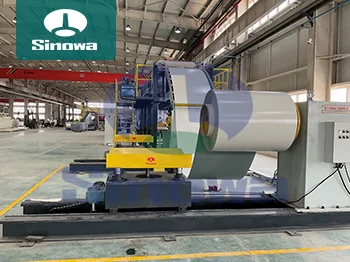
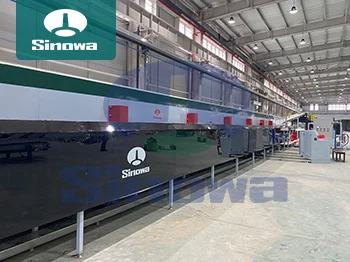
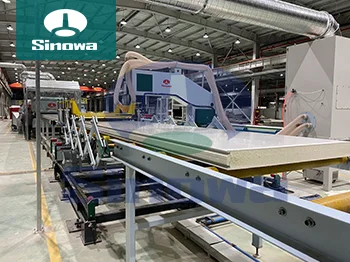
Sinowa is committed to the development and manufacturing of high-end and high-efficiency sandwich panel production line. Our sandwich panel production line are leading the way in efficiency, automatic control, human-computer interaction, environmental protection and energy consumption. Using system integration and bus control technology, it realizes the automatic integrated linkage control of the entire sandwich panel production line, and can achieve remote interactive communication, which has the world-class level and a comprehensive leading high-performance sandwich panel production line in the market.
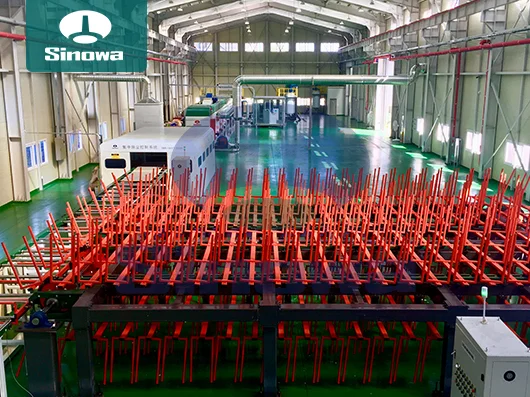
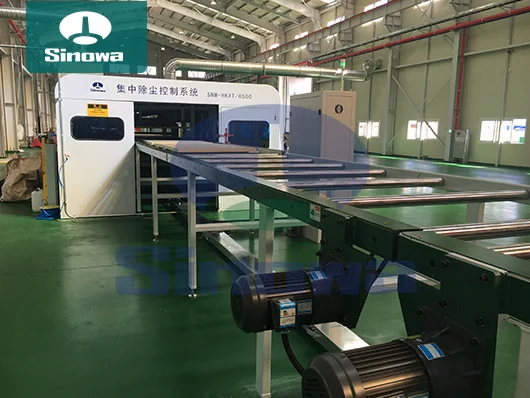
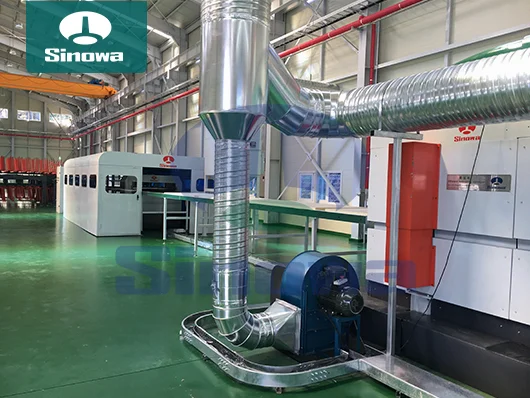
For more than ten years, relying on our innovative manufacturing concept and excellence in quality, reliable and trustworthy service to customers, we cooperate with customers all over the world, exported products to Canada, South Korea, Israel, Australia, the Middle East and other more than 20 countries and regions. contributed to building energy conservation and low-carbon production and have won widespread praise.
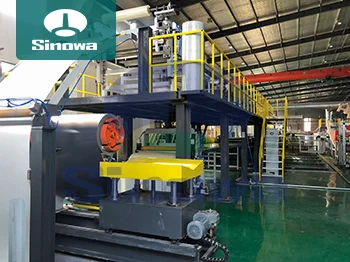
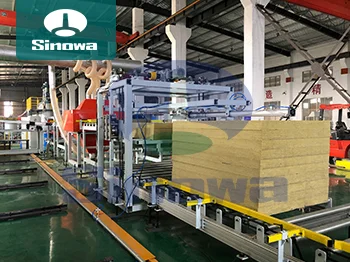
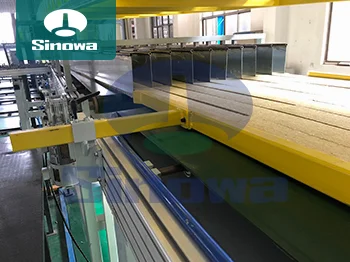
Sinowa has invested outstanding efforts in sandwich panel production line, this is why our products are more efficiency, quality, automatic control technology, environmental protection, energy consumption indicators and the appearance and safety protection are comprehensively leading, some subversive design changes in many major technical points, these major innovations make our products excellent in price/performance and user experience.
A sandwich panel production line is a highly automated and integrated manufacturing system designed to produce high-quality composite panels with a unique "sandwich" structure, consisting of two outer facing layers and a core material sandwiched between them. This type of production line has become an indispensable part of modern manufacturing, especially in the building materials industry, due to its ability to produce panels that combine light weight, high strength, thermal insulation, sound insulation, and fire resistance. Unlike traditional manual production methods, modern sandwich panel production lines achieve continuous and efficient production, ensuring consistent product quality while reducing labor intensity and material waste. The flexibility of these production lines allows them to adapt to various types of raw materials and production requirements, making them suitable for a wide range of applications across different industries.
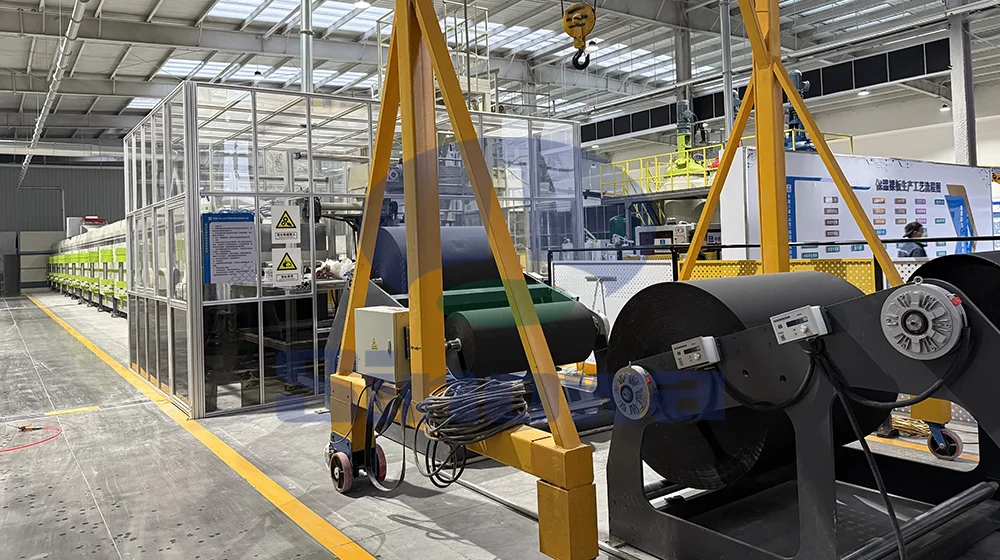
The core structure of a sandwich panel production line is composed of multiple functional modules that work seamlessly together to complete the entire production process from raw material feeding to finished product stacking. Each module is designed with precision to ensure the smooth operation of the production line and the high quality of the final products. The main modules include the unwinding system, preprocessing unit, forming system, core material processing system, composite system, cutting system, and automatic stacking system. These modules are connected through an intelligent control system, which enables centralized management and real-time adjustment of the production process, ensuring that each step meets the required technical standards.
The unwinding system is the starting point of the sandwich panel production line, responsible for unrolling the outer facing materials, which are usually metal coils such as color steel plates, stainless steel plates, or aluminum plates. Modern unwinding systems are equipped with dual-station unwinding machines, which allow for non-stop roll changing, greatly improving production efficiency and reducing downtime. In addition, the unwinding system is equipped with an automatic correction device that ensures the centering accuracy of the metal coil is within a small range, usually ±1 mm, to avoid deviations during the subsequent forming process. Some advanced unwinding systems also include a tension control device, which maintains stable tension during the unwinding process, preventing the metal sheet from wrinkling or stretching, thus ensuring the flatness of the outer facing layers.
After unwinding, the metal sheets enter the preprocessing unit, which is designed to enhance the bonding strength between the outer facing layers and the core material. The preprocessing process usually includes cleaning, passivation, and surface activation. The cleaning step removes dust, oil, and other contaminants from the surface of the metal sheets, ensuring that the adhesive can form a strong bond. Passivation treatment forms a protective film on the surface of the metal sheets, preventing corrosion and further improving the adhesion performance. For some special applications, the preprocessing unit may also include a corona treatment system, which increases the surface energy of the metal through high-voltage discharge, further enhancing the bonding effect with the core material. This preprocessing step is crucial for ensuring the long-term stability and durability of the sandwich panels.
The forming system is responsible for processing the flat metal sheets into the desired shape and profile. This system usually consists of a multi-roll continuous forming machine, which uses 16 to 24 sets of precision roller wheels for progressive forming. The forming process is controlled by a hydraulic servo system, which precisely adjusts the forming pressure and speed to ensure that the metal sheets are formed into uniform and consistent profiles. The forming system also includes a quick mold changing device, which allows for switching between different panel types within 30 minutes, increasing the flexibility of the production line. Whether producing wall panels, roof panels, or special-shaped panels, the forming system can be adjusted to meet the specific requirements of different products.
The core material processing system is one of the most critical parts of the sandwich panel production line, as the core material determines the main performance characteristics of the sandwich panels, such as thermal insulation, sound insulation, and fire resistance. Modern production lines are designed to be compatible with multiple types of core materials, including polyurethane (PU), rock wool, glass wool, expanded polystyrene (EPS), and phenolic resin (PF). Each type of core material has its own unique processing requirements, and the production line is equipped with corresponding equipment to handle them.
For polyurethane core materials, the processing system includes a high-pressure foaming machine, a temperature control unit, a mixing head, and a measurement system. The high-pressure foaming machine operates at a working pressure usually in the range of 120 to 200 bar, ensuring that the polyurethane raw materials are fully mixed and foamed. The temperature control unit accurately controls the temperature of the raw materials within ±0.5 ℃, which is crucial for the foaming reaction. The mixing head adopts a self-cleaning design, with a mixing efficiency of over 98%, ensuring uniform foaming of the core material. The measurement system has a flow accuracy of ±1.5%, ensuring that the ratio of the raw materials is precise, thus guaranteeing the performance of the polyurethane core.
For rock wool and glass wool core materials, the processing system includes an automatic feeding device, a precise slitting machine, and a positioning device. The automatic feeding device ensures that the core material is continuously and evenly fed into the production line, while the slitting machine cuts the core material into the required width and thickness. The positioning device ensures that the core material is accurately placed between the two outer facing layers, avoiding deviation and ensuring the uniformity of the panel thickness. Some advanced production lines also include a vertical cotton laying technology for rock wool, which enhances the density and uniformity of the core material, improving the fire resistance and thermal insulation performance of the panels.
The composite system is responsible for bonding the outer facing layers and the core material together to form a complete sandwich panel. This system usually includes a double-track press, a temperature control platform, and an online thickness gauge. The double-track press applies even pressure, which can be adjusted between 0.1 and 0.3 MPa, ensuring that the outer layers and the core material are firmly bonded. The temperature control platform maintains the optimal foaming and curing temperature, promoting the full reaction of the adhesive and the core material. The online thickness gauge monitors the thickness of the panels in real time with an accuracy of ±0.2 mm, ensuring that the thickness of each panel meets the required standards. This combination of pressure and temperature control ensures that the sandwich panels have strong bonding strength and uniform thickness.
After the composite process, the continuous panel enters the cutting system, which is responsible for cutting the panel into the desired length. The cutting system is usually equipped with a servo-controlled flying saw or laser cutting device, which has a cutting accuracy of ±0.5 to ±1 mm. The flying saw cutting unit can cut the panel while it is moving, ensuring continuous production without stopping. Some advanced cutting systems also include an automatic trimming function, which trims the edges of the panels to ensure that the edges are smooth and neat. The cutting system is controlled by the intelligent control system, which can be set to different cutting lengths according to customer requirements, providing high flexibility.
The final step in the production process is the automatic stacking system, which is responsible for stacking the finished panels neatly and efficiently. The stacking system includes an automatic stacker crane, which can stack the panels to a maximum height according to the requirements. The stacker crane is equipped with automatic counting and layering devices, ensuring that the number of panels in each stack is accurate and the stacking is stable. This not only reduces labor intensity but also prevents damage to the finished panels during stacking and transportation. Some production lines also include a packaging device, which wraps the stacked panels with plastic film or other packaging materials to protect them from moisture and damage during storage and transportation.
Modern sandwich panel production lines are equipped with an intelligent control system based on PLC (Programmable Logic Controller) and bus control technology, which enables centralized control and monitoring of the entire production process. The control system can display real-time production data, such as production speed, output, and equipment status, allowing operators to monitor the production process at any time. It also has a fault self-diagnosis function, with a fault diagnosis rate of over 90%, which can quickly identify and prompt equipment faults, reducing downtime and maintenance costs. Some advanced control systems also support remote interaction, allowing operators to control and monitor the production line from a remote location, improving the convenience of operation and management.
One of the key advantages of modern sandwich panel production lines is their high automation level, which greatly reduces the need for manual operation. Compared with traditional manual production methods, fully automated production lines can increase production efficiency by 10 to 15 times, with a standard production line capable of producing 150 to 300 square meters of sandwich panels per hour, and some high-speed production lines can reach a production speed of 8 to 15 meters per minute. This high efficiency not only reduces production costs but also enables large-scale production to meet the growing market demand.
Another important advantage is the stability and consistency of product quality. The automated production process ensures that each step is carried out according to the set parameters, avoiding the errors caused by manual operation. The precise control of the forming, composite, and cutting processes ensures that the sandwich panels have uniform thickness, flat surfaces, and strong bonding strength. This consistency is crucial for applications that require high-quality panels, such as high-rise buildings, cold storage, and purification workshops.
Flexibility is also a significant feature of modern sandwich panel production lines. The modular design of the production line allows for flexible configuration according to different production needs. For example, the production line can be adjusted to produce different types of sandwich panels by switching core materials, such as polyurethane, rock wool, or EPS. It can also be adjusted to produce different sizes and shapes of panels, including wall panels, roof panels, cold storage panels, and purification panels. This flexibility makes the production line suitable for a wide range of applications and can meet the diverse needs of different customers.
Energy conservation and environmental protection are also important considerations in the design of modern sandwich panel production lines. Many production lines adopt energy-saving technologies, such as heat recovery systems, which capture and reuse the heat generated during the production process, reducing energy consumption. For polyurethane foaming, some production lines use pentane foaming technology instead of traditional fluorine-containing foaming agents, which has a zero ODP (Ozone Depletion Potential) value, reducing environmental pollution. In addition, the production lines are designed to reduce material waste, with some continuous production lines reducing material waste by 18 to 22% compared with batch processing. The use of industrial waste, such as fly ash, in some cement-based sandwich panel production lines also contributes to environmental protection and resource recycling.
Sandwich panels produced by these production lines are widely used in various industries, with the construction industry being the main application field. In the construction industry, sandwich panels are used for building walls, roofs, floors, and partitions, due to their excellent thermal insulation, sound insulation, and fire resistance. They are particularly suitable for industrial plants, warehouses, cold storage, high-rise buildings, and residential buildings. For example, polyurethane sandwich panels are widely used in cold storage and refrigerated trucks due to their low thermal conductivity, which can maintain a constant temperature in an environment of -40 ℃ to 120 ℃. Rock wool sandwich panels, with their Class A fire resistance, are suitable for high-rise buildings and other applications that require strict fire safety standards.
Beyond the construction industry, sandwich panels are also used in the aerospace, automotive, marine, and industrial manufacturing industries. In the aerospace industry, lightweight sandwich panels are used to build aircraft structures, reducing the weight of the aircraft and improving fuel efficiency. In the automotive industry, they are used for interior components and body panels, enhancing the safety and comfort of the vehicle. In the marine industry, sandwich panels with excellent corrosion resistance are used for ship interiors and exteriors. In industrial manufacturing, they are used as enclosure materials for industrial plants, garages, mobile homes, and other structures, meeting the diverse needs of industrial production.
The continuous development of technology has driven the innovation and upgrading of sandwich panel production lines. Modern production lines are constantly integrating new technologies, such as artificial intelligence (AI) and Internet of Things (IoT), to improve production efficiency and product quality. For example, some advanced production lines are equipped with AI-powered quality control systems that perform 120 surface inspections per minute, ensuring that any defects are detected and addressed in a timely manner. IoT technology enables real-time monitoring of equipment status and production data, allowing for predictive maintenance and reducing the risk of equipment failure.
In addition, the trend of customization is becoming increasingly prominent in the sandwich panel production industry. Customers have different requirements for the size, thickness, core material, and performance of sandwich panels, and modern production lines are designed to meet these customized needs. The modular design and flexible configuration of the production lines allow for quick adjustments to produce panels that meet specific customer requirements, providing a personalized solution for each customer.
In conclusion, a sandwich panel production line is a highly efficient, automated, and flexible manufacturing system that plays a crucial role in the production of high-quality sandwich panels. With its advanced technology, precise control, and diverse configuration options, it can meet the needs of various industries and applications. The continuous innovation and upgrading of these production lines will further improve production efficiency, product quality, and environmental performance, contributing to the sustainable development of the building materials industry and other related fields. As the demand for energy-efficient, environmentally friendly, and high-performance building materials continues to grow, the importance of sandwich panel production lines will become even more prominent in the global manufacturing landscape.
« Sandwich Panel Production Line Manufacturer » Update Date: 2026/4/13
Tags: Continuous PUR Sandwich Panel Production Line , Continuous PUF Sandwich Panel Production Line , Insulated Sandwich Panel Production Line , PUF Sandwich Panel Production Line , Wall Sandwich Panel Production Line , Roof Sandwich Panel Production Line , Cold Room Sandwich Panel Production Line , Cold Storage Sandwich Panel Production Line , Metal Sandwich Panel Production Line , Metal Carved Insulated Sandwich Panel Production Line , Isolation Sandwich Panel Production Line , Corrugated Sandwich Panel Production Line , Fully Automatic Rock Wool Sandwich Panel Production Line , Fully Automatic PU Sandwich Panel Production Line , Foam Sandwich Panel Production Line , Decorative PU Sandwich Panel Production Line , Continuous PU Sandwich Panel Production Line , PUR Sandwich Panel Production Line , PIR Sandwich Panel Production Line , Sandwich Panel Production Line , Soundproofing Sandwich Panel Production Line , Rock Wool Sandwich Panel Production Line , Mineral Wool Sandwich Panel Production Line , Rockwool Sandwich Panel Production Line , Glass Wool Sandwich Panel Production Line , Continuous Sandwich Panel Production Line , Composite Sandwich Panel Production Line , Color Steel Sandwich Panel Production Line , Automatic Sandwich Panel Production Line , Polyurethane Sandwich Panel Production Line , PU Sandwich Panel Production Line ,
- Cheap PU Sandwich Panel Production Line
- PIR Sandwich Panel Production Line
- High-tech PU Sandwich Panel Machine
- High Efficiency Sandwich Roof Wall Panel Making Machine
- PIR Sandwich Panel Machine
- PU Sandwich Panel Line Price
- High-quality PU Board Production Line
- PU Sandwich Panel Making Machine Factory
- Polyurethane Sandwich Panel Machine Factory
- PIR Sandwich Panel Line
- Continuous Sandwich Panel Production Line Design
- PU Insulation Panel Production Line Factory
- Metal Sandwich Panel Production Line On Sales
- PU Insulation Board Production Line Manufacturer
- Continuous Sandwich Panel Line On Sales
- High Quality Sandwich Panel Production Line
- PUR Sandwich Panel Line On Sales
- Custom Corrugated Sandwich Panel Production Line
- Glass Wool Sandwich Panel Line Price
- PUF Panel Manufacturing Machine Design
- Links:
- Sandwich Panel Continuous Production Line
- Automatic and Continuous Sandwich Panel Production Line
- Cheap and Low Price Sandwich Panel Production Line
- China Sandwich Panel Production Line Factory
- Color Steel Sandwich Panel Production Line For Cold Storage
- Continuous Composite Foam Sandwich Panel Production Line
- Continuous Production Line For Rockwool and Mineral Wool Sandwich Panels
- Continuous PU Phenolic Insulation Panel Production Line
- Continuous PU PIR Sandwich Panel Production Line
- Continuous PUF PUR Sandwich Panel Production Line
- Continuous Sandwich Panel Production Line For Roof and Wall
- Customized and Design Sandwich Panel Production Line
- Decorative Sandwich Panel Production Line For Glass Wool Boards
- High Quality Sandwich Panel Production Line For Sale
- Polyurethane(PU) Sandwich Panel Production Line
- Sandwich Panel Production Line Manufacturer and Supplier