
Sandwich Panel Production Line On Sales
Sinowa is a well-known manufacturer and technical service provider of high-end sandwich panel production line, learn more about sandwich panel production line on sales, please contact Sinowa's technical engineer, tell us what you need, we will contact you as soon as possible!
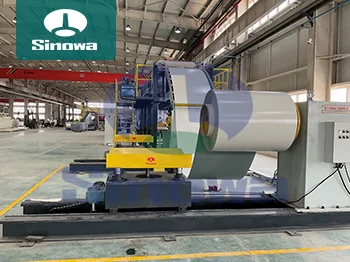
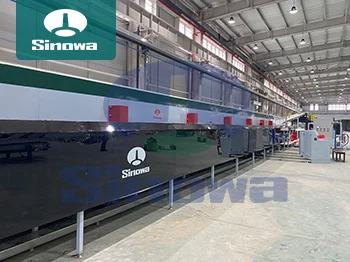
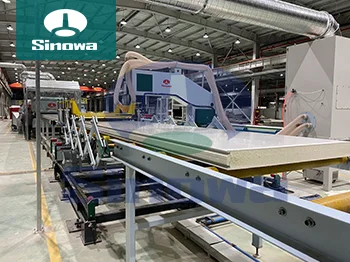
Sinowa is committed to the development and manufacturing of high-end and high-efficiency sandwich panel production line. Our sandwich panel production line are leading the way in efficiency, automatic control, human-computer interaction, environmental protection and energy consumption. Using system integration and bus control technology, it realizes the automatic integrated linkage control of the entire sandwich panel production line, and can achieve remote interactive communication, which has the world-class level and a comprehensive leading high-performance sandwich panel production line in the market.
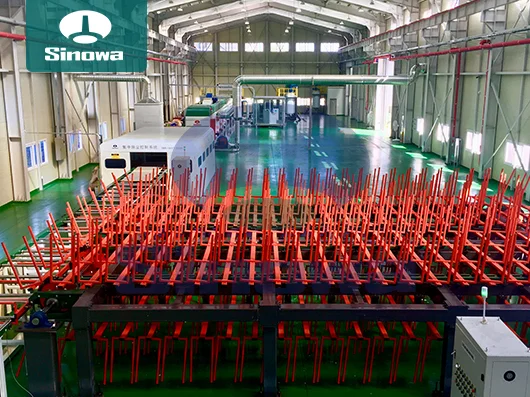
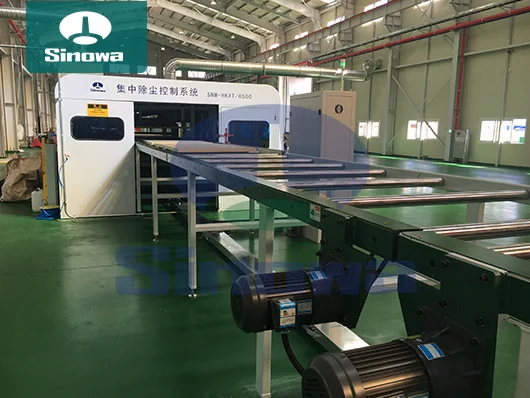
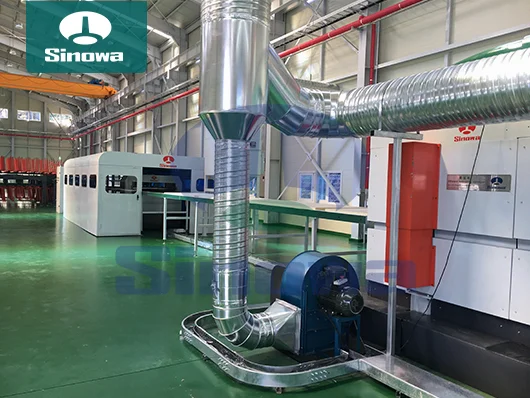
For more than ten years, relying on our innovative manufacturing concept and excellence in quality, reliable and trustworthy service to customers, we cooperate with customers all over the world, exported products to Canada, South Korea, Israel, Australia, the Middle East and other more than 20 countries and regions. contributed to building energy conservation and low-carbon production and have won widespread praise.
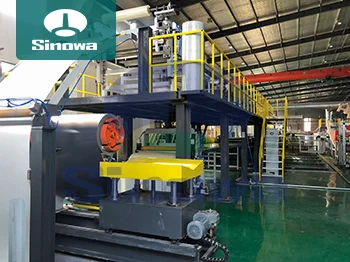
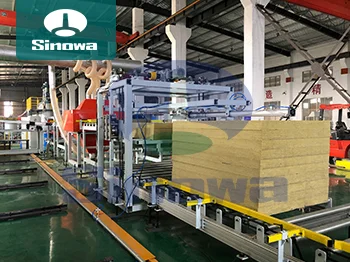
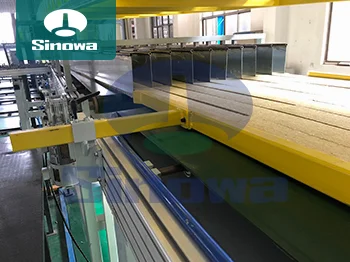
Sinowa has invested outstanding efforts in sandwich panel production line, this is why our products are more efficiency, quality, automatic control technology, environmental protection, energy consumption indicators and the appearance and safety protection are comprehensively leading, some subversive design changes in many major technical points, these major innovations make our products excellent in price/performance and user experience.
In the modern construction and manufacturing industry, sandwich panels have emerged as a versatile and essential material, widely used in various fields due to their excellent combination of structural strength, thermal insulation, soundproofing, and lightweight properties. As the demand for high-quality sandwich panels continues to surge globally, the need for efficient, reliable, and advanced sandwich panel production lines has become increasingly prominent. These production lines are designed to streamline the manufacturing process, ensuring consistent product quality while maximizing production efficiency, making them a valuable investment for businesses looking to enter or expand in the sandwich panel market. Whether for large-scale industrial plants, small to medium-sized manufacturing facilities, or specialized production needs, the sandwich panel production lines available on the market today offer a range of configurations and capabilities to meet diverse requirements.
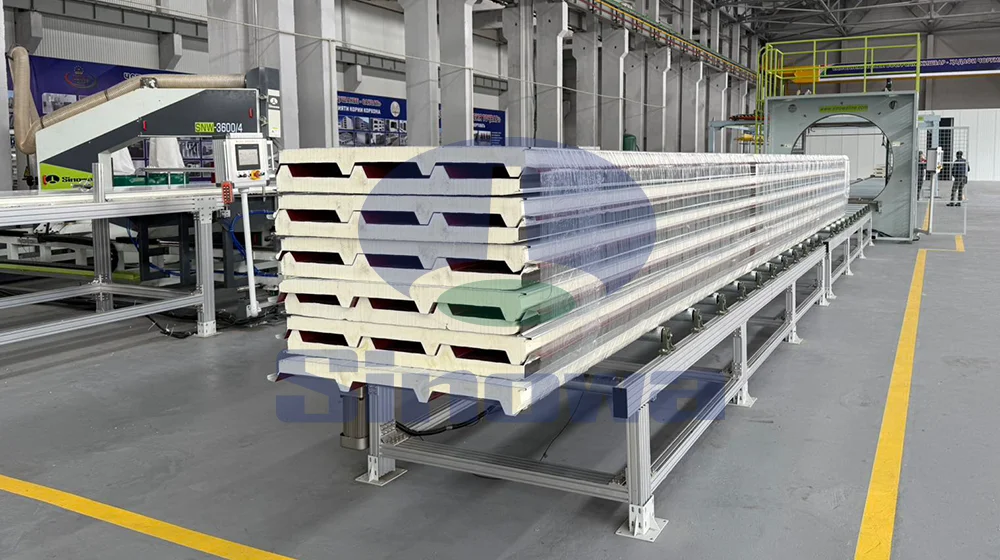
A sandwich panel production line is a comprehensive system composed of multiple interconnected modules, each designed to perform specific functions in the manufacturing process. These modules work in harmony to transform raw materials into finished sandwich panels, eliminating the need for manual intervention at most stages and reducing the risk of human error. The core advantage of such production lines lies in their ability to achieve continuous, automated production, which not only boosts output but also ensures that each panel meets the same high standards of quality and dimensional accuracy. Unlike traditional manual or semi-automatic production methods, modern sandwich panel production lines can operate continuously for extended periods, significantly improving productivity and reducing production costs in the long run.
The raw materials used in sandwich panel production typically include facing materials and core materials, and the production line is designed to handle a wide range of these materials to accommodate different application needs. Facing materials commonly used include various types of metal sheets, such as aluminum and steel, which provide structural rigidity and weather resistance to the finished panels. Core materials, on the other hand, are selected based on the desired properties of the sandwich panels, with options including polyurethane (PU), expanded polystyrene (EPS), mineral wool, and phenolic foam. Each core material offers unique advantages: PU cores excel in thermal insulation and fire resistance, EPS cores are lightweight and cost-effective, mineral wool cores provide excellent soundproofing and fire retardancy, and phenolic foam cores offer superior thermal stability and durability. The production line is equipped to process these different core materials seamlessly, allowing manufacturers to switch between material types with minimal adjustments, thus enhancing production flexibility.
The working process of a sandwich panel production line can be divided into several key stages, each of which is critical to the final quality of the product. The first stage is raw material preparation, where the facing materials and core materials are inspected, cut, and prepared for processing. Metal coils, for example, are uncoiled using an automatic uncoiling machine, which ensures smooth and consistent feeding of the material into the production line. The metal sheets are then leveled to eliminate internal stress and ensure a flat surface, which is essential for proper bonding with the core material. For core materials such as EPS or mineral wool, the production line may include a cutting or shaping module to ensure the core is of the correct thickness and dimensions before being sandwiched between the facing materials.
The next stage is the bonding process, which is one of the most important steps in sandwich panel production. The production line uses specialized adhesive application systems to apply a uniform layer of adhesive to the facing materials or the core material. The adhesive is carefully selected based on the type of facing and core materials to ensure a strong, durable bond that can withstand various environmental conditions, including temperature changes, humidity, and mechanical stress. Some advanced production lines are equipped with double-sided adhesive coating devices, which ensure that both facing materials are evenly coated with adhesive, promoting consistent bonding across the entire surface of the panel. After the adhesive is applied, the facing materials and core material are brought together in a precise alignment, ensuring that the core is centered and the layers are properly positioned.
Following the bonding stage, the assembled panel enters the pressing and forming module. This module uses heat and pressure to cure the adhesive and bond the layers together firmly. The temperature and pressure parameters are carefully controlled to ensure optimal bonding strength and to prevent any gaps or delamination between the layers. Some production lines use zone temperature control technology, which allows for precise adjustment of temperature in different sections of the pressing module, ensuring that the adhesive cures evenly and the panel maintains its shape and dimensions. The pressing process also helps to consolidate the panel structure, enhancing its structural integrity and ensuring that it meets the required thickness tolerances.
Once the bonding and pressing process is complete, the continuous panel is fed into the cutting module, where it is cut into the desired lengths using high-precision cutting equipment. The cutting module is equipped with advanced servo-controlled flying saws or laser cutting devices, which ensure that the cuts are clean, precise, and consistent. The cutting accuracy can reach within ±0.5 mm, ensuring that each panel meets the exact dimensions required by the customer. After cutting, the finished panels are conveyed to a stacking module, where they are automatically stacked and sorted, ready for packaging and shipment. Some production lines also include a finishing module, which may involve trimming, sanding, or cleaning the panels to ensure a smooth surface and remove any excess adhesive or debris.
Modern sandwich panel production lines are characterized by their high level of automation and intelligence, which significantly reduces the need for manual labor and improves production efficiency. The entire production process is controlled by an intelligent control system, which allows operators to monitor and adjust production parameters in real time. The control system is equipped with a user-friendly interface, making it easy to operate and maintain, even for operators with limited technical experience. Some advanced production lines also integrate Internet of Things (IoT) technology, which enables remote monitoring of production data and equipment status, allowing for timely maintenance and troubleshooting to minimize downtime.
Another key advantage of the sandwich panel production lines available on the market is their flexibility and adaptability. These production lines can be customized to produce different types of sandwich panels, including wall panels, roof panels, insulated panels, and cold storage panels, to meet the diverse needs of various industries. The modular design of the production line allows for easy expansion or modification, enabling manufacturers to adjust their production capacity or add new functions as their business grows. For example, a production line initially designed to produce EPS core panels can be modified to process mineral wool or PU cores with minimal changes to the equipment, making it a versatile investment that can adapt to changing market demands.
Energy efficiency and environmental friendliness are also important features of modern sandwich panel production lines. Many production lines are equipped with energy-saving motors and heat recovery systems, which reduce energy consumption and lower operating costs. The adhesive application systems are designed to minimize adhesive waste, and the production process is optimized to reduce emissions and environmental impact. Additionally, the use of recyclable materials in the production of sandwich panels, such as recyclable metal skins and eco-friendly core materials, aligns with the global trend towards sustainable manufacturing and green building practices.
The applications of sandwich panels produced by these production lines are vast and diverse, covering a wide range of industries and sectors. In the construction industry, sandwich panels are widely used for exterior walls, roofs, and interior partitions in residential, commercial, and industrial buildings. They are particularly popular in prefabricated construction, where their lightweight and easy installation properties help to speed up construction time and reduce labor costs. In the cold chain logistics industry, sandwich panels are used to construct cold storage facilities, refrigerated warehouses, and refrigerated transport vehicles, as their excellent thermal insulation properties help to maintain stable temperatures and preserve perishable goods. They are also used in the automotive industry for vehicle interiors, in the aerospace industry for lightweight structural components, and in the packaging industry for protective packaging materials.
The global market for sandwich panels is growing steadily, driven by increasing demand for energy-efficient buildings, rapid urbanization, and the expansion of the cold chain and industrial sectors. According to market research, the global sandwich panel market is projected to grow at a significant compound annual growth rate (CAGR) in the coming years, with the Asia-Pacific region expected to be the fastest-growing market due to rapid industrialization and urban development. This growth is creating significant opportunities for manufacturers of sandwich panel production lines, as businesses seek to expand their production capacity and meet the rising demand for high-quality sandwich panels.
When considering the purchase of a sandwich panel production line, there are several factors that businesses should take into account. First, the production capacity of the line should align with the business’s current and future production needs. Production lines are available in a range of capacities, from small-scale lines suitable for small businesses to large-scale continuous lines capable of producing thousands of square meters of panels per day. Second, the flexibility of the production line is important, as it should be able to handle different types of raw materials and produce various types of panels to adapt to changing market demands. Third, the reliability and durability of the equipment are crucial, as downtime can significantly impact production and profitability. It is important to choose a production line that is made of high-quality components and is backed by reliable after-sales support.
Additionally, the ease of operation and maintenance should be considered, as this can reduce the need for specialized technical personnel and lower operating costs. Many modern production lines are designed with user-friendly controls and easy access to components for maintenance, making them suitable for businesses of all sizes. Finally, the overall efficiency of the production line, including energy consumption, material waste, and production speed, should be evaluated to ensure that it provides a cost-effective solution in the long run.
In conclusion, sandwich panel production lines are essential equipment for businesses looking to produce high-quality sandwich panels efficiently and cost-effectively. The advanced technology, automation, and flexibility of these production lines make them a valuable investment, enabling manufacturers to meet the growing demand for sandwich panels in various industries. With their ability to handle a wide range of raw materials, produce diverse panel types, and ensure consistent quality, sandwich panel production lines on sales today offer a comprehensive solution for businesses of all sizes. As the global market for sandwich panels continues to grow, the importance of these production lines will only increase, making them a key component of the modern manufacturing and construction landscape. Whether for a new business entering the market or an established company looking to expand its production capacity, investing in a high-quality sandwich panel production line is a strategic decision that can drive growth, improve efficiency, and enhance competitiveness in the industry.
« Sandwich Panel Production Line On Sales » Update Date: 2026/4/20
Tags: Continuous PUR Sandwich Panel Production Line , Continuous PUF Sandwich Panel Production Line , Insulated Sandwich Panel Production Line , PUF Sandwich Panel Production Line , Wall Sandwich Panel Production Line , Roof Sandwich Panel Production Line , Cold Room Sandwich Panel Production Line , Cold Storage Sandwich Panel Production Line , Metal Sandwich Panel Production Line , Metal Carved Insulated Sandwich Panel Production Line , Isolation Sandwich Panel Production Line , Corrugated Sandwich Panel Production Line , Fully Automatic Rock Wool Sandwich Panel Production Line , Fully Automatic PU Sandwich Panel Production Line , Foam Sandwich Panel Production Line , Decorative PU Sandwich Panel Production Line , Continuous PU Sandwich Panel Production Line , PUR Sandwich Panel Production Line , PIR Sandwich Panel Production Line , Sandwich Panel Production Line , Soundproofing Sandwich Panel Production Line , Rock Wool Sandwich Panel Production Line , Mineral Wool Sandwich Panel Production Line , Rockwool Sandwich Panel Production Line , Glass Wool Sandwich Panel Production Line , Continuous Sandwich Panel Production Line , Composite Sandwich Panel Production Line , Color Steel Sandwich Panel Production Line , Automatic Sandwich Panel Production Line , Polyurethane Sandwich Panel Production Line , PU Sandwich Panel Production Line ,
- Custom Decorative PU Sandwich Panel Production Line
- Glass Wool Sandwich Panel Machine Supplier
- Insulation Sandwich Panel Machines Manufacturer
- PU Sandwich Panel Line For Sale
- Polyurethane Sandwich Panel Line For Cold Storage
- High-quality Continuous Sandwich Panel Manufacturing Line
- Isolation PU Sandwich Panel Line Supplier
- Continuous Sandwich Panel Manufacturing Line For Cold Room
- Continuous Sandwich Panel Production Line Supplier
- Cheap Decorative Sandwich Panel Line
- PU Isolation Panel Production Line Design
- Highly Intelligent Continuous Sandwich Panel Line
- PU Panel Machine Price
- Cold Storage Sandwich Panel Production Line Price
- PU Insulation Panel Production Line Manufacturer
- High Efficiency Glass Wool Panel Production Line
- Glass Wool Panel Production Line For Sale
- Cheap PU Board Production Line
- Sandwich Panel Making Machine Factory
- Customized PUR Sandwich Panel Line
- Links:
- Sandwich Panel Continuous Production Line
- Automatic and Continuous Sandwich Panel Production Line
- Cheap and Low Price Sandwich Panel Production Line
- China Sandwich Panel Production Line Factory
- Color Steel Sandwich Panel Production Line For Cold Storage
- Continuous Composite Foam Sandwich Panel Production Line
- Continuous Production Line For Rockwool and Mineral Wool Sandwich Panels
- Continuous PU Phenolic Insulation Panel Production Line
- Continuous PU PIR Sandwich Panel Production Line
- Continuous PUF PUR Sandwich Panel Production Line
- Continuous Sandwich Panel Production Line For Roof and Wall
- Customized and Design Sandwich Panel Production Line
- Decorative Sandwich Panel Production Line For Glass Wool Boards
- High Quality Sandwich Panel Production Line For Sale
- Polyurethane(PU) Sandwich Panel Production Line
- Sandwich Panel Production Line Manufacturer and Supplier